


There's a stink bug on your ceiling, and every article says the same thing: seal your house. The advice is right and the timing is usually wrong — caulking your siding in October seals the bugs inside the wall instead of outside it.
Extension entomologists are blunt in a way consumer pest pages rarely are: the seal-out has to happen while the house is empty of them — which means summer. Here's the calendar, the checklist, and an honest ranking of everything else.
The deadline nobody puts in the headline
These bugs spend the warm months outdoors, then hunt for shelter. NC State says seal them out before they try to return in late August. Ohio State puts flight to overwintering sites at early September, peaking late September or early October, Penn State at September through October. Colorado State gives the hardest deadline: seal entry points by mid-August, no later than Labor Day.
Then the sentence that reorders the project. NC State: do not bug-proof your house in fall, winter, or early spring, which will likely trap them inside. Let them leave in spring, then seal.
| Window | Outside | Your move |
|---|---|---|
| June–Aug | Bugs outdoors; walls empty | Do the seal-out |
| Sep–Oct | They're arriving daily | Stop; you'd close them in |
| Nov–Mar | Dormant; wandering on warm days | Mop-up only |
| Apr–May | Trying to get back outdoors | Let them go |
Those dates are Mid-Atlantic and Midwest, and onset shifts with latitude. Elsewhere, treat bugs gathering on sun-warmed south and west walls as your closing bell. Summer-first timing runs through most structural pest work, which is why it anchors our walkthrough of do-it-yourself pest control.
Make sure it's actually a stink bug
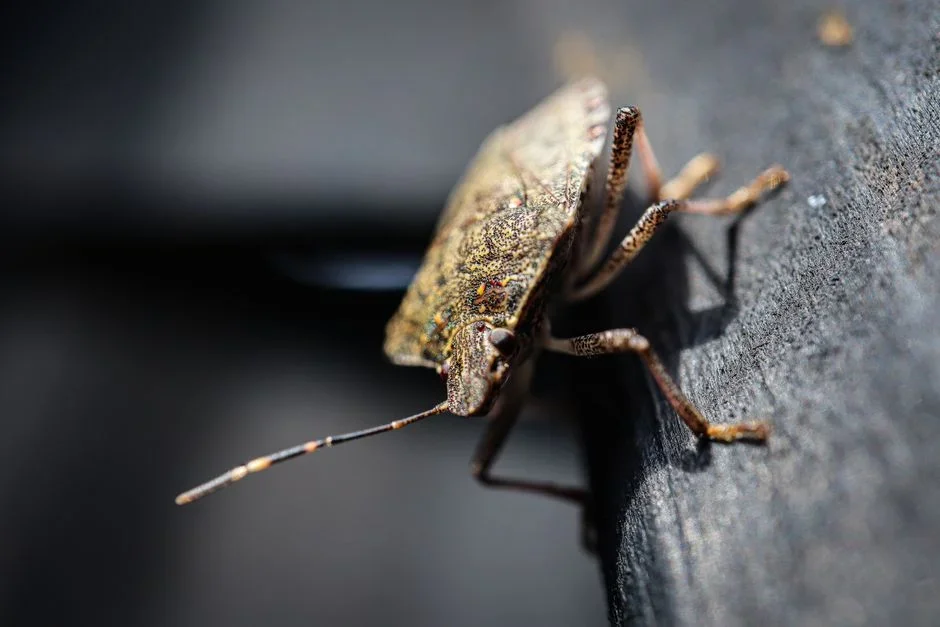
The seal-out is identical for all of these, but ID matters — whoever thinks they have bed bugs buys an expensive product that fixes nothing. NC State also lists native brown, green and dusky stink bugs as look-alikes. That same August seal-out is what keeps out boxelder bugs and Asian lady beetles, which pick the same sun-warmed walls.
| Insect | Size | Giveaway | Bites? |
|---|---|---|---|
| Brown marmorated stink bug | 1/2 to 5/8 inch | Two pale bands near the antenna tips; light and dark spots along the abdomen edge; dark red eyes | No |
| Western conifer seed bug | 3/4 inch | Thin, jagged white line along the back; flared hind legs | Not a medical risk |
| Boxelder bug | About 1/2 inch | Narrow, flat-backed, brownish-black with three lengthwise red stripes | No |
What they actually do to you: essentially nothing
The upsell runs on implied danger, so say it flatly. NPIC, the EPA-funded center at Oregon State, says stink bugs do not bite, sting, or cause structural damage; EPA adds they aren't known to transmit disease; Maryland, that they don't eat or bore into wood. Michigan State confirms they won't reproduce in homes — the crowd you see in March is last fall's arrivals.
Costs are bounded: odor, fecal spotting on walls and curtains, and NC State's note that they foul small engines and heat pumps. No source reviewed here addressed sensitivity to the odor itself — an open question, not a cleared one.
Myth 1: crushing or vacuuming them calls in reinforcements
It's on nearly every commercial pest page, and it's wrong. NPIC: killing or vacuuming them may release a foul odor, and this odor will not attract other bugs. Clustering runs on a separate system — USDA researchers identified the aggregation pheromone as two chemicals produced exclusively by adult males, which Missouri IPM calls the scent that draws others to the area. Live bugs on a sunny wall recruit more. A squashed one summons nobody.
Purdue gives the honest reason to skip the paper towel: they get their name from the smell given off if squashed — a stain, not a summons. Maryland says a wet or dry vac is efficient and the canister odor is temporary; rubber-band a knee-high stocking over the tube and the bugs never reach the canister at all. UNH says promptly empty the bag and dispose of it outdoors, because survivors crawl back out. We've sorted the home remedies with evidence behind them from the folklore separately.
Myth 2: a fogger or a perimeter spray ends this
Foggers
EPA is more precise than the internet: foggers labeled for stink bugs will kill the ones in your living space, but they won't prevent more from emerging from cracks after they dry — a floor of corpses and the same ceiling tomorrow. NPIC adds that foggers may contain substances that repel pests, causing them to retreat further into their hiding places.
The safety notes matter more than the product. EPA warns that because the aerosol propellants typically are flammable, improper use may cause a fire or explosion — pilot lights off, no open flame. Breathing the mist may be harmful and re-entering early can make you ill, so respect the label's re-entry time and keep Poison Control (1-800-222-1222) handy.
Perimeter sprays
Outdoor treatments fail differently. Penn State allows minor relief but says sunlight breaks the product down, so the residual may not last beyond several days or a week. NC State names the structural problem: sprays are not always effective given how mobile the bugs are and the constant influx from outside, and Maryland calls them expensive, marginally effective, and not generally recommended. Insecticides aren't useless; they fail at this job.
The honest tier list
| Tactic | Verdict | Why |
|---|---|---|
| Summer exclusion: caulk, screens, sweeps, vents | REAL — Tier A | Only fix that lowers next season |
| Vacuum with a stocking liner, emptied outdoors | REAL — mop-up | Fastest knockdown; nothing long-term |
| Soapy water: a jar, or a pan under a lamp | REAL — mop-up | Free; pan trap won a published trial |
| Indoor fogger | MYTH | Kills the room, not the cracks |
| Exterior perimeter spray | MYTH | Sunlight kills the residual in days |
| Not squashing because "it attracts more" | MYTH | The defensive odor recruits nothing |
| Caulking in fall, after they've moved in | DANGEROUS | Seals them in to feed carpet beetles |
| Insecticide dust in an occupied wall void | DANGEROUS | Same beetles, plus indoor exposure |
The actual job: a one-weekend seal-out
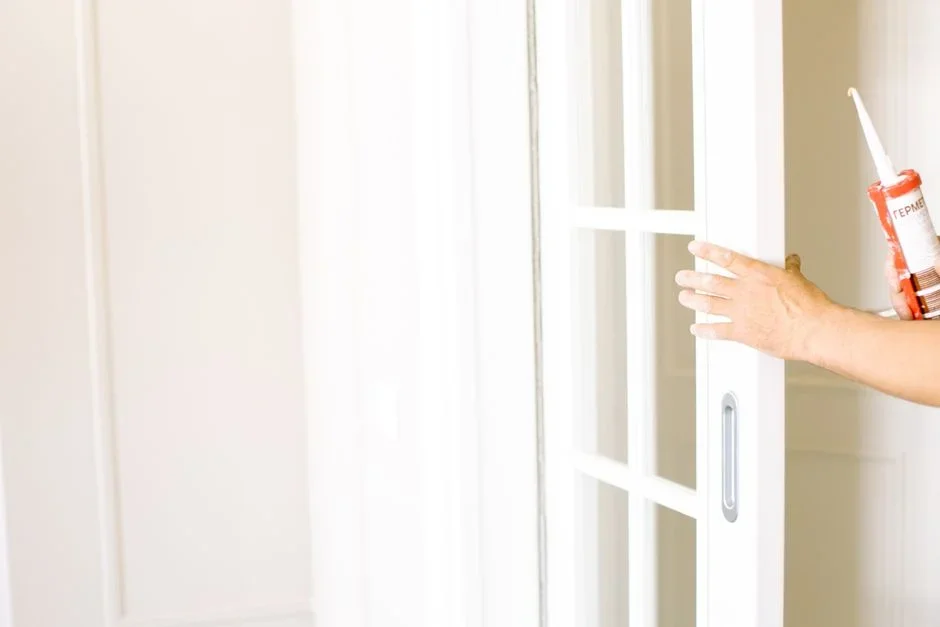
- Caulk the gaps with silicone or silicone-latex, around windows, doors, siding, utility pipes, behind chimneys and under the wood fascia, plus holes for pipes and wires.
- Fix torn screens — Ohio State specifies 16-mesh or smaller.
- Screen attic and wall vents, cap the chimney — EPA's checklist, plus Penn State on the same overwintering guild.
- Seal penetrations. EPA: caulk small gaps around plumbing, fill larger ones with steel wool, seal foundation cracks, secure crawlspaces.
- Door sweeps and weatherstripping wherever daylight shows around a closed door — EPA's test.
- Pull window AC units before winter, and rake leaves back from the foundation in a six- to ten-foot-wide strip, especially on the south and west sides.

Shopping list: exterior silicone caulk and a gun, weatherstripping, a door sweep per door, steel wool, screen patch — roughly the cart behind our guide to sealing drafty windows and doors for about ten dollars. Ohio State's typical entry points are cracks around window and door trim, window air conditioners, exhaust fans, ceiling fixtures, baseboards and chimneys, so photograph each winter sighting and you'll know where to caulk in July. Those same gaps let in the other autumn visitor, which is why it pays to know what actually brings house spiders indoors once the nights cool.
Two limits. On vinyl siding, Michigan State warns caulk will not provide complete efficacy — expect a large reduction, not zero. And above the first story you're on a ladder; if you aren't steady, hire that out.
Mopping up the ones already inside
Damage control, not a solution — none of it touches next season. Maryland's method is water with a teaspoon of liquid detergent; sweep them in and they can't climb out. Passively, NPIC describes soapy water in a roasting pan in a dark room with a light aimed at it. A trial in the peer-reviewed Journal of Extension found the most efficacious indoor trap was an aluminum foil water pan built by a citizen scientist, beating commercial designs. The widely quoted figure for how much better couldn't be verified, so take it as "the cheap one won." Keep an open soapy pan away from a toddler or a thirsty dog.
The one thing that genuinely makes it worse
Sealing them in. Penn State warns carpet beetles will feed on the dead stink bugs and subsequently attack woolens and stored dry goods; NC State says the same about dead bugs left in attics, walls or crawl spaces, and Maryland raises it against dusting voids with insecticide. It's a documented pathway rather than a certainty, but a bad bet with no upside — which is why Ohio State says insecticides should not be used inside houses after the insects have gained access.
One legal line before you improvise: every registered pesticide label states it is a violation of Federal law to use the product in a manner inconsistent with its labeling, so carrying an outdoor concentrate indoors is useless here and illegal. Store pesticides locked away from children and pets, and never treat a surface a cat will walk across.
Why this is the highest-return weekend on your house
Here's the part that isn't about insects: the gaps a stink bug walks through are the gaps your heat leaves through. EPA's ENERGY STAR methodology estimates homeowners save an average of 15% on heating and cooling costs, or 11% of total energy costs — but that model assumes air sealing to a 25% cut in air infiltration plus attic, crawlspace and basement insulation brought to 2012 code. A caulk gun is one part of it, not all of it. Virginia Tech Extension prices caulk at two to fifteen dollars or more per tube.
Then rodents. NC State's urban pest program notes mice squeeze through an opening the size of a dime and rats through anything quarter-sized, and prescribes steel wool, sheet metal and door sweeps — which is why our under-$15 rodent exclusion routine reads like the list above. Same caulk gun, one weekend, three problems.
Common mistakes
- Sealing in October, when the bugs are already in the wall.
- Expecting a fogger to stop tomorrow's arrivals.
- Refusing to vacuum because of a myth about attracting more.
- Expecting caulk to fully seal vinyl siding.
- Dusting an occupied wall void and inheriting carpet beetles.
FAQ
I'm reading this in September. Now what?
Mop up indoors, note every spot they emerge from, and put the sealing on next summer's calendar. Two jobs are safe now, because neither closes anything in: a torn screen and a door sweep.
Do they bite, or hurt pets?
No. EPA states they don't bite people or pets and aren't known to transmit disease. A dog that mouths one will dislike the taste and may drool; call your vet if a pet seems unwell afterward.
What about peppermint oil or other natural repellents?
No source reviewed here offers efficacy data for essential oils or neem against these bugs. Put the money into caulk.
The takeaway: Seal the house in summer while the bugs are still outside — it's the only tactic with evidence behind it, and it quietly pays you back in heating bills and mice too. Spend less. Live more. — The Thrifty Almanac






0comments