

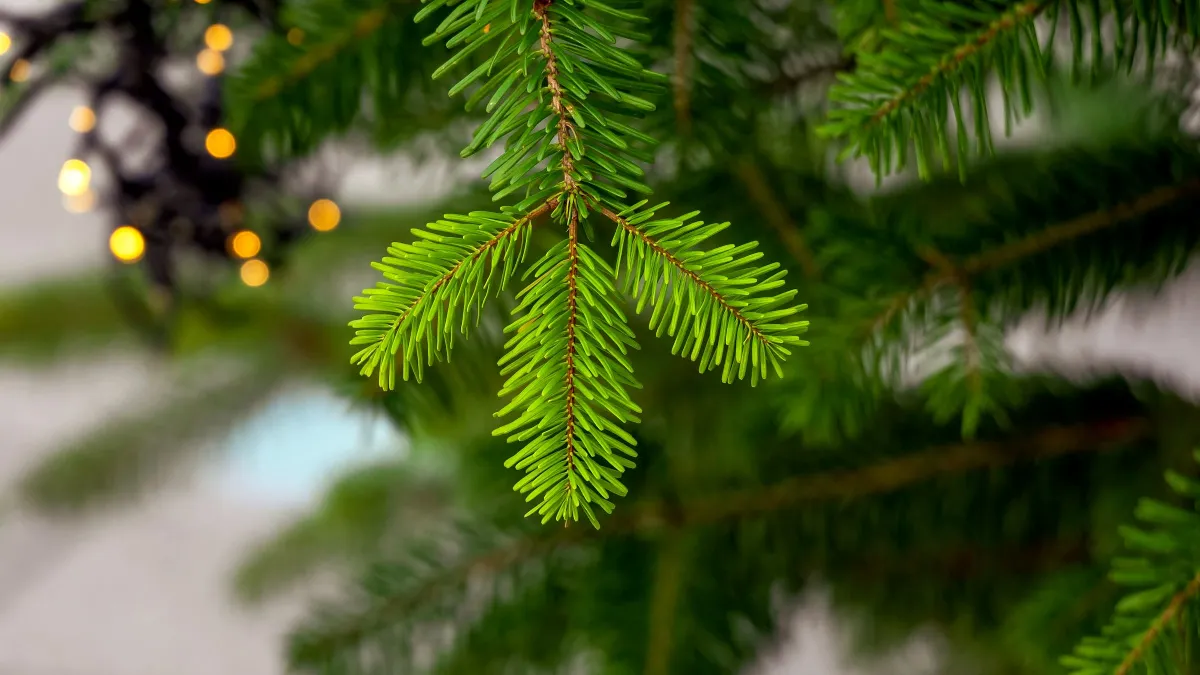
Sometime after the tree goes up, tiny dark specks start turning up on the windowsill and the gift wrap. Are the bugs in a Christmas tree dangerous, and is it safe to spray them?
Extension services and the tree industry give different advice on some points. This guide shows which, and where the 25,000 figure came from.
Are bugs in a Christmas tree harmful?
Real Christmas trees grow outdoors, so some bring overwintering insects inside. Bugs in a real Christmas tree are a nuisance, not a danger, according to Penn State and Iowa State, and NC State Extension agrees. Penn State says none of the species that might arrive on a real tree are dangerous to the home, its contents or its occupants. Iowa State says the insects and spiders that emerge cannot bite or sting, and NC State says they do not bite or cause disease: "just a nuisance."
Most real trees are free of insects and other arthropods, says Penn State. A 2015 NC State Extension page says perhaps one tree in 100,000 has one of its listed pests on it (among them Cinara aphids and praying mantis egg cases). That is an estimate from two specialists with no method given, and Illinois Extension repeats the figure. When bugs do turn up, Iowa State says an infestation "may vary from just a few to several hundred individuals."
How the common claims hold up:
| Claim | Verdict | Why |
|---|---|---|
| Real trees can carry dormant bugs | REAL | Warmth wakes them (Penn State) |
| Every tree holds 25,000 bugs | MYTH | Most trees are free of bugs (Penn State) |
| Aerosol insecticide sprayed on the tree | RISKY | Often flammable; sources split on use |
The MYTH label is for the "every tree" version of the claim. The next section covers the original.
Where the 25,000 bugs figure came from
The earliest source found for the number is a University of Bergen (Norway) news feature from December 17, 2012. Its lead says 25,000 insects, mites and spiders are sound asleep inside the tree. The entomologist it interviewed, Bjarte Jordal, said something narrower: research had found as many as 25,000 individuals in some of the trees. The article names no study or counting method, and Jordal says farmed trees hold fewer bugs than trees cut in your own woods.
Retellings widened the claim. HealthDay's December 23, 2012 story said a single tree "may contain as many as 25,000 individual bugs." On November 27, 2017, FOX 13 Tampa Bay wrote that 25,000 bugs "could be living inside just one Christmas tree," crediting Safer Brand, a company that sells pest-control products. Safer's own tree-bug page, archived June 14, 2026, says "Most Christmas trees aren't brimming with bugs."
The Bergen figure and the US numbers may measure different things. The Bergen article gives a count of animals in some trees without naming a method. NC State's one in 100,000 is how often a tree carries a pest, and Iowa State's "few to several hundred" is the size of an infestation. Penn State says most real trees are free of insects and other arthropods, while Jordal says trees hold a number of insects that are hard to see, and the sources do not say how to reconcile the two.
What you might actually see
What turns up, per the sources:
| You find | Looks like | Sources say |
|---|---|---|
| Giant conifer aphids | Black, gray or brown; up to 1/8 inch | Do not bite; may stain if crushed |
| Mantis egg case | Brown, frothy-looking mass on a twig | Hatches into dozens or more indoors |
| Spiders and spider mites | Small; spiders may spin webs | Not dangerous; mites may stain red |
| Adelgids | White "flocking" on needles or twigs | Harmless, per Penn State |
NC State Entomology says the small dark bugs people report in their homes are often Cinara aphids. It calls them strictly a nuisance, but extremely annoying when a crushed one stains a gift's wrapping paper. NC State Extension says a crushed aphid may leave a purple or red stain, so vacuum instead. Penn State says most conifer aphids will not feed on houseplants; if aphids are on your plants anyway, see how to get rid of aphids naturally.
The sources differ on whether aphids multiply indoors. Iowa State, describing insects that hatch on the tree, says they "will not live long enough to grow or multiply." NC State, describing Cinara aphids that stay on the cut tree, says that in a warm room the aphids start having live young and "Numbers can build rapidly in the house." Penn State says winged offspring can appear if a tree stays up a long time, particularly a live tree with a root ball.
Aphids also get mistaken for ticks; Illinois Extension says they have six legs to the eight of spiders and ticks. Ticks are the exception, since NC State says they may carry diseases to people and pets. Jordal says Norwegian public health research suggests three reports every Christmas in Norway of ticks found in Christmas trees, usually after a family dog rested under the tree, and he calls the overall chance of tick bites minimal. NC State says ticks have never been found on Christmas trees in western North Carolina.
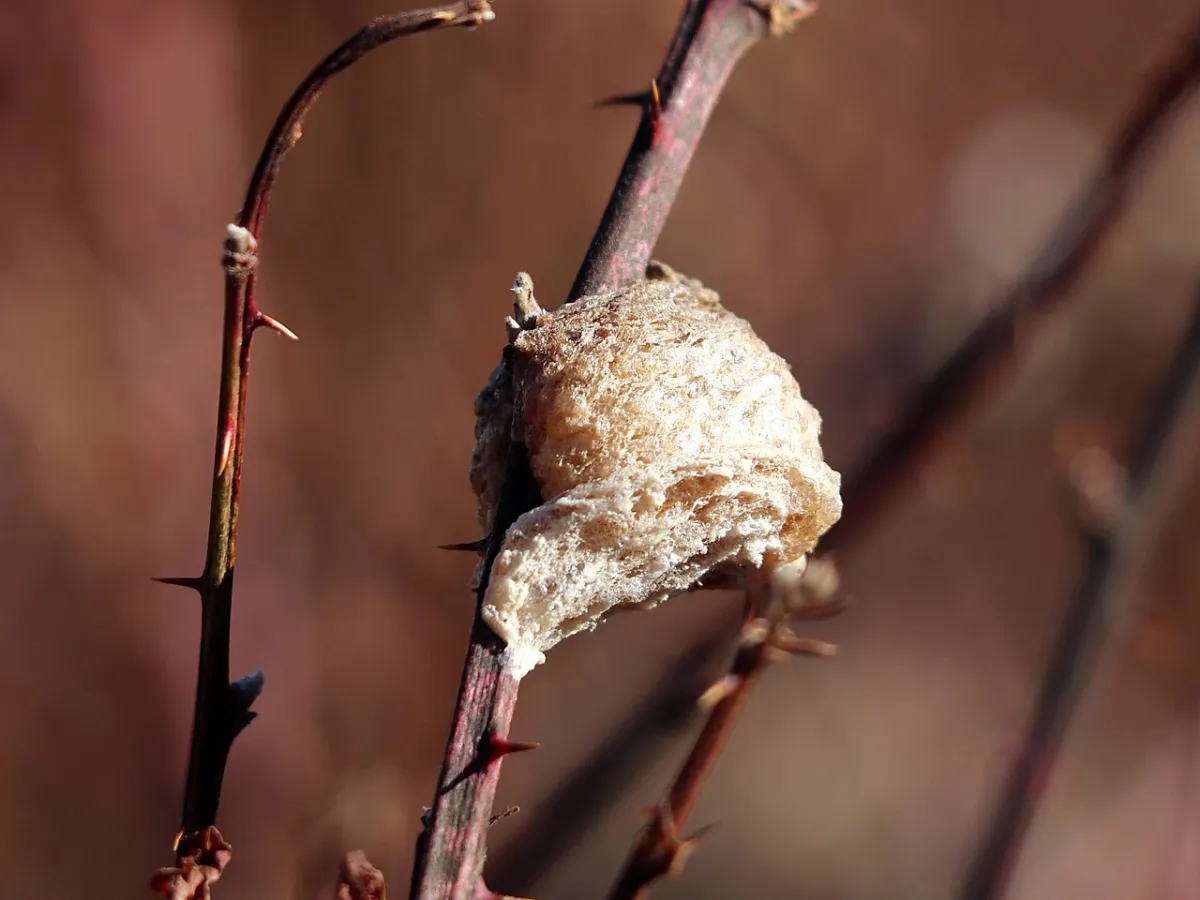
A mantis egg case is a brown, frothy-looking mass on a twig; Tennessee adds that it is crispy. Penn State says it hatches indoors after several weeks into dozens of baby mantises, and Purdue says one case can hold hundreds. They are cannibalistic and eat each other when nothing else is available. Four extension sources give the same fix before the tree comes in: cut off the branch and put it outdoors in a shrub or tree. Penn State and Tennessee add that it will hatch outdoors when there is food. Penn State says the popular belief that mantises are protected by law is a misconception. Spotted lanternfly egg masses are the exception to that fix. Purdue says to bag and save them and send in a report, and Penn State says to report ones that hatch indoors to your state agricultural agency if you live outside the quarantine zone.
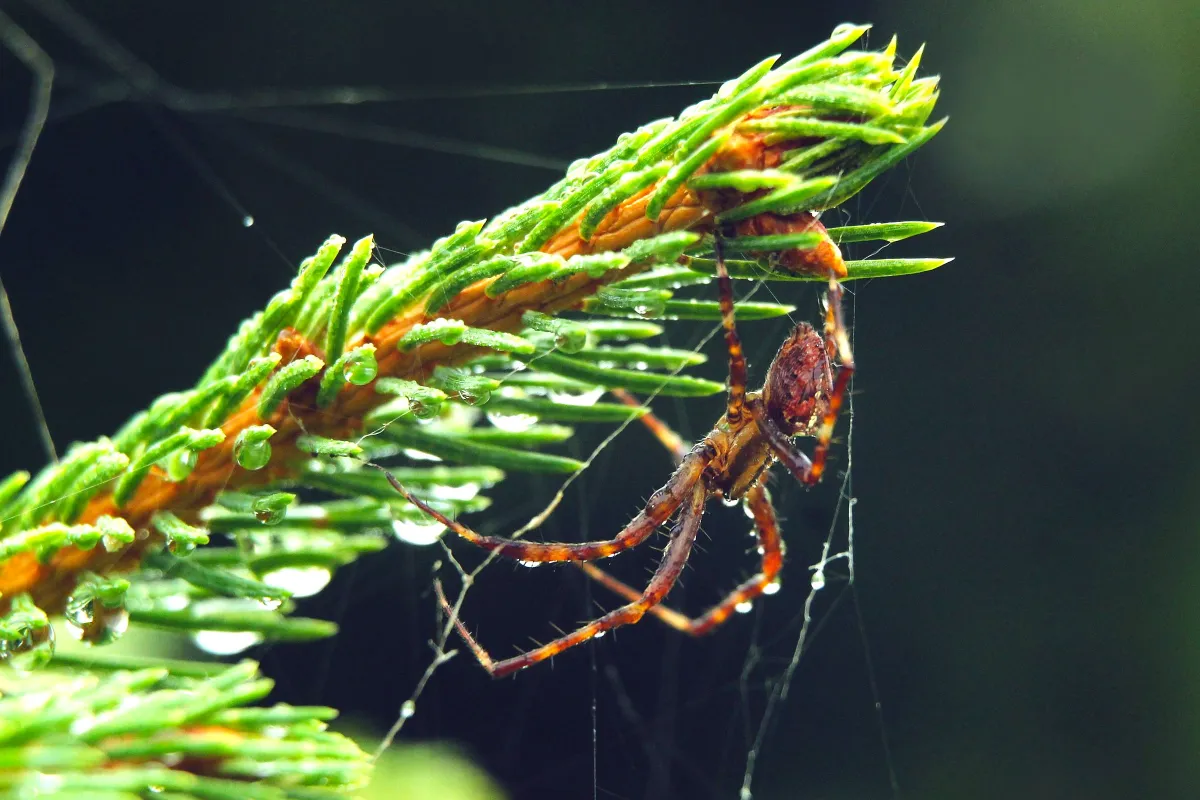
Spiders on a tree are insect predators and not dangerous to people or pets, and Penn State says they die in a short time indoors. NC State says spider mites can leave small red stains on furnishings, cannot live in your house, and do not bite. For spiders that already live in your home, see house spiders in fall.
Penn State says emerging bark beetles cannot colonize the dry wood in a home and bark lice cannot bite people.
Check and shake the tree before it comes inside
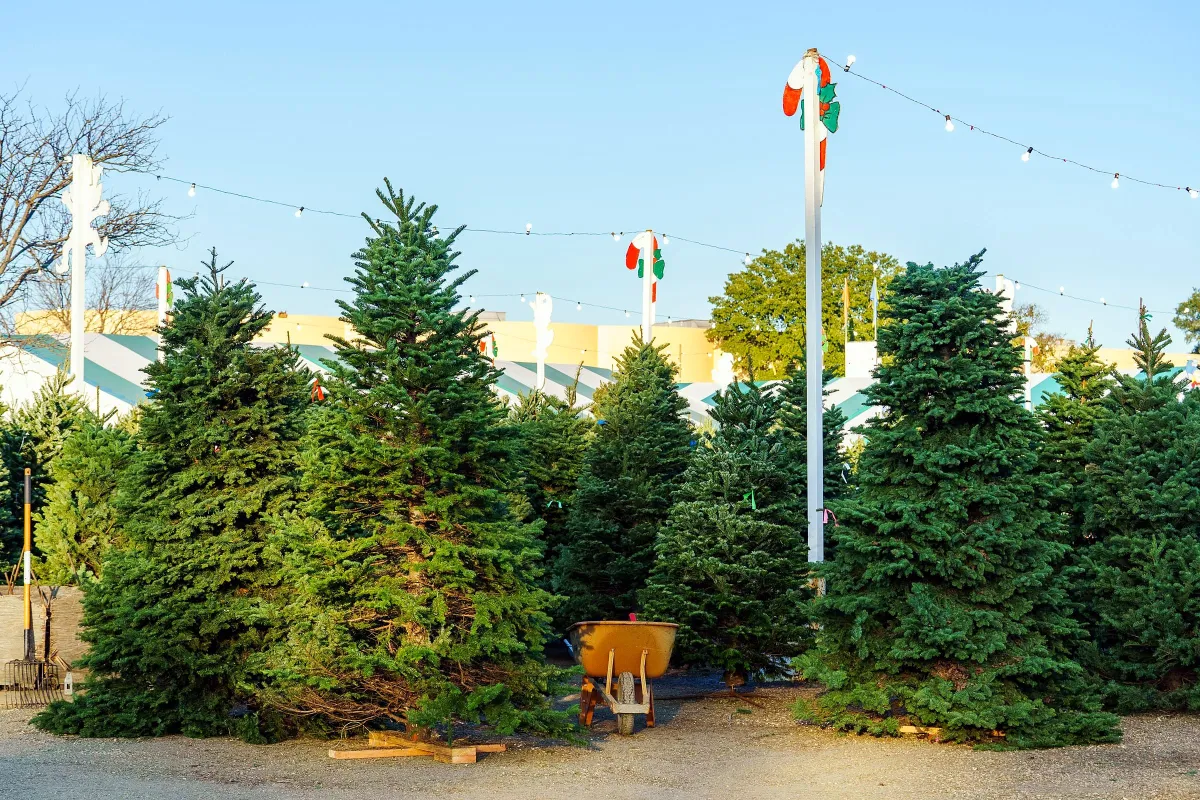
Penn State says mechanical shakers at some retail lots, or vigorous shaking, can dislodge some arthropods, particularly adults. Illinois says to lay the tree on its side and look up from the cut end for egg masses. It also says to remove bird nests, which can harbor mites and lice.
Rinsing is disputed. NC State Extension suggests a garden-hose wash and letting the tree dry before it comes in, NC State Entomology calls hosing it "not a bad idea," and SUNY Upstate agrees, aimed at mold. Jordal says not to flush the tree, because that will damage it.
If the tree is crawling with pests, take it back. Illinois says you can ask the supplier for a refund or exchange, and Tennessee says to return it and request another if you cannot remove soft-bodied pests.
If bugs show up after the tree is up
Penn State says to leave insects on the tree until the tree leaves the house and to vacuum any that collect on ceilings, walls or windows. Warmth wakes them, and some are drawn to windows by day and lamps at night; firewood pests describes the same wake-up for logs.
NC State says to use a vacuum attachment without a beater bar and not to worry about the ornaments. Tennessee says to vacuum aphids carefully so you do not crush and stain surfaces, and NC State Entomology notes that vacuuming also squashes them and may remove some needles.
Decide whether to spray: the experts split
Penn State, Illinois, Iowa State and Purdue advise against spraying a tree, on different grounds, and Tennessee advises against spraying one with electrical lights. Penn State says control should be limited to non-chemical means, and that aerosol insect sprays are often flammable and usually not labeled for indoor use. Illinois says they should never be used on a Christmas tree, Iowa State calls spraying not necessary or recommended, and Purdue says it is unnecessary after harvest and that some pesticides are flammable. Tennessee says not to apply insecticides to a tree with electrical lights, because many aerosols are flammable and water-based products could cause "electrical shorts or worse."
Two sources allow a spray under conditions. NCTA, the trade group for Christmas tree growers, says household insect sprays specifically labeled for indoor use on ornamental plants and evergreens may be used if necessary after vacuuming, following label directions, with all tree lights turned off and unplugged first. The 2015 NC State Extension page says the least toxic insecticide is insecticidal soap, and that aerosol home insecticides are another choice, set off near the tree after the lights are unplugged because the containers are flammable. A 2020 NC State Entomology post advises against a typical insecticide but says soap is effective on contact, does not pose a significant poison issue for people, kids or pets, and leaves no lasting protection.
The labels do not settle it. The Safer insecticidal soap concentrate label (an EPA copy dated July 22, 2015) says "Flammable. Keep away from heat and open flame." The Bonide ready-to-use soap label (2018) lists houseplants and ornamental and shade trees, such as evergreens, among the plants it may be used on. The Raid Ant & Roach 26 aerosol label (2014) is marked flammable and says not to apply the product to plants. None of the three label copies mentions a cut Christmas tree. Labels change, so read the one on your can.
Safety note: Penn State says aerosol insect sprays are often flammable, and Illinois says never to use them on a Christmas tree. NCTA says a spray may be used if necessary after vacuuming, if it is a product specifically labeled for indoor use on ornamental plants and evergreens, with all tree lights turned off and unplugged first and the label directions followed. None of the three labels read for this guide names a cut Christmas tree, even though the Bonide label lists evergreens, and the Raid label says not to apply the product to plants, so this guide suggests treating a label that does not cover a cut tree as a reason not to spray. If you spray anyway, unplug the tree lights first, keep the room ventilated (the Raid label says "Use only in well-ventilated areas") and keep the spray away from heat and open flame. The Raid label says to keep people and pets out of the area during application and to stay outside the treated area until the spray has dried. Tennessee warns that water-based products on a tree with lights could cause electrical shorts. NC State Entomology says an aerosol sprayed on a lit tree might ignite on heated lights (old-style incandescent bulbs), and lists children touching the tree and cats chewing needles as reasons not to spray, so this guide suggests keeping children and pets away from the tree until the spray has dried. If anyone swallows the spray or gets it on skin, call your poison center at 1-800-222-1222 and have the can or label with you; the Raid label says to call a poison control center or doctor immediately if swallowed.
NFPA's tree guidance covers heat and water rather than insecticide. It says to keep a tree at least 3 feet from heat sources such as fireplaces and radiators and to add water daily, because a dried-out tree burns much more quickly than a well-watered one. It counts an annual average of 155 home structure fires caused by Christmas trees from 2018 to 2022. Stand water is a risk too: ASPCA calls it a breeding ground for bacteria, and Poison Control says drinking a contaminated solution from the stand could cause nausea, vomiting and diarrhea in children and pets. If someone drinks from the stand, call the same poison center number.
Sneezing but no bugs: mold and resin
If the sneezing starts when the tree comes in, bugs may not be the cause. SUNY Upstate Medical University says a 2011 letter in Annals of Allergy, Asthma & Immunology found 53 types of mold among 28 tree samples, and that the four most prevalent are known allergens. Lead researcher Lawrence Kurlandsky said people without obvious allergies are probably not going to be bothered.
A 1970 study in the Canadian Medical Association Journal found conifer allergies in 7% of 1,657 allergic patients. Mold scraped from bark failed to become airborne, and its summary says the oleoresins of the tree balsam are thought to be the most likely cause. The 2011 report suspects mold; the 1970 study suspects resin.
Sources and how we checked
We read university extension pages and trade-group and fire-safety pages, along with three product labels and a Norwegian university news feature, all viewed on October 26, 2026. The Safer Brand page was read in an archived copy because the live page blocked automated access. The three labels are EPA or university copies dated 2014 to 2018, not photos of current cans. We found no earlier source for the 25,000 figure, and no NFPA or U.S. Fire Administration page that addresses spraying insecticide on a tree; the CPSC page could not be opened. Several pages are old, so each date is given below.
- Penn State Extension: Insects on Real Christmas Trees (updated January 19, 2026).
- Iowa State University Extension: tiny bugs on my Christmas tree (December 6, 2024) and Insects on Christmas Trees (2016).
- NC State Extension: Post-Harvest Pests on Christmas Trees (February 10, 2015) and Rogues' Gallery of Post-Harvest Pests (January 28, 2015).
- NC State Entomology: Cinara Aphid - Early Christmas Visitors (November 26, 2020).
- University of Illinois Extension: Christmas Tree Hitchikers (December 6, 2019).
- Purdue Landscape Report: Holiday decoration and firewood hitchhikers (not dated).
- University of Tennessee Institute of Agriculture: E&PP Info #841 (December 11, 2023).
- University of Bergen: What lives in my Christmas tree? (December 17, 2012). HealthDay: Boughs of Christmas Trees Hold Many Insects (December 23, 2012). FOX 13 Tampa Bay: 25,000 bugs could be living in your Christmas tree (November 27, 2017).
- Safer Brand: Common Christmas Tree Bugs and How to Get Rid of Them (archived June 14, 2026). Labels: Safer Insect Killing Soap Concentrate II (July 22, 2015), Bonide Insecticidal Soap (2018), Raid Ant & Roach 26 (August 21, 2014).
- National Christmas Tree Association: FAQ (2019).
- NFPA: Preventing Home Christmas Tree Fires (updated February 23, 2026).
- ASPCA: Holiday Safety Tips. Poison Control: Christmas tree preservatives (neither dated).
- SUNY Upstate Medical University: Christmas trees may harbor unwanted presence, study says (December 16, 2011) and Christmas tree molds may prompt allergies (December 9, 2011). Annals of Allergy, Asthma & Immunology: Identification of mold on seasonal indoor coniferous trees (June 2011). Canadian Medical Association Journal: Wyse and Malloch (December 5, 1970).
Updated: October 26, 2026



0comments