

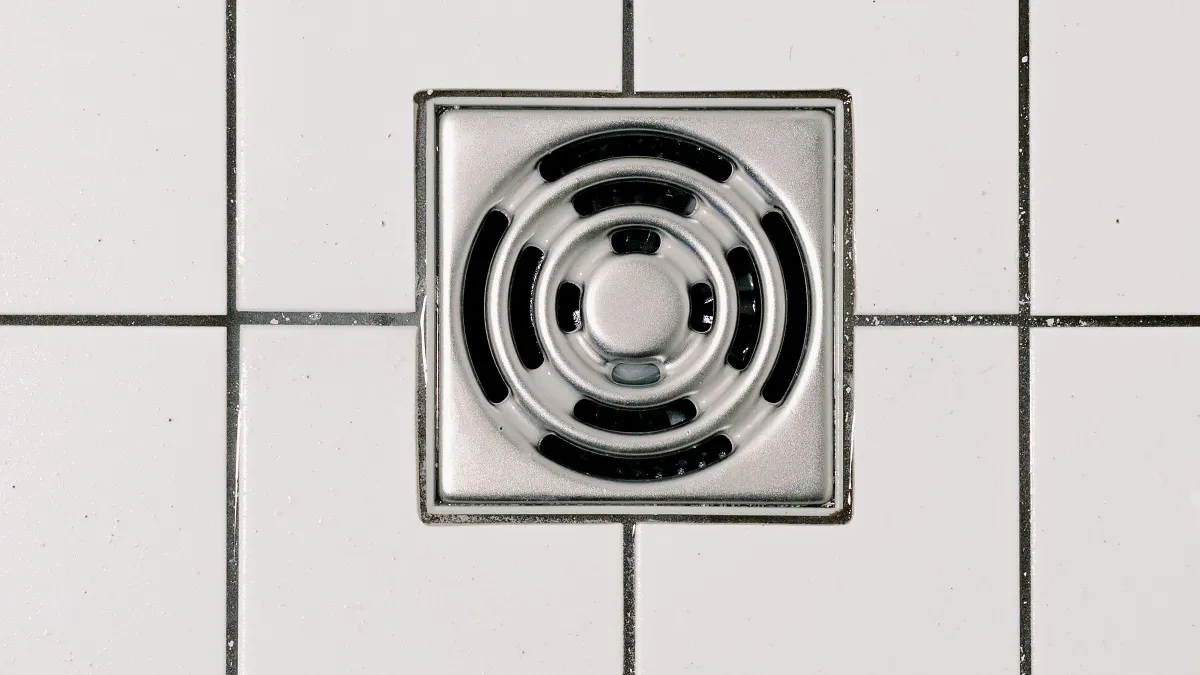
The water reaches your ankles before the tub drains, and it gets slower every week. Last weekend you poured baking soda and vinegar down it. It fizzed, and the water still sat there. A shower drain clogged with hair is common enough that Oatey, a plumbing parts maker, calls hair the number one cause of slow-draining bathtubs.
Here is what works on a hair clog in the order to try it, plus what the labels say about products that dissolve hair.
How to unclog a shower drain clogged with hair: pull it out first
Before pouring anything, look at the drain cover. The fix that needs no chemicals is to take the cover or stopper off and pull the hair out with a gloved hand or a barbed plastic strip, then plunge or snake only if water still stands.
If you already poured a chemical drain cleaner and water still stands, skip the steps below. Lowe's says not to use a plunger or other drain-opening tools afterward, or remove a trap, because you could come into contact with chemicals still in the water. If the cleaner doesn't open the drain, Lowe's says to call a plumber.
Home Depot says the problem may be a soapy clump of tangled hair that you can pull out with your fingers. Liquid-Plumr says hair is the most likely culprit, especially if someone in the household has long hair. The order:
- Put on gloves, as Liquid-Plumr advises for removing stoppers or snaking a drain.
- Take off the cover or stopper (next section).
- Pull out the hair you can see, then fish deeper with a barbed strip.
- If water still stands, plunge with the tub overflow blocked.
- If plunging fails, run a hand drain snake. If you still can't clear the clog, Lowe's says to call a plumber.
Get the cover or stopper off first
Liquid-Plumr says all bathtub drains are different, so follow the maker's instructions. The common types:
| Drain type | How it comes off | Per |
|---|---|---|
| Screwed-down shower grate | Take out the screws, then pry up | Lowe's |
| Snap-in or pry-off cover | Pry up with a flat screwdriver | Danco, Liquid-Plumr |
| Lift-and-turn tub stopper | Pull fully up, turn counterclockwise | Delta |
| Toe-tap tub stopper | Fully up, counterclockwise; cap may come first | Delta |
| Trip lever on overflow plate | Remove the overflow cover and linkage | UF/IFAS |
Delta's directions are for its own stoppers, and other brands may differ. Lowe's says to keep the grate screws from falling down the drain. If a toe-tap cap unscrews first, Delta says a nut is exposed that you can use to unscrew the plunger assembly.
If a stopper spins without unscrewing, Delta says the threads are stripped, so pull upward while you unscrew. If that fails, the bath waste flange has to come off the drain pipe from under the tub. This guide suggests a plumber for that.
A trip lever tub hides hair behind the overflow plate. University of Florida IFAS Extension says the cover has a rod and coil attached, and to clean the coils because they collect hair, soap scum, and body oils.
Pull the hair out by hand or with a barbed strip
For hair beyond your fingers, Oatey says inexpensive plastic drain snakes are sold at most hardware stores. Farm Show describes the Zip-It as a thin plastic strip with barbs that you push down a clogged drain and pull back out.
BrassCraft's 2014 announcement gave the Zip-It a length of 20 inches with 18 of them barbed. It called the tool disposable. Green Gobbler sells a 22-inch hair grabber that it says can be rinsed off and reused multiple times.
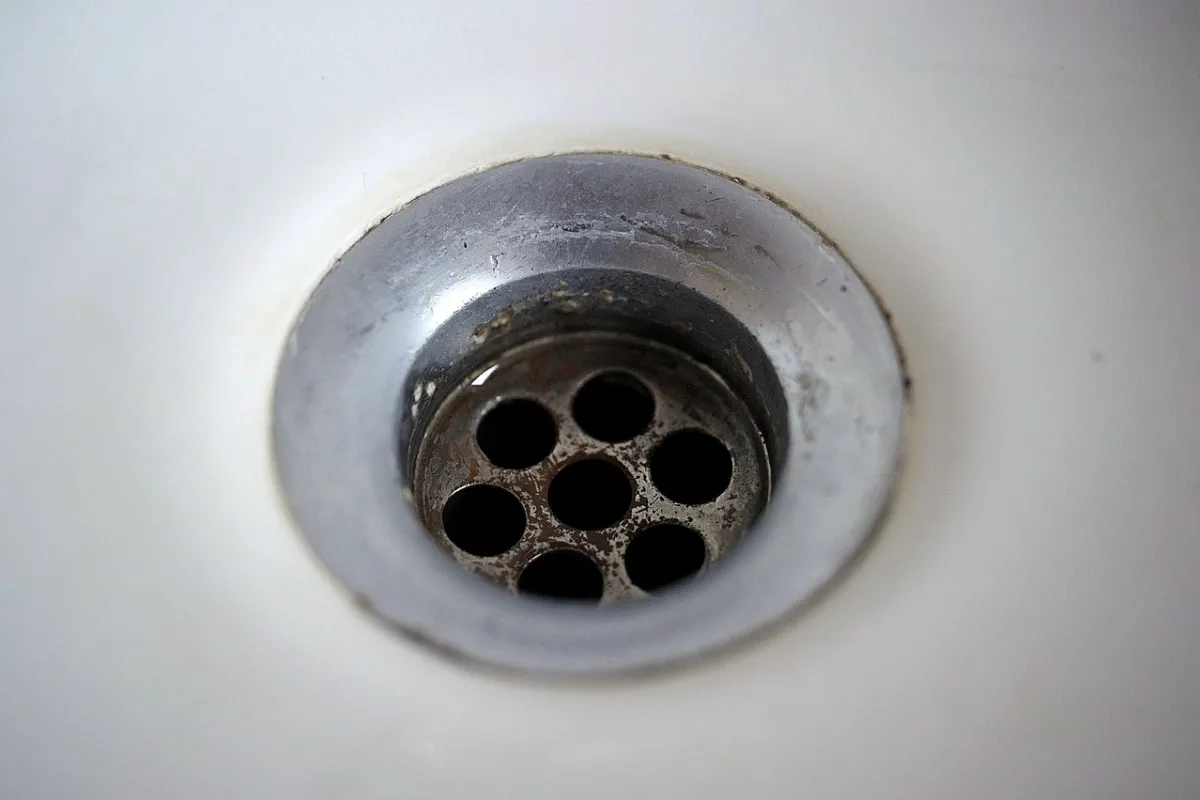
A fixed grate like the one above may not have to come out. FlexiSnake says its 18-inch Drain Weasel slides past most drain pop-up stoppers and grates. Its directions say to rotate the handle 360 degrees several times to tangle the hair, pull it out, then repeat at different depths.
Pull slowly, as Green Gobbler's directions say. Oatey warns that a drain snake may not clear the whole clog and could push the problem further down the pipe.
Still standing water? Plunge with the overflow blocked
Use a cup plunger. Lowe's says a plunger with a flat-bottomed cup works well for sinks, tubs, and showers; Oatey says flange plungers are designed for toilets.
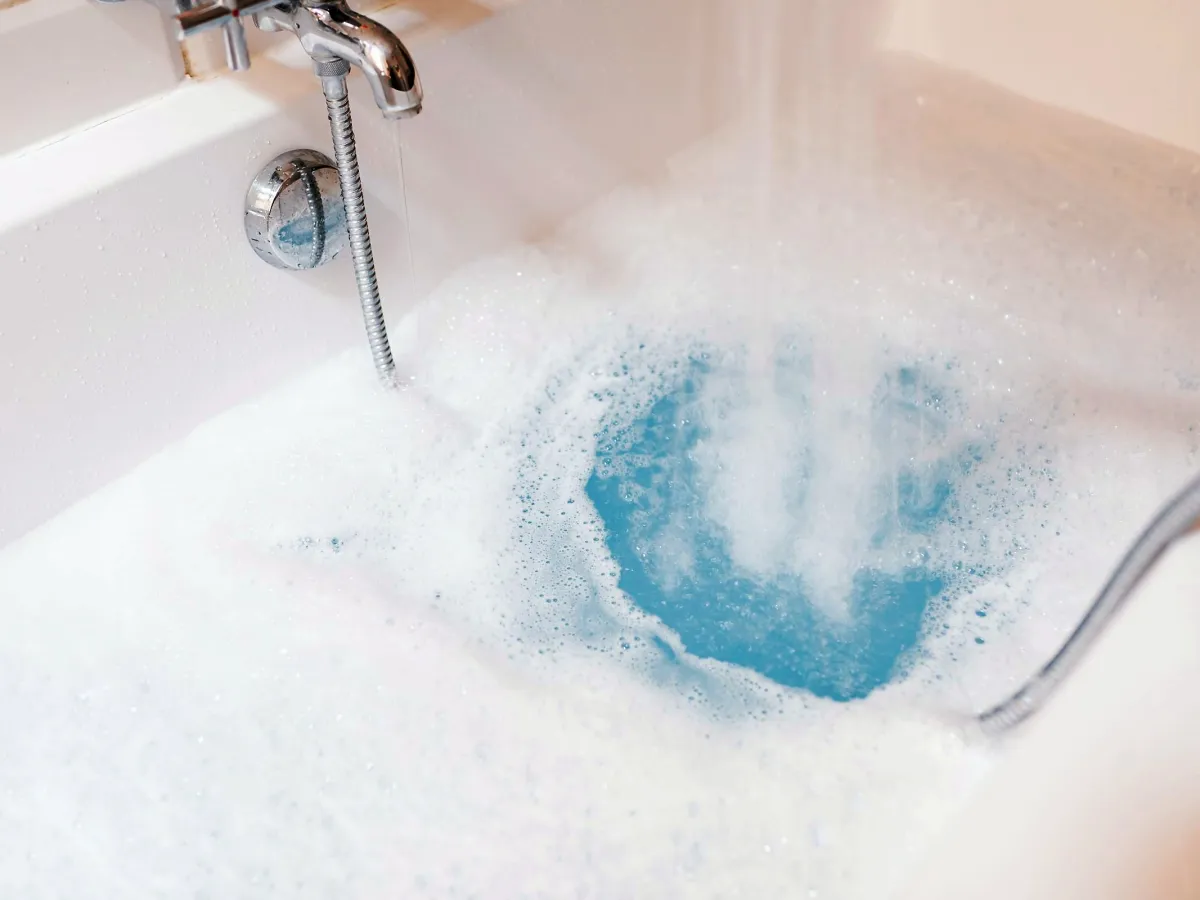
In a tub, UF/IFAS says to remove the stopper and cover the overflow drain with a wet washcloth or rag. Lowe's says blocking it focuses the plunger's force toward the blockage.
- Water depth: about 2 inches (UF/IFAS) or 2 to 3 inches (Lowe's). Oatey says the water should cover the plunger's bell.
- Seal: Lowe's and Home Depot suggest petroleum jelly on the rim of the cup.
- How long: UF/IFAS says to push down and jerk back up 20 to 30 times. Lowe's says to work the handle for 15 to 30 seconds, then see if the water drains.
In a shower stall, Home Depot says to run enough water to cover the lip of the cup.
When a hand drain snake makes sense
A hand drain snake (a coiled cable you crank by hand) reaches further than a plunger. On a shower drain, Lowe's says to take out the strainer and feed the cable in. On a tub, you remove the overflow plate and feed it into the overflow line.
Push the cable to the clog, then turn the handle clockwise to dig the tip in (Lowe's) or hook the clog (Home Depot). RIDGID's sheet for its KWIK-SPIN+ hand spinner, rated for drain lines up to 1½ inches across, says not to force the cable. It calls for safety glasses and leather gloves, because drains may contain hazardous chemicals or bacteria.
Oatey says to call a professional if the job gets too complicated. The guide to cheap plumbing fixes vs service calls covers where that line falls.
What baking soda, vinegar, and boiling water can and can't do
Poison Control says baking soda and vinegar form carbon dioxide gas, but drains are not airtight, so the gas generally does not build up enough pressure to push out the clog. Lowe's says the mix may not work as well on tougher clogs like hair, and Oatey says it may open a blockage only partially. Iowa State Extension says the mix can break down a clog of potato peels in a garbage disposal. The baking soda drain myth guide has the full breakdown.
On boiling water, sources disagree:
- EPA's septic care page says to avoid chemical drain openers and use boiling water or a drain snake instead. It is written for homes on septic systems.
- Home Depot says boiling water can help in metal pipes but warns: "Do not pour boiling water down PVC pipes, which can be damaged by the heat."
- Charlotte Pipe rates its PVC drain pipe for operating temperatures that will not exceed 140°F.
- Drano's Max Gel directions say to flush with hot, but not boiling, water after the gel.
If you don't know your pipe material, this guide suggests following Home Depot's warning.
What does dissolve hair, and why it's the last resort
Strong alkali can, given enough time. A 1990 hair-straightening patent (US 4,898,726) says prolonged exposure to strong alkali above pH 12 can weaken, break, and even dissolve the hair; a 2006 relaxer patent says the same. NIH's PubChem lists a pH of 8.3 for a baking soda solution. The federal ATSDR says sodium hydroxide (lye) is commonly present in commercial drain cleaners.
| Hair-clog product | Maker lists | pH |
|---|---|---|
| Drano Bathroom Gel | Sodium hydroxide, sodium hypochlorite, sodium silicate | Not on product page |
| Liquid-Plumr Hair Clog Eliminator | Sodium hydroxide 5–10%, sodium hypochlorite 3–7% | About 13 (2021 SDS) |
| Green Gobbler Targeted Hair Clog Remover | Confidential caustic replacement, 10–15% | Above 13.29 (2024 SDS) |
Drano says its gel starts dissolving hair on contact; Liquid-Plumr says its formula destroys hairballs within 15 minutes. Green Gobbler markets its product as bleach-free and non-corrosive, yet its 2024 safety data sheet (SDS) carries the signal word "Danger" and says it causes serious eye damage.
Sources split on pipes. Drano says its Bathroom Gel is safe on metal and plastic pipes, and Liquid-Plumr calls its hair product safe for plastic pipes and septic systems. Home Depot says chemical drain products may damage pipes, and UF/IFAS adds fixture finishes. For septic homes, EPA says to avoid chemical drain openers.
Enzyme cleaners work differently: Poison Control says enzymatic drain cleaners contain bacteria and enzymes that dissolve clogs. Hair is a hard target for them. A 1985 US patent for a hair drain cleaner (US 4,540,506, Genex) says hair proteins are about 14% cystine, which cross-links them through disulfide bonds into a structure highly resistant to protein-digesting enzymes alone. A 2026 review in Frontiers in Microbiology says keratin's disulfide bonds resist common proteases.
A distributor's sheet for Bio-Clean says its bacteria and enzymes digest hair and break down clogging material within an hour. The 1985 patent reports that hair soaked in two commercial protease mixtures for 24 hours at room temperature was not visibly degraded.
Safety note: Home Depot says to read and follow the directions on the label. Poison Control says to ventilate small spaces such as bathrooms by opening a window or door and running an exhaust fan. Sodium hydroxide is very corrosive and can cause severe burns in all tissues it touches (ATSDR). Wear goggles and rubber gloves, and pour drain cleaner carefully and close to the drain. Poison Control says injury can occur when a drain cleaner splashes back, which can happen if it is poured from too high up or too much is poured into a completely blocked drain. UF/IFAS says DO NOT look or hold your head over the drain.
Never use a plunger during or after use of a drain gel: Drano says the product may still be present if the drain is not clear, and Liquid-Plumr says plunging may cause it to splash onto you. Lowe's says not to use other drain-opening tools or remove a trap or cleanout plug either, because you could come into contact with chemicals still in the water. If the drain cleaner doesn't open the drain, Lowe's says to contact a professional plumber.
If one drain cleaner does not clear the clog, do not try a second type; UF/IFAS warns that one brand on top of another may produce DEADLY fumes. The Drano and Liquid-Plumr products above list sodium hypochlorite, which SC Johnson says is the basic ingredient in laundry bleach. Poison Control says mixing bleach with ammonia or acid can produce toxic fumes. Liquid-Plumr says not to use its product with ammonia, toilet bowl cleaners, or other brands' clog removers, and its SDS says such mixing can release hazardous gases such as chlorine. Iowa State Extension says not to use baking soda and vinegar after any commercial drain opener has been used or is still in the standing water. Drano says that if gases are released, leave the area immediately and ventilate if possible.
Poison Control also says to keep drain cleaner containers tightly closed and away from sight and reach of children. Drano's label says to keep its gel out of reach of children and pets.
If drain cleaner gets on skin or in the eyes, MedlinePlus says to flush with lots of water for at least 15 minutes. Call Poison Help at 1-800-222-1222.
Signs the clog is past the shower drain
If the tub stays slow after the hair is out, check other fixtures. EPA lists these septic system warning signs:
- Bathtubs, showers, and sinks draining very slowly
- Gurgling sounds in the plumbing system
- Water and sewage from toilets, drains, and sinks backing up into the home's plumbing
Purdue Extension, also writing for septic homes, says the most common reason for a sewage backup is a plugged sewer line between the house and the tank. On city sewer, Seattle Public Utilities tells its customers to call a rooter service for a clog in their own sewer pipe. That is plumber work.
Keep hair out of the drain next time
Pick a hair catcher sized to your drain. OXO says its Hair Catch fits bath drains 1.25 to 1.8 inches across. TubShroom fits 1.5-inch and 1.75-inch tub drains, and its ShowerShroom is made for 2-inch shower drains.

Home Depot and Oatey say to empty the catcher regularly. Drano suggests brushing your hair before showering, and UF/IFAS says to clean the hair out of the drain after washing your head. For a routine, see the drain clog prevention habit guide.
Quick verdict on the common fixes
How the three common claims hold up:
| Claim | Verdict | Why |
|---|---|---|
| Pulling hair near the drain works | REAL | Home Depot, makers' directions |
| Baking soda fizz pushes the clog out | MYTH | Drains aren't airtight (Poison Control) |
| Plunging after pouring a drain gel | RISKY | Drano's label, Liquid-Plumr's SDS say no |
Start with gloves and a screwdriver, and save the chemical for last.
Sources and how we checked
We based the steps on manufacturers' instructions, two retailers' how-to pages, and a University of Florida IFAS Extension fact sheet. The safety advice comes from product labels and safety data sheets, the same retailers, Poison Control, federal agency pages, and university extension pages; the chemistry of hair comes from three patents and one review. All were viewed on October 24, 2026. Some sources are old; the list gives each date. Two retailer pages blocked direct access, so we read archived copies. We left out retail prices because this guide does not recommend a product, and we found no federal or university source that tested any of these fixes on a hair clog.
- University of Florida IFAS Extension: Making Simple Repairs: Clogged Drains (PDF, archived copy, revised December 2005).
- EPA: How to Care for Your Septic System (updated August 17, 2026), Resolving Septic System Malfunctions (updated March 11, 2026).
- Purdue Extension: What is an on-site sewage (septic) system failure? (PDF, January 2019).
- Seattle Public Utilities: Troubleshooting Your Sewer Problem (PDF, not dated).
- Iowa State University Extension AnswerLine: Disposal Clog from Potato Peels (May 20, 2019, updated February 2025).
- Poison Control (National Capital Poison Center): What's in drain cleaner (not dated), Top tips for a safe spring cleaning (updated February 28, 2024).
- MedlinePlus: Drainpipe cleaners (reviewed October 14, 2025).
- ATSDR: ToxFAQs: Sodium Hydroxide (PDF, April 2002).
- NIH PubChem: Sodium bicarbonate (not dated).
- Frontiers in Microbiology (via PubMed Central): Keratinases: microbial sources, mechanisms, and industrial applications in waste valorization (February 23, 2026).
- US patents: US 4,540,506 (1985), US 4,898,726 (1990), US 7,118,736 (2006).
- Charlotte Pipe: PVC Schedule 40 DWV submittal (PDF, March 17, 2022).
- Delta Faucet: How do I remove my tub drain stopper for cleaning? (not dated). Moen: Tub and Shower Drains (not dated).
- Oatey: How to Fix a Slow Draining Bathtub (December 19, 2024), 14 Must-Have Plumbing Tools for Homeowners (July 2022).
- Lowe's: Unclog a Sink, Shower or Tub Drain (updated March 24, 2025; read from a November 2025 archived copy).
- The Home Depot: How to Unclog a Shower Drain (September 25, 2025; read from a June 2026 archived copy).
- RIDGID: KWIK-SPIN+ Hand Spinner instructions (2017).
- Tools: BrassCraft Zip-It announcement (April 4, 2014), Farm Show: New Way To Unclog Drains (2001), Green Gobbler Hair Grabber, Drain Weasel directions (maker's text on a retailer page), drainweasel.com (all viewed October 24, 2026).
- Liquid-Plumr: How to Unclog a Bathtub (not dated), Pro-Strength Hair Clog Eliminator (not dated), SDS (January 4, 2021).
- Drano (SC Johnson): Bathroom Gel, Max Gel Clog Remover, 5 Ways to Prevent Hair from Clogging Shower Drains (not dated); SC Johnson: What's Inside Drano Max Gel (not dated).
- Green Gobbler: Targeted Hair Clog Remover (not dated), SDS (September 4, 2024).
- Bio-Clean: product sheet from distributor Fresh Water Systems (PDF, not dated).
- Hair catchers: OXO Good Grips Hair Catch, TubShroom FAQ (not dated), Danco Square Shower Hair Catcher instructions (PDF, 2022).
Updated: October 26, 2026





0comments