

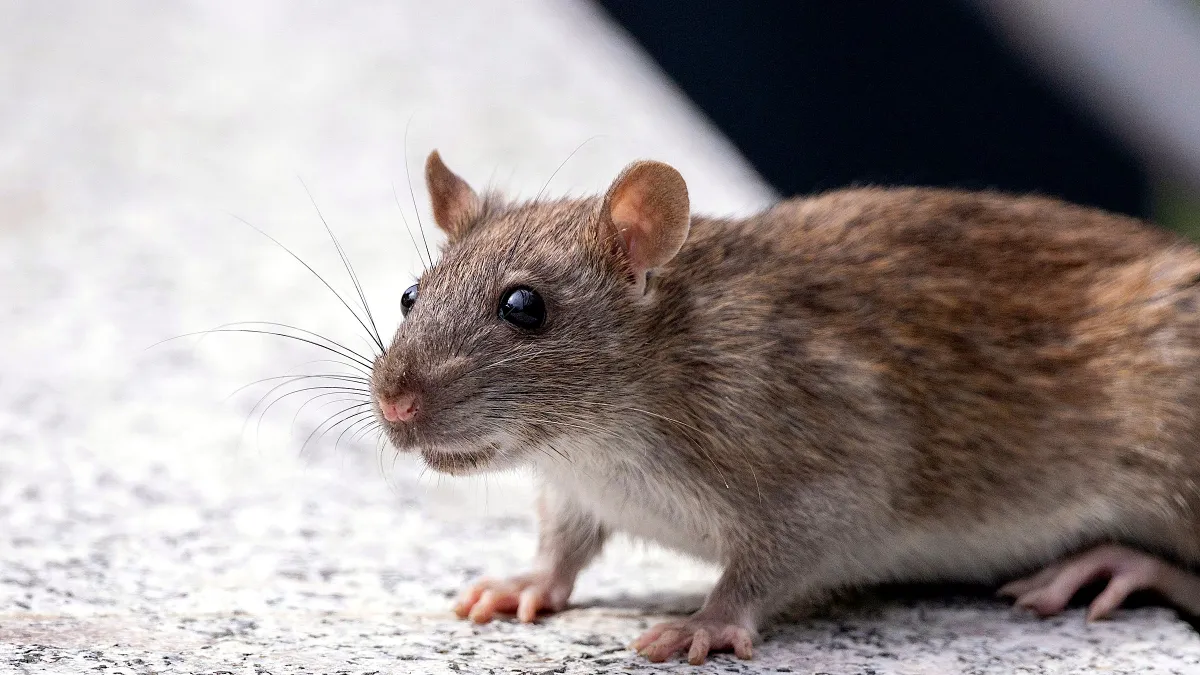
You pull the trash can out from under the kitchen sink and find a scatter of small dark pellets behind it. Before you buy traps, settle the question of mouse droppings vs rat droppings, because the answer decides which traps you need and where they go.
A ruler and a flashlight answer most of it.
Mouse droppings vs rat droppings: the ruler test
Hold a ruler next to the pellets without touching them. House mouse droppings average 1/8 to 1/4 inch long with one or both ends narrowing to a point, according to Nebraska Extension, while rat droppings are roughly 1/2 to 3/4 inch long and dark when fresh, according to NC State Extension.
The National Park Service (NPS) says mouse droppings look like small dark grains of rice. Texas A&M AgriLife Extension says rat droppings are about the size of a raisin.
How the two compare:
| Sign | House mouse | Rat |
|---|---|---|
| Length | 1/8–1/4 inch | 1/2–3/4 inch |
| Ends | One or both pointed | Blunt (Norway) or pointed (roof) |
| Pellets per day | 50–75 | 30–50 or 40–50 |
| How they lie | Scattered, not in piles | Small clumps (Norway); scattered (roof) |
| Looks like | A grain of rice | A raisin |
The mouse count comes from Nebraska Extension. For rats, NC State gives 30 to 50 a day and the Internet Center for Wildlife Damage Management (ICWDM) gives 40 to 50. ICWDM says Norway rat droppings usually are clumped in small groups, while Victor's guide lists roof rat droppings as scattered; Nebraska says mouse droppings usually do not collect in piles.
Color is a weak clue. Nebraska says mouse droppings are usually black but vary with the mouse's diet, and NC State says rats that eat colorful bait can leave pellets in that hue.
Norway rat or roof rat: look at the ends
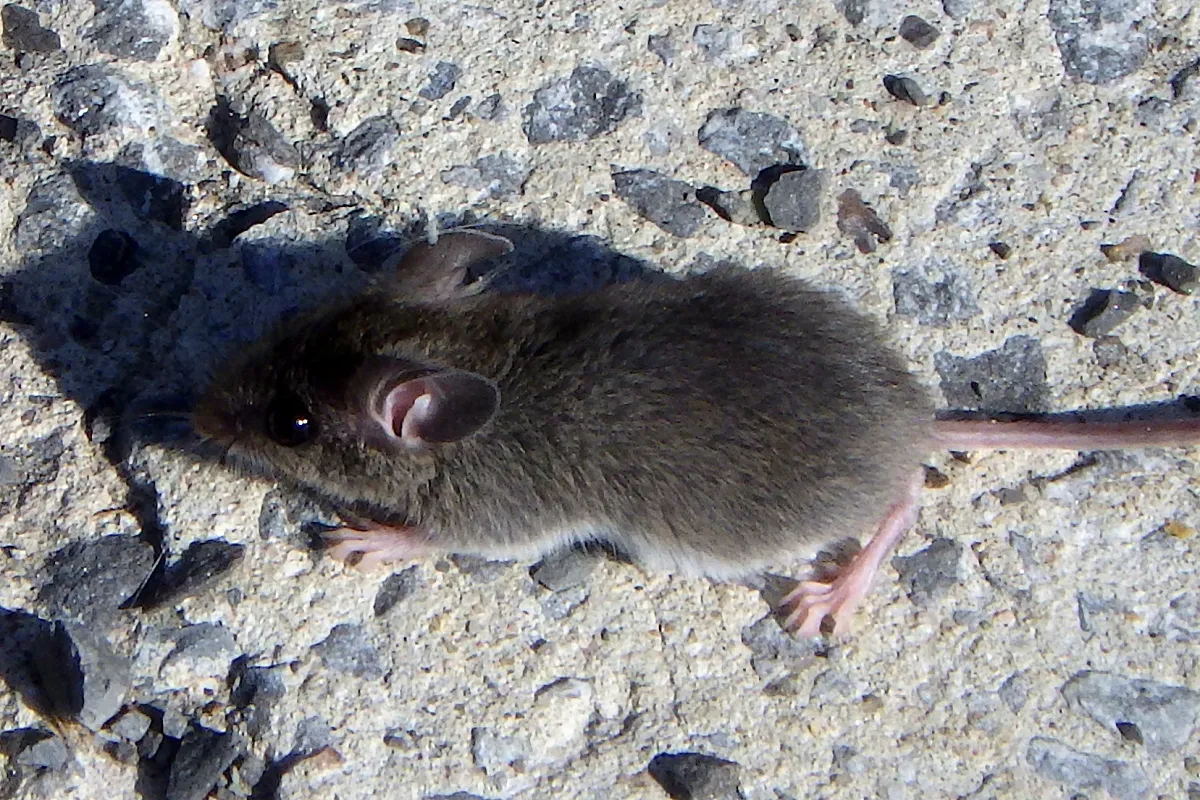
If the pellets are rat-sized, the ends tell you which rat. ICWDM says Norway rat scat may be as large as 3/4 inch long and 1/4 inch in diameter with blunt ends; it says roof rat droppings are about 1/2 inch long with pointed ends. UF/IFAS Extension calls Norway rat droppings capsule-shaped and roof rat droppings spindle-shaped.
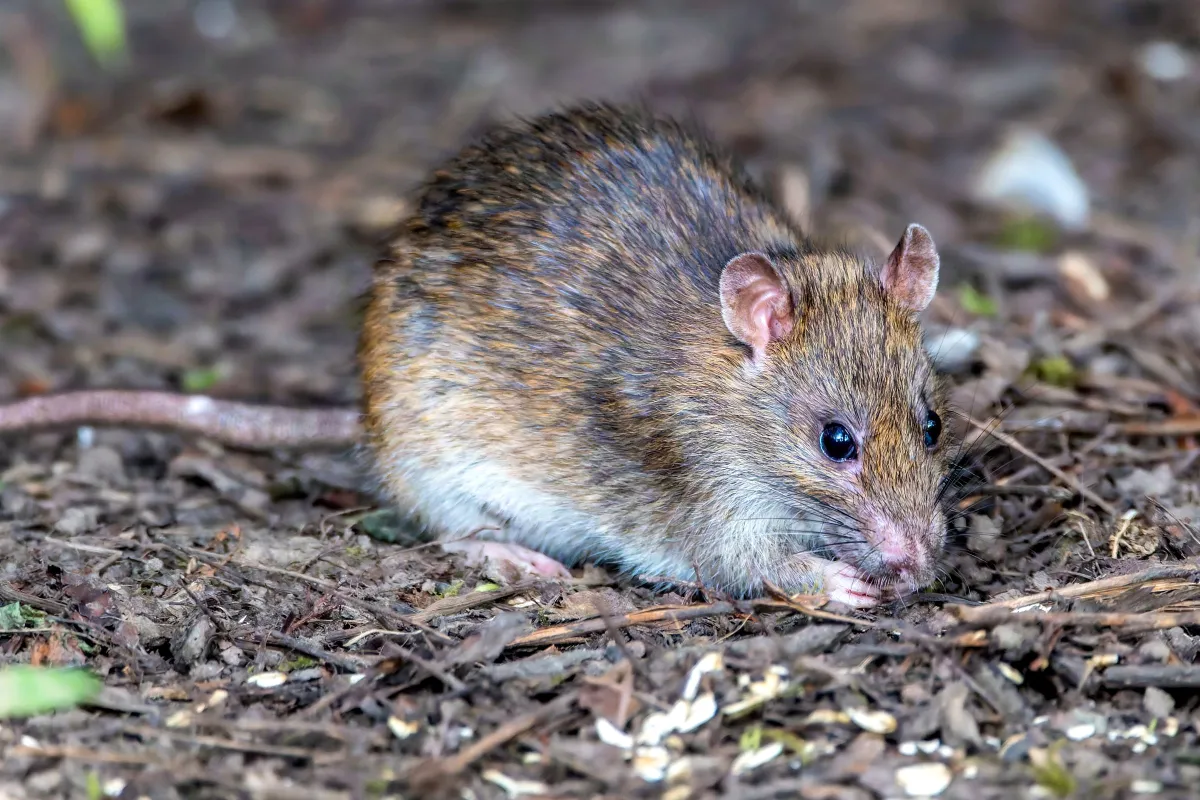
UC IPM says that when both species share a building, Norway rats typically occur in the basement and ground floors, and roof rats occupy the upper floors. ICWDM adds that roof rat droppings show up less on floors, because roof rats may live between floors or above false ceilings and come down to feed.
Fresh or old droppings: is anything still living there?
UF/IFAS says fresh droppings are black, shiny and puttylike, while old droppings are gray and dusty and will crumble.
On timing, the sources differ. Trap maker Victor says fresh droppings harden and lose their dark color after three days. The Maryland Department of Agriculture's training manual for pest control applicators says they harden after a few hours or days and turn gray and dusty after a few weeks. The same manual warns that old droppings moistened by rain can turn black and shiny and look new.
Judge by eye, not by touch. The Maryland manual has trained applicators crush pellets in their fingers, but CDC says avoiding exposure to rodents and their urine and feces is the best way to prevent hantavirus infection. CDC also says it can be hard to know if rodents are active just by examining droppings. Its test: clean the area safely, and new droppings after cleaning indicate active rodents.
To see where they run, the Maryland manual describes a tracking patch: a paper-thin dusting of talc (unscented baby powder) about 12 by 4 inches, laid in a suspected runway and checked with a flashlight held at an angle. It says not to use flour, which may attract insect pests; ICWDM lists flour or talc as non-toxic tracking dusts. Buy plain powder, not "tracking powder": in the same manual, that term means a rodenticide combined with talc or powdery clay.
What the number of droppings says
The NPS says a single house mouse can produce 50 to 75 pellets a day. NC State gives 30 to 50 for a rat; the Maryland manual says a single rat may produce up to 75 and a mouse up to 100.
The same manual reads the count for you. It says a few fresh pellets suggest a single mouse or rat has been in the area, and large numbers of pellets of varying sizes are a good bet for a breeding population. Mixed sizes can also fool you: the manual says very young rats produce droppings similar in size to those of mature mice.
Things that get mistaken for mouse or rat droppings
- Cockroach droppings. ICWDM says they can look like pepper sprinkled on the floor. They are usually 1/8 to 1/4 inch long, and under a magnifying glass they show distinct longitudinal ridges and squared-off ends. See German vs American cockroaches.
- Bat guano. ICWDM says bat droppings tend to be segmented and turn powdery when crushed, showing shiny bits of insect remains. Mouse and rat droppings tend to be harder and more fibrous. Bat droppings tend to be in piles in the attic below where the bats roost.
- Squirrel droppings. Pests in the Home (eXtension) says they are about 3/8 inch long and 1/8 inch in diameter and can easily be confused with rat droppings. Attic noises too? See squirrels in the attic.
- Deer mouse droppings. The Maryland manual says deer mouse, white-footed mouse, and house mouse pellets look very much alike.
- Vole droppings. UC IPM says they are greenish and about 3/16 inch long, found in runways near the burrows next to fresh grass clippings; with age they turn brown or gray.
- Termite pellets and ant sawdust. UC IPM says drywood termite pellets have six hexagonal sides. Carpenter ant sawdust is fibrous instead.
Smell and urine stains
ICWDM says a characteristic musky odor is a positive indication of mice and can be used to tell them from rats. NC State says a heavy rat infestation can cause a musty smell due to urine.
A UV flashlight can back up what the droppings say. UF/IFAS says rodent urine glows blue-white under ultraviolet light when fresh. ICWDM warns that many other items fluoresce too, such as cleaning products. The NPS says UV lights help confirm mouse activity when there are other signs in the area as well.
Before you clean up
CDC's cleanup steps cover rodent droppings in general, so use them whatever the ruler says. The guide to signs of mice and what to do walks through the full cleanup.
Safety note: CDC says not to vacuum or sweep rodent urine, droppings, or nesting materials, because this can cause tiny droplets containing viruses to get into the air. If you already vacuumed, follow CDC's cleanup guidance. Open all doors and windows for 30 minutes before cleaning, and leave the area during this time. Put on rubber or plastic gloves. Spray the urine and droppings until very wet with an EPA-registered disinfectant (confirm the word "disinfectant" is on the label) or a fresh bleach solution of 1.5 cups of household bleach in 1 gallon of water (1 part bleach to 9 parts water). Let it soak for 5 minutes or according to the disinfectant label, then wipe up with paper towels. Throw the paper towels in a covered garbage can, mop or sponge the area with a disinfectant, and wash your gloved hands with soap and water or a disinfectant before removing the gloves. Wash your hands with soap and warm water after removing the gloves.
Poison Control says to read labels and follow instructions before using bleach, to store bleach up, away, and out of sight of children, and not to mix household chemicals such as bleach and ammonia or bleach and acid. This guide suggests taking children and pets out of the room while it airs out and keeping them away until you finish cleaning.
Nebraska Extension says to seek medical attention if you feel ill or develop a fever within five days of handling mice and their droppings. CDC says hantavirus pulmonary syndrome symptoms usually start 1 to 8 weeks after contact with an infected rodent, so if you get sick later, still tell a healthcare provider about the rodent exposure. ICWDM says not to disturb bat guano unnecessarily; it says guano can grow microorganisms that cause disease in people, such as histoplasmosis. For a heavy rodent infestation, CDC lists extra protective gear: coveralls, rubber boots or shoe covers, gloves, goggles, and a half-mask respirator with a HEPA filter. CDC also says to contact a professional rodent exterminating service if rodents have gotten into heating and cooling ventilation systems.
Quick verdict on the common claims
How the common beliefs hold up against the sources:
| Claim | Verdict | Why |
|---|---|---|
| Length and ends tell which rodent | REAL | Extension sizes agree; young rats differ |
| House mouse droppings are harmless | MYTH | House mice carry several diseases (UC IPM) |
| Sweeping or vacuuming dry droppings | RISKY | Can put virus droplets in the air (CDC) |
Length works for adult rats only (see the young-rat caveat above), and end shape mainly separates Norway rats from roof rats.
UC IPM lists leptospirosis, salmonella and lymphocytic choriomeningitis (LCM) for house mice. For hantavirus, CDC says the most common type in the United States is spread by the deer mouse, and University of Tennessee Extension says house mice do not carry it. Washington State University Extension says mouse droppings may transmit viruses and bacteria whether they are fresh or old. Since deer mouse droppings look like house mouse droppings, this guide suggests treating every pile as a risk. Once you know it is mice, the guide to mouse-proofing a home on a small budget covers sealing the way in.
Sources and how we checked
We based the measurements and look-alikes on university extension publications and federal agency pages, with a Maryland pesticide applicator manual and one trap maker's guide for how droppings age. All were viewed on October 23, 2026. Some sources are old; the list below gives each date. The measurements match the ones in the guide to signs of mice on this site. We left out retail prices because this guide does not recommend a product.
- Nebraska Extension: G1105 Controlling House Mice (revised March 2012).
- NC State Extension: Surveillance and Management of Common Structure-Invading Rats (December 20, 2024).
- Internet Center for Wildlife Damage Management: Norway Rats, Roof Rats, Roof Rat Damage Identification, House Mice, House Mouse Damage Identification, Deer and White-footed Mouse Damage Identification, Brown or Black Droppings, Bat Damage Identification (pages not dated).
- UF/IFAS Extension: ENY-224 Rat and Mouse Control (1991, revised October 2013).
- UC IPM Pest Notes: Rats (June 2025), House Mouse (July 2025), Voles (April 2023), Drywood Termites (August 2014), Carpenter Ants (August 2009).
- National Park Service: Conserve O Gram 3/12: Identifying Mouse and Rat Damage in Museum Collections (page updated January 23, 2026).
- Texas A&M AgriLife Extension: rodent brochure (PDF, posted 2011).
- University of Tennessee School IPM: Keep House Mice Away This Winter (December 2023).
- Washington State University Extension: House Mouse (PDF, posted 2014).
- Pests in the Home (eXtension): How to get rid of squirrels in the attic (2022).
- Maryland Department of Agriculture: Maryland Pesticide Applicator Training Manual, Rodent Control (PDF, November 30, 2021).
- Victor (Woodstream): Diagnose Your Problem: Droppings (not dated).
- CDC: How to Clean Up After Rodents (April 8, 2024), Rodent Control, About Hantavirus (May 13, 2024), Preventing Hantavirus (May 13, 2024).
- Poison Control (National Capital Poison Center): Chlorine Gas (updated August 20, 2026).
Updated: October 26, 2026




0comments