

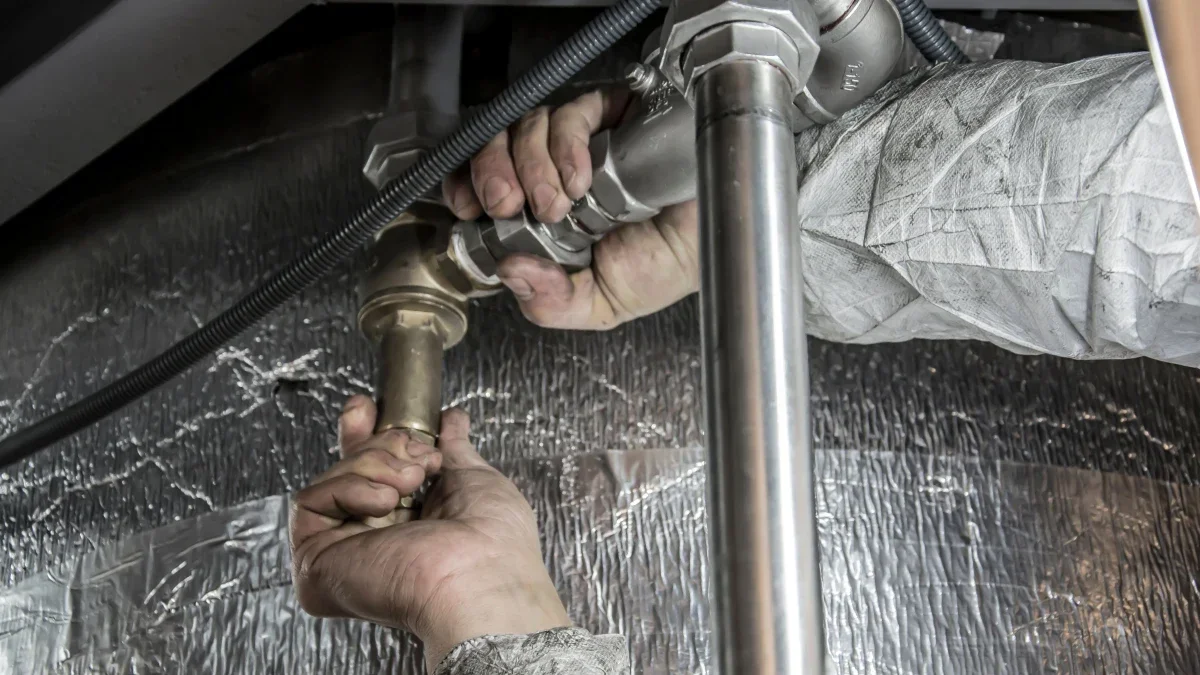
The dishwasher hums, the coffee brews, and somewhere behind the wall a toilet you flushed twenty minutes ago is still quietly refilling. That soft hiss is not a plumbing emergency. It is a worn rubber flapper that stopped sealing, a part that costs pocket change, and left alone it can run through about 200 gallons a day. The same call a plumber might charge a few hundred dollars to answer is, more often than not, a part you can hold in your palm. (A toilet that won't clear rather than won't stop is a different problem — we cover why toilets keep clogging separately.)
Here is the honest frame the "$1 miracle" plumbing videos skip: most of what you pay a pro for is small neglect, not real damage. Water is patient, and it always finds the cheapest way out, whether that is a worn washer, a loose seal, or a tired hose. Close those little doors while your coffee brews and the bills close with them. This is not "never call a plumber." A burst pipe, a gas water heater, and a backing-up sewer line are genuine pro jobs where trying to save a few dollars can cost a flooded floor. This is about not paying someone for the jobs you can do yourself in minutes, whether you own or rent. It is the same do-it-yourself thrift that runs through our wider home-hacks playbook.
Silent leaks first: the running toilet, the drip, and the clogged aerator
WHAT: Three quiet money-wasters and the cheap parts that fix them, namely the toilet flapper and fill valve, the faucet washer or cartridge, and the little aerator screen on the tip of the faucet.
HOW:
- Dye-test the toilet. Drop a few drops of food coloring into the tank (not the bowl) and wait about ten minutes without flushing. If color creeps into the bowl, the flapper is leaking. A replacement flapper costs pocket change and snaps on by hand.
- Swap a faucet washer. Shut the small valve under the sink, take the handle apart, and replace the worn rubber washer or cartridge. The part is usually one of the cheapest things in the hardware aisle.
- Soak the aerator. Unscrew the screen at the faucet tip and drop it in a cup of white vinegar overnight to dissolve the mineral scale.
- Run the free meter test. Turn off every tap and appliance that uses water, then check your water meter. If it is still ticking, you have a hidden leak worth chasing before it grows. That meter test is one of two free tests that pin down a hidden leak between them.
WHY it works: These small fixes are not small in total. The average American home loses more than 9,300 gallons a year to leaks, and 9 percent of homes leak 50 gallons a day or more. The EPA's WaterSense program finds that clearing the easy leaks trims about 10 percent off a household water bill. A running toilet alone can waste about 200 gallons a day, which makes it the loudest cheap fix in the house.
One myth to bury here: low pressure at a single faucet is almost never a "system failure" that needs a plumber. It is usually just scale clogging the aerator or showerhead. Unscrew it, soak it in vinegar, and the pressure problem fixes itself for nothing.
LIMIT: Do this only at the fixture, meaning the flapper, the washer, and the aerator. If the leak is inside a wall or under the slab, stop, because that is a pro job, and every hour it runs behind drywall makes it more expensive.
The water heater: set it to 120°F and flush the sediment

WHAT: Two nearly free moves plus one optional cheap part that shave the second-biggest slice of your energy bill. According to the University of Maryland Extension, water heating is up to 20 percent of a typical home's energy use, behind only heating and cooling.
HOW:
- Turn the dial down. Many tanks ship set higher than they need to be, but 120°F is plenty for a home. It saves standby energy and lowers scald risk, though the savings and the scald math both have limits worth knowing.
- Flush the sediment once a year. Attach a hose to the drain valve and run a few gallons out of the bottom of the tank to remove mineral deposits. Sediment on the bottom makes the tank work harder and shortens its life.
- Wrap a warm tank. An insulating blanket on the tank can noticeably cut standby heat loss.
- Consider the anode rod. The sacrificial anode rod corrodes so your tank does not. That is the same buy-cheap, act-early logic behind stopping rust before it spreads. Trade knowledge holds that swapping this inexpensive rod before it is eaten away adds years to the tank, so treat that as maintenance wisdom, not a guaranteed number.
WHY it works: A cooler set point means the tank loses less heat between uses; a clean tank transfers heat efficiently instead of insulating itself with a crust of minerals; and a blanket slows the constant leak of warmth into the basement air.
LIMIT: If your heater runs on gas, do not touch the gas line or the burner, because that is pro-only work. And know the tell that the DIY window has closed: an anode rod seized solid in the tank, or a tank already weeping rust from a seam, means the heater is near end-of-life. That is a replacement, not a patch, and it is a job for a pro.
The cheap hoses that can flood a whole house
WHAT: The rubber washing-machine supply hoses, and the smaller lines feeding sinks, toilets, and ice makers, sit under full water pressure around the clock, whether the machine is running or not. They are the cheapest disaster in the house to prevent and one of the most expensive to ignore.
WHY it matters: In an insurance-industry study of washing-machine water-damage claims, more than half of the damage came from a supply hose that simply burst. Failures climb sharply after about five years, and most failed hoses were closer to a decade old. A hose lets go while you are at work, and the water does not stop until someone comes home. A single soaked floor easily runs into the thousands of dollars to dry out and repair.
HOW:
- Pull the washer out, shut the two valves behind it, and unthread the old rubber hoses with a pair of pliers.
- Swap in braided stainless-steel hoses, which run about $10 to $15 for the pair and roughly 20 minutes of work.
- Write the install date on the new hose with a marker so future-you knows its age.
- Build the free habit that matters most: shut those two valves whenever you travel.
LIMIT: Braided steel is stronger, not eternal. It can still oxidize and fray over the years. The date written on the hose and the shutoff valve behind the machine protect you more than any brand name does. It is the same lesson that lets a little free upkeep stretch a wood fence's life for decades.

The pressure nobody checks: a cheap gauge that saves everything downstream
WHAT: Water pressure is the silent killer that shortens the life of every washer, valve, and joint in the house, and it is the cause of the "water hammer" bang you hear when a faucet shuts off. Nobody thinks to check it, and the city sends whatever it sends.
WHY it works: The EPA's WaterSense program recommends homes run at 45 to 60 psi. Most U.S. plumbing codes require a pressure-reducing valve wherever the supplied water pressure exceeds 80 psi, because above that, pressure hammers washers, valves, and joints until one of them gives. High pressure is why a house eats washers faster than it should.
HOW: Thread an inexpensive screw-on pressure gauge onto an outdoor spigot or the laundry faucet, then open the tap fully and read the dial. Anything in the 45 to 60 psi range is comfortable. Anywhere near or over 80 psi is your culprit, and it explains a lot of small failures at once.
LIMIT: The gauge is yours to use, and reading it is the whole point. But replacing the pressure-reducing valve on the main line, if the gauge shows you need one, is a licensed-pro job, not a Saturday project.
Drains: what actually works vs the "$1 miracle" myths
This is where the internet does the most damage, so let us separate the real fixes from the viral nonsense.
What actually clears a clog
- A plastic zip tool for hair. Push it down the drain, twist, and pull the clog straight out. This barely-a-dollar strip of plastic handles most bathroom slow-downs by itself.
- A plunger with a proper water seal over the drain. The seal is what makes it work; a dry plunger just moves air.
- A hand-crank drain snake for a clog deeper than the trap.
- A weekly kettle of boiling water down the kitchen drain, plus the simple rule of pouring cooking grease into a can, not the sink. Grease is what most kitchen clogs are made of.
- A monthly cup of water down a rarely-used drain. A drain that smells like sewer usually is not broken at all, because the U-shaped trap under a guest sink has simply dried out and let sewer gas up. A cup of water restores the seal and kills the smell for free.
- Monthly enzyme treatment as prevention. Used regularly, enzymes stop clogs from forming and are safe for pipes and septic tanks.
The myths that quietly wreck pipes
The most important correction, and the one an honest plumber will back: harsh chemical drain cleaners are the opposite of a cheap, safe fix. The viral "$1 liquid that melts any clog" does not reliably clear clogs. It can eat older pipes and joint seals, and when it fails, it leaves a pipe full of caustic liquid for the next person, or the plumber, reaching in. On a septic system it is worse: those chemicals kill the bacteria the tank depends on to break down waste, which was the single most-repeated worry among readers of competing videos. Enzyme treatments are the only kind that are safe for a septic tank. Better still, keep clogs from forming at all with a cheap monthly drain habit instead of reaching for any product.

A few more that deserve honesty:
- Baking soda and vinegar does not clear a real clog. It fizzes, it freshens a smell, and it might nudge a very early greasy slow-down. It will not move a genuine hair-and-grease blockage no matter how many videos insist otherwise.
- The "hydrogen peroxide trick plumbers don't want you to know" is over-hyped. The ordinary brown-bottle peroxide from the pharmacy really does freshen a drain and break down light organic film without eating pipes, but it is not a clog dissolver, and no plumber is hiding it. It costs a couple of dollars at any pharmacy. Never mix it with vinegar or bleach.
- Enzyme treatments are prevention, not rescue. Poured in monthly they keep clogs from forming, but they will not clear a clog you already have.
- That widely-shared detergent-and-salt clip people cite is often a pot-scrubbing paste demo that got mislabeled as a drain fix. Do not copy a trick whose original video was for something else entirely.
LIMIT: If every drain in the house is slow at once, or one gurgles and backs up when another fixture drains, stop plunging. That is the main or sewer line, and it needs a pro with a real powered auger. Enzymes prevent, they do not clear an existing clog, and peroxide should never be mixed with vinegar or bleach.
The free monthly habit and the line you never cross alone
WHAT: A five-minute walk-through once a month, plus knowing where your main shutoff is before the night you need it. This is the highest-leverage move on the whole list, a free habit that catches the cheap fix before it becomes the expensive emergency.
HOW: Once a month, listen for a toilet that hisses when nobody flushed it. Watch the water meter with every tap off; a ticking meter means a hidden leak. Feel under sinks for damp spots. Down in the basement, scan the foundation for the hairline cracks that let groundwater seep in, since sealing concrete cracks the old-mason way is another cheap job you can handle before it grows. Then find your main shutoff valve and confirm it still turns, because a valve seized open is no help in the middle of the night with water rising.
WHY it works: Catching a leak early is the whole game. A worn part caught this month is a five-minute swap; the same part ignored becomes water damage, mold, and a pro's invoice. The cheap habit is what keeps the small problem small.
LIMIT: Some jobs are always pro-only, and no amount of thrift changes that. Call a licensed professional for gas appliances, the main or sewer line, replacing a pressure-reducing valve, or anything leaking inside a wall or under the slab.
Common mistakes to avoid
- Reaching for a chemical drain cleaner, which can eat your pipes and is unsafe for septic tanks.
- Believing baking soda and vinegar will clear a real hair-and-grease clog. It only fizzes.
- Blaming the "water system" for weak flow when it is just a scaled-up aerator soaking away in five minutes.
- Leaving decade-old rubber washing-machine hoses in place, or forgetting to shut the valves when you travel.
- Never once checking your water pressure, then wondering why the house eats washers.
- Touching the gas line on a gas water heater, or plunging a whole-house backup that belongs to the sewer line.
FAQ
How much does a running toilet actually cost me?
A single running toilet can waste about 200 gallons a day, and fixing the easy household leaks trims about 10 percent off the water bill. A flapper costs pocket change, which makes it the fastest payback in the house.
Is boiling water safe to pour down the drain?
Down a metal or ceramic drain it is fine and helps melt kitchen grease. On PVC or with a porcelain fixture, let it cool slightly first and pour steadily rather than dumping it, since a hard blast of boiling water on cold plastic is rough on the joints.
What water pressure is too high?
Homes run best at 45 to 60 psi. Most plumbing codes require a pressure-reducing valve once supplied pressure passes 80 psi. An inexpensive screw-on gauge tells you in thirty seconds whether high pressure is quietly wearing out your fixtures.
How do I know when a job is beyond a DIY fix?
Stop and call a pro if it involves gas, the main or sewer line, a leak inside a wall or under the slab, or a water heater that is weeping rust. The goal is to stop paying for the easy stuff, not to gamble a flooded floor to save a few dollars.
The takeaway: Most plumber call-outs are small neglect you can erase yourself for the cost of a flapper, a washer, a soaked aerator, a pair of braided hoses, or a screw-on pressure gauge, but skip the viral chemical "miracles" and hand over gas, the sewer line, and anything leaking inside a wall to a licensed pro. Spend less. Live more. — The Thrifty Almanac






0comments