

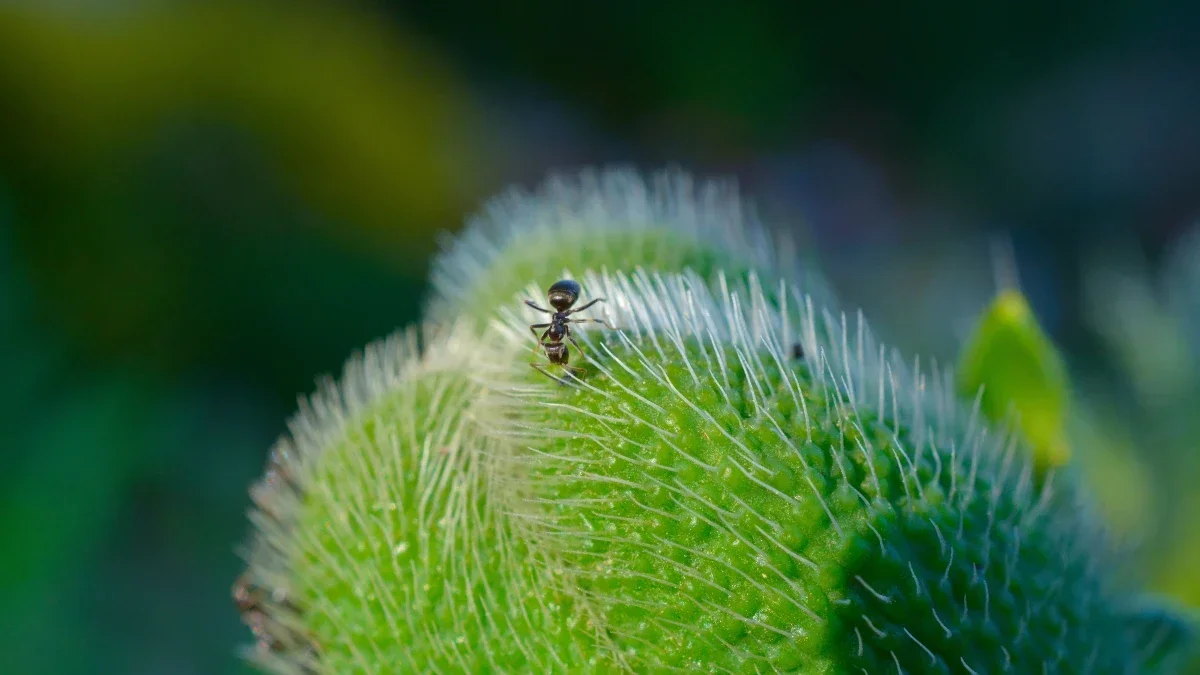
You wiped the counter, sprayed the line of ants marching toward the sugar bowl, and felt pretty good about it. Two days later they're back — same trail, same spot, like nothing happened. If that sounds familiar, you're not doing anything wrong. You're just fighting the wrong part of the problem.
The ants on your counter are foragers — only a small slice of the operation. The real colony (the queen, the eggs, the workers you never see) sits in a wall void, under the slab, or out in the yard, and rebuilds no matter how many scouts you flatten. Here's why they keep coming back, and how to shut it down without paying for a monthly service.
Why the ants keep coming back: messengers vs. the colony
Start with the one fact that explains everything else: at any given moment only a small fraction of the colony is out of the nest. University of Minnesota Extension puts it plainly — killing foraging workers has little effect, because most of the colony (including the queen) never leaves home, and the queen is the one you have to reach (UMN Extension). UC's statewide IPM program agrees: the foragers you see typically represent only a small proportion of the colony (UC IPM).
As long as the queen is alive and fed, the colony rebuilds its foraging crew as fast as you can wipe it out. The job isn't to kill the ants on the counter; it's to get something lethal back to the queen and brood you can't see.
Why spraying visible ants almost never works
WHAT it is: Reaching for a can of spray the second you see a trail — it feels productive because ants die on contact.
HOW it goes wrong: You kill the foragers in front of you and nothing else. UC IPM is direct: spraying around the foundation won't provide permanent control, because it kills only foraging ants without killing the colony and the queens (UC IPM). The queen keeps laying, and fresh scouts head right back to the food they already found.
WHY it can make things worse: A barrier spray outside doesn't seal ants out — it can seal them in. UC IPM notes that on occasion, barrier sprays make the situation worse by trapping ants indoors (UC IPM).
LIMIT: This corrects a myth you'll see online — that spraying "splits one trail into three." Extension sources don't back that. What they do back is simpler: spray kills only the disposable messengers, and a barrier spray can trap ants indoors — either way, no dent in the colony.
How baiting actually kills the colony: trophallaxis
WHAT it is: Bait is food laced with a slow-acting toxicant. You're not trying to kill the forager that finds it — you want it to eat, survive, and carry it home.
HOW it works: Ants feed each other mouth to mouth — a food-sharing behavior called trophallaxis. UC IPM describes the chain: workers carry small portions of bait back to the nest, where it is transferred mouth to mouth to other workers, larvae, and queens to kill the entire colony, and the bait "must be slow-acting so that the foraging ants have time to make their way back to the nest" (UC IPM). UMN Extension explains that baits exploit this same trophallaxis, and the toxicant typically reaches the queen after about 3 to 4 days, hitting colony reproduction (UMN Extension). Penn State sums up the payoff: worker ants carry the bait back and feed the queen, killing the colony (Penn State Extension).
WHY patience beats spraying: A fast knock-down kills the messenger before it delivers. A slow poison rides home in its gut and spreads to ants you could never reach — which is why leaving live ants alone to carry bait works when spraying doesn't.
LIMIT: It is not instant, and the timeline is a range. UC IPM says it can take 5 to 10 days to see fewer ants, and several weeks or more for full control (UC IPM). UMN Extension adds that final control of a large colony may take 1 to 5 months (UMN Extension). Quit at day four and you've quit right before it starts.
The single biggest mistake: spraying around your bait
People put out bait, then spray "just to be safe" — and the spray quietly cancels it. UC IPM is blunt: don't use any insecticide sprays while you are using baits (UC IPM).
Repellent sprays and bait work against each other. Spray near your bait and ants avoid the whole zone — so the bait never gets carried home, and you conclude "bait doesn't work." It works fine. The spray sabotaged it.
To erase a line of ants without wrecking your baiting plan, wipe them with a sponge and soapy water. UC IPM notes that soapy water removes the ant's scent trail (UC IPM). That's the honest role for "natural" fixes: vinegar and a wipe-down remove the scent trail and food residue — cleaning, not colony control. No extension source endorses vinegar, cinnamon, or citrus as something that kills a nest.
The break-the-cycle sequence: starve, bait, wait, seal
Here's the order that holds — it ends the reruns instead of pausing them.
- Cut off food and water first. Wipe grease, store food in clean, sealed containers, rinse the recycling, pick up pet bowls between feedings, and fix any drips — UC IPM flags fixing leaky faucets, since water attracts ants (UC IPM). Starve the easy options so your bait becomes the most attractive thing in the room.
- Don't spray the trail — bait it. Leave the scent trail intact and set slow-acting gel or bait stations right where you've seen ants, not where you wish they'd go. Remember these baits are pesticides: keep gel and stations off food-prep surfaces and out of reach of children and pets, and follow the product label. UC IPM notes bait stations are safe when kept away from children and pets, so avoid spots they can reach (UC IPM).
- Match the bait to the ant. Ants swing between craving sweets and craving protein or grease, by species and season. UC IPM notes sweet baits attract Argentine ants year-round while protein baits pull them mainly in spring, and thief ants prefer protein or greasy baits (UC IPM). If a sugar bait sits untouched, switch to a protein one.
- Wait — and expect a surge. You'll often see more ants for a few days as they recruit to the bait. That's the system working, not failing. Give it the full window and don't clean up the bait early.
- Seal the doors last. Once traffic dies down, caulk the cracks and openings that let ants in — a core UC IPM prevention step, and Penn State says to seal cracks and crevices around windows, doors, and pipes with caulk (UC IPM; Penn State Extension). This keeps next season's colony out.
Caulk and a pack of bait run cheap — well under a single professional visit. Remove what they want, let bait reach the queen, then lock the doors behind them.
When it's carpenter ants — call a pro
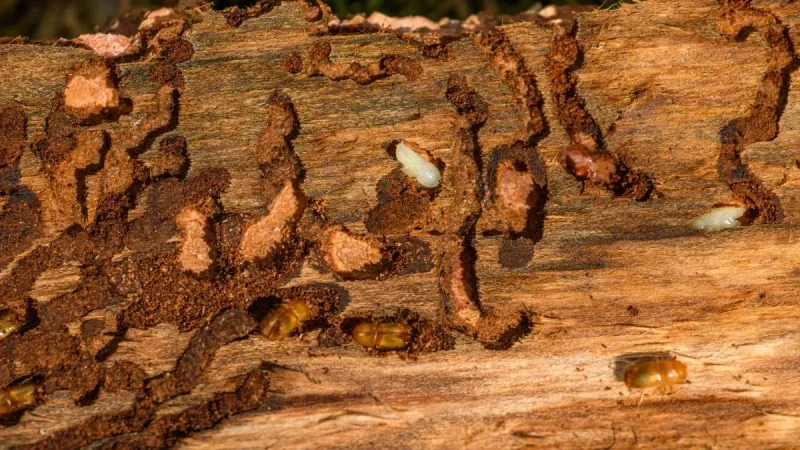
Most ants are a nuisance. Carpenter ants are the one case where bait-and-wait is the wrong call, because they nest where you can't bait them. They don't eat wood the way termites do — UC IPM explains that they excavate wood to make their nests, often beginning where there's water or wood-decay damage, then expanding into sound wood (UC IPM Pest Notes). A carpenter ant problem is usually a moisture problem in disguise.
Signs you're dealing with carpenter ants rather than kitchen ants:
- Big, dark ants. UC IPM puts the common western workers at 1/4 to 1/2 inch long, black with dark red legs or a red-and-black body (UC IPM Pest Notes); UMN Extension gives a similar 3/8 to 1/2 inch for workers, with queens up to about an inch (UMN Extension) — much larger than sugar ants.
- Fibrous sawdust (frass). Piles of coarse, fibrous sawdust near baseboards, window sills, or under beams — the wood they chew out but don't eat, and they're most active after sunset (UC IPM Pest Notes).
- Winged ants indoors. Large numbers of winged carpenter ants inside signal an indoor nest, and finding them in late winter or early spring means the colony is inside the building, per UMN Extension (UMN Extension).
Because the nest usually hides in a wall void or damp beam, UMN Extension recommends leaving carpenter ant control to an experienced pest management professional with the products to reach a nest you can't (UMN Extension). This isn't giving up — it's paying a pro once to find hidden water damage and a buried nest. Fibrous sawdust plus big dark ants, or winged ants inside, is a "get a pro to look" situation, not a bait-and-wait one.
Common mistakes
- Spraying repellent around bait. The number-one cause of "bait doesn't work." UC IPM says not to spray while baiting at all.
- Cleaning up bait too soon. If ants swarm it, the system is working; wiping it away cuts off delivery to the queen.
- Panicking at "more ants." A surge at fresh bait is recruitment, not a worsening infestation.
- Using a barrier spray outside. No permanent control, and it can trap ants indoors.
- Ignoring moisture. Many ant problems are really water problems. Fix the leak and interest fades.
- Using the wrong bait. If a sweet bait sits untouched, switch to a protein or greasy one.
FAQ
Why do I see more ants after putting out bait, and how long until they're gone?
The surge means it's working — foragers are recruiting the colony to the bait. UC IPM says it can take 5 to 10 days to see fewer ants and several weeks or more for full control; UMN Extension says a large colony can take 1 to 5 months (UC IPM; UMN Extension). If nothing improves after weeks of proper baiting with no spraying, the nest may be indoors — reassess.
Do vinegar or cinnamon actually get rid of ants?
Not the colony. Soapy water and vinegar wipe up the scent trail and food residue — UC IPM confirms soapy water removes the ant's scent trail (UC IPM). But no extension source endorses vinegar, cinnamon, or citrus as something that kills a nest. Use them to support baiting, not as your main plan.
Should I spray the trail to be safe while I bait?
No — that's the mistake that wastes the whole effort. UC IPM says not to use any insecticide sprays while you're using baits, because the spray repels ants from the bait you want them to carry home (UC IPM). To clear a visible line, wipe it with soapy water instead.
The takeaway: Ants keep coming back because spray only hits the messengers — so starve them, set slow bait on the trail, leave it alone while it rides home to the queen, seal the cracks, and save the phone call for carpenter ants. Spend less. Live more. — The Thrifty Almanac





0comments