

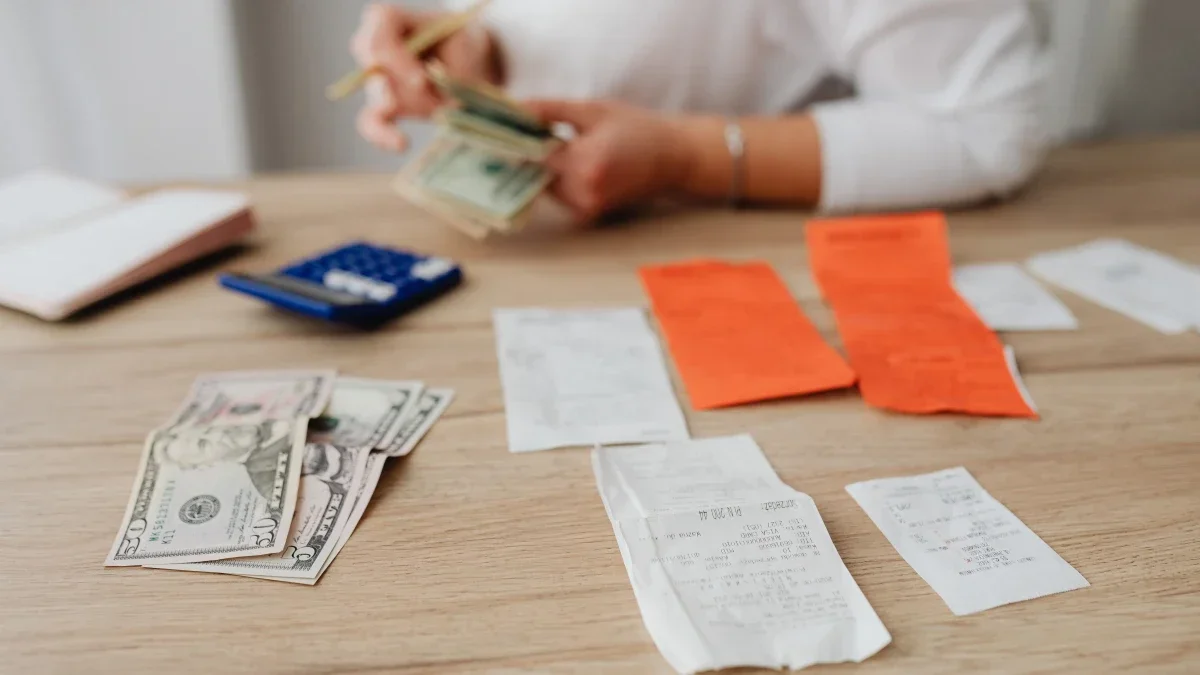
Open your electric bill, scroll past the pretty usage graph, and land on the number at the bottom. If it made you wince this month, here is the good news: the cheapest kilowatt-hour you will ever pay for is the one you never use. You do not need a smart home or a solar array to shave that number down — just a handful of small habit changes that cost exactly nothing.
The one rule: the cheapest kilowatt-hour is the one you never use
Energy you do not use is always cheaper than energy you use efficiently. A fancy Energy Star dryer still costs money every time it runs; a clothesline costs nothing. So the biggest wins come from not running things, running them less, or running them smarter — not from buying gadgets. And no honest source can promise a set percentage off your bill from habits alone; it depends on your climate, home, and rates. Ignore anyone who hands you a headline number, and aim at your biggest energy users — on which the federal data is refreshingly blunt.
First, aim at the biggest user — not your phone charger
Do not guess where your money goes; most people obsess over phantom chargers while the air conditioner and the hot water tank quietly eat the real dollars. Pull up your last bill and note your total kWh and your rate per kWh — the U.S. residential average was about 16.5 cents in 2024, but state averages ran from roughly 10 cents to over 35 cents per kWh, so where you live changes every number below. Rates have kept climbing since then, so check your own bill for today's figure.
Now aim. In a typical U.S. home, the three biggest slices of the electricity bill in 2020 were air conditioning at 19%, space heating at 12%, and water heating at 12%, with lighting and the refrigerator close behind. Counting energy of every kind, heating and cooling together came to about 52% of a household's annual use, plus another 25% for water heating, lighting, and refrigeration. Those shares are national averages that shift by region and weather, but the headline holds: the top of the list is heating, cooling, and hot water — not your charger.
| Usual energy hog | Why it costs so much | Where to look here |
|---|---|---|
| Heating & cooling | Runs for hours; the top electricity use | Thermostat, sun & curtains |
| Water heater | Keeps a big tank hot 24/7 | Water heater, cold-water laundry |
| Clothes dryer | Nearly pure heat, long cycles | Full loads & line drying |
| Fridge & freezer | Never turns off, ever | Fridge temperature & door |
| Lighting & electronics | Small each, but constant | LEDs, empty rooms, standby |
Wash your clothes in cold water
Move the temperature dial to "cold" and make it your default; save warm or hot for greasy work clothes and oily stains. Heating the wash water, not spinning the drum, is where the machine burns its energy — water heating consumes about 90% of the energy it takes to run a clothes washer, so cold removes the single largest draw of the cycle, and modern detergents are built to clean cold. Just remember that 90% is the washer's cycle energy, not your whole laundry bill — the dryer is a separate appliance and usually the bigger hog.
Cut standby ("vampire") power
Gang your entertainment center or home-office cluster onto one power strip and flip it off at night, unplug chargers once the device is full, and switch your game console from "instant on" to its energy-saving startup mode. A device that is off but still plugged in keeps paying for a lit clock, a listening remote, and instant-on. Be honest about scale, though: standby draw is real but small next to the systems that dominate the bill, so do it and move on to the big hitters.
Nudge the thermostat and put it on a schedule
Program a setback for when you are away and another for overnight; no programmable model? Adjust it the same way each day by hand. In winter, reach for a sweater before the dial; in summer, a fan lets you set the AC a couple of degrees higher because moving air feels cooler on skin. Heating and cooling is the single biggest slice of the bill, so this small move pays the most: the Department of Energy estimates you can save as much as 10% a year on heating and cooling by turning the thermostat back 7–10°F for 8 hours a day — the hours you are at work or asleep. That 10% is DOE's setback estimate and varies by home and climate. And a fan cools people, not rooms, so turn it off when you leave.
Let the sun, shade, and breeze do the work
Think of the sun as a heater you switch on and off with your curtains. In hot months, close blinds on the sunny side by day, especially south- and west-facing windows in the afternoon; in cold months, do the opposite, then close them at night to hold heat in. On mild evenings when it is cooler out than in, open windows on opposite sides for a cross-breeze instead of running the AC. Since air conditioning alone was 19% of home electricity in 2020, any afternoon the sun stays out is one the compressor works less. There is no federal dollar figure for a day of drawn curtains, so treat it as a sound mechanism, not a promised saving.
Run full loads and air-dry laundry
Wait until you have a full load — a dishwasher or washer uses close to the same energy half full or packed, so a half run pays full price for half the work. Then hang clothes on a line outside or a rack indoors, especially the slow, heavy items (towels, jeans, sheets) that punish the dryer most. The dryer is nearly pure heat and runs a long time, which is why ENERGY STAR's laundry guidance leans on full loads, cleaning the lint filter, and air-drying. When you do run it, clean the lint trap every load — a clogged trap runs longer and hotter and is a genuine fire hazard. There is no credible federal percentage for "full loads save X," so do not trust one; the mechanism (same energy, twice the work per run) is the honest case.
Smarter cooktop and oven habits
Small habits add up because you cook nearly every day, and the theme is not heating air you are not using: match the pot to the burner, keep lids on so water boils faster, stop opening the oven (every peek dumps heat it must rebuild), reach for a toaster oven or microwave on small jobs, and turn electric burners off a few minutes early to ride the residual heat. No agency publishes a per-habit dollar figure here, so do these because they are free and sensible.
Set the fridge and freezer right and mind the door
Set the refrigerator to 40°F or below and the freezer to 0°F, the targets the FDA recommends. If your fridge has only a 1-to-7 dial, drop a cheap thermometer inside and adjust from the middle. Check the door seal by closing it on a dollar bill and tugging — if it slides out easily, the gasket is leaking cold air, and cleaning a sticky seal often restores the grip for free.
The fridge never turns off, so any inefficiency runs around the clock — and colder settings buy no extra food safety, only extra electricity. The USDA confirms food held constantly at 0°F stays safe indefinitely; recommended freezer storage times are about quality, not safety. One myth to drop: people often set the "safe fridge" floor at 37°F, but the FDA gives no lower bound — its target is simply "40°F or below," so do not overcool "to be safe."
Switch to LEDs and kill the lights in empty rooms
Swap your most-used bulbs to LED first — kitchen, living room, porch — since those run the most, and make "last one out hits the switch" a house rule. Old incandescent bulbs turn most of their energy into heat, not light, so you are paying to warm the ceiling; ENERGY STAR–certified LEDs use up to 90% less energy and last 15 to 25 times longer. Buying bulbs is not strictly free, but the off-switch habit that pairs with it is — and it is the more valuable of the two.
Turn the water heater down to 120°F
Find the dial on the tank — electric heaters usually have one behind a panel, so flip the breaker off first. Turn it down, check a faucet a few hours later, and use the "vacation" setting when you travel. The tank fights heat loss around the clock, making it a quiet top spender. DOE notes that although some manufacturers set the thermostat to 140°F, most households only need 120°F — a setting that also slows mineral buildup and corrosion. Left at 140°F, a heater wastes money in standby heat losses alone, before the extra used at the tap — and 140°F water is hot enough to scald.
Two honest notes: "some" heaters are set to 140°F from the factory, not all, so check yours; and standby-loss savings are only an estimate, so real savings depend on the tank, its insulation, your local rates, and your usage. If the tank is old, leaking, or making popping sounds, or you are uneasy near the breaker, call a plumber or electrician instead of forcing it.
Common mistakes that quietly cost you
- Chasing phantom chargers while ignoring the water heater and AC. Chargers are pennies next to the systems that run the bill — fix the hogs first.
- Overcooling "to be safe." Past 40°F for the fridge and 0°F for the freezer, colder adds zero food safety and steady cost.
- Running half-empty dishwasher and laundry loads. Nearly the same energy for half the work.
- Blasting the AC with the curtains open to the afternoon sun. You are cooling and heating the same room at once.
- Cranking the thermostat past your target to "get there faster." Systems do not run faster at extreme settings — you just overshoot and waste energy.
FAQ
Does turning lights on and off use more power than leaving them on?
No — this is an old myth. For household lighting, the tiny surge at startup is nowhere near the cost of leaving a bulb running, which is why the standard DOE guidance is to switch lights off whenever you leave a room for more than a moment.
How much can I really save with free changes alone?
It depends on your home, climate, and rates, so any promised percentage would be made up. What is honest: the more of these you stack — especially the heating, cooling, and hot-water ones — the more you will notice. Find your own rate on the bill and it costs nothing to see for yourself.
Which change should I start with if I only do one?
Attack your biggest hog. For most homes that is heating and cooling — nudge the thermostat and use the curtains — or the water heater at around 120°F, since air conditioning, space heating, and water heating are the three largest slices of a typical home's electricity.
The takeaway: read your bill, aim your free habits at the biggest users — heating, cooling, and hot water — and stop paying for energy you were only wasting. Spend less. Live more. — The Thrifty Almanac





0comments