

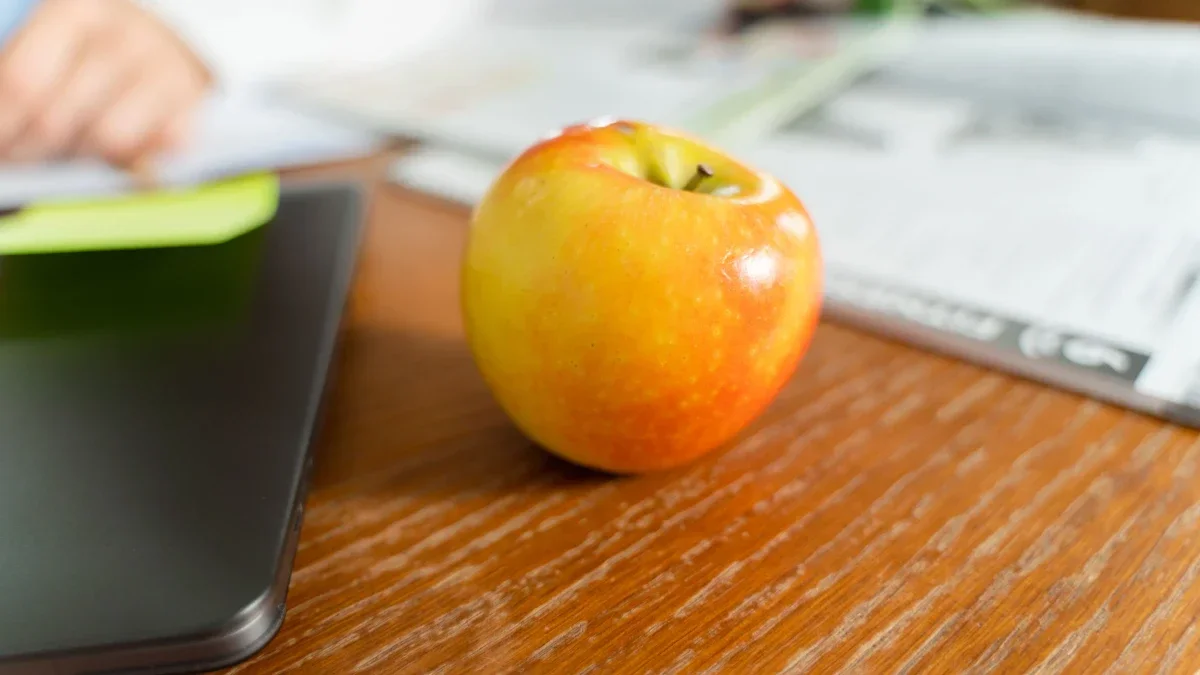
You built the apple cider vinegar trap you saw online, and three days later the flies are back like nothing happened. Before you decide the trap is a scam, here is the honest reason it "isn't working": most fruit fly advice treats three completely different tiny flies as one bug fixable by one jar. A vinegar trap only ever drowns adult fruit flies already in the air — it does nothing to the nursery still hatching new ones. And if your flies are actually swarming a houseplant or a bathroom drain, the fruit-bowl trap was never going to touch them.
So the real fix has two parts, and both depend on the step most people skip: figuring out which fly you have. Get it wrong and you can trap all summer while the breeding site keeps the assembly line running.
First, figure out which fly you actually have (30-second ID)
WHAT: a quick judgment call, not a lab diagnosis. Three tiny flies get lumped together, and each one lives somewhere different. Match the swarm's location, then check the look:
- Fruit flies (vinegar flies): tiny, tan-bodied, with unmistakable bright red eyes, hovering over the fruit bowl, the trash, or the recycling. Clemson describes the adult as about 1/8 inch with a tan body and red eyes (Clemson HGIC).
- Fungus gnats: dark, delicate, mosquito-like flies that drift up out of your potted plants when you water them and mostly ignore the fruit bowl. Wisconsin Horticulture describes them as dark brown or black flies about 1/8 inch long (Wisconsin Hort).
- Drain (moth) flies: fuzzy, moth-like flies that sit still on the bathroom wall near a sink or shower and barely fly. UC IPM notes their hair-covered wings give a moth-like look, and they rest with wings held roof-like over the back (UC IPM).
WHY it matters: each of these breeds in a different place, so one trap cannot fix all three. Using a fruit-fly trap on gnats or drain flies is the number-one reason people say "my trap isn't working" — it is aimed at a nursery that isn't there.
LIMIT: homeowner ID is practical, not perfect. If you can't tell the flies apart by eye, trust where they gather — a swarm over the fruit bowl, over the ferns, and on the bathroom wall are three different problems no matter how similar the specks look.
Build the trap that actually drowns fruit flies (WHAT + HOW)
WHAT: a small jar with about an inch or two of apple cider vinegar and one to two drops of unscented dish soap.
HOW: the vinegar smell mimics fermenting fruit and pulls adult flies in; the soap is the part everyone underrates. Wisconsin Horticulture says to add one to two drops of unscented dish soap "to break the surface tension of the liquid so that flies are more likely to be captured" (Wisconsin Hort). Refresh it weekly — Penn State's version says to clean traps weekly and replace with fresh vinegar (Penn State Extension).
The soap is not there to attract or poison anything — a common misunderstanding. It is pure physics. Without it, a fly lands on the surface film, drinks, and flies off. With a drop of soap breaking that surface tension, the fly sinks and drowns. That single drop is the difference between a trap and a free drink.
LIMIT: two honest cautions. First, plain apple cider vinegar is not the strongest bait — Wisconsin notes it is "less effective" than a yeast-and-sugar mix, so treat ACV as the accessible option, not the optimal one. Second, this is a home-remedy-style mixture, and Penn State Extension is blunt that internet pest mixes using dish soap, vinegar, and boric acid "do not come with precise instructions on how to use; they may not be effective; they have the potential to harm humans, pets, and plants" and can even run afoul of federal pesticide law (Penn State Extension). This jar is a trap for adult fruit flies, not an all-purpose bug spray — keep it out of reach of kids and pets.
WHY the trap alone never wins: you're catching adults while the nursery keeps hatching
Here is the gap the whole "it keeps coming back" complaint lives in. The trap removes adult flies from the air, but does nothing to where they came from. Fruit flies lay eggs on the surface of fermenting fruit and organic matter, and they breed anywhere moist and fermenting — not just the fruit bowl but drains, garbage disposals, and trash (Penn State Extension). While your jar drowns a dozen adults, the breeding site quietly hatches the next dozen. Every extension service says the same thing: removing the breeding site is the best method of control, not trapping (Clemson HGIC). Utah State's IPM guidance leads with "Locate breeding substrate, if possible, and remove" (USU Extension). The trap is a supporting tool for the adults that got indoors — nothing more.
HOW to hunt the source:
- Eat, refrigerate, or throw out any ripe or overripe produce on the counter (Penn State).
- Seal recycling and take out the trash; rinse containers so nothing ferments inside (Clemson).
- Clean the kitchen drain and garbage disposal — a forgotten film of food sludge there is a classic hidden breeding site.
- Check the overlooked spots: a damp mop, a spill under the fridge, the bottom of the fruit basket.
LIMIT: be suspicious of any "2-minute permanent fix" headline. The trap is instant to build, but clearing an infestation depends on removing the breeding source and then waiting out at least one life cycle for the last eggs already laid to hatch. There is no honest way to promise it's gone by morning.
If it's really fungus gnats: the fruit-fly trap is the wrong tool
WHAT: if the flies swarm your potted plants and shrug at the fruit bowl, they are almost certainly fungus gnats, and an ACV trap is weak against them because they don't breed in fermenting fruit. Their larvae feed on fungi and organic matter in moist potting soil, where females lay up to 200 eggs on the surface (Wisconsin Hort). The nursery is the dirt, not the counter.
HOW to actually beat them:
- Dry the soil surface — the core move. Wisconsin's guidance is to keep the soil surface dry to eliminate favorable egg-laying sites by allowing the top inch of soil to dry out before you water (Wisconsin Hort); UC IPM agrees, letting container soil dry between waterings (UC IPM).
- Treat the larvae with Bti. UC IPM says you can mix Bacillus thuringiensis subspecies israelensis (Bti) — the active ingredient in mosquito dunks — with water and apply it as a soil drench to kill the larvae. Yellow sticky cards stuck on skewers in the pots catch the flying adults as a supplement (UC IPM).
LIMIT: a huge share of "the vinegar trap doesn't work" complaints come from people who never had fruit flies at all, so drying the soil is what actually turns their problem around. Use Bti strictly per its label directions — the label is the law, so don't invent dosages — and remember sticky cards only catch adults, not the larvae still in the pot.
If it's really drain flies: scrub the pipe, don't just trap or pour
WHAT: those fuzzy moth-like flies on the bathroom wall breed in the slimy organic film coating your sink and shower drains — UC IPM notes moth fly development often occurs in exactly that slimy matter lining the drain (UC IPM). The trap has nothing to lure here; the whole life cycle is down the pipe.
HOW: physically scrub the film out. UC IPM's fix is direct — to remove the organic film within the drain, use a hard-bristle brush with an industrial drain cleaner (UC IPM). Destroy the film and you destroy the breeding site.
WHY not just pour something down? Because the internet's favorite shortcuts don't work. UC IPM is explicit that pouring boiling water or bleach down a drain does not remove the organic film and gives "at best short-term control" — the flies come back because the film is still there (UC IPM). Same lesson as the fruit flies: kill the source, not just the adults.
LIMIT: follow the label on any drain cleaner, and know the fix is scrubbing out the film, not a one-time pour. If a drain is truly unreachable, that is where a plumber earns their fee.
The one rule that ties it all together
Strip away the specifics and every tiny-fly problem obeys one rule: trap or kill the adults AND destroy the specific breeding source for that fly. The trap is a supporting actor; the breeding site is the whole play, and removing it is the best method of control across all three flies (Clemson HGIC). One more reason to fix the source: a swarm is a sanitation signal — your kitchen or your plants telling you something damp and fermenting needs attention.
| The fly | Where it breeds | What actually fixes it |
|---|---|---|
| Fruit flies (red eyes, on fruit/trash) | Fermenting produce, drains, disposals, recycling | ACV + dish-soap trap for adults, then clear the produce and clean the drains |
| Fungus gnats (dark, around plants) | Moist potting soil | Dry the top inch of soil, drench with Bti, sticky cards for adults |
| Drain flies (fuzzy, on bathroom walls) | Slime film inside drain pipes | Scrub the film out with a stiff brush; skip the boiling water and bleach |
Common mistakes recap
- Trapping adults while leaving the breeding source intact, then blaming the vinegar.
- Aiming a fruit-fly trap at fungus gnats or drain flies that live somewhere else entirely.
- Skipping the drop of dish soap, so flies drink and fly off instead of drowning.
- Pouring boiling water or bleach down a drain and expecting the drain flies to stay gone.
- Leaving spiked vinegar within reach of kids or pets.
FAQ
Why do the flies keep coming back after I set the trap?
Because the trap only catches adults, while the breeding source keeps hatching new ones. Fruit flies breed in fermenting produce, drains, and trash; find and remove that source and the trap finally has nothing to refill it (Clemson).
Does the dish soap poison the flies?
No — it works purely by physics. The soap breaks the liquid's surface tension so flies sink and drown instead of standing on top and flying off. Without it, they land, drink, and leave (Wisconsin Hort).
My trap isn't catching the flies around my plants. What gives?
Those are probably fungus gnats, not fruit flies, and they ignore vinegar because they breed in moist soil. Let the top inch of soil dry between waterings and treat the larvae with Bti; a fruit-fly trap will barely dent them (Wisconsin Hort; UC IPM).
How long until the flies are actually gone?
Once you've removed the breeding source, plan on at least one full life cycle for the last eggs already laid to finish hatching. It is not an overnight job — anyone promising instant results is skipping the part that matters.
The takeaway: ID the fly by where it swarms, trap or kill the adults, then destroy its specific nursery — fermenting produce and drains for fruit flies, dry soil plus Bti for fungus gnats, a scrubbed-out drain for drain flies. Spend less. Live more. — The Thrifty Almanac




0comments