


It is late afternoon in July, the thermostat downstairs reads comfortable, and the upstairs bedroom feels like a parked car. That is not a broken air conditioner — a few feet above that ceiling, the roof deck is baking and pressing its heat down all afternoon. The fixes are cheap and you can do them yourself, but the one the viral clips push first can raise your electric bill and, in the wrong house, pull carbon monoxide back inside. So here is the honest version, ranked by what each fix costs against what it buys you — the order your wallet wants, not a foil salesman's.
Why your upstairs turns into an oven
Heat reaches that bedroom through three doors, and every fix on this list closes one of them — which is why order matters.
- It radiates. On a clear July day the roof surface can run to 160°F or hotter, and the roof deck keeps throwing that infrared heat downward well into the evening, long after the sun is off it.
- It conducts. That superheated attic air presses straight through the ceiling, the way a hot pan warms the counter below.
- It rides the air. Warm air escapes high in the house, which sucks air-conditioned air up through hidden gaps around wires, pipes, and the hatch. Building scientists call this the stack effect: your house acts like a chimney. Older homes leaned on that same chimney effect, shedding summer heat without any AC.
No single fix closes all three doors; they work as an ordered set, cheapest first.
The ranking rule: dollars per degree, not the seller's order
The most-liked comment on one popular attic-cooling video was a plea to get to the point. So here is the whole answer up front:
- Seal the attic floor — a caulk-gun budget, one Saturday. Closes the air door.
- Top up the insulation — the boring biggest saver. Slows the conduction door.
- Add a radiant barrier (foil) — a modest cost, sunny climates only. Blocks the radiation door.
- Improve ventilation — often free with passive vents. But the powered attic fan is a trap, so it comes last, not first.
Sealing and insulating together save about 15% on heating and cooling costs (roughly 11% of total household energy), per EPA Energy Star — your biggest lever, and the cheapest.
Fix #1 — Seal the attic floor (the cheapest fix, one Saturday)
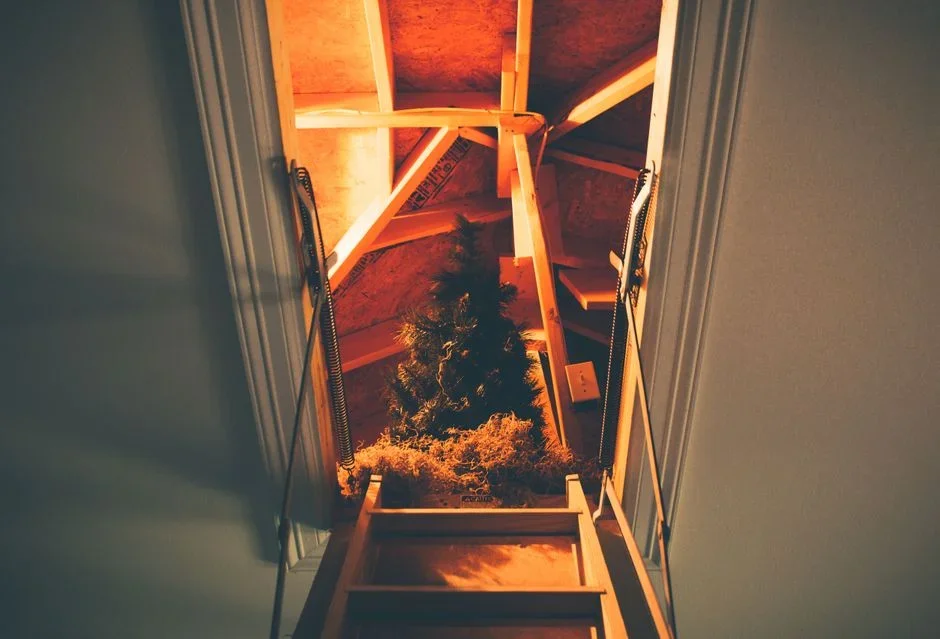
WHAT: Close the cracks where cooled air leaks up into the superheated attic — gaps around wiring, plumbing, recessed lights, and especially the hatch.

HOW:
- Weatherstrip the hatch lip and add a hook latch so it seals tight, not loose.
- Headlamp on, chase the gaps: caulk small cracks, spray foam around bigger penetrations.
- To find hidden leaks, hold a lit incense stick near suspect spots on a breezy day — the smoke bends toward a draft. A cheap infrared thermometer also shows cold streaks where air escapes.
WHY it works: The stack effect constantly pulls paid-for cool air up through those gaps; plug them and the leak stops. This is half of the pair Energy Star credits with that 15% cut — the half you do first.
LIMIT: Sealing alone will not stop a baking roof from radiating down; if insulation is thin, the ceiling still runs warm. And seal the attic floor, never the vents — the attic must breathe.
Fix #2 — Top up the insulation (the boring biggest saver)
WHAT: Bring attic-floor insulation up to spec, and add an insulated lid over the sealed hatch.
HOW:
- Do the tape-measure test. Energy Star recommends roughly R-38 to R-60 across most of the country — deep enough to bury your ceiling joists, wall to wall. If you can see the tops of your ceiling joists, you are under-insulated.
- Lay new batts crosswise over the old (never compress them flat), or rent a blower and add loose-fill cellulose.
- Keep insulation back from the eaves so soffit vents can still draw air.
WHY it works: Insulation is trapped air that slows conduction — a winter coat working in reverse in July, keeping the superheated attic from pressing down. It is the biggest total saver because it works every hour of the year.
LIMIT: Seal the leaks before you bury them, or nobody will find a wire gap under a foot of fluff. Fit foam baffles at the eaves so you do not smother the soffit vents. And past the recommended R-value, each extra inch buys less.
Fix #3 — The famous foil, honestly (real in Texas, useless in Vermont)

WHAT: A radiant barrier — reflective foil that faces the hot roof and bounces its heat back. It costs a modest amount in materials, not the pocket change viral clips imply.
HOW:
- Staple the foil foil-side down to the rafter undersides, leaving the air gap between foil and roof deck. Stop short of the ridge and eaves so you do not block airflow.
WHY it works: The roof deck radiates infrared downward, and shiny aluminum foil reflects back more than 90% of it — the same trick as a windshield sunshade. In sunny climates the payoff runs to about 8 to 12% off cooling.
LIMIT: Here the marketing runs miles ahead of the physics. The same runaway hype drives the candle-in-a-flowerpot heating hack. "Cheap foil cuts your bill in half" or "keeps a home cooler forever" is a sales pitch, not a measurement. Foil earns its modest percentage only where the sun is strong; in cool, cloudy country (Vermont, Seattle, the Upper Midwest) the benefit is close to nothing and can even work slightly against you in winter. Viewers who installed foil and "saw no difference" were skipping the real levers: seal and insulate first. And never lay foil flat on top of the insulation — in humid regions that becomes a condensation trap that grows mold. Use perforated foil in humid climates and keep it on the rafters, air gap intact.
Fix #4 — Ventilation, and the powered-fan trap that raises your bill
WHAT: Passive ventilation — low intake at the soffits, high exhaust at the ridge or gable — lets the attic breathe out its own heat, often for free. The powered (electric) attic fan is the trap people reach for instead.
HOW (the passive, safe version):
- From inside the attic on a bright day, look for daylight at the soffits. If slumped insulation blocks them, clear it and set foam baffles to hold the channel open.
- Make sure intake area roughly matches exhaust, so air flows through instead of stalling.
- As one top-rated homeowner comment puts it, ridge vents with properly spaced soffits eliminate heat and mold. Blocking those vents traps moisture.
WHY the powered fan backfires: A powered attic fan moves more air than the soffits can supply, so it makes up the difference by pulling from the easiest place it can reach: your air-conditioned living space, up through those same ceiling gaps. Building-science testing finds these fans rarely provide a net energy benefit — the fan's own electricity can wipe out the cooling savings — and some homeowners find their bills higher than the year before.
LIMIT (a safety issue, not just a savings one): In a tighter house with gas appliances, that same suction can backdraft a gas water heater — pulling flue exhaust, and the carbon monoxide in it, back into the home. If you insist on a powered fan with gas appliances, have a pro check the draft. The honest order: seal the floor first and let passive venting do the work.

Bonus — the free night flush ("chasing the cool")
WHAT: A no-cost evening habit that swaps the house's hot air for cool night air, using a box fan you own. When cooling season ends, that same fan becomes a DIY air purifier with one furnace filter.
HOW: At dusk, open a shaded downstairs window and set a box fan in the hottest upstairs window blowing out. That pulls cool air in low and pushes hot air out high. In the morning, before the day heats up, shut the windows and drop the west-side shades to bank the cool.
WHY it works: When the night genuinely cools off, this can pull an upstairs down toward the outdoor temperature within an hour — real relief for free. It is the little cousin of the old whole-house hallway fan. If AC is not an option at all, our guide on how to cool a room without AC ranks what actually works against what is just a myth.
LIMIT: It only works when the night actually cools off. Real readers push back — in Florida the "cooler" night air can be swampy, and folks in Atlanta refuse to open the windows at all. During a heat wave it does nothing, in humid weeks it drags in moisture, and windows must stay closed when there is wildfire smoke. That same humidity limit decides whether a DIY clay-pot air cooler does anything measurable at all.
The order that saves money
Follow the dollars-per-degree order, not the seller's order: Seal the attic floor (cheapest, and first), Insulate to R-38 to R-60 (the biggest total saver), Reflect with foil (sunny climates only), then Breathe with passive vents (skip the powered fan). Results vary by climate and house, so report yours in the comments.
Common mistakes
- Reaching for a powered attic fan first. It can raise your bill and, in a gas-appliance house, backdraft carbon monoxide. Seal the floor first; a powered fan is a last resort.
- Believing "foil cuts your bill in half." That is marketing. A radiant barrier saves a modest percentage of cooling cost, and only where the sun is strong.
- Laying foil flat over the insulation. In humid climates it becomes a mold-growing condensation trap. Staple it foil-down to the rafters and keep the air gap.
- Sealing the attic vents. You seal the floor; the attic must keep breathing, or moisture builds up.
- Insulating before sealing. Bury a wire gap under a foot of fluff and no one will find it.
- Assuming the night flush works everywhere. It is useless during heat waves and humid stretches, and off-limits in wildfire smoke.
FAQ
Do I really have to do all four fixes?
No single fix is complete on its own — they close three different doors. But if you do one thing, seal and insulate the attic floor. That pair carries most of the savings for the least money.
Is a radiant barrier worth it for my house?
Only where the sun is strong. In Texas, Arizona, or the Deep South, foil earns its keep. In cool, cloudy regions it does almost nothing — and can even hurt slightly in winter — so put that money into insulation instead.
My neighbor swears by their attic fan. Are they wrong?
Powered attic fans rarely provide a net energy benefit and can pull air-conditioned air out of the living space, raising bills. In a tight house with gas appliances, the fan can backdraft carbon monoxide. Passive venting is safer and usually free.
How deep should my attic insulation be?
Deep enough to bury the tops of your ceiling joists — the depth that gets you to R-38 to R-60 across most of the U.S. If you can see the tops of your joists, you are short.
The takeaway: Seal the attic floor, top up the insulation, add foil only where the sun is strong, and let the attic breathe on its own — and never let a powered fan be your first move, because the cheapest fix is almost always the one that plugs the air leaks. For more low-cost wins around the house, our complete guide to thrifty home hacks maps them all out. Spend less. Live more. — The Thrifty Almanac






0comments