

The shower runs cold this morning, or it went lukewarm halfway through. A water heater not heating can mean the tank is done, but it can also come down to something far cheaper than a new tank. Before you price a new tank, it helps to know which one you are dealing with.
The symptom narrows it down. So does the fuel: electric and gas heaters fail in different places.
Why your water heater is not heating, by symptom
If the water heater is not heating at all, start with the breaker and the reset button, then the upper element or thermostat on electric models, or the pilot and thermocouple on gas models. In Home Depot's online listings checked November 11, 2026, single parts sold for about $12 to $19 and a four-piece tune-up kit for about $35 to $36; a new 40-gallon tank listed for $469 (electric) to $609 (gas) before installation.
| Claim | Verdict | Why |
|---|---|---|
| A cheap part can restore heat | REAL | A.O. Smith: replace the failed element or thermostat |
| Lukewarm water always means a broken part | MYTH | Rheem: cold winter inlet water is normal |
| The reset button is the fix | RISKY | Makers: find out why it tripped |
| Testing an element with power on | RISKY | Makers: turn power off first |
Use the table as a map, not a repair order. Rheem and A.O. Smith disagree on how much of this an owner should do, covered below, so your own heater's manual has the last word.
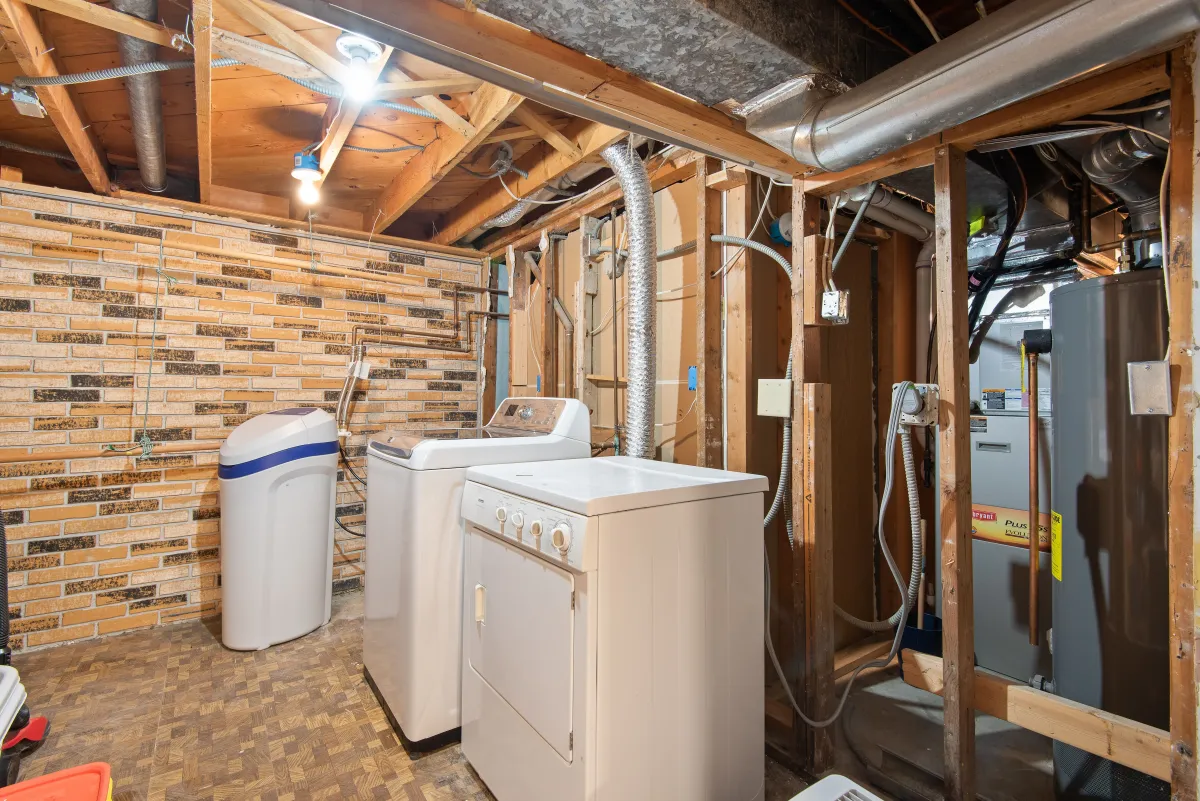
Electric water heater not heating: upper vs lower
Read the symptom first, because most standard electric tanks have two heating elements and two thermostats, one pair near the top and one near the bottom. University of Hawai'i Maui College course material describes the usual home unit as "a 240-volt, 4500-watt, non-simultaneous water heater," meaning "only one of the elements" runs at a time. A SUNY Canton bulletin says "the upper thermostat will take priority and heat up the top portion of the water," and only then does the lower one take over.
No hot water at all
Rheem's checklist for "Not enough or no hot water" begins with power: "A fuse is blown or a circuit breaker tripped," with the fix "Replace fuse or reset circuit breaker." It also lists the "Manual reset limit (ECO)," the red button covered in the next section.
If power and the reset button check out, look at the top of the tank. When the upper element burns out, American Water Heater's training manual says, "the water heater will cease to function because the upper thermostat will never be satisfied." The lower element never gets its turn. A.O. Smith's no-hot-water chart has you test the upper element first and, if it is good, replace the upper thermostat.
Lukewarm, or the hot water runs out fast
Here the top of the tank is still heating, which points to the bottom half: the lower element, or the lower thermostat, which A.O. Smith's chart says "is the most likely to fail before upper thermostat." Before buying anything, rule out the free causes the makers list:
- Rheem: "Cold water inlet temperature may be colder during the winter months," which it calls "normal."
- Rheem: "Water usage may have exceeded the capacity of the water heater"; wait for it to recover.
- Rheem also lists a thermostat set too low.
- A.O. Smith: an "Undersized water heater" may run out "too quickly," and "A melted dip tube can restrict the flow of hot water."
If the tank was just installed, A.O. Smith also lists "Water connections to unit are reversed" as a cause.
The reset button and no hot water after a power outage
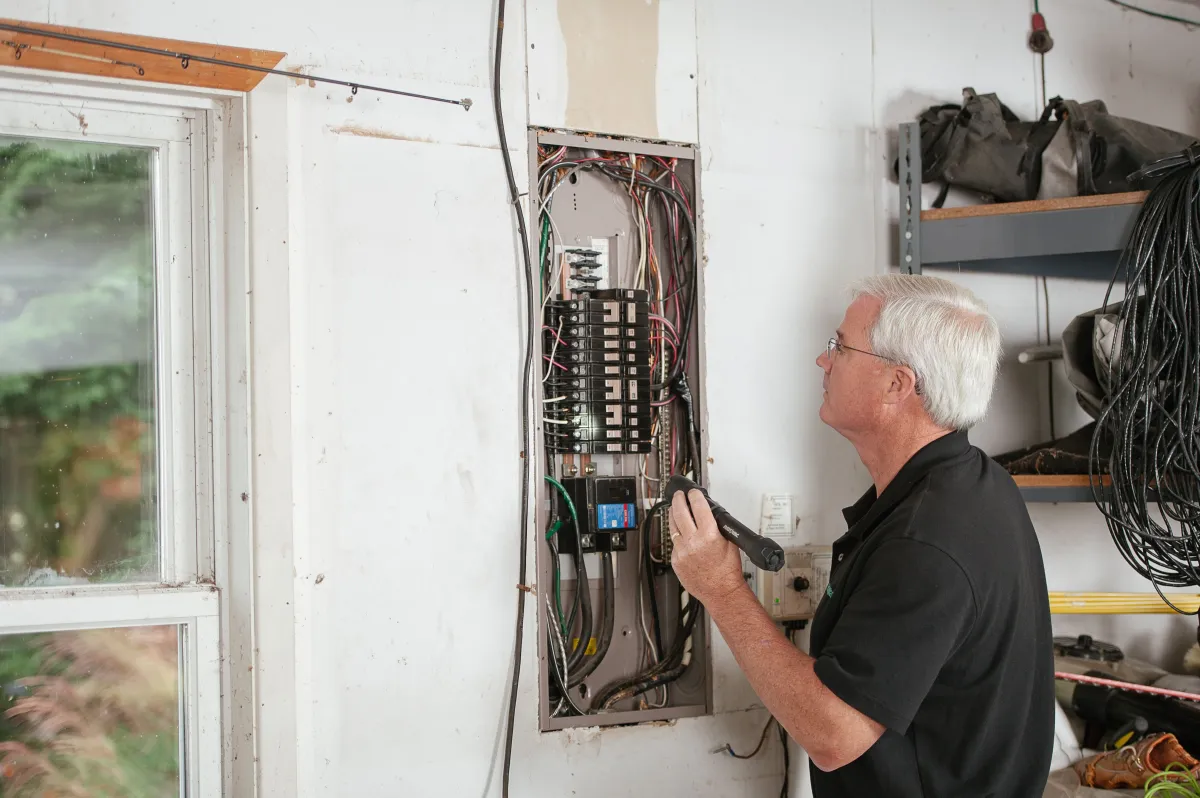
Find the red button before calling anyone. On electric models it sits above the upper thermostat, and American Water Heater's manual says it "can be reset by firmly pushing the red button." Reaching it means taking off the upper access panel, so turn the power off first; University of Missouri Extension says "before removing the thermostat access panels, turn the electricity off at the circuit breaker or fuse box." It is a high-temperature cutoff, the ECO. A.O. Smith's chart reads a click when you push it as a sign that the heater "got too hot," which tripped the cutoff.
The makers differ here. A.O. Smith says a tripped ECO "can usually be reset, but you should have a qualified person investigate the cause." Rheem says, "Once the control opens, it must be reset manually," and goes further: "The cause of the high temperature condition must be investigated by qualified service technician and corrective action must be taken before placing the water heater in service again." If you do reset it and it trips again, this guide suggests calling a technician rather than pressing it again.
After an outage, start with Rheem's first check, the supply: make sure the electric supply "and disconnect switch, if used, are in the ON position." If the breaker is on and the upper thermostat still gets no power, A.O. Smith's chart points to the "circuit breaker/wiring"; checking for 240 volts on live terminals is a job for an electrician or technician.
Testing an element, and where the makers disagree
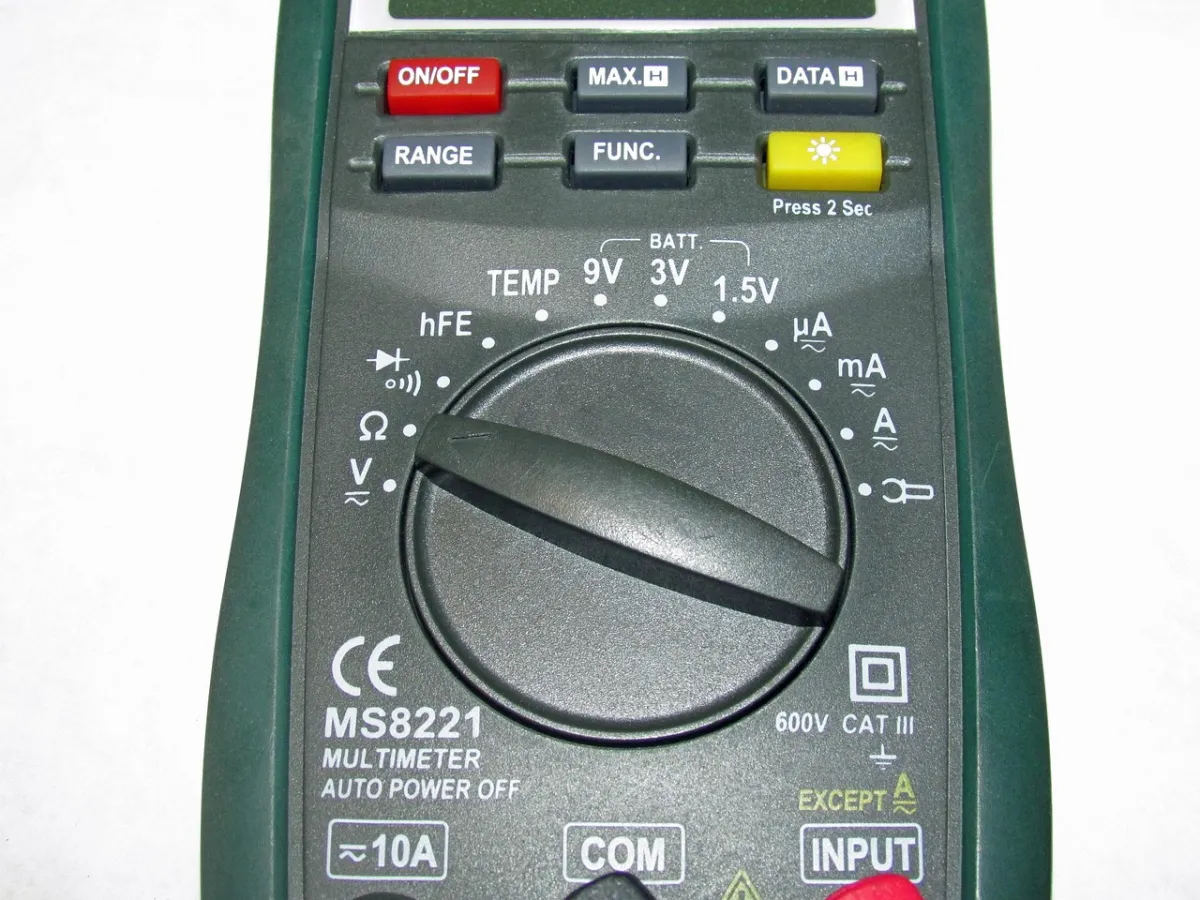
Decide whose manual you are following before you open a panel. Rheem's electric manual (AP23124) says: "For your safety DO NOT attempt repair of electrical wiring, thermostats, heating elements or other safety devices." Another Rheem electric manual adds, "DO NOT attempt to repair or replace any part of your water heater unless it is specifically recommended in this manual." A.O. Smith takes the other side. Its troubleshooting chart walks through a meter test, and its heat pump manual says, "A good element will have a resistance ranging between 5 and 25 Ohms."
The A.O. Smith chart says to turn the power off and disconnect the element's wires before measuring. A reading outside 5 to 25 ohms means the element needs replacing. If both elements and both thermostats test good, the chart points to a leak on the hot water side.
Safety note: A standard electric water heater runs on 240 volts. University of Missouri Extension says "before removing the thermostat access panels, turn the electricity off at the circuit breaker or fuse box." A.O. Smith says to "turn power OFF and check the power wires with a non-contact circuit tester before working on the water heater." Rheem says "DO NOT turn on the electrical supply or operate this water heater unless it is completely full of water." American Water Heater's manual says powering an element that is not fully under water, called "dry firing," "will cause the element to immediately burn out." That can ruin a brand-new element the moment power comes on.
Gas water heater not heating: pilot, thermocouple, lockout
Check first whether the pilot is lit. University of Missouri Extension says "The thermocouple acts as a safety cutoff for the gas valve," and the Hawai'i course text says "A thermocouple must sense a pilot flame in order to allow the gas to flow." So a failed thermocouple can keep the pilot from staying lit, and the burner from getting gas.
The sources split here too. Missouri Extension's 2014 guide says "You should replace the thermocouple if [it] is faulty." Rheem's gas manual says "The thermocouple should be replaced by a qualified service technician." Bradford White's service manual is marked "To be performed ONLY by qualified service providers."
Look at the label for FVIR. An industry safety standard (ANSI Z21.10.1a) for flammable vapor ignition resistant (FVIR) gas water heaters took effect July 1, 2003, according to the CPSC. Rheem says its FVIR models have "a combustion shut off device that shuts the operation of the water heater down if undesirable combustion conditions occur," and adds, "Please contact a Qualified Service Technician if this occurs." American Water Heater's training manual says the ECO is "a single use switch" that "requires complete replacement of the entire thermostat if activated." Bradford White calls the gas valve "a non-repairable device."
Safety note: Connecticut's utility regulator says, "If the smell is strong or you are unsure, leave the building and then call," and "Don't use any electrical equipment or lights that might create a spark in the area of the odor." Relight a pilot only by the instructions on your heater's label; Rheem says to "read and follow the instructions on the label." A tripped combustion shutoff on an FVIR heater is a call for a technician, not a relight. The CPSC says gasoline "should never be stored or used indoors (in a basement or garage) where vapors can ignite," and to have a professional inspect fuel-burning water heaters every year. Rheem warns of "asphyxiation from carbon monoxide" and says never to operate the heater "unless it is properly vented." The CPSC says to install CO alarms in hallways near bedrooms.
What the parts cost vs a new tank
Price the part before you price a tank. The figures below are Home Depot online listings checked November 11, 2026, at the site's default store; prices vary by store. Pro estimates come from Angi (2025 data) and Fixr (updated August 29, 2025), and the two disagree.
| Part | Part price | Pro estimate, installed |
|---|---|---|
| Thermocouple, 24 in. | $11.98–$14.22 | Up to $150 (Angi); $150–$325 (Fixr) |
| Element, 4500 W | $18.98–$19.39 | $200–$300 (Angi); $200–$750 (Fixr) |
| Upper thermostat | $18.98 | $150–$200 (Angi); $100–$250 (Fixr) |
| Tune-up kit | $34.98–$35.99 | Not listed |
| New 40-gal tank | $469 electric; $609 gas | $850–$1,800 (Angi) |
The tune-up kits from Everbilt and Rheem each hold two 4500-watt elements plus an upper and a lower thermostat. Element wattage varies by model: the $469 Rheem tank in the table is a 3800-watt model, so this guide suggests matching the voltage and wattage on your own heater's rating plate. At Walmart, a Camco screw-in element listed at $23.05 from a third-party seller. The $469 electric tank costs about 25 times the $18.98 Everbilt element. For more small fixes that beat a service call, see the guide on plumbing fixes that cost $15 instead of $400.
When to stop repairing and replace the tank
Check the age on the rating plate before you buy parts. ENERGY STAR says that if your water heater "is more than 10 years old," it is "time to consider replacing it before you're left with an emergency decision," and that heaters can "fail without warning." UF/IFAS Extension says "most water heaters last 10–15 years."
- Rust: "Corrosion is a sign that the water heater is breaking down," per ENERGY STAR.
- A reset button that keeps tripping: both makers want a qualified person to find the cause.
- A failed gas valve: Angi puts replacement at about $350 on average, a large share of what a new tank costs.
Rumbling usually comes from sediment on the tank bottom, ENERGY STAR says, and "Any noises should be checked out." For flushing, the T&P valve and setting the dial, see the guide to water heater settings for savings and safety. When the heat comes back, keep it at 120°F, the setting the CPSC urges; its scald sheet says "Most adults will suffer third-degree burns if exposed to 150 degree water for two seconds."
Warranty: what voids it and what doesn't
Call the maker with your model number and proof of purchase before you buy a part. None of the warranty papers here says a DIY repair voids coverage. Rheem's 2012 warranty excludes failures "resulting from improper installation" and those "caused by the use of unapproved parts or components." Its manual adds that the warranty "does not cover damage or failure resulting from operation with an empty or partially empty tank." Ask the maker whether a generic part counts as approved. A.O. Smith says the anode rod "must be installed in the water heater at all times or the warranty is void."
Labor coverage differs. That Rheem warranty covers labor in its first 2 years; A.O. Smith's Signature 100 electric tank carries 1 year of limited labor coverage. While labor is still covered, the maker's service visit may cost you nothing.
Sources and how we checked
We used maker manuals and troubleshooting charts, federal pages, and university extension guides, all viewed November 11, 2026. Home Depot prices were read online without choosing a store, so they reflect the site's default store; Lowe's and Ace showed no prices without a store selected, and Walmart's price was a third-party marketplace listing. Angi and Fixr figures are their own estimates. Some maker documents were read as third-party copies, named below. No heater was tested for this guide.
- Rheem: Residential Electric Use & Care Manual, AP23124; Residential Gas FVIR Use & Care Manual, AP23059; Electric Use & Care Manual AP21980 Rev 02; Residential Limited Warranty, AP12167-6 (May 2012, via Home Depot).
- A.O. Smith: Standard Electric, No Hot Water chart; Hybrid Heat Pump Use & Care Guide (October 2016); Signature 100 product page.
- American Water Heater University: Residential Water Heater Training (January 2016).
- Bradford White: FVIR Gas Service Manual (Rev. 10/18, ManualMachine copy).
- ENERGY STAR: When Should You Replace Your Water Heater?
- CPSC: Tap Water Scalds; FVIR news release (July 8, 2003); Carbon Monoxide safety.
- Connecticut PURA: What To Do If You Smell Natural Gas (March 2026).
- Extension and courses: University of Missouri Extension EM111 (2014); UF/IFAS FY1025; University of Hawai'i Maui College, Water Heating (2018); SUNY Canton, dual element sequence (2005).
- Prices: Home Depot Everbilt thermocouple, White-Rodgers thermocouple, Everbilt element, Rheem element, Everbilt upper thermostat, Everbilt tune-up kit, Rheem tune-up kit, Rheem 40-gallon electric, Rheem 40-gallon gas; Walmart Camco element.
- Cost estimates: Angi, water heater repair cost (2025 data); Fixr, water heater repair cost (updated August 29, 2025).
Updated: November 16, 2026





0comments