

A pale film settles on the nightstand by morning, and the humidifier tank has started to smell a little like a pond. The jug of white vinegar under the sink looks like the obvious fix, but how to clean a humidifier with vinegar depends on who you ask. Is vinegar enough on its own?
How to clean a humidifier with vinegar
Soak the unplugged, empty tank in white vinegar for the time your maker lists, then scrub and rinse. Humidifier makers tell owners to use vinegar to dissolve mineral scale, as a soak with the machine off, while the EPA adds a schedule. It says to clean portable units every third day, to disinfect with the maker's product or 3% hydrogen peroxide when the manual names none, and to use distilled water to cut white dust.
Vicks says it plainly on its support page: "Please do not run the unit with the vinegar in it." The same page treats removing scale and disinfecting as two separate jobs.
| Claim | Verdict | Why |
|---|---|---|
| Vinegar loosens mineral scale | REAL | Makers' manuals use it for descaling |
| Spring or mineral water stops white dust | MYTH | EPA: not treated to remove minerals |
| Running vinegar through the machine | RISKY | Vicks and Pure Enrichment say don't |
| Mixing vinegar and bleach | RISKY | Poison Control: it releases chlorine gas |
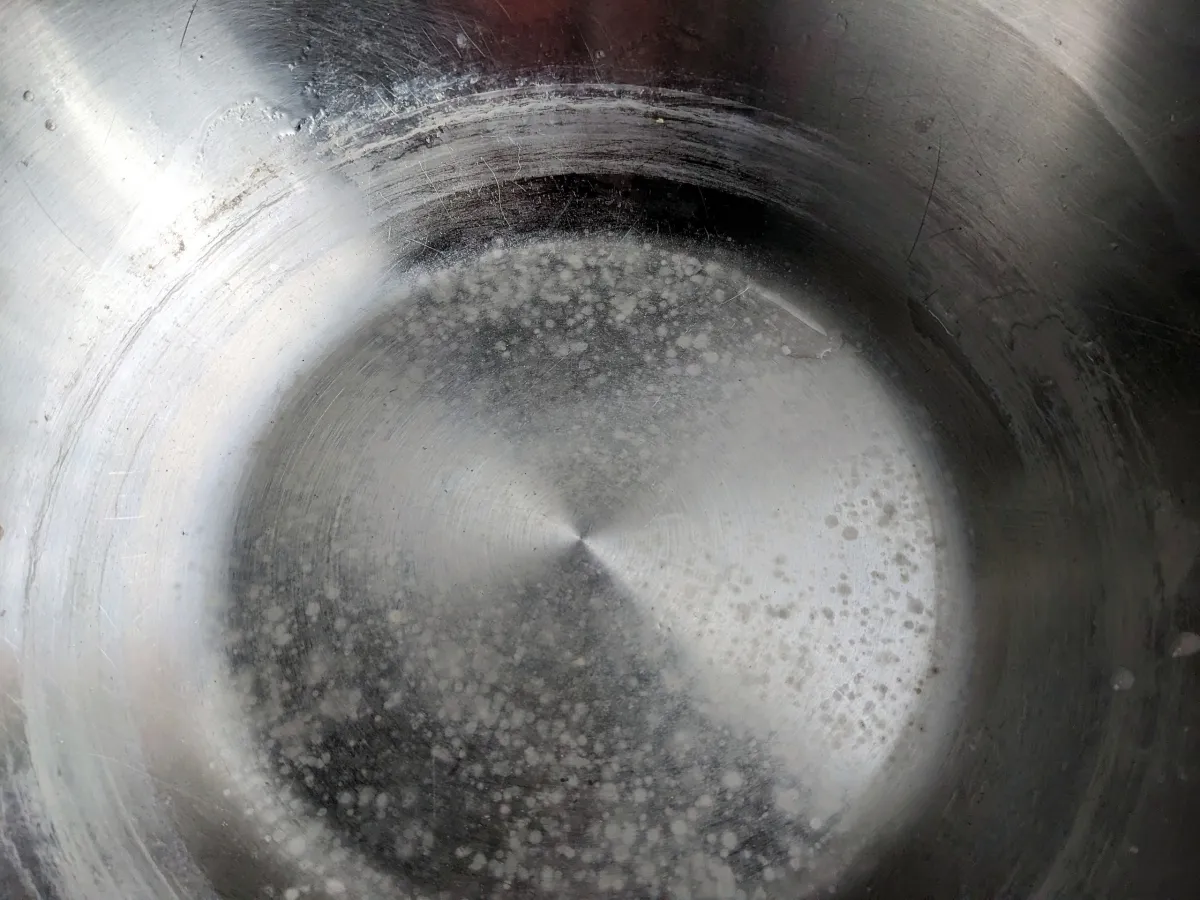
Mineral scale is the chalky crust hard water leaves behind, the same thing that builds up in a cooking pot. Vinegar is an acid, and the makers use it to soften that crust so it wipes off.
What the makers say about vinegar
The amounts differ by brand, so your own model's manual comes first.
| Maker and source | Vinegar | Soak time |
|---|---|---|
| Vicks support page | Undiluted, enough to cover the nebulizer | At least 20 minutes |
| Honeywell HCM-890 manual | 1 cup, undiluted | 20 minutes |
| Levoit blog | 3 cups distilled white vinegar | 15 to 20 minutes |
| Pure Enrichment MistAire Studio support | 1 tsp vinegar plus 1 tsp water | 5 minutes |
| Crane EE-5301 manual | 1 tsp in a full tank | 20 minutes |
The Honeywell figures come from its manual as posted by ManualsDir, and the Crane figures from its manual as posted by ManualsOnline. Crane's line lets owners use 1 teaspoon of bleach or vinegar in a full tank. Boneco's E2241 manual, as posted by emanuals.org, gives no ratio for its diluted vinegar.
For heavy buildup, Vicks says to let it soak longer; for its warm-mist models, that can mean several hours or overnight. For mildew or mold, Pure Enrichment calls for "2 cups of undiluted white vinegar" left for at least an hour. Vicks and Honeywell both say to take the wick filter out first. The Vicks V3900 manual puts it in capitals: "REMOVE FILTER BEFORE CLEANING." Cleaning with the filter in place destroys it, Vicks warns.
Step by step
- Unplug the humidifier first, as the EPA advises.
- Empty the tank and pull out any wick filter.
- Pour in white vinegar at your maker's amount and let it soak. Vicks says: "Do not submerge the whole base in any liquid."
- Scrub scale off with a soft brush. On ultrasonic models, Pure Enrichment says of the misting disc: "Do not scrub or scrape."
- Pour out the vinegar and rinse every part with plain water until no vinegar is left.
- Disinfect only the way your manual says. Vicks's V3900 manual and Honeywell's both use 1 teaspoon of bleach in 1 gallon of water for 20 minutes. Never add bleach while any vinegar is still in the tank; Poison Control says, "Do not mix vinegar with chlorine bleach," because the mix releases chlorine gas. Vicks asks owners to do the steps "in the proper order to avoid harmful chemical interactions." If the manual names no disinfectant, the EPA suggests a 3% hydrogen peroxide solution on every surface that touches water.
- Rinse again. Vicks says to keep rinsing "until the smell of bleach is gone."
- Dry the parts and refill with distilled water.
Between deep cleans, the EPA's daily routine is short: "Empty the tank, wipe all surfaces dry, and refill the water in portable humidifiers daily to reduce any growth of microorganisms." Vicks says "Weekly cleaning is recommended"; the EPA's every-third-day schedule is stricter. Vicks says its wick filters should be "changed every 1-3 months depending on your water quality."
White dust: what it is and how to cut it
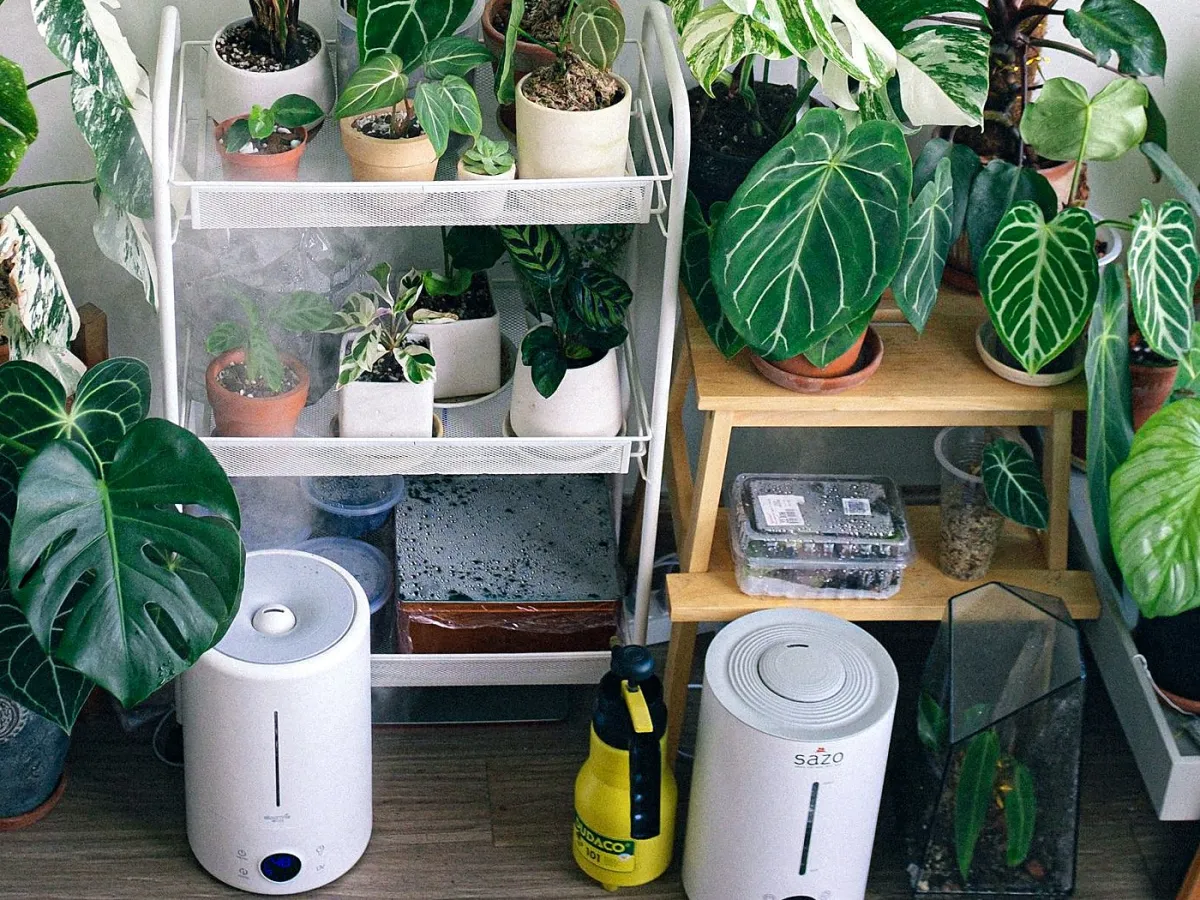
White dust is the minerals in tap water, thrown into the air with the mist. The EPA says ultrasonic and impeller (cool mist) models release the most.
The CPSC says the dust "may contain particles that are small enough to enter the lungs," and adds that the health effects of breathing it are not clear. Its advice is direct: "Do not use tap water because it contains more minerals."
A 2020 study in the International Journal of Environmental Research and Public Health, run in a test room in South Korea, found indoor PM2.5 ranging "from 16 to 350 ug/m3, depending on the water types used for an ultrasonic humidifier." With a natural evaporative humidifier, white dust "did not increase the indoor PM2.5 concentration," whatever water went in.
The EPA says distillation removes minerals best; spring or mineral water has not been treated to remove them. Results vary by water type. A University of Alberta release reported no particles from store-bought distilled water, while Virginia Tech still measured about 16 µg/m³ from deionized water. Distilled water cuts the dust sharply, but it may not bring it to zero.
Mold and humidity
The CPSC says film or scum on the water or the tank walls "may indicate that the humidifier tank contains bacteria or fungi," and that "Breathing dirty mist may cause lung problems."
Too much moisture is the other half. The EPA says not to humidify above 50% relative humidity. The CPSC suggests keeping it "between 30% and 50%" if possible. NDSU Extension goes lower for cold climates and says to bring winter humidity "under 40 percent" when windows sweat.
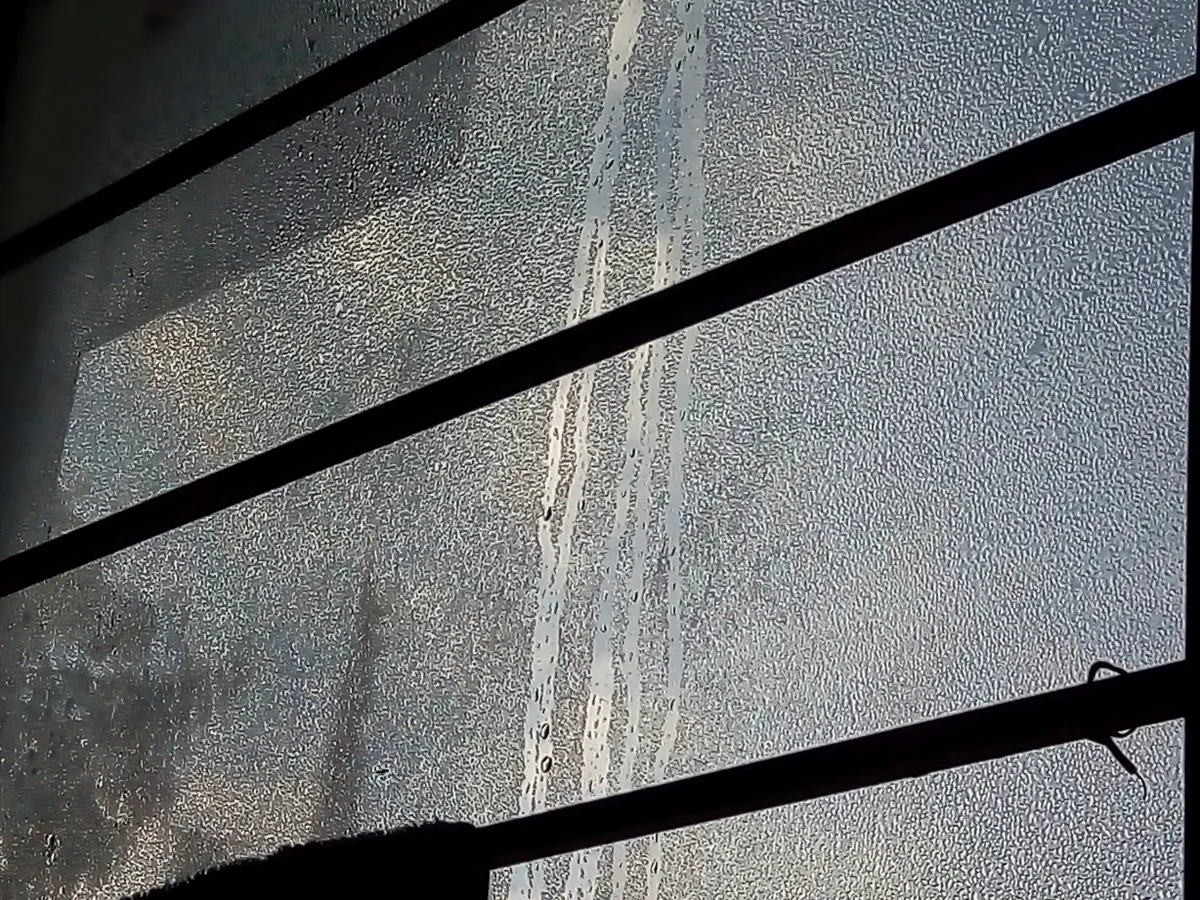
Water running down the glass is the EPA's sign to turn the humidifier down or move it. If moisture has already turned into dark spots, this guide on getting rid of black mold covers cleanup. For a room that stays damp, see whether a salt dehumidifier works. For cold, wet glass, see how window insulation film holds up.
Safety note: The EPA and the CPSC both say to unplug the humidifier before cleaning it. Poison Control says, "Do not mix vinegar with chlorine bleach," and "Mixing bleach with an acid forms chlorine gas"; rinse all vinegar out before any bleach goes in, and "If you inhale chlorine gas," leave the area right away and get fresh air. After any cleaner or disinfectant, rinse the tank thoroughly so chemicals do not go into the air, the EPA says. The AAP says "Cool-mist humidifiers generally are considered safer for young children" than warm-mist units or steam vaporizers because "there's no risk of burns," and to place the machine near the child but "out of their reach." The CPSC says dirty humidifiers are of special concern to "allergy or asthma sufferers." The EPA says to stop using the humidifier and call a doctor if you have breathing symptoms.
Sources and how we checked
We read federal and university pages first, then maker pages, all viewed November 11, 2026. The federal pages we read (EPA, CPSC, NDSU Extension, AAP) do not mention vinegar; the vinegar steps here come only from makers. The CPSC PDF and the Vicks pages blocked automated access, so we read Wayback Machine copies. Three manuals were read on third-party manual sites, named above. The University of Alberta finding comes from its news release, not the paper itself. No machine was tested for this guide.
- EPA: Use and Care of Home Humidifiers (last updated April 29, 2026); A Brief Guide to Mold, Moisture and Your Home (last updated February 18, 2026).
- CPSC: Dirty Humidifiers May Cause Health Problems, Publication 5046 (2012 printing, Wayback copy).
- NDSU Extension: Humidifiers may Spew Bacteria and Fungi in the Air; Eliminate Condensation on Windows.
- AAP HealthyChildren.org: Cough and Cold Survival Kit.
- Poison Control (National Capital Poison Center): No, vinegar is not always safe; Chlorine gas: Get the facts.
- Research: Indoor PM2.5 by water type and humidification method, IJERPH 2020; Virginia Tech, ultrasonic humidifiers and water quality (2020).
- Makers: Vicks, How to clean your humidifier; Vicks V3900 manual; Honeywell HCM-890 manual (ManualsDir); Levoit blog (August 16, 2022); Pure Enrichment descaling and mold cleaning; Crane EE-5301 manual (ManualsOnline); Boneco AOS E2241 manual (emanuals.org).
Updated: November 13, 2026




0comments