

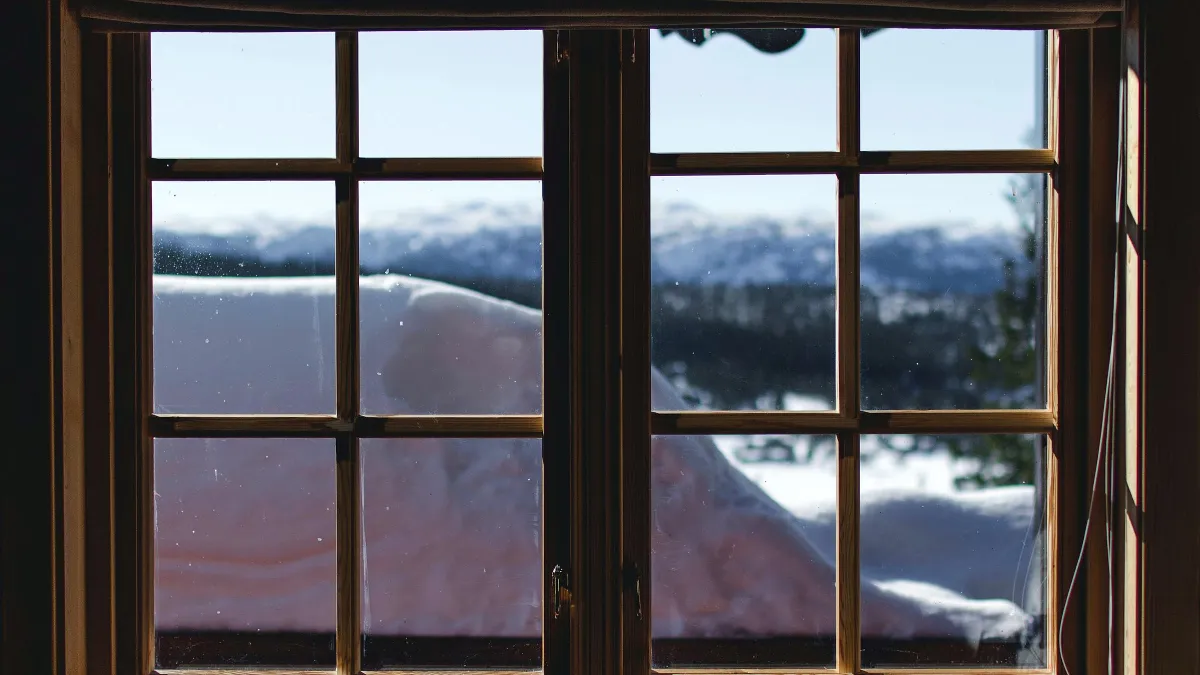
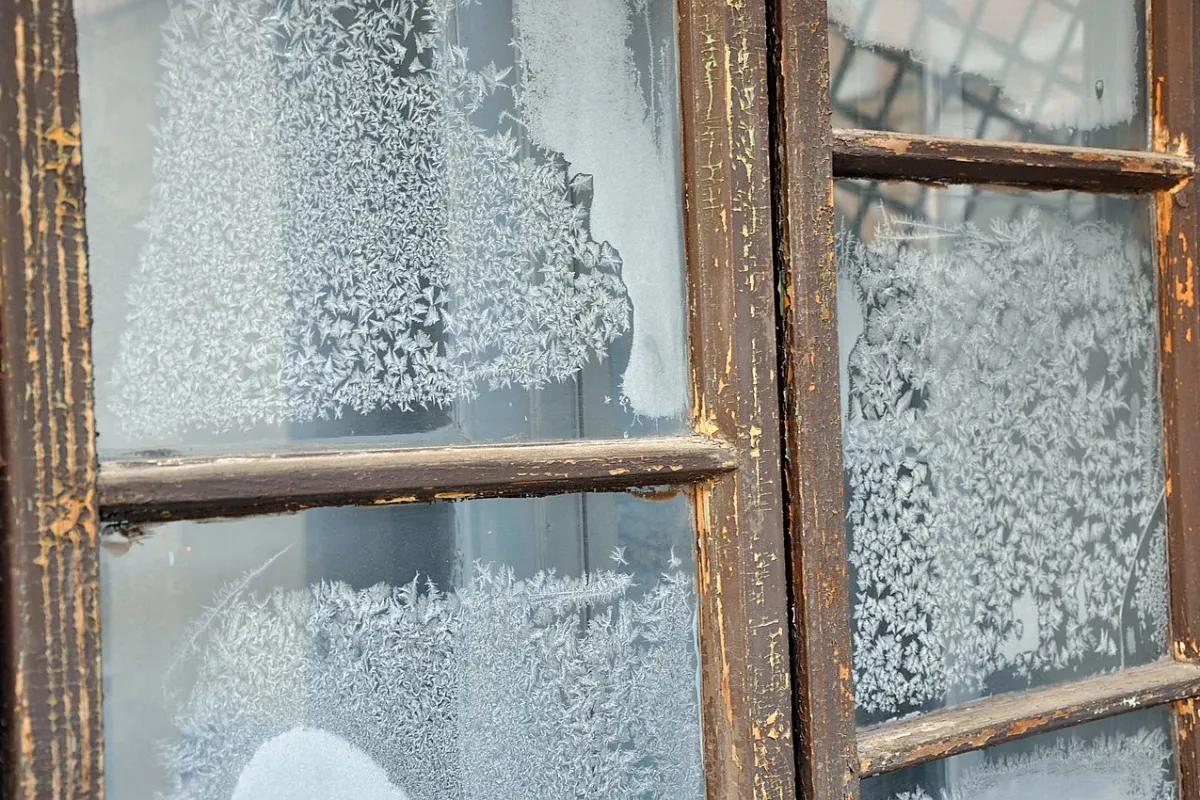
It is November, and frost is forming on the inside of the old wooden window by the bed. A plastic window kit sits on the store shelf, and one maker's website says the project can "increase the R value of your windows by 90%." So does window insulation film work as well as that, and is anyone measuring it?
Does window insulation film work?
The real question is what film changes on a drafty window. Plastic shrink film does work as a draft stopper and helps a room feel warmer, as ENERGY STAR says, but it saves less heat than the boxes suggest. The only heat-loss test of a shrink kit this guide found, a 2010 University of Oregon student project, measured about 11 to 13% less heat flow through one old single-pane window, or a 15% gain in R-value, far below the 90% R-value gain that two kit makers advertise.
ENERGY STAR calls plastic heat-shrink window coverings "easy, effective, and inexpensive." It says they reduce drafts and condensation but gives no savings percentage, and it rates the project's cost at one dollar sign, which its key defines as under $100.
Here is how the common claims hold up:
| Claim | Verdict | Why |
|---|---|---|
| Film cuts drafts, room feels warmer | REAL | ENERGY STAR: reduces drafts |
| A tape-on kit equals double-pane glass | MYTH | Kit 11% lower U; double-pane 42% lower |
| Covering an escape window | RISKY | NFPA: everyone must be able to remove it |
| Pulling tape off pre-1978 paint | RISKY | EPA: chips and dust can hold lead |
The MYTH row compares two studies: the kit's 11% (0.98 to 0.87) comes from the Oregon students' hot box, and the double-pane 42% (a single-pane wood window at 0.88 against double-pane at 0.51) from a Pacific Northwest National Laboratory (PNNL) computer model. U-factors here are in Btu/hr·ft²·°F; lower means less heat lost. Efficient Window Coverings, a site linked with the Attachments Energy Rating Council, says interior panels "when properly installed" bring a window close to a double-pane clear window; those panels include film stretched over a stiff frame, which a tape-on kit is not.
What the one shrink-film test found
Read the Oregon numbers as a small test. Four architecture students built an insulated hot box in Eugene, set a wood-framed single-pane window "in relatively poor condition" in the middle, and heated one side with a light bulb for 24-hour runs. They tested the bare window, the window with an M-D shrink kit and the window with Energy Film, a static-cling film stuck directly on the glass.
The students' own calculation gives the window a U-factor of 0.87 with shrink film, against 0.98 without it, which is about 11% lower. Their summary says "nearly 13%," and their conclusion reports a "15% increase in R-value." M-D claimed up to 90% more R-value. Energy Film claimed up to 35% less heat loss, and the paper reports "a 6% reduction." The paper's verdict: "Both products significantly fall short of the best results claimed by the brand manufacturers."
The limits matter. It was one window, the temperature difference across it was only about 4 to 5°F, with both sides of the box between about 76 and 84°F, far from a winter night, and the 0.98 for the bare window was an assumed value, not a measured one. It was a class project, not a peer-reviewed study.
The makers' own claims come without test details:
- Frost King says its kits reduce heat loss "by as much as 35%," and a Frost King tips page says the project "can increase" R-value by 90% and save up to $500. Neither page says what window or test those numbers come from.
- Duck says "Save up to 10%*" on home energy costs. The asterisk reads "*When you properly seal and insulate your home," and the estimate is for a whole "typical" house built between 1970 and 1989, based on Department of Energy recommendations (Duck links ENERGY STAR's method). It is not a number for the film alone.
- 3M's product pages say the kits save energy and reduce heating costs, with no number.
Why an extra clear layer helps, and how much
Start with what a second layer of glass does. The Department of Energy (DOE) Energy Saver pages, as archived on January 1, 2026, say "About 30% of a home's heating energy is lost through windows." In PNNL's 2015 model, a single-pane wood double-hung window has a U-factor of 0.88, and a double-pane one has 0.51.
The numbers below are for glass panels in a frame, not plastic film. PNNL's model found that a clear glass panel over a single-pane window cuts the U-factor by 47 to 53%. In tests outdoors in Reno, Nevada, in early 2002 (reported in 2003), Lawrence Berkeley National Laboratory (LBNL) measured a clear glass exterior storm window on a leaky single-pane wood window and found the U-factor fell from about 0.83 to 0.58, roughly 30% lower.
For whole houses, PNNL field tests summarized by the nonprofit ACEEE found heating savings of 6.5 to 10% from interior storm windows (storm panels, not film). A shrink kit works on the same idea of trapped air, but no one in these sources measured a kit that way, and Efficient Window Coverings says there are "no industry standards" for the performance of non-glass interior panels.
Which windows are worth covering
Old single-pane glass in a loose frame is where the film has the most to fix; the Oregon students tested that kind of window. ENERGY STAR adds that film can stop air leaks around the window if it extends over the woodwork.
Double-pane windows gain less. In PNNL's model, a clear glass panel takes a double-pane wood window from 0.51 to 0.32, a drop of 0.19, while the same panel takes a single-pane window from 0.88 to 0.46, a drop of 0.42.
Seal the window itself first. The University of Maryland Extension says to make sure the window is sealed with caulk and weatherstripping before adding a storm layer; the guide to draft-proofing windows for under $10 covers those steps.
Skip these:
- A window you may need to escape through in a fire, unless everyone in the home can pull the plastic off quickly.
- Frames where the tape would land on the wall. 3M says not to apply it to painted walls; Frost King says not to apply it to wallpaper, wallboard, plaster or veneer.
Condensation: when film helps and when it traps moisture
Check indoor humidity before you blame the window. ENERGY STAR says film covers reduce moisture buildup on the window, and Efficient Window Coverings says a tight interior panel helps prevent condensation by reducing the moisture that reaches the cold glass.
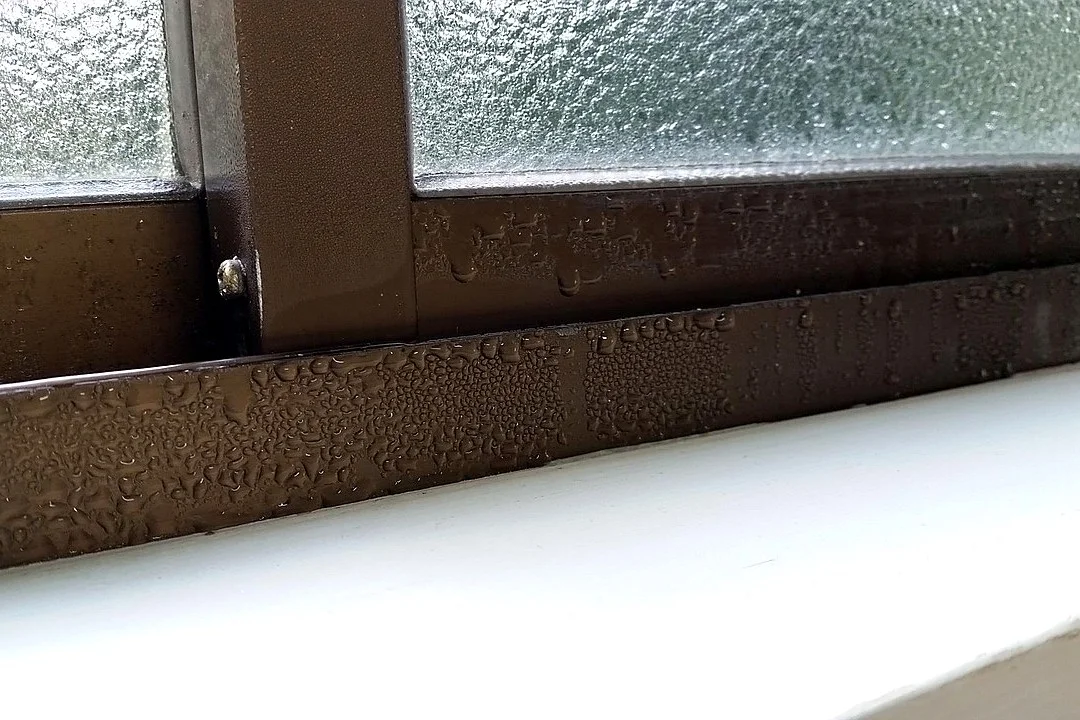
North Dakota State University Extension suggests aiming for indoor humidity around 40% in winter. At that level, it said in 2011, a double-pane window should start to show condensation when it drops below 0°F outside. A 1974 University of Minnesota Extension bulletin put it bluntly: "Serious condensation on a window is a danger signal." It means the moisture level is too high, so this guide suggests treating it as a humidity problem first.
A second layer can also trap moisture. The DOE says any storm window carries "a slight risk of condensation" between it and the existing window, and says making the existing window as airtight as possible with caulk lowers that risk. For a damp room, see the guide to salt as a dehumidifier.
How to put it up so it seals
Duck says tape that will not stick usually comes down to a dirty or cold surface, so start there:
- Clean the frame with a general-purpose or alcohol-based cleaner, as Duck advises. Duck says the surface should be 40°F or warmer for the tape to stick.
- For indoor kits, 3M suggests picking a bright, sunny day if it is below 0°F outside.
- Frost King says to leave at least 1 inch of overhang around the edge.
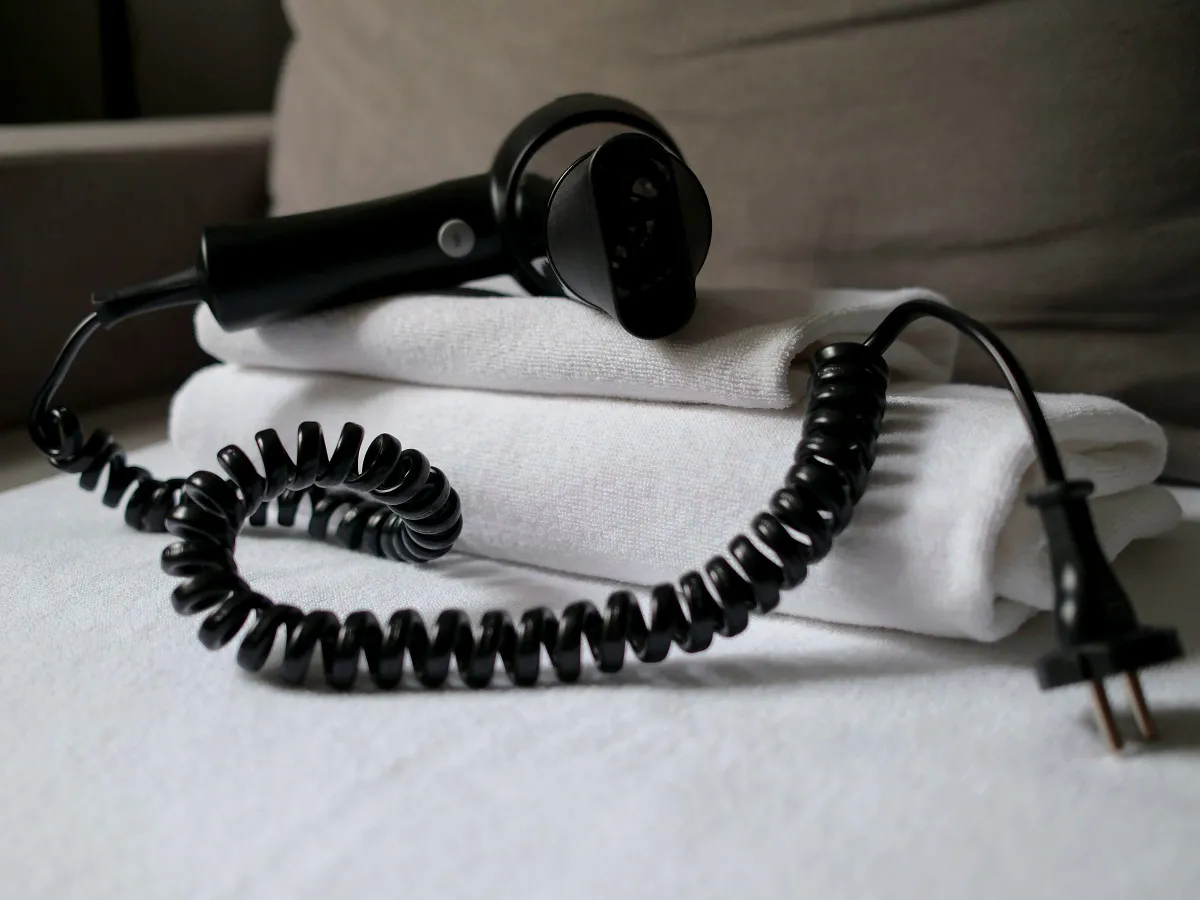
- Shrink the film with a hair dryer. Frost King's sheet says to use the highest setting, held 4 to 6 inches away, and "Do Not Touch Plastic with Hot Dryer!" Follow your own kit's box, as ENERGY STAR advises.
- Stop when the wrinkles are gone; Duck warns that over-shrinking pulls the tape away.
If the window has mini-blinds, ENERGY STAR notes the plastic can stop you from opening and closing them, and describes a way around it: remove the wand first, then cut a tape-reinforced hole in the film for it.
For outdoor kits, 3M says the film "should not be shrunk with a hair dryer" and should go up when it is above 50°F outside. Duck warns about its outdoor tape used inside: it "may peel off paint and varnish."
When spring comes, warm the tape with a hair dryer before pulling the film off; Duck and Frost King both advise this. ENERGY STAR says the tape removes easily without damaging the finish; on old, worn paint, read the safety note first.
Safety note: If your home was built before 1978, the EPA says it is more likely to have lead-based paint, and about three-quarters of U.S. homes built before 1978 still contain some. Old or worn lead paint can turn into chips and dust where surfaces rub, as on window sills; those are a hazard when children or adults breathe or swallow them. If paint comes off with the tape, the EPA says to remove chips and dust with a damp paper towel, put them in the trash, wipe the area with a clean wet paper towel, and fix small areas (under 6 square feet) of damaged paint without sanding. If you are not sure whether the paint has lead, the EPA says to hire a certified lead-based paint inspector or risk assessor, or assume it does; for renovation, repair or painting work it says to hire a lead-safe certified contractor and not to remove lead-based paint yourself. A landlord or property manager of a pre-1978 rental must follow the EPA's RRP Rule when doing work that disturbs paint. On a window that is an escape route, the NFPA says to make sure everyone in your family can easily remove the plastic in an emergency, and to "Never nail or paint windows shut"; the U.S. Fire Administration says to make sure all doors and windows that lead outside open easily. Keep the hot dryer off the plastic, and do not put kit tape on painted walls, wallpaper, wallboard, plaster or veneer.

Sources and how we checked
We relied first on federal agencies and two national laboratories (LBNL and PNNL). University extension pages and the NFPA came next. We quote kit makers' savings figures from their own pages as claims. All were viewed on November 4, 2026. We found no U.S. agency or peer-reviewed measurement of shrink-film kits; the only kit test we found is the 2010 University of Oregon student paper. The DOE Energy Saver window pages returned 404 errors on November 4, 2026, so we link Wayback Machine copies from January 1, 2026. 3M's pages blocked automated access, so we read Wayback copies. We left out store prices because we could not check them at a fixed store on the day of writing.
- ENERGY STAR (EPA): Applying Plastic Over Windows Project; Seal and insulate methodology.
- U.S. Department of Energy, Energy Saver (Wayback copies, January 1, 2026): Energy Efficient Window Coverings; Install exterior storm windows with low-e coating.
- Rosenthal et al., University of Oregon Department of Architecture: shrink film and Energy Film hot box study (student course paper, winter 2010).
- T.D. Culp, PNNL: Thermal and Optical Properties of Low-E Storm Windows and Panels (PNNL-24444, July 2015).
- J.H. Klems, LBNL: Measured Winter Performance of Storm Windows (LBNL-51453, 2003).
- ACEEE: Residential Window Attachments (about 2019).
- Efficient Window Coverings: Interior Panel and purchasing interior panels.
- University of Maryland Extension: Home Energy: Storm Windows (updated July 14, 2026).
- NDSU Extension: Window Condensation Common Problem (January 10, 2011).
- University of Minnesota Agricultural Extension: humidity and condensation bulletin (1974).
- EPA: Reduce the Risk of Lead Exposure at Home (updated November 3, 2026); Lead Renovation, Repair and Painting Program (updated June 17, 2026).
- NFPA: escape barriers brochure; U.S. Fire Administration: Focus on Fire Safety: Fire Escape Plans (January 4, 2012).
- Kit makers: Frost King Winterize your windows, Home for the holidays, indoor kit instructions and mounting tape FAQ; Duck Rolled Window Insulation Kits and FAQ; 3M Indoor Window Insulator Kit (May 2026 snapshot) and Window Insulator Kit FAQs (August 2026 snapshot).
Updated: November 4, 2026




0comments