

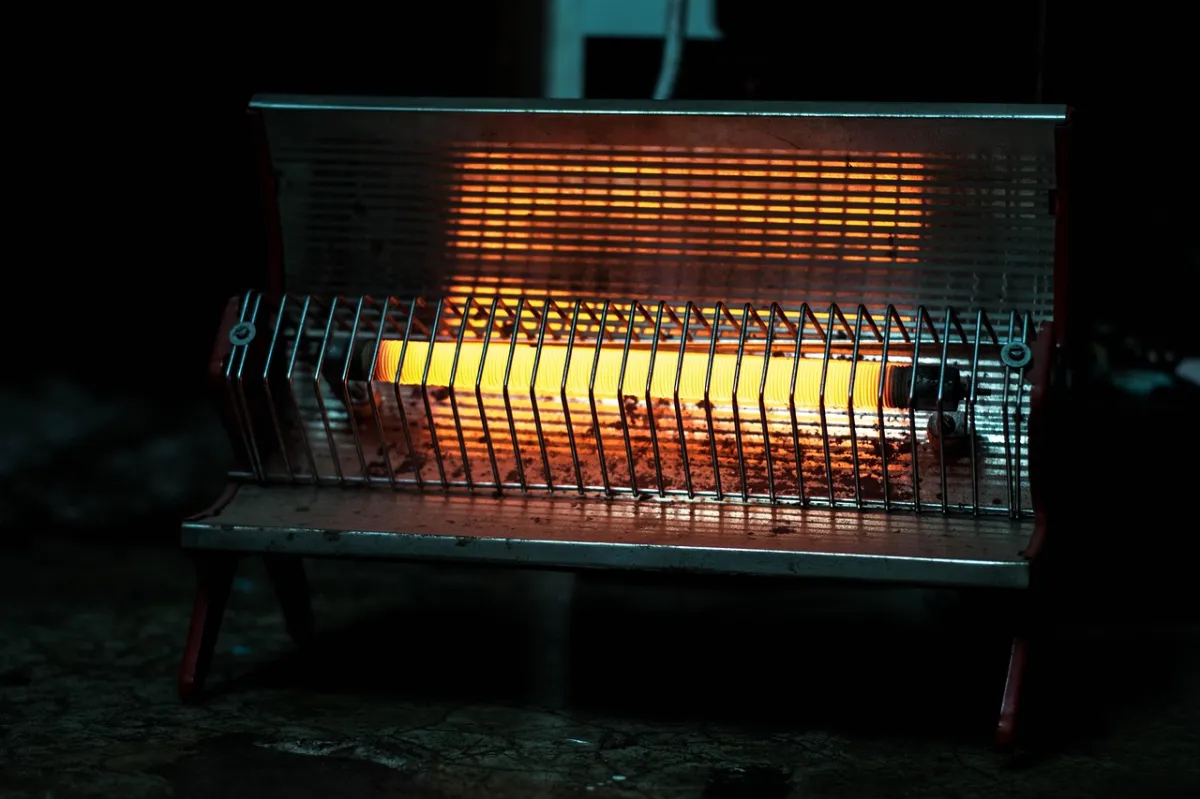
On Home Depot's website, a $104 infrared heater is listed a few clicks from a $52 plastic heater. Both say 1500 watts. The pricier one's manual promises to heat up to 1,000 square feet. Do infrared heaters save money, or does the extra $52 buy the same heat?
Do infrared heaters save money?
Not on electricity. An infrared space heater turns the same 1,500 watts into the same heat as a cheaper convection heater, such as the $52 Lasko, so an hour on high costs the same, about 27 cents at the August 2026 U.S. average residential price of 18.16 cents per kWh, according to the Energy Information Administration (EIA). Any space heater saves money only when it lets you turn the furnace down.
The Department of Energy (DOE) puts the physics plainly: "Electric resistance heating is 100% energy efficient in the sense that all the incoming electric energy is converted to heat." North Dakota State University (NDSU) Extension said in 2009 that because heaters share one source of energy, "they will produce the same amount of heat."
Here is how the common claims hold up:
| Claim | Verdict | Why |
|---|---|---|
| It warms you directly in its beam (open-element models) | REAL | DOE: heats people in its line of sight |
| It uses less power than other 1,500 W heaters | MYTH | Same watts, same heat |
| "60% more heat than other heaters" | MYTH | 1,500 W in, 1,500 W of heat out |
| Turning the furnace way down to rely on it | RISKY | Frozen pipes, condensation |
| Leaving it on while you sleep | RISKY | CPSC: turn heaters off |
The "60% more heat" line comes from a retail listing for one infrared model; the rest of this guide shows where each verdict comes from.
Same watts, same heat: why the type of heater does not change the bill
The manuals for the Dr Infrared DR-968, the Duraflame 5HM8000 and the Heat Storm HS-1500-ILOD all list 1,500 watts, and so does the listing for the $52 Lasko convection heater. NDSU gives the conversion, "1 watt equals 3.4 Btu," which makes 1,500 watts about 5,100 Btu an hour. Makers and retailers list 5,000 to 5,200 Btu for 1,500-watt infrared models, about the 5,100 Btu any 1,500-watt heater gives.
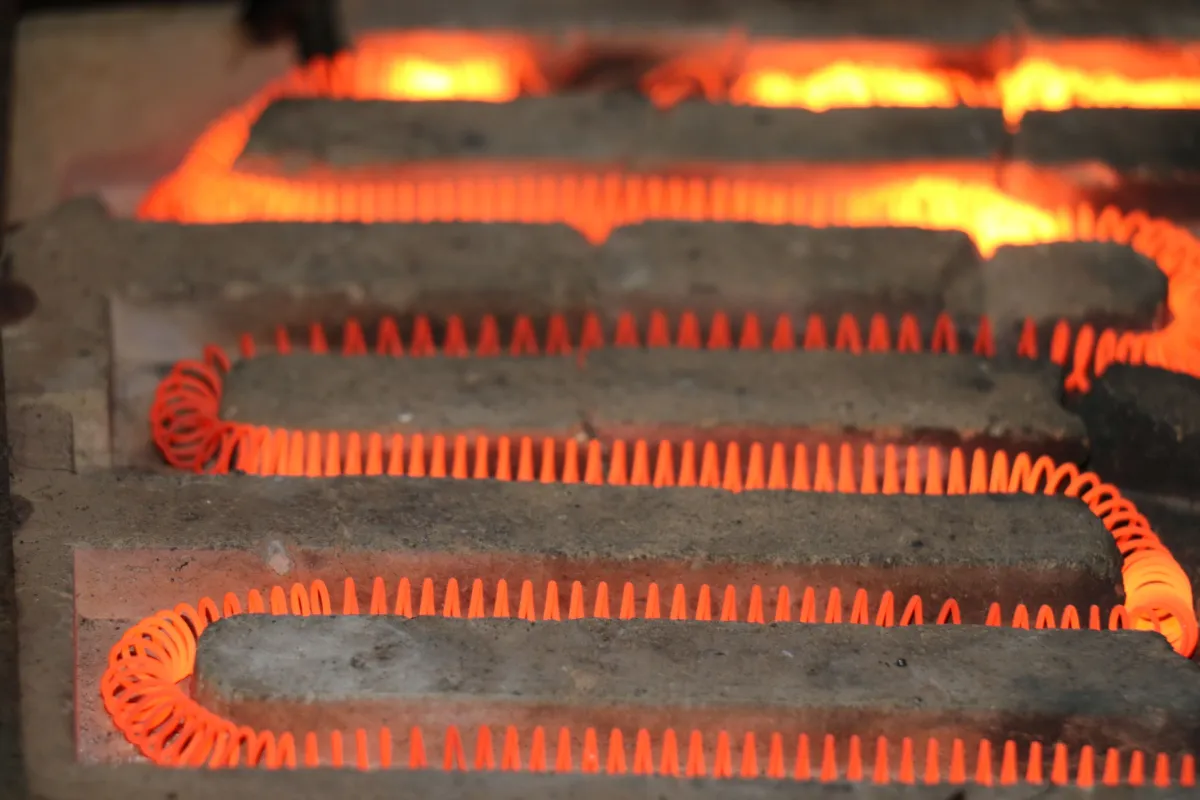
What changes is how the heat reaches you. The DOE says small space heaters "work by convection (the circulation of air in a room) or radiant heating," and that for convection models "the best types incorporate a heat transfer liquid, such as oil." Open-element infrared heaters, with exposed, glowing quartz or carbon tubes, are the radiant kind: "Radiant heaters emit infrared radiation that directly heats objects and people within their line of sight," the DOE says, and they "are a more efficient choice when you will be in a room for only a few hours and can stay within the line of sight of the heater."
That is the real advantage. If you sit in one chair in a drafty room for an evening, a radiant heater can warm you without first warming all the air, so you may be comfortable sooner or on a lower setting. The meter still charges for every watt the heater draws. Some cabinet heaters sold as infrared also blow air: the DR-968 manual says that when it heats, "the fan will blow warm air," and Home Depot lists Dr Infrared cabinet models with "Dual Heating (Forced Air)." The more a heater relies on its fan, the more it works like a convection heater.
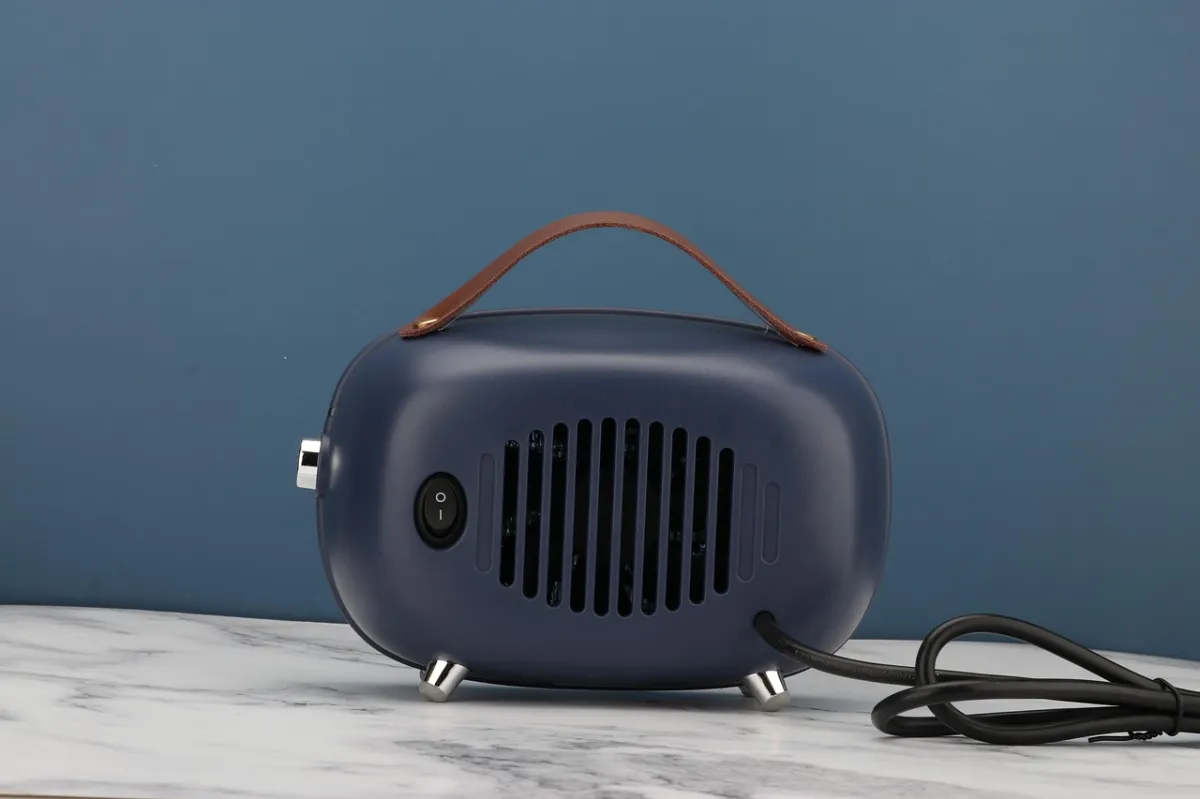
Thermostats blur the gap further. The DR-968 manual says the heater "uses approximately 1.26 kilowatts per hour," about 23 cents an hour at the EIA price, but it does not say under what conditions. Lasko's listing for its convection heater reads: "Adjusts from 750 to the max 1500 watts to maintain temperature." Any heater that cycles uses less than its full rating in a room that is already warm. The DOE's advice holds for every type: "Choose a thermostatically controlled heater, because they avoid the energy waste of overheating a room."
What the "heats 1,000 square feet" and "save 50%" claims leave out
Read the room size as a maker's claim, not a measurement. The DR-968 manual says "This heater can heat up to 1,000 square feet," then calls it "a zone heater" meant "as a supplemental heating source only." A Walmart Business listing for the same model gives a maximum room size of 400 square feet. Lasko says its 1,500-watt convection heater "heats areas up to 300 sq. ft." Same wattage, three very different promises.
For scale, University of Missouri Extension said in 2018 that "a well-insulated, 1,500-square-foot home will require at least 70,000 BTUs per hour to heat the entire house." One 1,500-watt heater gives about 7% of that.
The savings claims work the same way. Missouri Extension noted a common one: that "these space heaters can slash heating bills by up to 50 percent." NDSU's Carl Pedersen said such claims are "not untrue" but "at least misleading," and spelled out the catch: "So to achieve a 50 percent savings, homeowners would have to turn their thermostat down by 17 degrees for 24 hours a day."
Watchdogs have pushed back before. In 2012 the Electronic Retailing Self-Regulation Program (ERSP), whose decisions BBB National Programs publishes, recommended that the maker of EdenPURE heaters stop making its monthly heating-bill savings claims. One challenged ad line said the heater "saves more on heating bills."
The price tag matters more than the label. Missouri Extension put it this way: "If they have the same wattage, a $40 heater pays back a lot quicker than a $400 heater."
What an infrared heater costs to run, and to buy
Running cost depends only on watts, hours and your electricity rate. At the EIA's 18.16 cents per kWh:
| Use | Energy | Cost |
|---|---|---|
| 1 hour on high (1,500 W) | 1.5 kWh | 27¢ |
| 4 hours an evening | 6 kWh | $1.09 |
| 4 hours a day for 30 days | 180 kWh | $32.69 |
| Missouri's example, 6 hours at 1,585 W | 9.51 kWh | $1.73 |
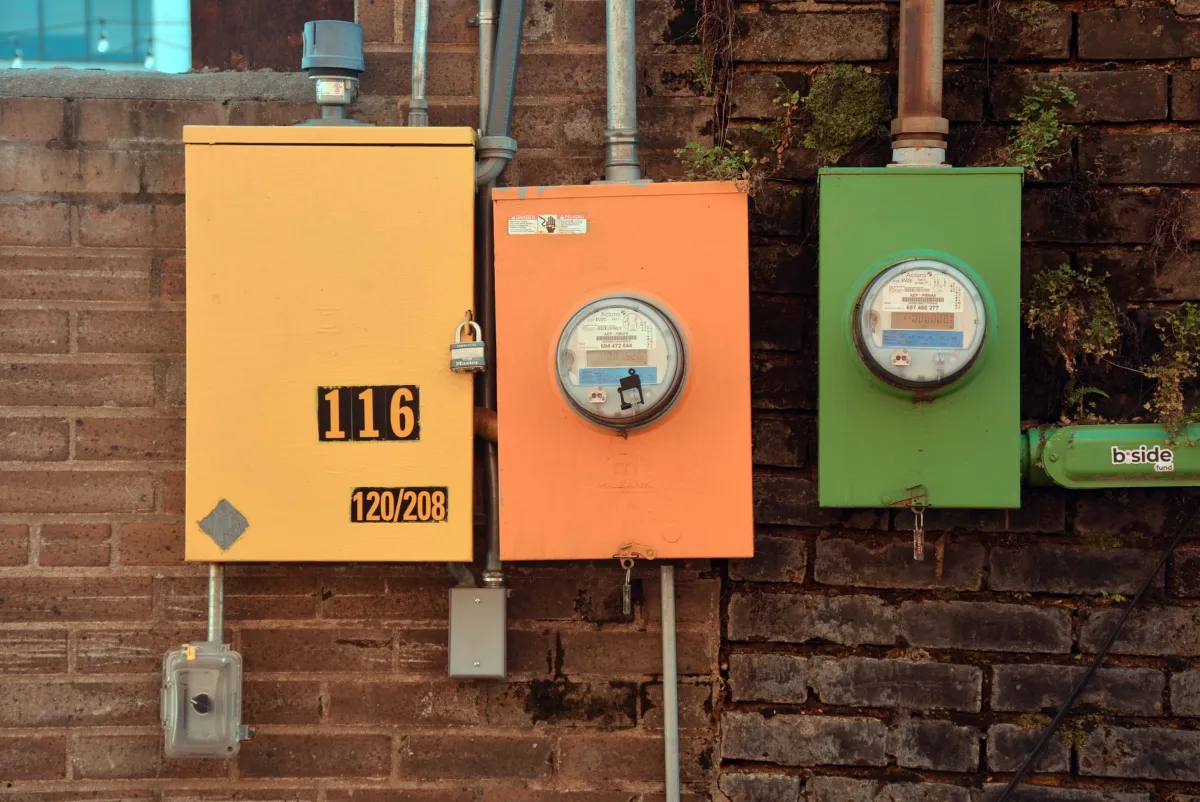
These are this guide's own figures at full power, and they apply to any heater of the same wattage. Missouri's 2018 example came to about 86 cents a day "just to heat a single 10-by-12-foot room" at 9 cents per kWh; the August 2026 average roughly doubles that. The Ohio Consumers' Counsel lists a 1,500-watt space heater at 180 to 300 kWh a month, about $32.69 to $54.48 at the same price.
The purchase price is where infrared costs more. On November 13, 2026, Home Depot's website, set to its default store, listed Dr Infrared's 1,500-watt models from $104 to $159.99 and a Comfort Glow quartz heater at $131.99; Walmart.com listed the EdenPURE GEN2 at $201.60. The Lasko 1,500-watt convection heater was $52.15 at the same Home Depot store, about $52 less than the cheapest Dr Infrared. Prices vary by store and change often. That gap buys a different way of delivering heat, not cheaper heat.
Real savings come from heating less of the house. The DOE says: "Zone heating can produce energy savings of more than 20% compared to heating the whole area of your house." It adds: "In some cases, small space heaters can be less expensive to use if you only want to heat one room." That works only if the furnace thermostat goes down; see the winter thermostat guide for how far is safe.
If you heat with electricity anyway, a heat pump is the bigger lever. The DOE's electric heating page says heat pumps "easily cut electricity use by 50% when compared with electric resistance heating"; its heat pump page says "up to 75%." For how a heat pump compares with oil, propane and gas, see the pellet stove cost guide. For warmth in bed, an electric blanket costs far less to run than any 1,500-watt heater.
When an infrared heater is the right pick
Pick by how you will use the heat, not by the savings claim:
- You sit in one spot for a few hours, such as at a desk or in a reading chair: pick an open-element radiant model and stay in its line of sight, which the DOE calls "a more efficient choice" when you will be in a room for only a few hours.
- You want a whole closed room to stay evenly warm: a convection heater with a thermostat, like the $52 Lasko, does the same job for less money up front.
- You want a heater that cannot run your bill up: none exists. Use a timer or the thermostat, and turn it off when you leave the room.
Before buying a heater sold on big savings claims, read the label for watts. If it says 1,500, it heats like every other 1,500-watt heater. A tea light under a flowerpot heats even less, as the flowerpot heater guide explains.
Safety note: The Consumer Product Safety Commission (CPSC) estimates that portable heaters, including electric space heaters, "are involved in an average of 1,600 fires per year, resulting in an average of 70 deaths and 150 injuries annually from 2020 to 2022." The CPSC says to plug electric space heaters "directly into a wall outlet," "never into an extension cord or power strip," and to keep them "at least three feet away from drapes, furniture, bedding and other combustible materials." Its heater flyer adds: "Never leave the heater operating while unattended or while you are sleeping." The DOE's heater page allows "the shortest possible heavy-duty cord of 14-gauge wire or larger" if a cord is necessary, but the CPSC and the Dr Infrared manual both say never to use one, so follow the stricter rule.
The DR-968 manual says the heater draws 12.5 amps and plugs "directly into a grounded 120V 15 Amp or higher circuit receptacle." Missouri Extension warns that a 1,585-watt heater "will draw more than 14 amps of current, so it will need to be on a separate electrical circuit from other loads." If the heater's cord or plug is hot, the CPSC says to "disconnect the heater and contact an authorized repair person." If any part of the outlet is hot, its flyer says to "contact a certified electrician."
Infrared heaters get hot on the outside too. The DR-968 manual says: "This heater is hot when in use. To avoid burns, do not let bare skin touch hot surfaces." The DOE says to "be especially careful to keep children and pets away from the heater," and the Duraflame manual says "extreme caution is necessary if unsupervised children or invalids are nearby." Duraflame says not to cover its heater and not to use it "on soft surfaces, like a bed, where opening may become blocked." The DOE advises a heater with the Underwriter's Laboratory (UL) label and "a tip-over safety switch, which automatically shuts off the heater if the unit is tipped over." The CPSC says to check SaferProducts.gov to see if your heater has been recalled. Missouri Extension warns that lowering the heat to the rest of the house too much "can cause frozen pipes and excessive condensation on walls and ceilings."
Sources and how we checked
We relied first on the DOE, the CPSC, the EIA and university extension pages, then on maker manuals and retail listings for wattage, Btu and room-size claims. All were viewed on November 13, 2026. Every cost figure is our own math from label wattage and the EIA price, not a measurement in any home; the EIA labels its 2026 values preliminary. The Missouri and NDSU articles are from 2018 and 2009, but the physics they describe has not changed. Prices came from public product pages: Home Depot showed its default store and Walmart.com a Sacramento delivery address, and Lowe's showed no prices, so prices at your store may differ. We found no Federal Trade Commission case against a space heater maker; the EdenPURE review came from the ERSP. We could not read the DOE's Portable Heaters page or an NFPA heating report.
- U.S. Department of Energy, Energy Saver: Electric Resistance Heating; Small Space Heaters; Heat Pump Systems.
- U.S. Energy Information Administration: Electric Power Monthly, Table 5.6.A (August 2026 data, released October 23, 2026).
- Consumer Product Safety Commission: Keep Warm and Safe This Winter (January 23, 2026); 7 Highly Effective Portable Heater Safety Habits.
- University of Missouri Extension: Study space heater claims carefully (April 12, 2018). NDSU Extension: Be wary of portable heater claims (February 12, 2009). Ohio Consumers' Counsel: "Watts" Driving Up Your Electric Bill?
- BBB National Programs: ERSP decision on Suarez Corporation Industries' EdenPURE claims (August 23, 2012).
- Maker manuals: Dr Infrared Heater DR-968; Duraflame 5HM8000; Heat Storm HS-1500-ILOD.
- Retail pages (November 13, 2026): Home Depot, Dr Infrared heaters; Home Depot, Comfort Glow QDE1345; Home Depot, Lasko 5812; Walmart.com, EdenPURE GEN2; Walmart Business, Dr Infrared DR-968.
Updated: November 18, 2026





0comments