

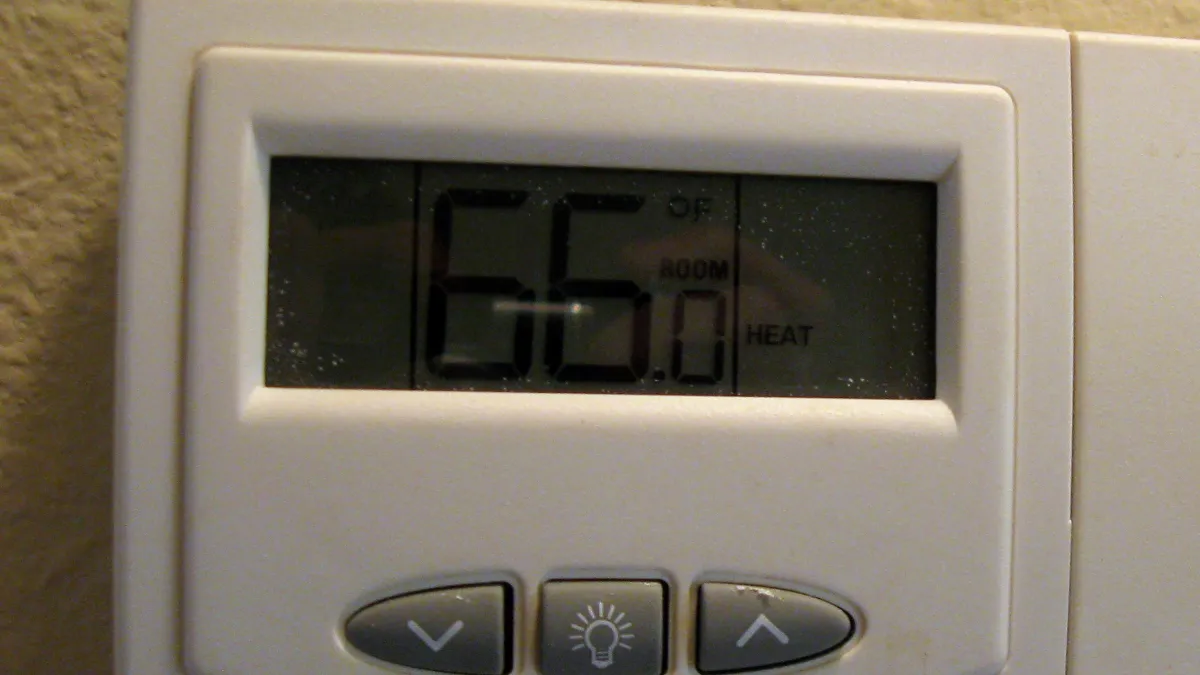
You're heading out the door for work, or about to go to bed, and someone in the house says to leave the thermostat alone, because heating a cold house back up costs more than turning it down saves. So what is the best thermostat temperature in winter, and who is right?
Does turning the heat down while you sleep or work lower the bill, or does warming the house back up eat the savings? And how low can it go before the pipes, or the people inside, are at risk?
What temperature to set your thermostat in winter
Picture an ordinary winter weekday: the house is busy in the morning and evening, and empty or asleep for long stretches in between. For winter, the Department of Energy (DOE) advised setting the thermostat around 68°F to 70°F while you're awake at home, then turning it back 7–10°F for 8 hours a day, such as overnight or while you're out, which it estimated can save as much as 10% a year on heating and cooling.
The saving comes from those cooler hours. DOE said the percentage saved is greater in milder climates than in more severe ones, and that if the house is empty for four hours or more during the day, it makes sense to turn the heat down for that stretch too.
In early July 2026, DOE deleted more than 1,600 pages from the Energy Saver section of its website, and its thermostat guide is offline, so the DOE advice here is quoted from archived copies listed under Sources.
For more no-cost moves, see the guide to free habit changes that cut your electric bill.
Is it cheaper to leave the heat on all day?
The case for leaving the heat alone rests on one idea: the furnace has to work harder than normal to warm the house back up, so turning it down saves little or nothing. DOE called that a common misconception.
Its explanation is about heat loss. As soon as the house drops below its normal temperature, it loses heat to the outdoors more slowly. In winter, the lower the indoor temperature, the slower the heat loss, so the longer the house stays at the lower setting, the more energy you save, because the house has lost less heat than it would have at the higher one.
So for a furnace, turning the heat down beats leaving it up all day. A programmable thermostat handles the comfort side, because DOE said it can bring the temperature back to normal before you wake up or get home. Heat pumps are an exception, since DOE said a setback can cancel out their savings. So are slow systems such as steam and radiant floors, which need the schedule planned around the delay, and cold spells that put pipes at risk.
Slowing that heat loss also helps; the guide to draft-proofing windows and doors covers cheap fixes.
How much turning it down can save in winter 2026–27
To put DOE's 10% in dollars, start from what the U.S. Energy Information Administration (EIA) expects the average home to spend from November 2026 through March 2027, by main heating fuel, in its Winter Fuels Outlook published October 6, 2026.
| Heating fuel | Average Nov–Mar cost forecast | 10% of that |
|---|---|---|
| Natural gas | $640 | about $64 |
| Electricity | $1,196 | about $120 |
| Propane | $1,246 | about $125 |
| Heating oil | $2,115 | about $212 |
Read the last column as a rough upper limit, not a promise. DOE's figure is "as much as" 10% and covers heating and cooling over a full year, and EIA's totals include everything else that fuel runs in the home, such as water heating and cooking. EIA adds that in homes heating with electricity, space heating is a smaller portion of the total, especially where winters are mild, so treat the electricity row with the most caution. What you actually save depends on your climate, your heating system and how far and how long you turn the heat down.
When the usual setback doesn't fit: heat pumps, steam and radiant floors
Before you program a deep setback, check what heats your home. DOE's guide listed limits for homes with heat pumps, electric resistance heating, steam heat and radiant floor heating.
Heat pumps
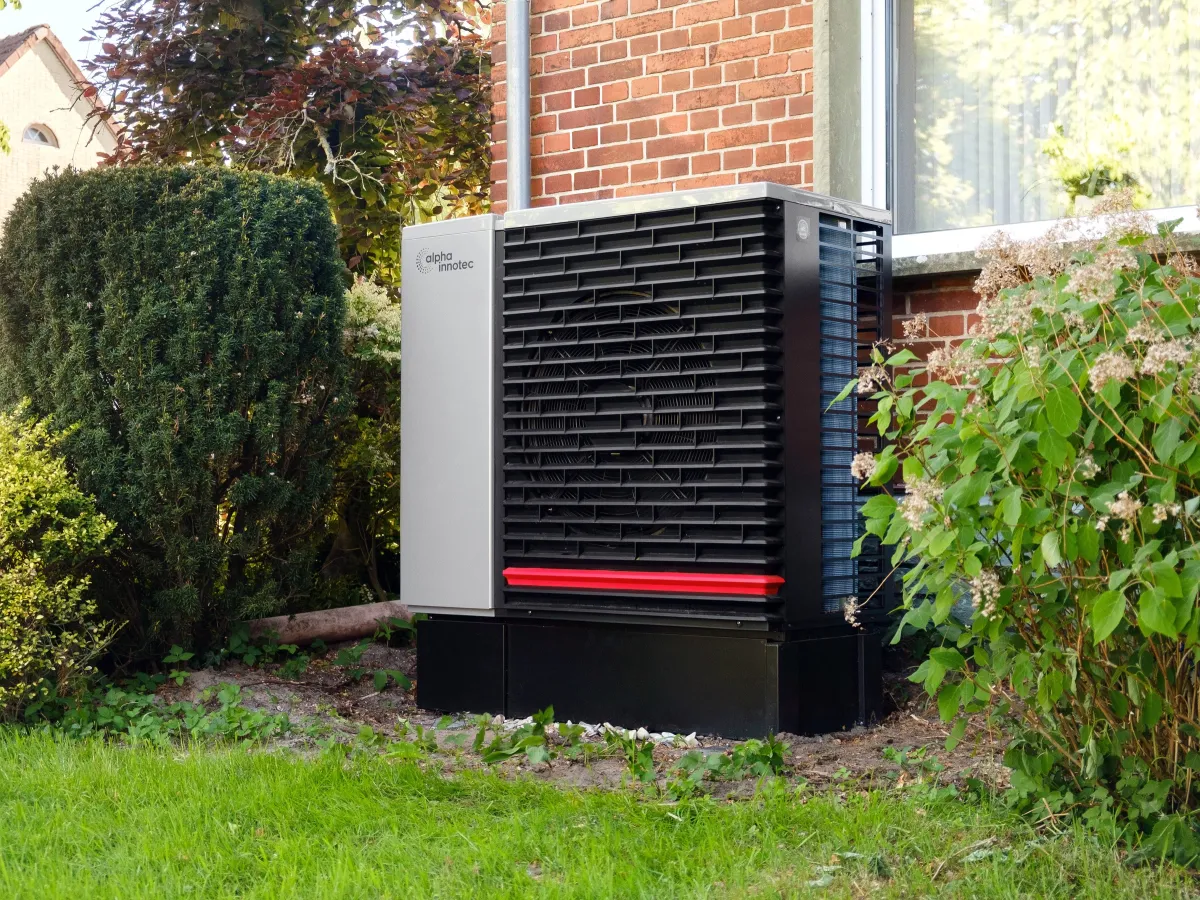
A heat pump is the main exception. DOE said programmable thermostats are generally not recommended for heat pumps, because setting back the thermostat in heating mode can make the unit run inefficiently and cancel out the savings; maintaining a moderate setting is the most cost-effective practice.
The weak spot is the backup heat. DOE said many heat pump controls are incorrectly wired to switch on the auxiliary strip heat whenever the indoor thermostat is changed by more than 3°F, whatever the outdoor temperature, which wastes energy when the compressor could do the job. That backup is electric resistance heat, and in DOE's comparison, a heat pump rated 10.3 HSPF delivers 10,300 Btu of heat per kWh of electricity, while an electric resistance element delivers only about 3,400 Btu.
If you still want a schedule, DOE pointed to programmable thermostats designed for heat pumps, which it said make setting back cost-effective; they typically use special algorithms to minimize backup electric resistance heat. It also said to make sure the heat pump is installed correctly so it doesn't run auxiliary heat it doesn't need; an outdoor lockout thermostat is one fix it named.
Steam heat and radiant floors
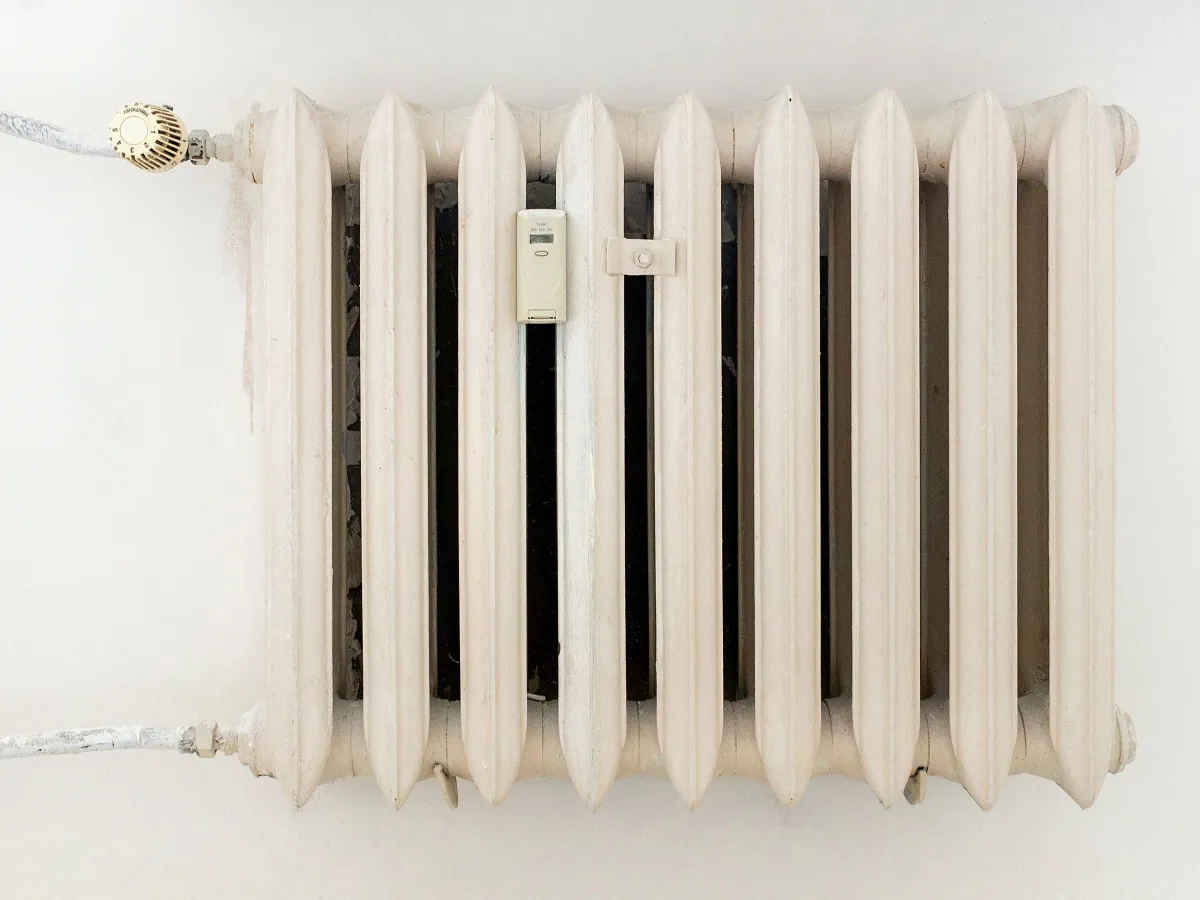
Steam heat and radiant floor heat respond slowly, taking up to several hours according to DOE. Its fix was to plan around the delay. Some thermostats track how the system performs and work out when to turn it on. A regular programmable one can start cooling down well before you leave or go to bed and return to normal two or three hours before you wake up or come home. DOE said this may take some guesswork at first, but that with a little trial and error you can still save energy while keeping the house comfortable.
Radiant floors set in thick concrete slabs are the exception. DOE said their slow response makes night or daytime setbacks difficult if not impossible, and that most experts recommend keeping a constant temperature in those homes.
Electric baseboard heaters
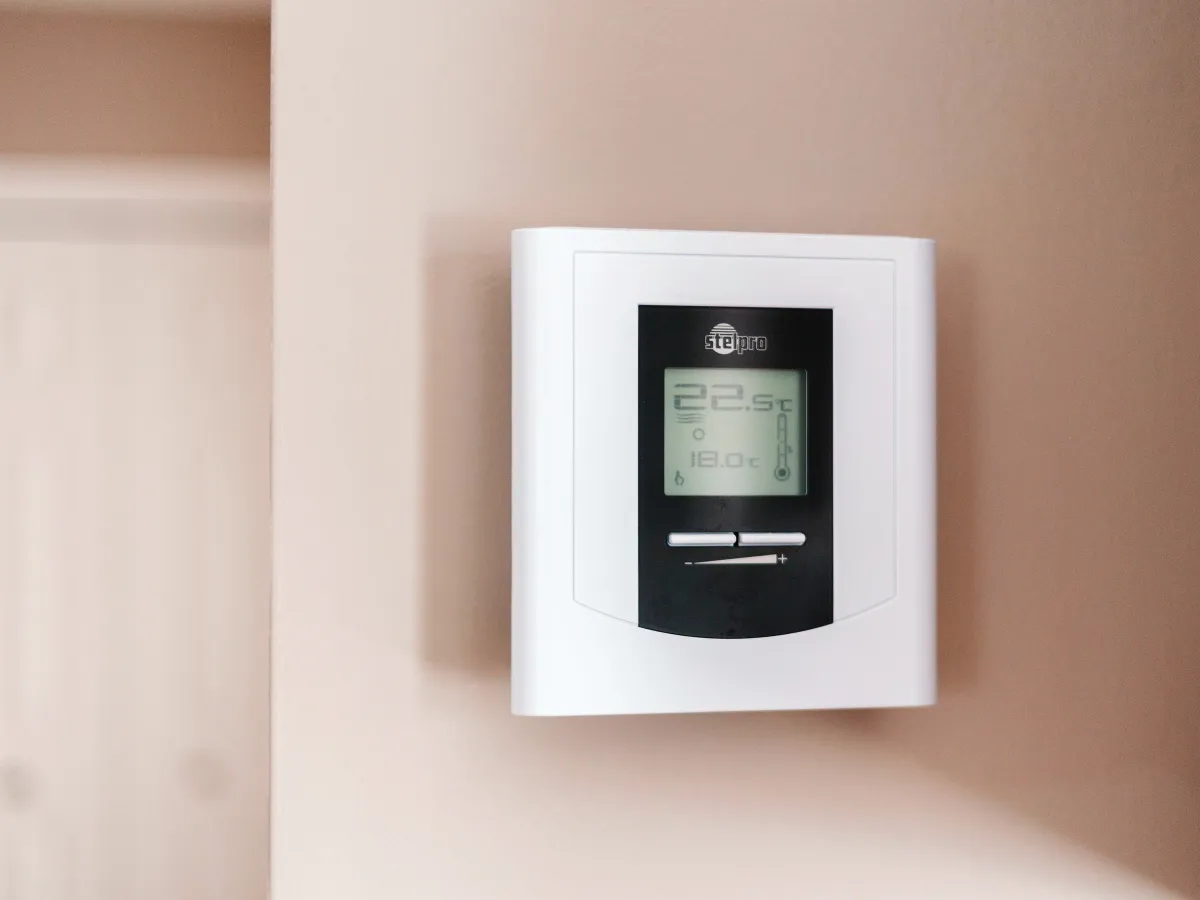
Electric baseboard heaters often use a line-voltage thermostat, which directly controls the power to the heater on its 120-volt or 240-volt circuit. DOE said a thermostat built into the heater often doesn't sense the room temperature accurately, and that it's best to use a remote line-voltage or low-voltage thermostat on an interior wall. Both kinds come as programmable thermostats for setting the temperature back at night or while you're away, so the usual setback works with baseboard heat.
The table sums up DOE's archived guidance by heating system.
| Heating system | What DOE's guidance says to do |
|---|---|
| Furnace | Turn it back 7–10°F for 8 hours a day |
| Heat pump | Keep a moderate setting, or use a programmable thermostat designed for heat pumps |
| Steam or radiant floor | Start the cool-down early and bring the heat back two or three hours ahead |
| Radiant floor in a thick concrete slab | Keep a constant temperature |
| Electric baseboard | Set back at night or while away, with a programmable line-voltage or low-voltage thermostat |
Not sure which system you have? Find out before setting a deep setback.
Safety note: A line-voltage thermostat for baseboard heat connects to 120-volt or 240-volt wiring. One maker's installation guide says to always turn off power at the breaker and check with a voltage tester before touching any wires. It also says to check local building codes, since some areas require a licensed electrician to install a line-voltage thermostat. For a heat pump, DOE said it is essential to hire a qualified technician to avoid problems such as improperly wired auxiliary heat strips.
How low is too low: pipes, older adults and babies
Before you set the heat lower, check how low the house can go without putting the pipes or the people in it at risk. If you'll be away during cold weather, the American Red Cross says to leave the heat on, set no lower than 55°F.
To prevent frozen pipes, the Red Cross also advises temporarily keeping the thermostat at the same temperature day and night instead of using a lower nighttime setting. That runs against DOE's nighttime setback, and the Red Cross gives no outdoor temperature for when to make the switch; it presents it as a temporary step to keep pipes from freezing. It says that may mean a higher heating bill, but it can prevent a much more costly repair if pipes freeze and burst. Among the pipes it lists as freezing most often are water lines in unheated areas such as basements, crawl spaces, attics, garages and kitchen cabinets, and pipes along exterior walls with little or no insulation. It also suggests opening kitchen and bathroom cabinet doors so warmer air reaches the plumbing, after moving harmful cleaners and household chemicals out of children's reach.
DOE's own Energy Saver blog said the setting that keeps pipes from freezing depends on where you live, where the pipes run, what they are made of and how well they are insulated, and noted that kitchen and bathroom pipes are generally not insulated.
The people in the house set a floor too. The National Institute on Aging (NIA, part of NIH) advises older adults to set the heat to at least 68°F and says even mildly cool homes at 60–65°F can lead to hypothermia in older adults. NIA gives no separate nighttime number, so in a home with an older adult this guide suggests keeping the nighttime setting at 68°F or above too. A full DOE-style setback from 68°F to 70°F would land at 58–63°F, inside or below the 60–65°F range NIA warns about.
The CDC lists babies sleeping in cold bedrooms among those who often become victims of hypothermia, though its prevention page gives no indoor temperature. NIH's Safe to Sleep campaign warns about the opposite risk too: babies in too many layers of clothes and bedding for the room temperature can overheat, and overheated babies are at higher risk for SIDS and heat-related death. It advises dressing a baby for the room's temperature, with a wearable blanket or an extra layer of clothing rather than extra items in the sleep area. It also says to keep a baby's head and face uncovered during sleep and to take off a baby's hat indoors.
If you rent, a DOE Energy Saver blog post suggested asking whether the owners require tenants to keep the thermostat above a certain temperature, since some landlords do.
Safety note: If you'll be away during cold weather, don't switch the heat off; the American Red Cross says to keep it at no lower than 55°F. In a home with an older adult, NIA advises at least 68°F. If a pipe freezes anyway, the Red Cross says not to thaw it with a blowtorch, a kerosene or propane heater, a charcoal stove or any other open flame. Call a licensed plumber, it says, if you can't find, reach or thaw the frozen section.
Tempted by a homemade heater for a cold room? See why the candle-and-flowerpot heater can't warm a room.
Do programmable and smart thermostats actually save money?
A thermostat that turns the heat down on a schedule saves money only if the schedule is set. The U.S. Environmental Protection Agency (EPA) suspended the ENERGY STAR label for programmable thermostats on December 31, 2009. It said it recognized their potential to save significant amounts of energy, but that there continued to be questions about the net energy savings achieved under its earlier specification.
A 2010 study from Lawrence Berkeley National Laboratory (LBNL) pointed to how people use them. In its online survey of 81 people, 89% rarely or never used their programmable thermostat to set a weekday or weekend program, though the authors noted that none of their surveys was representative of all users. An LBNL article from March 2011 described another survey in which half of the homes had their thermostats set to long-term hold and 20% had the wrong time of day on the thermostat's clock.
Smart thermostats that earn the ENERGY STAR label are certified on actual field data. ENERGY STAR says families can save about $50 a year with one, and homes with high heating and cooling bills up to $100 a year. Certification is a threshold, not a promise for your bill. Under ENERGY STAR's main test, a model's field data must show at least an 8% yearly cut in heating run time, measured as the lower 95% confidence limit of a weighted national average. A maker can instead propose an A/B field study, which must show a heating run-time cut of at least 6% on the same lower-confidence-limit basis.
Whichever kind you have, set the schedule once and check it: lower from bedtime and for any empty stretch of four hours or more, back to normal before you wake up or get home, no long-term hold, and the right time on the clock. Heat pumps, steam and radiant floors need the adjustments above, and the minimums for pipes (55°F when away in cold weather) and older adults (68°F) still apply.
Sources and how we checked
We started from U.S. government sources (the Department of Energy, ENERGY STAR, the Energy Information Administration, the National Institute on Aging, the CDC and NIH's Safe to Sleep campaign), added the American Red Cross and two Lawrence Berkeley National Laboratory publications, used no figures from companies that sell thermostats, heating equipment or energy, and used one thermostat maker's installation guide only for its wiring safety steps. DOE's Energy Saver pages return a "page not found" error as of October 7, 2026, so we read them from Internet Archive copies saved between May and July 2026. Every source was viewed on October 7, 2026. The dollar column in the savings table is our arithmetic: 10% of EIA's forecast, rounded to the nearest dollar.
- U.S. Department of Energy, Energy Saver (archived copies): Programmable Thermostats, saved July 1, 2026; Air-Source Heat Pumps, saved June 2, 2026; Electric Resistance Heating, saved May 5, 2026; Radiant Heating, saved May 12, 2026; blog post Turn Down the Temperature, but Don't Let Your Pipes Freeze! (November 20, 2023), saved June 10, 2026. Viewed October 7, 2026.
- Government Executive, republishing Grist: Energy Department removes more than 1,600 webpages from public website (July 20, 2026), viewed October 7, 2026.
- U.S. Energy Information Administration: Winter Fuels Outlook 2026–27 (October 6, 2026), viewed October 7, 2026.
- ENERGY STAR (EPA): Smart Thermostats; smart thermostat savings; Program Requirements for Connected Thermostats, Version 1.0; Programmable Thermostats Specification. Viewed October 7, 2026.
- Lawrence Berkeley National Laboratory: Meier et al., How People Actually Use Thermostats (ACEEE Summer Study, August 15, 2010); Measuring the Usability of Programmable Thermostats (March 29, 2011). Viewed October 7, 2026.
- Mysa: Installation Overview (Baseboard), wiring safety steps only, viewed October 7, 2026.
- American Red Cross: Preventing & Thawing Frozen Pipes, viewed October 7, 2026.
- National Institute on Aging (NIH): Cold Weather Safety for Older Adults (reviewed January 3, 2024), viewed October 7, 2026.
- Centers for Disease Control and Prevention: Preventing Hypothermia (reviewed August 25, 2026), viewed October 7, 2026.
- NIH Safe to Sleep campaign: Ways to Reduce Baby's Risk, viewed October 7, 2026.
Updated: October 7, 2026




0comments