

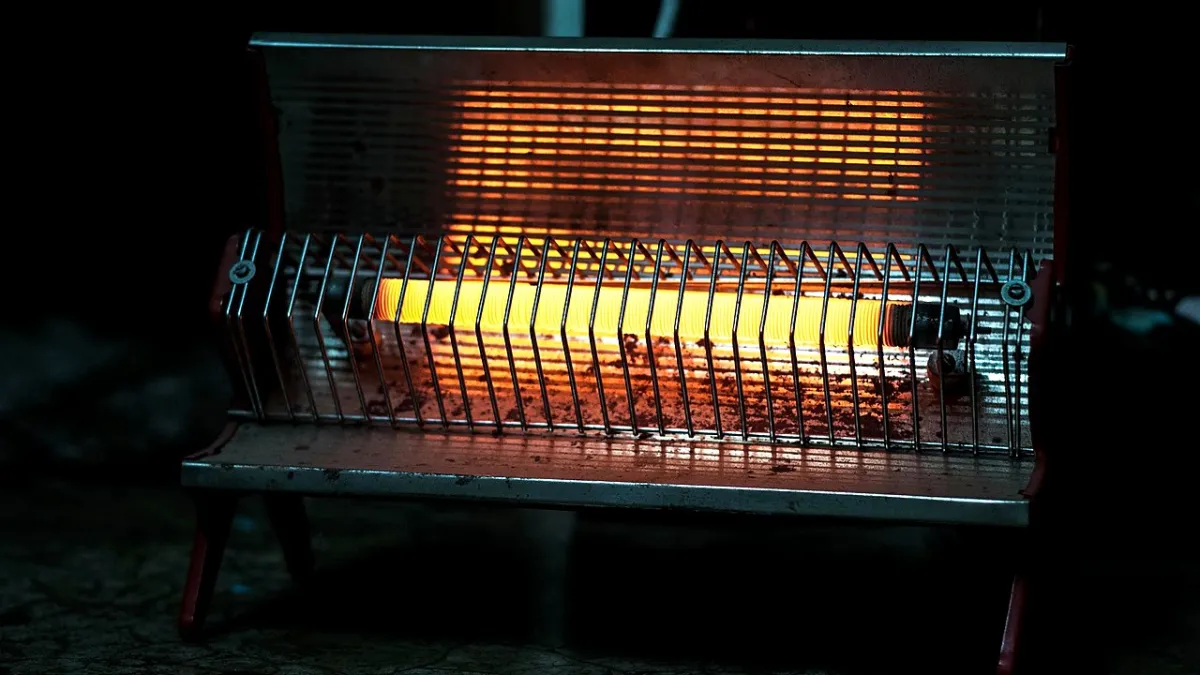
The bedroom is cold. A space heater runs in the corner while an electric blanket waits in an online cart. Look up electric blanket vs space heater costs and the answers run from a few cents to a few dollars a night. Which number holds up, and should either device stay on until morning?
Is an electric blanket cheaper than a space heater overnight?
Compare the two over the same 8 hours. On label wattage an electric blanket is much cheaper: at the U.S. average residential electricity price of 18.16 cents per kWh in August 2026, according to the EIA, a 200-watt queen blanket costs at most about 29 cents a night, and a 1,500-watt space heater at most about $2.18.
Both figures are this guide's own math at the maximum, not measured nights. The Department of Energy (DOE) says "The wattage listed is the maximum power drawn by the appliance," and both devices can cycle on and off, so a real night can cost less.
Safety matters as much as the money, and the safety advice points one way: neither device should stay on while you sleep. The Consumer Product Safety Commission (CPSC) says: "Never leave the heater operating while unattended or while you are sleeping." So the $2.18 prices a habit the CPSC warns against; it is not a suggested plan. For blankets, Iowa State University Extension says to "always turn off before going to sleep," so the 29 cents prices a habit to avoid too; half an hour of warming the bed costs at most about 2 cents. The CPSC estimates portable heaters, including electric space heaters, were involved in an average of 1,600 fires a year from 2020 to 2022, resulting in an average of 70 deaths and 150 injuries a year.
Here is how the common claims hold up:
| Claim | Verdict | Why |
|---|---|---|
| A blanket costs far less to run | REAL | By label: at most 29¢ vs. $2.18 |
| A blanket lowers your bill by itself | MYTH | Only if other heating goes down |
| Running a space heater while you sleep | RISKY | CPSC: never |
| Sleeping with a blanket left on | RISKY | Iowa State: turn off before sleep |
| Piling a comforter on a running blanket | RISKY | CPSC: it may overheat |
The MYTH row is this guide's reading of the numbers below, not a test result: a blanket adds electricity use, so the bill falls only if it lets you cut some other heating.
What it costs, by the wattage on the label
Start with the rating on your own device. The DOE's formula is (wattage × hours used per day) ÷ 1000 = daily kWh; multiply that by your electricity price. This table runs it at the EIA's 18.16 cents:
| Device, label watts | 8 hours, label max | 30 days of that, label max |
|---|---|---|
| Twin blanket, 100 W | 15¢ | $4.36 |
| Queen blanket, both sides, 200 W | 29¢ | $8.72 |
| Heater on low, 750 W | $1.09 | $32.69 |
| Heater on high, 1,500 W | $2.18 | $65.38 |
These are label maximums, not measured use. The 8-hour and 30-day figures only price the comparison: the CPSC says never to leave a heater running while you sleep, and Iowa State says to turn a blanket off before sleep.
The blanket rows use one Serta manual: 100 W for twin or full, 100 W x 2 for queen or king. Virginia Cooperative Extension's 2020 table puts portable heaters at 750–1500 watts and lists electric blankets at 60 watts for a single and 100 for a double. Other sources differ, and one prints no number:
- The Ohio Consumers' Counsel gives 60–200 watts and 24–48 kWh a month, against 180–300 kWh for a 1,500-watt space heater, without stating hours. At the EIA price, that is about $4.36–$8.72 against $32.69–$54.48.
- Sunbeam's 2017 manual prints no wattage by size; its Canadian FAQ says its products keep "cycling on and off through the night."
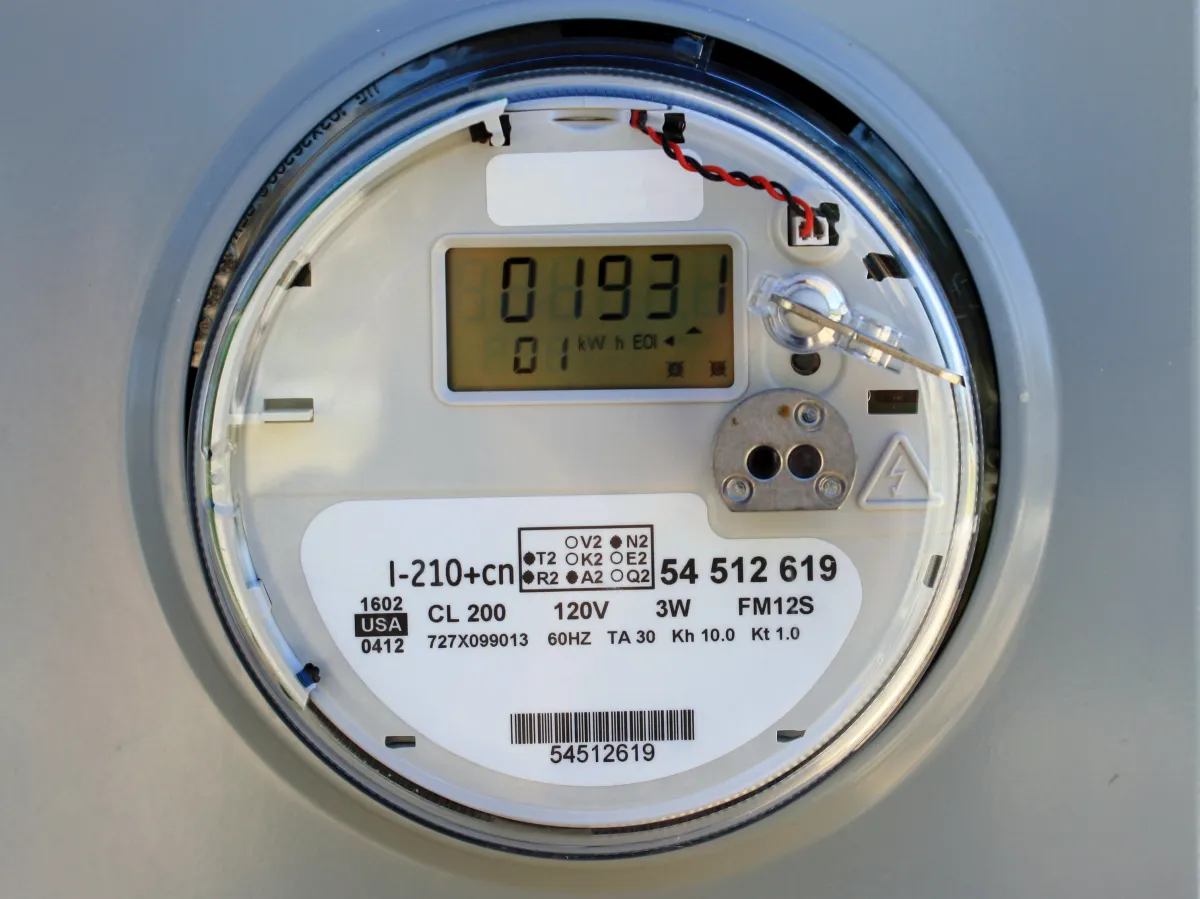
The same EIA table shows 13.37 cents in Idaho and 30.48 cents in Massachusetts. Eight hours on a 1,500-watt heater comes to at most about $1.60 in Idaho and $3.66 in Massachusetts. August is one summer month and the EIA labels its 2026 values preliminary, so use the rate on your own bill.
A blanket only saves money if the heat goes down
Work out what the blanket would replace. If you already turn the heater off at bedtime and leave the furnace alone, a blanket adds cost and cuts nothing: at most about 2 cents to warm the bed for half an hour at 200 watts, or at most 29 cents if it ran 8 hours.
Sunbeam's Canadian FAQ pitches the saving without a number: "You can simply turn down the thermostat at night and heat only your bed." The DOE does give one: "as much as 10% a year on heating and cooling" from turning the thermostat back 7–10°F for 8 hours a day, with a greater percentage in milder climates. University of Illinois Extension says "A 1°F reduction can save 3% on your bill," in a tip about using a space heater to keep the home setting lower. The two figures do not line up. The DOE's is a yearly upper limit for one schedule; Illinois gives no time frame.
Some homes have limits on turning down:
- Heat pumps. The DOE says setting one back in heating mode "can cause the unit to operate inefficiently," which can cancel the savings; see the winter thermostat guide.
- Frozen pipe risk. To prevent frozen pipes, the Red Cross says to temporarily keep the thermostat at the same temperature day and night, even at a higher bill. If you go away in cold weather, it says no lower than 55°F. A 2023 FEMA sheet for Illinois says 55°F or higher. See the frozen pipes guide.
- Older adults and babies. The National Institute on Aging says "Set your heat to at least 68°F" and that homes at 60 to 65°F can lead to hypothermia in older adults. A 2005 CDC guide lists "babies sleeping in cold bedrooms" among those often hit by hypothermia.
Blanket on top or heated pad underneath?
Choose by where you want the heat, then buy the product built for that spot. Sunbeam's Canadian FAQ says "The real difference is in the direction that the heat comes from," and calls the choice "a matter of personal preference." The running cost differs a little: the Ohio Consumers' Counsel lists a heated mattress pad at 15–36 kWh a month, about $2.72–$6.54 at the EIA price, against $4.36–$8.72 for a blanket.
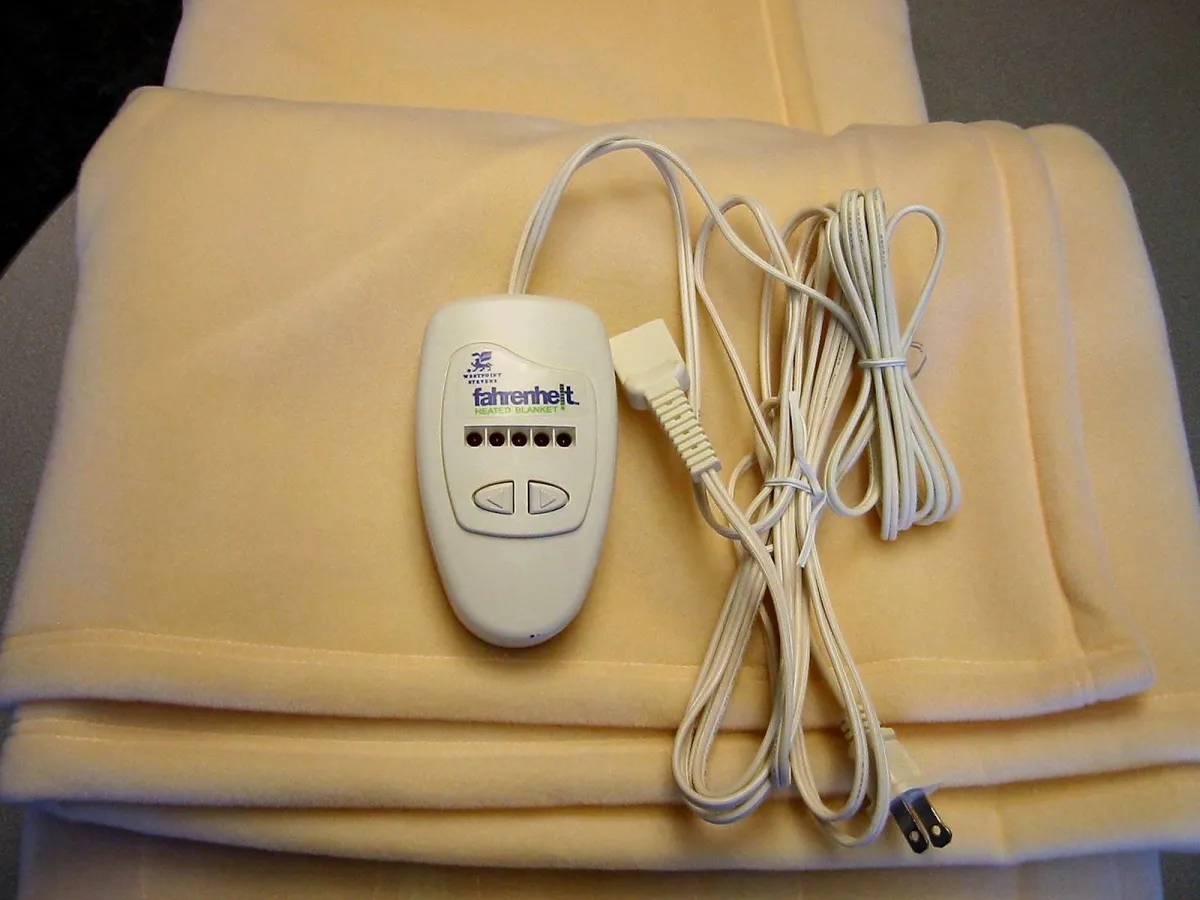
Iowa State University Extension warns against using a blanket as a pad: "No sleeping or lounging on top of the blanket either," because weight may make it overheat. Extra layers on a running blanket are out as well: the CPSC says "Do not allow anything on top of the blanket when it is in use."
Pick one, not both. Iowa State says "Blankets and pads are not meant to be used interchangeably or at the same time," and UL Solutions warns that using a blanket with a heating pad can trap heat and cause burns. Iowa State's bedtime advice below covers pads too, and the CPSC says "Always turn off your heating pad before you go to sleep."
Can the blanket stay on all night?
Plan to turn it off before you sleep; the safety sources all lean that way, even though makers sell longer timers. Iowa State says to "always turn off before going to sleep," and adds, "If the appliance does not have a timer, turn it off before going to sleep." That second line leaves room for a timer but gives no length. A burn surgeon quoted by UL Solutions says to turn it on about half an hour before bed and "switch it off before you climb into bed." The UAB Burn Center director encourages unplugging heated blankets before sleep, though UAB also says they "do not pose as big a threat as space heaters."
Maker timers run longer, but neither manual calls that safety advice. Serta's runs 1–12 hours, and Sunbeam's 2017 manual describes a 10-hour auto-off, "designed for conservation of energy," that some models let you turn off. Warming the bed first also costs less: half an hour at 200 watts is 0.1 kWh, or at most about 2 cents.
What each one costs to buy
Prices can differ by store. These were checked November 6, 2026:
- 1,500-watt space heaters: $18.84–$39.97 on Walmart.com.
- Space heaters from three brands: $34.99–$49.99 at a Chicago-area Target.
- Queen heated blankets: $39.87–$94.95 on Walmart.com.
- A Bedsure heated blanket: $39.99–$99.99 depending on size, on Target.com with a Chicago-area store selected.
Iowa State says to look for blankets that are "UL- or ETL-certified," and the DOE says to buy a heater with a tip-over safety switch. Infrared heaters cost more to buy but draw the same 1,500 watts; see whether an infrared heater saves money.
Moving from a 1,500-watt heater to a 200-watt blanket saves about $1.89 a night by the label math ($2.18 minus 29 cents), so a $39.87 blanket covers its price in about 21 nights, longer if the heater cycles off. That comparison applies only if a heater has been running all night, the habit the CPSC warns against, and it is not a reason to leave either one on.
Who should skip the blanket, and when to replace it
Read these limits before you buy:
- Sunbeam's manual says not to use its heated products with "an infant, child, incapacitated or immobile person, paraplegic or quadriplegic, a diabetic, anyone insensitive to heat, such as a person with poor blood circulation, or anyone who cannot clearly understand the instructions and/or operate the controls."
- The UAB Burn Center director says the elderly, people with paralysis and people with diabetes should not use them.
- UL Solutions adds that "people with urinary incontinence should not use electric blankets."
- Sunbeam says to check with a healthcare provider first if you have a pacemaker or any medical devices.
- Iowa State rules out waterbeds and adjustable, hospital-style beds.
The CPSC says to discard a blanket with cracks or breaks in wiring, plugs or connectors, or with dark, charred or frayed spots. On age, the sources differ: Iowa State says to throw one away at more than 10 years old, and Sunbeam's Canadian site says to replace its products "at least every five years."
On September 17, 2026, the CPSC announced a recall of about 195,000 JKMAX heated blankets and heating pads sold on Amazon because the heating elements can overheat; that recall covers only that brand. The CPSC says to stop using them immediately and contact JKMax for a full refund. Look up any model on SaferProducts.gov, whether you own it or plan to buy it.
Safety note: For space heaters, the CPSC says to keep all sides of the heater at least 3 feet from beds, clothes, curtains, papers, sofas and other items that can catch fire, and "Never leave the heater operating while unattended or while you are sleeping." Never run the heater's cord under rugs or carpeting, and never power the heater with an extension cord or power strip. Make sure it is not near water, and never touch it if you are wet. Place it on a stable, level surface where it will not be knocked over. The UAB Burn Center director says heaters should be in a child- and pet-free zone. If the heater's cord or plug is hot, disconnect it and contact an authorized repair person; if any part of the outlet is hot, contact a certified electrician.
For electric blankets, the CPSC says to allow nothing on top while in use, including other blankets, comforters and sleeping pets. Never fold them when in use. Do not tuck them in, which can cause excessive heat buildup and start a fire. Serta says its blankets "should not be used with power strips or extension cords"; Sunbeam says "Do not use with an extension cord." Serta says a blanket must be completely dry before use after washing, and not to use it with pets; Sunbeam says "Do not use if wet." Do not route the cords between the mattress and box spring or let them get pinched; Sunbeam says damaged cords can lead to overheating or fire. Turn the blanket off before you sleep.
This guide suggests warming the bed with the blanket, then turning both the blanket and the heater off before you sleep; lower the thermostat only if none of the exceptions above apply. For more, see the guide to free changes that lower your electric bill.
Sources and how we checked
We relied first on federal and state agencies and university extension pages, then on maker manuals for wattage ratings. All were viewed on November 6, 2026. The dollar figures are our own math at the label maximum, using the EIA price; we found no agency, extension or maker measurement of a full night on either device. The DOE Energy Saver pages returned 404 errors, so we link Wayback Machine copies. A DOE page allows a heavy-duty cord when an extension cord is necessary; this guide follows the CPSC's stricter line. CPSC's web pages blocked automated access, so we read the JKMAX recall through the CPSC's SaferProducts.gov recall data and the January 2026 news release through a Wayback copy, and confirmed both pages in a browser. We read store prices in a browser at the Target Chicago State St. store and on Walmart.com, which showed a California location; we did not use Amazon prices.
- U.S. Energy Information Administration: Electric Power Monthly, Table 5.6.A (August 2026 data, released October 23, 2026).
- CPSC: 7 Highly Effective Portable Heater Safety Habits; Keep Warm and Safe This Winter (January 23, 2026); Home Electrical Safety Checklist; Safety for Older Consumers; JKMAX recall (September 17, 2026).
- DOE Energy Saver (Wayback copies): Estimating Appliance and Home Electronic Energy Use; Programmable Thermostats; Small Space Heaters.
- Virginia Cooperative Extension: BSE-301NP (2020). Ohio Consumers' Counsel: What watts are driving your electric bill.
- University of Illinois Extension: Seasonal Savings. Iowa State University Extension: Electric Blanket Safety (December 6, 2018, reviewed June 2024).
- National Institute on Aging: Cold Weather Safety for Older Adults. CDC: Extreme Cold guide (2005). American Red Cross: Frozen Pipes. FEMA: Winterizing your home, DR-4749-IL (2023).
- UAB News: Cold weather safety (November 5, 2024). UL Solutions: Electric blankets are cozy, but are they safe?
- Maker documents: Serta-brand heated blanket manual (E&E Co. Ltd., copy hosted on Amazon); Sunbeam Heated Bedding manual (February 2017, copy hosted on Amazon); Vornado VH10/VH30 manual; Honeywell HCE870 manual; Lasko CC24810 manual; Sunbeam Canada warming systems FAQ and care FAQ.
- Retail pages: Walmart.com space heaters and queen electric blankets; Target electric blankets and space heaters.
Updated: November 6, 2026




0comments