

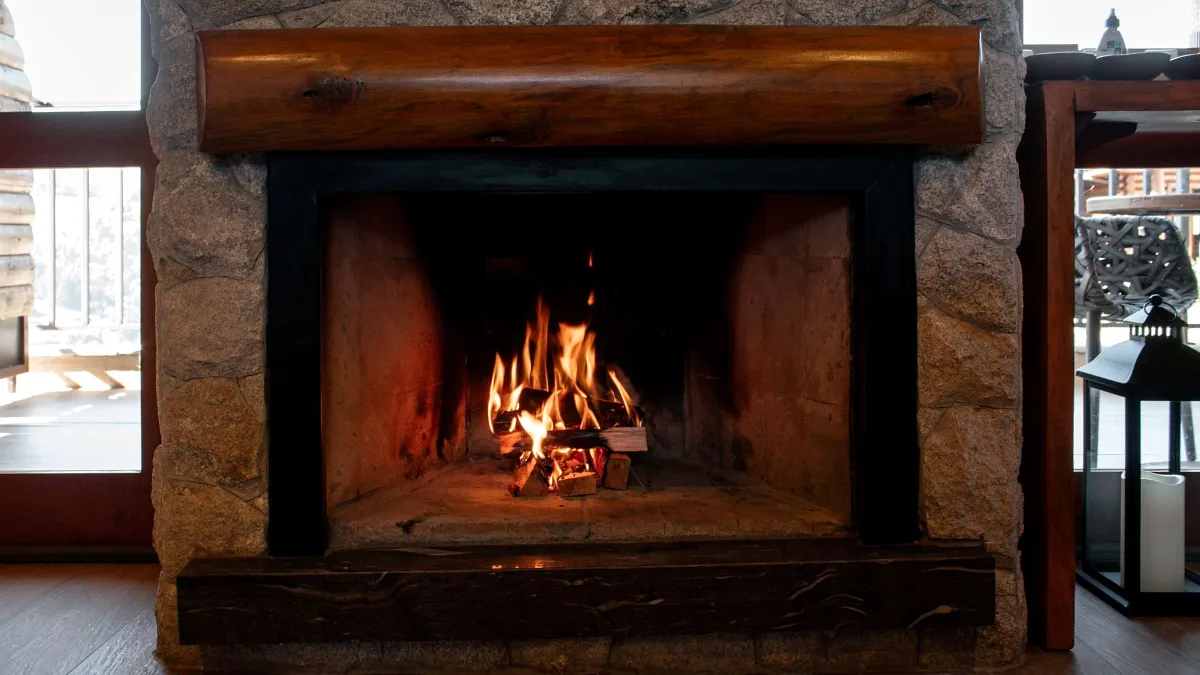
You light a fire and the living room glows, but the hallway feels colder than it did an hour ago. Does a fireplace heat a house, or does it send the heat you already paid for up the chimney?
Does a fireplace heat a house?
This answer covers traditional open masonry fireplaces, so check which kind you own. A traditional open fireplace warms the people close to it but is a poor way to heat a whole house: the Department of Energy (DOE) says these fireplaces "should not be considered heating devices," and in a 1979 Lawrence Berkeley Laboratory (LBL) test of one house, a gas-burning fireplace had a net efficiency of just 1.1%.
That figure comes from one house, about 50°F outside, with the damper fully open. Preliminary runs with wood came in under 5%. The Environmental Protection Agency's (EPA) Burn Wise guidance says fireplace drafts can pull warm air up the chimney, "causing other rooms to be cooler."
Here is how the common claims hold up (NFPA is the National Fire Protection Association):
| Claim | Verdict | Why |
|---|---|---|
| It warms the area near the fire | REAL | One LBL test: no electric heat needed there |
| A fire can leave other rooms cooler | REAL | EPA: drafts can do this |
| A traditional open fireplace is a whole-house heater | MYTH | DOE: not to be considered heating devices |
| Closing the damper over live embers | RISKY | NFPA: open until the fire is out |
Both REAL rows can be true during the same fire.
What the 1979 test measured, and what it did not
Read the 1.1% as one preliminary measurement, not a rule for every home. The authors called their results an illustration of the method, not "a definitive assessment" of fireplaces, and said the method "needs refinement" there. Researchers used an unoccupied ranch house in Walnut Creek, California. They held its temperature steady with electric heaters during a six-hour test.
From 46,450 watts of burning gas, the house gained a net 526 watts. In the living room, electric heating fell from an average 1,378 watts to zero. In the other rooms it rose by an average 664 watts, which the authors tied to extra cold air coming through wall cracks. After the fire went out, the living room still used less electricity than before the fire, the other rooms' use stayed above pre-fire levels, and the authors said they could not justify charging that period against the fireplace.
The authors wrote that a wood fire "radiates proportionately more than natural gas," so their figures "may be lower than one would obtain using wood." A net loss is predicted: colder weather "would probably yield negative efficiencies," and the paper's review says efficiency "can actually become negative" in leaky houses in very cold climates. This test came out at 1.1%.
Other figures run higher, and none is reported as a house test: about 7% in a 1998 EPA review (professional judgment) and an assumed 10% to 15% in an Oregon State University bulletin revised in 2013.
Why other rooms can get colder during a fire
Count the air the fire uses. The DOE says traditional fireplaces draw in "as much as 300 cubic feet per minute of heated room air for combustion, then send it straight up the chimney." That is the DOE's top figure; a 1982 National Research Council Canada digest estimated 240.
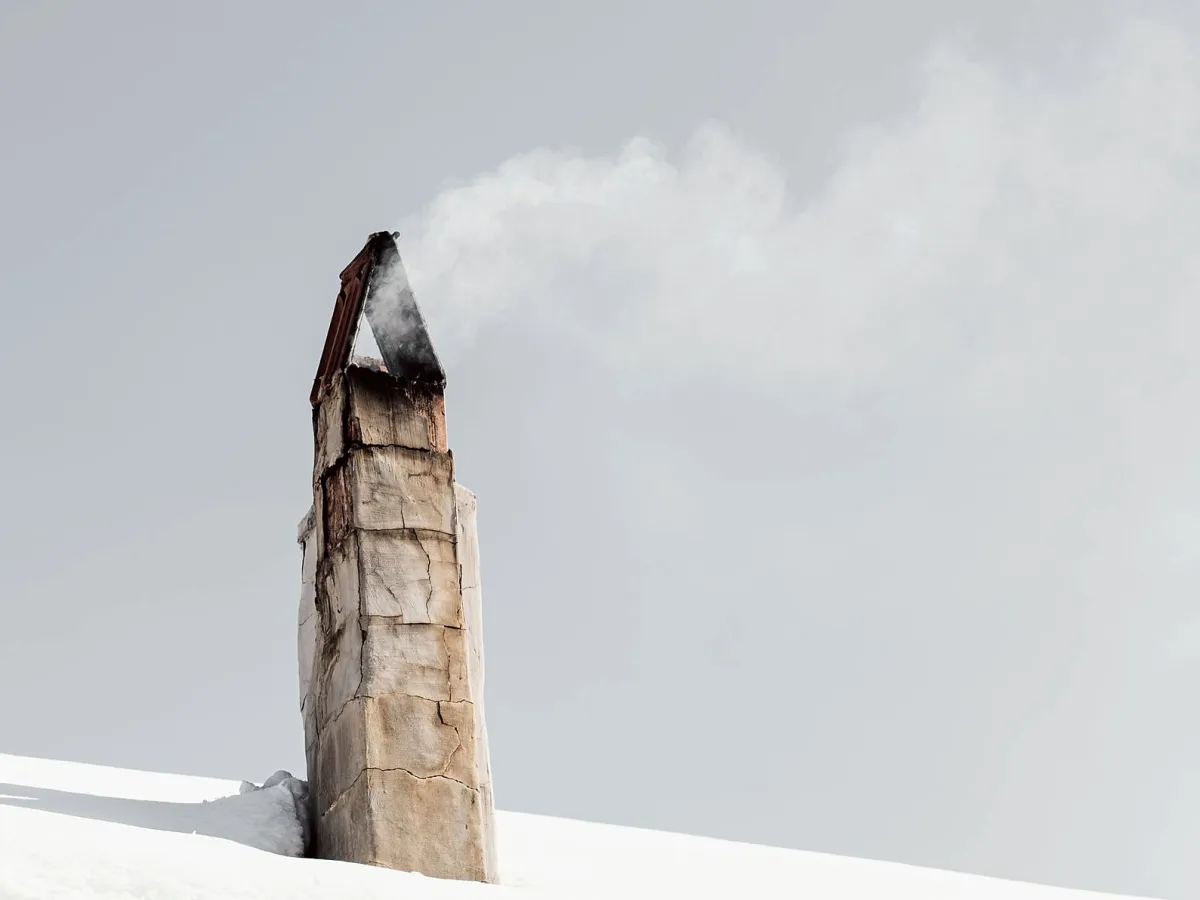
If your central heat stays on, the EPA says "your heater will work harder to maintain constant temperatures throughout the house."
How to lose less heat while a fire is burning
The DOE's winter tips apply only while the fire is lit: open any dampers in the bottom of the firebox or open the nearest window about 1 inch, close the doors leading into the room, and lower the thermostat to between 50°F and 55°F. Another DOE page goes further: "you should turn your heat down or off and open a window near the fireplace."
Those settings cool the other rooms. The American Red Cross says to leave the heat on, "no lower than 55° F," when you go away in cold weather, and to temporarily keep the same temperature day and night to prevent frozen pipes; the National Institute on Aging advises at least 68°F for older adults. In cold weather, this guide suggests lowering the thermostat only while the fire burns, staying at 55°F or above (68°F with older adults home), and leaving the whole house's heat on. Raise it once the fire is out. See the winter thermostat guide for pipes and babies.
When the fire is out, close the leak
Close the damper only after the fire is completely out. The DOE says leaving it open "is like keeping a window wide open during the winter."
If you never use the fireplace, the DOE says to "plug and seal the chimney flue," and it mentions an inflatable stopper as a temporary seal.
If you buy a chimney balloon:
- Take it out before lighting a fire. Chimney Balloon's UK FAQ (updated August 21, 2023) says the balloon "is not designed to stay in place with a lit fire."
- Fit it cold. A U.S. dealer's instructions say to make sure the fireplace and chimney are cold, with no hot embers, before measuring, and to reinstall only after the flue cools.
- Treat gas differently. The UK FAQ cites Gas Safe's rule that you should "never permanently block a gas fire flue" linked to a live gas fire. A U.S. dealer's listing for Lyemance top dampers says not to use them with gas logs, because of carbon monoxide backup and a possible explosion if gas leaks.
If you want heat, look at a closed appliance
Decide first whether you want a fire's look or its heat. The EPA says non-catalytic wood stoves average 71% efficiency, with a range of 60–80%. A fireplace insert is a wood stove built to fit inside an existing fireplace, and the DOE says a well-fitted one "can function nearly as efficiently as a wood stove." Have a professional installer check that your fireplace and chimney are suitable.
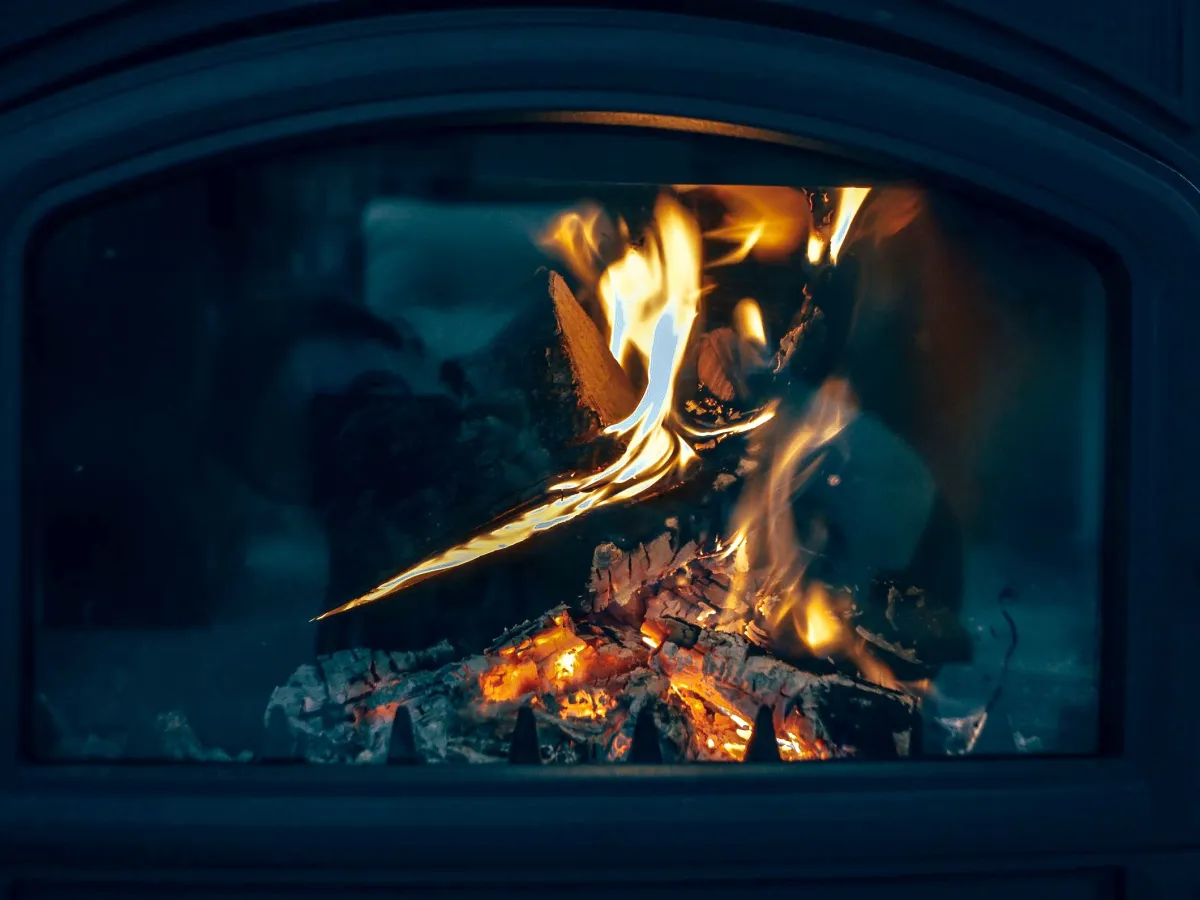
A 2010 University of Maryland fact sheet, assuming $150 for a cord of red oak, puts heat from a 10% fireplace at $59.30 per million Btu and from a 70% EPA-approved stove at $8.50. For a pellet stove's fuel bill next to oil, propane, gas and a heat pump, see whether a pellet stove saves money. Before you stack wood near the house, see the firewood pests guide.
Safety note: The EPA lists back-drafting from fireplaces as a source of carbon monoxide (CO). In airtight houses, a 1982 National Research Council Canada digest warned, a fire plus exhaust fans can cause a furnace-chimney downdraft; it names opening a window as a precaution. The Consumer Product Safety Commission, cited by the EPA, recommends CO alarms on each level outside each sleeping area; the NFPA adds every room where a person sleeps and says to test them at least monthly. If a CO alarm sounds, the NFPA says to go outside immediately, call 9-1-1 and stay out until responders say it is safe. Open the damper before lighting a fire and, per the NFPA, leave it open until the fire is completely extinguished, so smoke and gases from embers stay out of the home. Remove any chimney balloon before lighting, and never permanently block a live gas fire's flue.
Have the chimney inspected and cleaned every year by a qualified professional. The EPA says creosote buildup can lead to a chimney fire.
The NFPA says to keep a metal or heat-tempered glass screen in place and to burn only dry, seasoned wood, never trash. Keep anything that can burn at least 3 feet away. Supervise young children closely and keep a 3-foot safety zone; glass doors and screens can stay dangerously hot for several hours after the fire goes out. Put the fire out before you sleep or leave home. Let ashes cool, then keep them in a tightly covered metal container at least 10 feet from the home and nearby buildings. Never empty ashes directly into a trash can; douse and saturate them with water first. If you regularly see or smell smoke, the EPA says you may have a problem; if it persists with dry wood and the damper open, it says to find a certified chimney professional. Fine particles in smoke can worsen asthma and trigger heart attacks.
With an open fireplace, this guide suggests budgeting for your furnace as usual.
Sources and how we checked
We relied first on federal agencies, a national laboratory and university extension fact sheets, then on maker and dealer pages for product warnings. All were viewed on November 9, 2026. The only measurement we found of an open fireplace in a real house is the LBL paper, read as a scanned copy; the other percentages are estimates or assumptions. The DOE Energy Saver pages returned 404 errors, so we link Wayback Machine copies. EPA's Burn Wise site states that the program ran from 2009 to 2025 and that EPA stopped updating its content on October 30, 2025. We found no agency warning aimed specifically at chimney balloons, and no agency or laboratory percentage for heat lost through an open damper. We left out retail prices because we could not read store pages on November 9.
- Lawrence Berkeley Laboratory: Sonderegger and Modera, Electric Co-Heating, LBL-8949 (March 1979).
- DOE Energy Saver (Wayback copies): Wood and Pellet Heating; Fall and Winter Energy-Saving Tips.
- EPA Burn Wise: Energy Efficiency and Your Wood-Burning Appliance; Frequent Questions; Best Wood-Burning Practices; Wood Smoke and Your Health. EPA: Carbon Monoxide's Impact on Indoor Air Quality; Residential Wood Combustion Technology Review (December 1998).
- University of Maryland Extension: FS-926, Heating with Wood (October 2010). Oregon State University Extension: EC 1628, Home Heating Fuels (revised November 2013).
- National Research Council Canada: CBD-222, Airtight Houses and Carbon Monoxide Poisoning (March 1982, copy on MIT's site).
- National Fire Protection Association: Educational Messages Desk Reference (2026); Home Heating Fires (December 2022). U.S. Fire Administration: Heating Fire Safety; handout.
- American Red Cross: Frozen Pipes. National Institute on Aging: Cold Weather Safety for Older Adults.
- Maker and dealer pages: Chimney Balloon FAQ (UK) (Wayback copy, December 1, 2023); Rockford Chimney Supply, Chimney Balloon FAQ; Rockford Chimney Supply, Lyemance top damper (Wayback copy).
Updated: November 9, 2026



0comments