

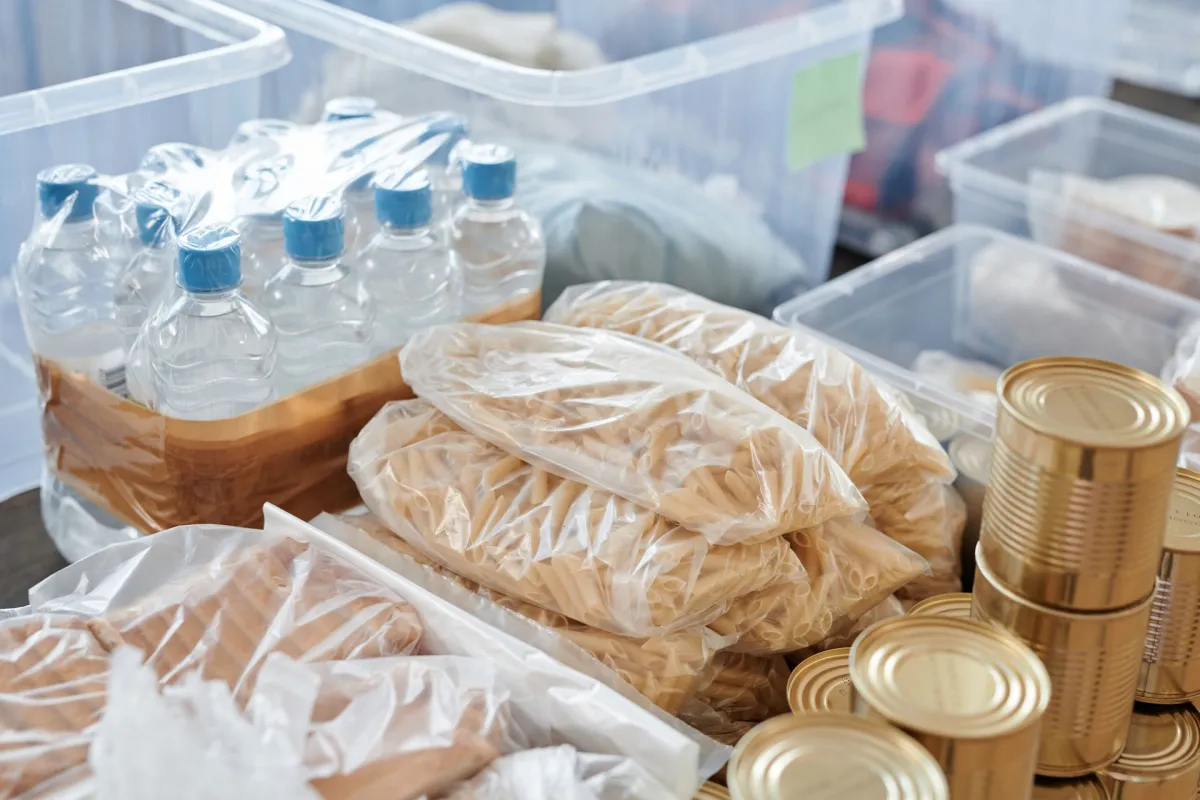
The jugs you filled from the kitchen tap are still at the back of the closet. Nobody wrote a date on them. So you are wondering how to store water long term the right way: whether that water is still safe to drink, and whether it ever needed bleach.
The federal rules for storing water fit on an index card. The trouble is that blog posts and old pamphlets give different bleach doses and different shelf lives, and a few of them are wrong in ways that matter.
How to store water long term: the short answer
Store at least 1 gallon per person per day. The CDC says to keep enough "for 3 days" and to "Try to store a 2-week supply if possible." Fill clean, food-grade containers with tight lids and label them. Keep them in a cool, dark spot, well away from the gas can and the pesticides. If you filled them yourself, the CDC says to "replace the water every 6 months." For store-bought water, its advice is to "Observe the expiration date."
Bleach is for a different job. If your tap water comes from a city system, it is already treated. University of Florida IFAS Extension says, "If your drinking water comes from a public supply, no chemical disinfectant is needed." UF makes one exception: an emergency boil water notice. Well water and water you are not sure about are where the drops of bleach come in, and the dose depends on the bottle.
| Claim | Verdict | Why |
|---|---|---|
| City tap water needs bleach before storing | USUALLY NOT | UF, NMSU: none, unless a boil notice |
| Stored water never goes bad | HALF TRUE | CDC still says replace every 6 months |
| 8 drops per gallon for any bleach | DEPENDS | EPA: 6 drops if it is 8.25% |
| Rinsed-out milk jugs work fine | AVOID | Ready.gov: milk protein stays behind |
| Refilling an empty bleach jug | RISKY | CDC: no chemical containers |
| Storing jugs beside the gas can | RISKY | Vapors can get through plastic |
RISKY here means the agencies say not to do it. USUALLY NOT, HALF TRUE and DEPENDS mean the claim is right only under conditions the sections below spell out.
How much water to store, and how heavy it gets
The math starts at one gallon per day for drinking and basic hygiene. Ready.gov says "at least one gallon of water per person per day for several days." The Red Cross puts numbers on it: a "3-day supply for evacuation, 2-week supply for home." The CDC adds that you should store more "for pregnant women, people who are sick, pets, or if you live in a hot climate," without giving a figure for pets.
| Household | 3 days | 2 weeks |
|---|---|---|
| 1 person | 3 gallons | 14 gallons |
| 2 people | 6 gallons | 28 gallons |
| 4 people | 12 gallons | 56 gallons |
The U.S. Geological Survey puts water at 8.33 pounds per gallon. A two-week supply for a family of four, 56 gallons, comes to about 466 pounds. A full 55-gallon drum holds about 458 pounds of water before you count the drum, so set it where it will stay before you fill it. A 5-gallon jug is about 42 pounds. A 2-liter soda bottle is under 5 pounds.
Which containers to use, and which to skip
Pick the container first, because a bad one ruins good water. The CDC says "it is best to use FDA-approved food-grade water storage containers," made of "durable, unbreakable materials (not glass)," with "a top that can be closed tightly."
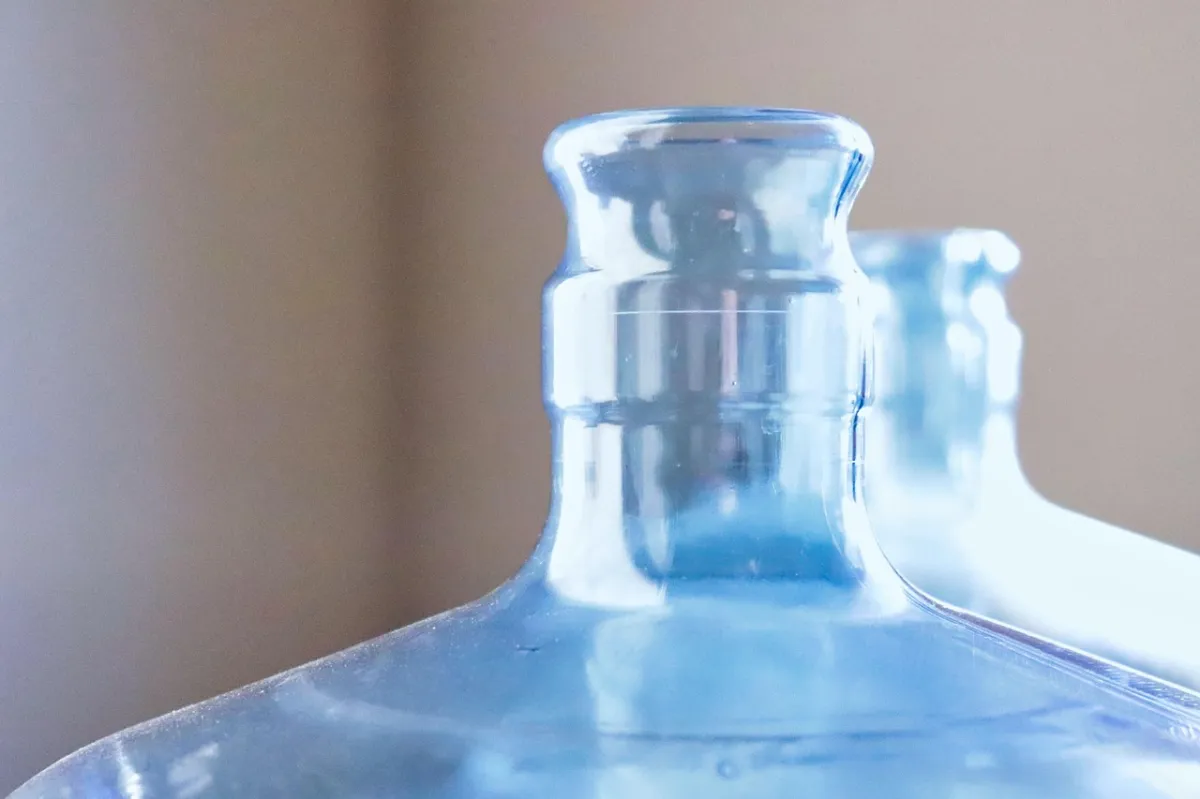
Ready.gov suggests "two-liter plastic soft drink bottles," and Oregon State University Extension says such bottles "can be cleaned and sanitized and reused to store water."
Milk jugs are the common mistake. Ready.gov says "Milk protein and fruit sugars cannot be adequately removed from these containers," and UF says to avoid them "because they can be hard to clean." Oregon State is a little softer: milk jugs "could also be cleaned and sanitized for short-term water storage," but "The plastic is designed to biodegrade over time, so leaking milk jugs could be a problem." For water you mean to forget about for six months, skip them.
Some prepper sites suggest refilling an empty bleach bottle. The CDC says the opposite: "Do not use containers that were previously used to hold liquid or solid toxic chemicals, such as bleach or pesticides."
How to clean the containers and fill them
Sanitize each container before the water goes in. These are the CDC's steps:
- "Wash the storage container with soap and rinse completely with water."
- Mix "1 teaspoon of unscented liquid household chlorine bleach in 1 quart (4 cups) of water." The CDC says to use bleach with 5% to 9% sodium hypochlorite.
- Pour the solution in. "Cover the container tightly and shake it well."
- "Wait at least 30 seconds and then pour the sanitizing solution out of the container."
- "Let the empty container air-dry before use."
- Fill it with clean water and close it with a tight lid.
- "Label container as "drinking water" and include storage date."
That teaspoon per quart cleans the container. It is a much stronger mix than you would ever drink, and it goes down the drain. City tap water can usually go straight in. New Mexico State University Extension says public-supply water "will not need to be disinfected before storing it in containers," unless your utility has issued a boil water notice. Utah State University Extension is more cautious. It says "[m]ost city-treated water is safe for storage without additives," but its 2010 guide still gives a dose for treating stored water: "1/8 teaspoon of liquid chlorine bleach" per gallon of 4 to 6% bleach, which it calls "equivalent to 8 drops." If your water comes from a private well, or you are not sure it is safe, treat it with the doses in the next section before you seal it.
How much bleach per gallon of water
Check the label before you count drops. EPA notes that household bleach "may contain 6 or 8.25% sodium hypochlorite," and the stronger kind needs less. Its table, for clear water:
| Water | 6% bleach | 8.25% bleach |
|---|---|---|
| 1 quart | 2 drops | 2 drops |
| 1 gallon | 8 drops | 6 drops |
| 2 gallons | 16 drops (1/4 tsp) | 12 drops (1/8 tsp) |
| 4 gallons | 1/3 tsp | 1/4 tsp |
| 8 gallons | 2/3 tsp | 1/2 tsp |
The other agencies round differently. The CDC lists one dose for all bleach between 5% and 9%: "Add 8 drops of bleach" per gallon, or "a little less than ⅛ teaspoon." Ready.gov says "Add 1/8 teaspoon of bleach per gallon of water," but only for bleach that is "5.25 to 6.0 percent sodium hypochlorite." An older Red Cross and FEMA booklet, revised in 2006, says "16 drops (1/8 teaspoon)" per gallon. That is twice the current EPA and CDC dose. The sources do not even agree on how many drops make a teaspoon, so count drops for small amounts and use EPA's teaspoon figures only for the larger ones.
EPA's table stops at 8 gallons, and the agencies' per-gallon doses do not scale to one number for a 55-gallon drum. For well water, EPA's 8-gallon row scaled up works out to about 4 1/2 teaspoons of 6% bleach (about 3 1/2 teaspoons of 8.25%). Ready.gov's 1/8 teaspoon per gallon works out to about 7 teaspoons of 5.25 to 6% bleach. That is arithmetic, not a figure any agency prints. Start with the lower dose, wait 30 minutes and use EPA's smell test below; if the water has no slight chlorine smell, dose it again. A drum filled from a city tap usually needs none.
The rest of EPA's method:
- Use regular, unscented chlorine bleach whose label says it is "suitable for disinfection and sanitization," in EPA's words. "Do not use scented, color safe, or bleaches with added cleaners."
- If the water is cloudy, EPA says to "let it settle and filter it through a clean cloth, paper towel, or coffee filter" first; the CDC says the same. Then "Double the amount of bleach if the water is cloudy, colored, or very cold."
- "Stir and let stand for 30 minutes." Then smell it: "The water should have a slight chlorine odor." If there is no smell, the EPA instruction is to "repeat the dosage and let stand for another 15 minutes before use."
The bottle has a shelf life too. EPA says to use bleach "stored at room temperatures for less than one year." Clorox, the maker, says "When properly stored, bleach has a 1-year shelf life," and Utah State Extension warns it "can lose up to half its strength after 6 months." Clorox says each bottle is "stamped with a production code that includes the Julian date," so you can check how old yours is.
How long stored water lasts, and where to keep it
The CDC and Ready.gov both say to replace water you bottled yourself every six months, and New Mexico State University Extension says to "replace it or use it up every 6 months." Others are looser. UF says "every 6 to 12 months for best taste," and Utah State goes furthest: "When potable water (drinkable water) is properly disinfected and stored, it should have an indefinite shelf life." Even Utah State says to check it "every 6-12 months," looking "for secure lids, broken or cracked containers and for cloudiness."
The six-month rule is cheap insurance. Pick two dates you will remember, such as the days the clocks change, and use the old water for plants or cleaning when you refill.
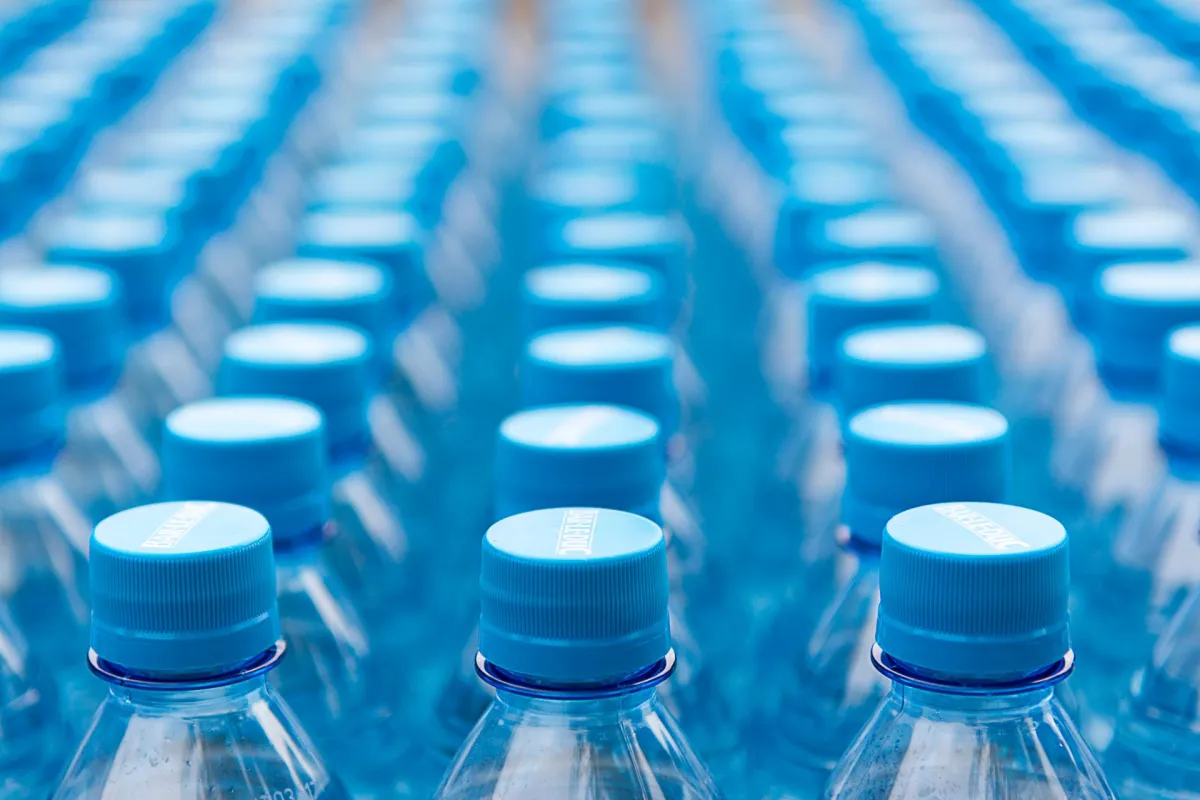
Store-bought water is simpler. The CDC calls "Unopened, commercially bottled water" "the safest and most reliable source of water in an emergency," and says to go by the date printed on it. Oregon State Extension is stricter, saying commercially bottled water "should be replaced every six months for quality purposes."
Where it sits matters as much as how long. The CDC says to keep containers at "a cool temperature (50°F –70°F)" and "away from direct sunlight." It also says to keep them "away from toxic substances, such as gasoline or pesticides," and UF and NMSU explain why: "vapors from these materials can penetrate plastic." In a garage, that rules out the shelf next to the gas can and the lawn chemicals. Utah State says to store water "off the ground and cement in a cool, dark place." If you have freezer space, Utah State says frozen jugs work too; "Leave 2-3 inches of headspace in container to allow for expansion as the water freezes."
What it costs: bottled cases vs a drum vs soda bottles
On Walmart's website on November 18, 2026, a 24-pack of Great Value 16.9-ounce bottles was $3.97. That pack holds about 3.2 gallons, so it works out to about $1.25 a gallon, or about $69 for 55 gallons. A food-grade 55-gallon drum from a third-party seller on the same site was $116.91. Prices vary by store and change often.
The drum costs more up front, but tap water to refill it costs very little, and it can be refilled if you sanitize it each time. Cases need no cleaning and keep their factory seal, and the CDC calls unopened bottled water the safest source. Reused 2-liter bottles cost nothing; it takes about 104 of them to hold 55 gallons. One approach is to keep a few cases ready to grab and use refilled bottles or jugs for the rest.
When the tap stops: using what you stored
When the water goes out or a boil notice comes, drink the sealed bottles first. If you need to treat more water and you have power or a gas stove, the CDC says to "Bring clear water to a rolling boil for 1 minute (at elevations above 6,500 feet, boil for 3 minutes)." EPA sets the altitude line lower, at "above 5,000 feet," so if you live between the two, boil for three minutes.
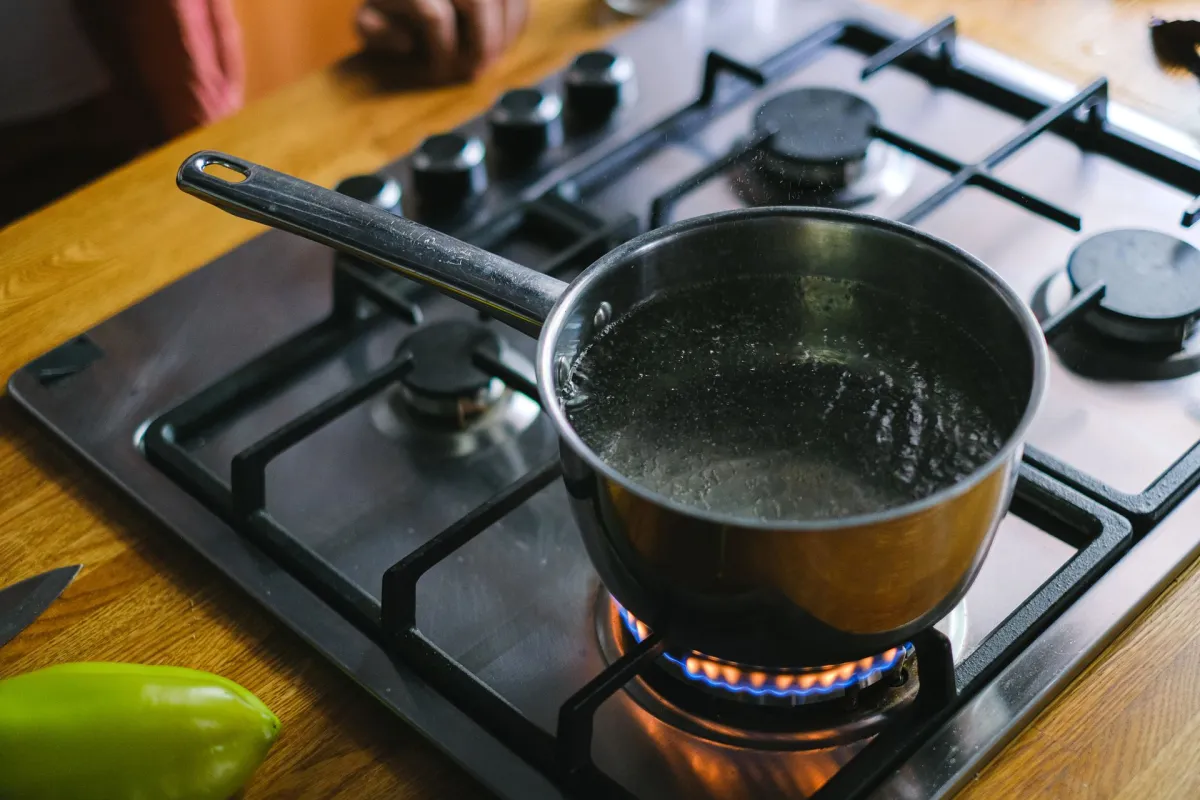
If you cannot boil, treat clear water with the bleach table above. For what home filters can and cannot remove, see what DIY water filters actually do. If the outage that cut your water also cut your heat, the steps in staying warm in a power outage come next.
Safety note: "Never mix bleach with ammonia or any other cleaner," the CDC warns, so rinse the soap out of a container completely before the bleach solution goes in, and mix it with a window or door open. Use only regular, unscented chlorine bleach whose label says it is for disinfection. EPA says to skip scented or color-safe bleach and any with added cleaners, and to use bleach less than a year old. Never store drinking water in a container that once held bleach or pesticides, as the CDC advises. Keep water containers away from gasoline and pesticides, because the vapors can get through plastic. Treated water needs to stand for 30 minutes before anyone drinks it, and it should smell slightly of chlorine; if it does not, EPA says to repeat the dose and wait another 15 minutes. A full 55-gallon drum holds about 458 pounds of water, so fill it where it will stay.
Sources and how we checked
We relied on federal agencies (the CDC, EPA and Ready.gov), the American Red Cross, and the university extension guides listed below. All were viewed on November 18, 2026. We reopened the EPA disinfection page and the CDC storage page that day to check the bleach table and the six-month rule. Agencies disagree on the bleach dose, on how often to replace water and on the altitude for longer boiling; the article gives each side. The Utah State guides date from 2009 and 2010, and the Red Cross booklet from 2006. We could not find an FDA page on whether unopened bottled water expires, so the article follows the CDC's advice to go by the printed date. We found no agency source for the common advice to keep drums off concrete floors beyond Utah State's line about "cement," so the article does not give a reason for it. Prices were read from Walmart's website on November 18, 2026, at the default store: the Great Value Purified Drinking Water 24-pack and a third-party 55-gallon food-grade drum listing. We did not find a second retailer listing a food-grade drum on the same day.
- CDC: How to Create and Store an Emergency Water Supply (reviewed June 27, 2025); How to Make Water Safe in an Emergency (reviewed September 19, 2024); How to Safely Clean and Sanitize with Bleach (reviewed August 26, 2026).
- EPA: Emergency Disinfection of Drinking Water (updated February 24, 2026).
- Ready.gov (FEMA): Water; Preparing Your Own Containers of Water.
- American Red Cross: Survival Kit Supplies; Food and Water in an Emergency (with FEMA, revised 2006).
- University of Florida IFAS Extension: Preparing and Storing an Emergency Safe Drinking Water Supply. New Mexico State University: Treating and Storing Water for Emergency Use (revised July 2026).
- Utah State University Extension: Water: Storage and Emergency Use (2010); Storing Water for an Emergency (2009). Oregon State University Extension: Soda bottles for emergency water storage?
- Clorox: How to Tell When a Bleach Bottle Was Made. USGS: Facts About Water.
Updated: November 23, 2026



0comments