

The video always runs the same way. Muddy water goes into a five-gallon bucket packed with gravel, sand, and blackened charcoal. Clear water trickles out the bottom. Somebody drinks it on camera. Two million views.
The part nobody films is the part that matters. Making water clear and making it safe are different jobs, and a homemade column only does the first. CDC says it flatly: contaminated water can look clean and still carry harmful bacteria, viruses, and parasites.
Clarify Versus Purify
Almost every bad decision here comes from swapping these words.
| Job | What it does | What does it |
|---|---|---|
| Clarify | Removes sediment, silt, turbidity. Water looks better. | Cloth, coffee filter, settling, sand-gravel column |
| Purify | Kills or removes bacteria, viruses, protozoa. | Boiling, disinfection, certified membranes, UV |
A DIY column sits entirely in the top row — step one of two, and step two is the one that saves you. That same demo-versus-data gap shows up in gadgets promising drinking water from humid air. We sort other household shortcuts the same way in our guide to hacks worth keeping.
The Honest Yes: What the Column Earns
What it does. It pulls out grit, algae, leaf debris, and suspended clay. In a long-term field study of engineered biosand filters in Haiti's Artibonite Valley, turbidity fell about 82 percent, from 4.7 NTU to 0.9 NTU.
Why that matters. Cloudiness isn't cosmetic. EPA states that disinfection does not work as well when water is cloudy or colored — particles shield microbes and consume disinfectant. Pre-filtering makes the next step stronger.
How agencies say to do it. EPA's instruction for cloudy water is to let it settle and filter it through a clean cloth, paper towel, or coffee filter. A bandana, not a four-layer tower.
The limit. That 82 percent belongs to a properly built biosand filter with a mature biological layer. Nobody has published data on a bucket assembled in an afternoon.
The 92% Problem
Across those same Haitian filters, bacterial removal came to 1.1 log10 — about 92 percent of E. coli. That sounds like a solid grade until you see the scale: one log means 90 percent gone, two logs 99 percent, four logs 99.99 percent. WHO's lowest comprehensive tier — two stars — requires ≥2 log10 bacteria, ≥3 viruses, ≥2 protozoa. A monitored filter at 1.1 log doesn't reach the bottom rung.
Worse, three filters showed higher E. coli coming out than going in, leading researchers to suggest the filters may harbor the bacteria. Unmaintained, a warm wet filter becomes a habitat.
Why Viruses Walk Straight Through
Straining stops only what's bigger than the holes.
| Technology | Pore size | Protozoa | Bacteria | Viruses | Chemicals |
|---|---|---|---|---|---|
| Microfiltration | ~0.1 micron | Very high | Moderate | Not effective | Not effective |
| Ultrafiltration | ~0.01 micron | Very high | Very high | Moderate | Low |
| Nanofiltration | ~0.001 micron | Very high | Very high | Very high | Moderate |
| Reverse osmosis | ~0.0001 micron | Very high | Very high | Very high | Metal ions and salts, incl. lead |
| DIY sand/charcoal bucket | Undefined | No published performance data | |||
Ratings: archived copy of the retired CDC guide. Store-bought gear disappoints too: CDC is blunt that most portable water filters do not remove bacteria or viruses. And a "nominal" 1-micron filter may let 20 to 30 percent of 1-micron particles slip through; an "absolute" one blocks Cryptosporidium more consistently.
The Charcoal Myth: Campfire Char Is Not Activated Carbon
Three materials get blended into one word. They are not the same.
- Campfire charcoal — burned wood from a fire pit. No published performance data. None.
- Biochar — pyrolyzed at controlled temperature. A peer-reviewed comparison puts its adsorption capacity interquartile range at 10,000–150,000 mg/kg against activated carbon's 21,400–266,400 mg/kg.
- Activated carbon — industrially activated. The only one with certified performance.
That study compared lab biochar to commercial carbon, never backyard char, which sits lower still. Even good carbon has a ceiling — EPA says an activated carbon filter, by itself, is not designed to remove all disease-causing organisms.
The knockout: CDC lists label phrases that do not prove a filter removes Cryptosporidium — "Carbon filter," "Activated carbon," "Water purifier," "EPA approved" — noting EPA does not approve or test filters.
The Ceiling No Bucket Reaches: Lead, Arsenic, Nitrate
EPA is unambiguous: boiling or disinfection will not destroy heavy metals, salts, and most other chemicals. Dissolved chemistry passes through sand and charcoal like it isn't there.
| Contaminant | DIY filter? | What actually works |
|---|---|---|
| Sediment, turbidity | Yes — genuinely helps | Cloth, coffee filter, sand column |
| Bacteria, viruses | No | Boiling; certified membrane + disinfection |
| Cryptosporidium | No | Boiling; NSF 53/58 "cyst reduction" filter |
| Lead | No | NSF/ANSI 53 lead filter; RO; distillation |
| Arsenic | No | Anion exchange, adsorptive media, RO |
| Nitrate | No — boiling worsens it | Distillation or ion exchange |
On arsenic, the University of Maine is direct: activated carbon is not much good for arsenic. Home options are adsorption/ion exchange units and reverse osmosis — though uncharged As(III) passes an RO membrane while charged As(V) is blocked. EPA credits anion exchange with greater than 99 percent removal of negatively charged contaminants, and the archived CDC guide credits distillation with removing arsenic, cadmium, chromium, lead, and nitrate.
The nitrate trap. This reverses everyone's instinct. Minnesota's health department warns that boiled water is not a safe option because boiling makes nitrate more concentrated. The standard is 10 mg/L as nitrogen; bottle-fed babies under six months face the highest risk of methemoglobinemia, which can result in serious illness or death. Minnesota recommends bottled water for those infants. On a private well, test — don't boil and hope.
Floodwater: Stop Filtering and Change Source
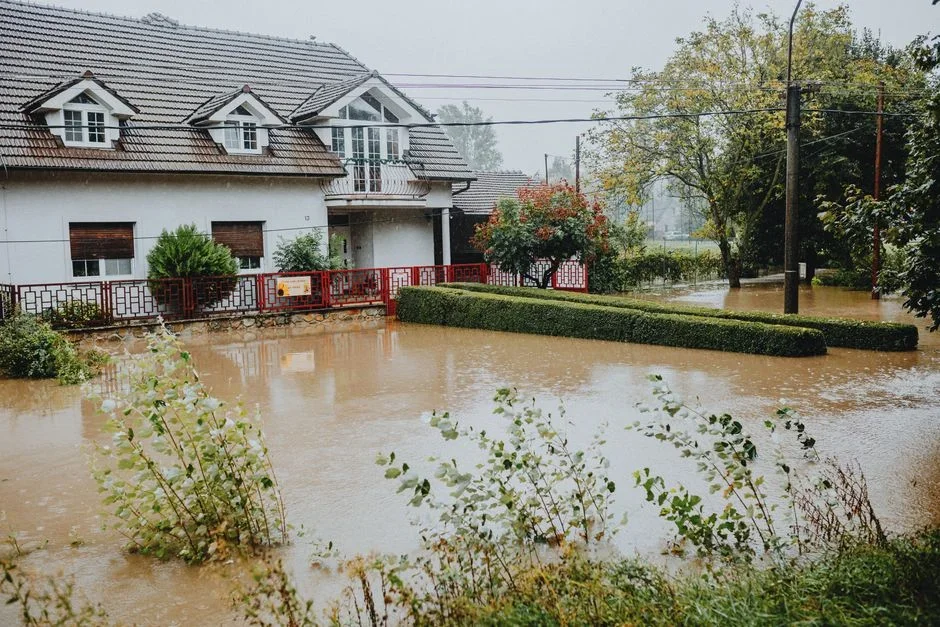
Penn State Extension describes floodwater as carrying bacteria, viruses, and other chemicals from various sources — sewage, farms, household and industrial chemicals. Shock chlorination kills microbes but won't remove nitrates, heavy metals, pesticides, gasoline, or oils, and the instruction is explicit: do not boil or use the water if chemical contamination is suspected.
The rule is short. Any fuel sheen, chemical smell, or suspected runoff? Stop — don't add another filter layer. Change your source and call your health department or water utility.
Outages arrive with floods, and the practical wins are elsewhere. Keeping perishables safe without refrigeration saves more grocery money than any filter project. A realistic backup power setup beats a heroic water build.
What Actually Makes Water Safe
Boiling
EPA: a rolling boil for at least one minute; above 5,000 feet, three minutes. CDC: one minute, three above 6,500 feet. A separate EPA fact sheet says three minutes above one mile, roughly 5,280 feet. Three documents, three thresholds — water boils cooler as elevation rises, and each rounds differently. Use the lowest, 5,000 feet.
Bleach, when you can't boil
Per EPA: settle and pre-filter cloudy water through cloth first, then add 8 drops of 6% bleach or 6 drops of 8.25% bleach per gallon. Stir, stand 30 minutes; the water should carry a slight chlorine odor. No odor means repeat the dose and wait 15 more minutes. Double the dose for cloudy, colored, or very cold water.
Safety limits. Use unscented bleach with no added cleaners, and check it isn't expired — bleach weakens on the shelf. Never mix bleach with ammonia or other cleaners; that releases toxic gas. Don't improvise doses for concentrations EPA doesn't list. Chlorine also has a blind spot: CDC notes disinfectants are not as effective with resistant organisms such as Cryptosporidium and Giardia. If anyone swallows bleach concentrate, call Poison Control at 1-800-222-1222.
Read the Label, Not the Hype
| Standard | What it means | What it does NOT mean |
|---|---|---|
| NSF/ANSI 42 | Aesthetic effects: chlorine, taste, odor, chloramine, particulate, iron, zinc, TDS | Nothing health-related |
| NSF/ANSI 53 | Health effects: 50+ claims including lead, Cryptosporidium, VOCs, chromium | Not every claim — check which is printed |
| NSF/ANSI 58 | Reverse osmosis; accepted for cyst reduction claims | Not a blanket purifier without the claim |
| NSF/ANSI 401 | Emerging compounds: drugs, herbicides, pesticides | Not a pathogen claim |
Scope wording comes from NSF's published summary. For parasites, CDC says look for Standard 53 or 58 for cyst removal. For lead, EPA says look for a certifier's mark plus testing against NSF/ANSI 53 with a lead reduction claim — and notes no federal rule requires POU certification at all. The printed claim matters more than box art.
Two more myths. Colloidal silver isn't a shortcut: an experiment on 22 ceramic pot filters in Water Research 51 (2014) found no significant difference in log removal values between silver applications, concluding virus removal remains of major concern. And don't use unknown glazed pottery as a water vessel — FDA warns improperly made pottery can let glaze lead leach into food and drink, flagging crude handmade pieces, antiques, and flea-market ware. Same for any drum that held chemicals.
The Tier List
| Tier | Method | Honest verdict |
|---|---|---|
| S | Boiling | REAL. One minute, three above 5,000 ft. Handles Crypto. Worsens nitrate. |
| A | Certified membrane + disinfection | REAL. NSF 53/58 cyst claim, or WHO 2–3 star ultrafiltration. |
| B | Chemical disinfection alone | PARTLY REAL. Targeted protection — limited on protozoa. |
| C | Engineered biosand or ceramic filters | REAL BUT MODEST. Near 1.1 log bacteria; viruses a concern. |
| F | DIY bucket as drinking water | DANGEROUS. Zero performance data, false confidence. |
In WHO's Round I evaluation, eight of ten products met at least 1-star targets — even purpose-built commercial products don't all clear the bar.
Emergency order: bottled water, boiling, certified filter plus disinfection, then disinfection alone. During a boil water advisory or after a flood, your local utility and health department are the authority — not this article.
Common mistakes
- Reading "clear" as "drinkable." Turbidity and pathogens are separate measurements.
- Treating campfire charcoal as activated carbon. CDC lists even real activated carbon among labels that prove nothing.
- Boiling nitrate-contaminated well water. It concentrates the nitrate. Highest risk to bottle-fed infants under six months.
- Filtering harder when water smells like fuel. Change the source and call your health department.
- Trusting "EPA approved" on a box. EPA does not approve or test filters.
- Never changing the media. Poor maintenance can cause a filter to fail; wear gloves swapping cartridges.
FAQ
Can I drink from a DIY sand and charcoal filter in an emergency?
Only after boiling or disinfecting the output. Use the column to cut cloudiness, which makes disinfection work better, then treat the water.
Does boiling remove lead or chemicals?
No. EPA states boiling won't destroy heavy metals, salts, or most chemicals. Only distillation, reverse osmosis, or a filter certified for that contaminant addresses dissolved chemistry.
How long do I really need to boil?
One minute at a full rolling boil. Agency thresholds differ — EPA says 5,000 feet, CDC says 6,500 — so use the cautious 5,000-foot line and boil three minutes above it.
Is a $40 off-grid filter box worth buying?
Judge the label, not the marketing. Look for a certifier's mark plus NSF/ANSI 53 or 58 with a cyst reduction claim. No printed claim means no verified performance.
The takeaway: A homemade filter earns its place as the step before treatment, never as the treatment itself. Spend less. Live more. — The Thrifty Almanac



0comments