

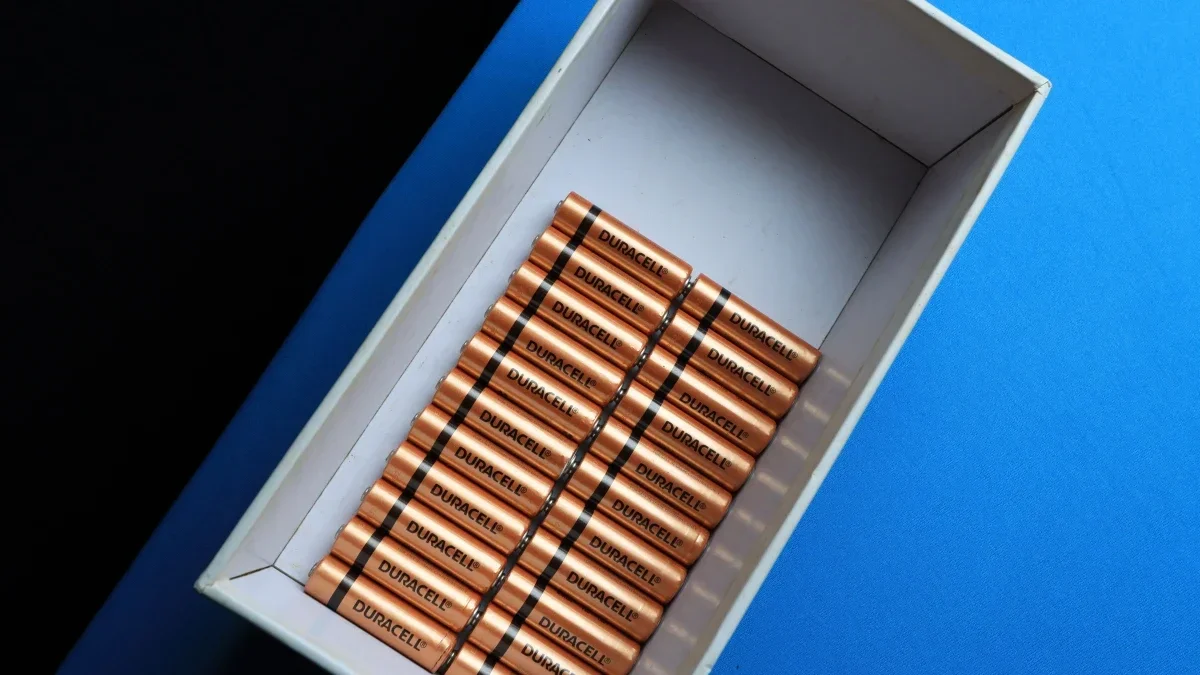
The power goes out on a cold night, you remember the little battery box in the closet, and the first thing you want to plug in is the refrigerator. Here is the honest version the "power your whole house for $150" videos skip: a cheap lithium battery box is genuinely useful in a blackout, but only for the small stuff — a few lights, your phone, the Wi-Fi router, a fan, maybe a CPAP. Ask it to run the fridge and it will trip, sag, or shut off in seconds. That is not a defect; it is physics.
Once you understand why, you can size a blackout plan that holds: what one of these boxes really runs, why a fridge defeats it, whether it is safe to charge indoors, and the one generator rule that quietly kills about a hundred Americans a year. And because that cold-night blackout is the classic scenario, it's worth pairing the box with cheap ways to seal drafts and hold heat in with the furnace off.
What a small power box actually is (and isn't)
Strip away the marketing and one of these units is three parts in a case: a rechargeable battery bank (the good ones use lithium iron phosphate, more below), an inverter that turns the battery's DC into the AC your gadgets expect, and a handful of outlets and USB ports. You charge it before the storm; it hands that energy back when the grid is down.
That is the whole honest category: a bucket of stored electricity for low-draw essentials — not a whole-house battery, and not a refrigerator solution. Keep your phone alive, your router on, a lamp lit, and a CPAP running through the night, and it serves you well. Treat it as a mini power plant and it disappoints you the moment you plug in a motor.
WHAT it can run: the runtime reality check
The math is simple, and it traces back to the Department of Energy's Energy Saver guidance. To estimate a device's energy use, multiply its wattage by the hours it runs and divide by 1,000 to get kilowatt-hours (Virginia Tech Extension). Flip that around for a battery and you get the only formula you need in a blackout: a battery's watt-hours divided by a device's watts equals roughly how many hours it will run. A lamp that sips power lasts a long time; anything that pulls hard drains the box fast. The exact hours depend on your battery's usable capacity and your device's label, so read these as the pattern, not a promise:
| Device | Roughly how it behaves on a small box |
|---|---|
| LED lights | Tiny draw — runs for many hours, often overnight and then some |
| Phone charging | Trivial draw — a small box refills a phone many times over |
| Wi-Fi router / modem | Small, steady draw — comfortably runs for hours, keeping you connected |
| CPAP (no heated humidifier) | Modest, continuous draw — realistic for a night if the box is sized for it |
| Box fan | Moderate draw — good for several hours of air on a hot night |
| Refrigerator, well/sump pump, AC, space heater, microwave, kettle | NOT this box — high-draw or high-surge loads it cannot start or sustain |
To find your own numbers, check the wattage on each device's label and divide your battery's watt-hour rating by it. Two cautions: a battery's usable capacity is a bit less than its rated capacity, and the inverter burns a little power just being on — so shave your estimate down rather than trusting the rated figure exactly. Reading those wattage labels is a habit that pays off beyond blackouts — it's the same first move behind trimming your everyday electric bill.
HOW it works: surge vs. run in 60 seconds
Here is the single idea that explains why the fridge row says "NOT this box." For a lamp or a router, the running watts are all that matter — a steady, flat draw. A motor is different: the moment a compressor or pump kicks on, it pulls a brief inrush of current before settling down.
The Department of Energy's motor guidebook puts a number on it: the locked-rotor current that flows when a motor starts and accelerates "tends to be around six times the rated full-load current," and that spike is "of no consequence in most situations because of its brief duration" (DOE motors guidebook). A refrigerator's compressor is exactly this kind of motor. So a fridge that runs at a modest wattage briefly demands several times more the instant it cycles on, and a small inverter cannot supply the spike — it faults out the moment the compressor starts.
Don't size a battery box for what an appliance runs at. Size it for what it surges to at startup. For a fridge, freezer, or pump, that surge is the number that defeats a small box.
The exact multiple varies by compressor, so treat "around six times" as the principle, not a precise wattage. There is also a second strike: it cycles on and off to hold temperature rather than running continuously, so its plate wattage is the maximum it draws — the DOE Energy Saver guidance suggests estimating real run-time by dividing plugged-in hours by about three (Virginia Tech Extension). Even so, its daily appetite dwarfs what a small box holds: surge stops it starting, total energy stops it lasting. If the outage stretches into a second day, your food is better protected by low-tech ways to keep food cold than by any battery box.
WHY chemistry matters: the battery safety card

The most common question in the comments under these videos is some version of "will it catch fire in my house, and can I charge it inside?" The answer depends on the chemistry inside the box.
Lithium iron phosphate (LiFePO4, or LFP) is the chemistry worth paying for. Battery researchers point to LFP cathodes for their "thermal stability and low toxicity, unlike the most widely used cathode material LiCoO2" — the cobalt-oxide chemistry in many older or cheaper lithium cells (NIH/PMC review). More thermally stable and less toxic is exactly what you want in something that charges overnight in your living room.
But "more stable" is not "fireproof." LFP is not immune to thermal runaway: when a cell suffers mechanical abuse — crushing, puncturing, a hard drop that ruptures the internals — the electrodes can touch, creating an internal short that generates "a substantial amount of heat, subsequently resulting in thermal runaway" (NIH/PMC study). So even a good LFP box needs an intact battery management system (BMS) and protection from being smashed or punctured. Buy a unit with a real BMS and follow the maker's charging and temperature limits.
What about the old-school alternative some DIY videos push — a lead-acid battery and a separate inverter? That one you genuinely should not charge in a sealed indoor space. OSHA is blunt: "Flammable hydrogen gas is always present during battery recharging," and it "is potentially explosive if allowed to accumulate in a closed area," so lead-acid charging demands ventilation and no sparks or flames nearby (OSHA). A sealed LFP box does not vent hydrogen like this — another reason it is the better indoor choice.
The CPAP exception, and where to be careful
A CPAP is the one "medical" device a small box handles well. It works by using "a motor that blows air into the tube" to hold your airway open while you sleep, so it needs continuous power (NHLBI). A basic CPAP without its heated humidifier draws little enough that a properly sized box can carry it through a night.

That said, this article covers general sizing and safety, not medical guidance. A CPAP, oxygen concentrator, or any life-critical device deserves more than a generic runtime table: if you depend on one, confirm your backup plan with the device manufacturer and your clinician, and register with your utility's medical-priority program.
LIMIT: the one rule that saves lives
When the outage drags on, plenty of people reach past the battery box for a gasoline or propane generator. Generators are legitimate tools for bigger loads, but they are also where people actually die — and the rule is absolute.
A generator's engine produces carbon monoxide, a gas that is odorless and colorless and gives no warning before it kills. An average of about 100 people die each year in the U.S. from CO poisoning tied to portable generators, and most of those deaths happen in and around homes (CPSC). The CDC's rules leave no wiggle room:
- Run a generator outside only — never in a home, garage, basement, crawlspace, or shed, and never near doors, windows, or vents (CDC).
- Keep it at least 20 feet from the house, with the exhaust pointed away from the building (CDC).
- Cracking a window or door is not enough. Opening doors or windows does not provide enough ventilation to prevent lethal CO buildup, which can reach fatal levels within minutes. Install battery-powered or battery-backup CO alarms near sleeping areas.
The garage with the door open feels safe. It is not — that is the exact scenario the death statistics are built from.
Common mistakes recap
- Sizing by running watts, or expecting a cheap box to run the fridge. A motor's startup surge, not its running watts, is what defeats a small inverter — and the box cannot hold a fridge's daily energy appetite anyway.
- Running a generator in the garage with the door up. Opening doors and windows does not prevent lethal CO. Outside, 20+ feet away, exhaust aimed away — no exceptions.
- Charging a lead-acid battery in a sealed room. It vents explosive hydrogen; prefer a sealed LFP box indoors.
- Trusting one quoted runtime number. Real hours depend on your device's label and your battery's usable capacity — do the DOE division yourself.
FAQ

Is it safe to charge one of these boxes inside my house?
A sealed LiFePO4 unit is the safer indoor choice — it does not vent hydrogen the way a charging lead-acid battery does. Keep it from being crushed or punctured, use a unit with a real BMS, and follow the maker's limits. Never charge a bare lead-acid battery in a sealed room.
Are all lithium batteries the same fire risk?
No. LFP is more thermally stable and less toxic than the cobalt-oxide (LiCoO2) chemistry in many cheaper cells, which is why it is the preferred pick for a home essentials box. It is safer, not fireproof — physical damage can still trigger thermal runaway.
What if I need power for a medical device?
Don't rely on a generic runtime table. A CPAP, oxygen concentrator, or similar life-critical device warrants a backup plan confirmed with the manufacturer and your clinician, plus a spot on your utility's medical-priority list.
The takeaway: a cheap LiFePO4 box is a real blackout helper for lights, phones, Wi-Fi, a fan, and a CPAP — just never the fridge, never a bare lead-acid battery in a sealed room, and never a fuel generator anywhere but outside and far from the house. A solid backup-power plan is just one piece of a well-run home; the rest of our complete guide to home hacks covers the everyday fixes. Spend less. Live more. — The Thrifty Almanac






0comments