

Something with pincers just scuttled across the bathroom floor, and an old part of your brain filed it under gets into your ear. That fear is a thousand years old, wrong in every part that matters, and it sells a lot of insecticide every summer. Here is the extension-entomology version.
The name is a medieval rumor, not a behavior
Four extensions say it plainly. Wisconsin Horticulture calls it "just a myth that earwigs purposely crawl into the ears of sleeping people and bore into their brains." Utah State: "The ideas that earwigs crawl into ears and that the pincers are dangerous are both false." Penn State agrees, and Colorado State says the old tales "have little basis in fact."
Now the part most articles skip: any insect can wander into an ear canal. A 2021 case report in Cureus describes a 24-year-old man who woke with severe ear pain; a live earwig was found in the canal and removed with forceps. The follow-up is the point: eardrum normal, hearing normal. No eggs. No tunneling. No damage.
The eggs go underground instead — 50 to 90 of them, in a chamber in the ground. And the pincers carry nothing: Illinois Extension says earwigs "are not poisonous and generally will not bite or sting humans."
Safety note: a live insect in an ear is a clinic visit. No oil, no flushing, no tweezers or swabs — those push it deeper and can tear an eardrum. Call a doctor.
What the pincers are actually for
Those rear forceps are cerci, "used primarily for defense and during courtship" per Wisconsin, and UNH Extension says the same. Shape is a free ID trick: males curved, females straighter. Adults run about 5/8 inch (roughly 16 mm), dark reddish-brown.
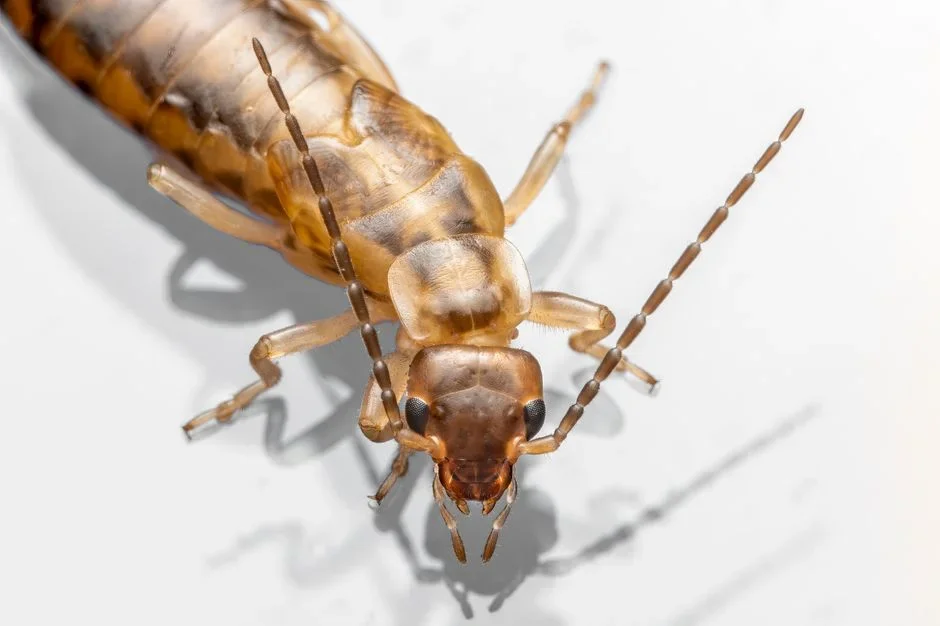
Can it pinch? If you grab one, yes — Michigan State calls it "a semi-painful pinch if the animal is handled roughly," and notes earwigs are "not known to bite or sting, eat your house or stored food, or infest your pets, transmit diseases." Iowa State: "they do not harm people."
Earwigs or slugs? The slime-trail test settles it
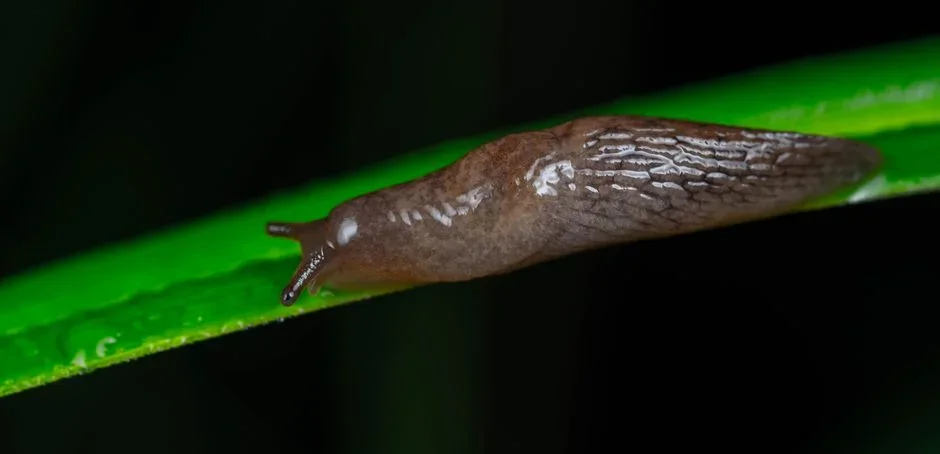
This is where money gets wasted. Earwigs chew "numerous, small, irregular holes leaving the leaves with a ragged appearance," per Wisconsin, which looks almost exactly like slug feeding. UC IPM's snail and slug guide concedes it: mollusc damage "can be confused with feeding by other pests such as earwigs, caterpillars, or other chewing insects."

The test. Both feed at night, so the decider is the trail, not the hole. UC IPM tells strawberry growers to separate the two "by checking for the slime trails snails and slugs leave behind." A shiny dried trail means molluscs; ragged holes with no trail means earwigs. Utah State: "examine the plants at night with a flashlight." Our step-by-step approach to home pest problems uses the same diagnose-before-you-buy logic.
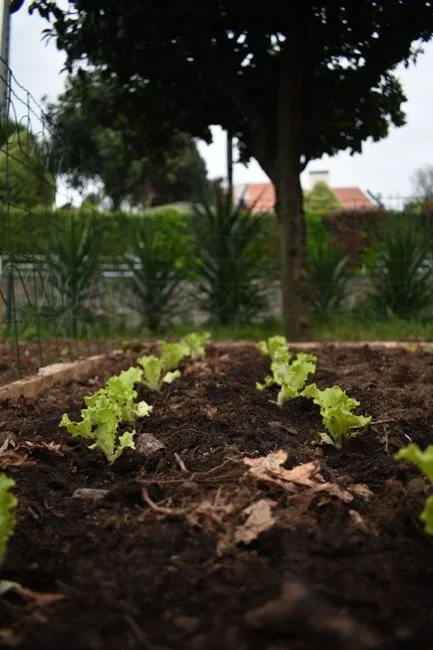
Other signatures, from UC IPM: seedlings "missing all or parts of their leaves and stem," stone fruit with "shallow gouges or holes that extend deeply into the fruit," chewed corn silks, and ragged zinnias, marigolds and dahlias. The limit: this identifies what is eating that plant, not which pest is worse locally.
The uncomfortable part: earwigs eat aphids
Before killing anything, read the sentence that reframes it. UC IPM states earwigs "are omnivores and are beneficial in some situations, such as when they feed on aphids, and don't need to be managed in many situations." Its Pest Notes calls them "important predators of aphids"; WSU Tree Fruit reports studies "failed to find evidence that earwigs increase damage to apples"; Penn State rates garden damage "usually minimal."
So: soft fruit or seedlings visibly disappearing, act. A few earwigs under a flowerpot, leave them. Earwigs plus aphids, definitely leave them — the reasoning behind our guide to knocking down aphids without buying ladybugs.
Tier 1: dry it out, take away the hiding places
Earwigs hide by day under soil clods, boards and weeds. Take away the shelter and most of the problem goes too.
- Colorado State: "Clear the area next to the home of sheltering debris (including mulches)," best when that strip "is also relatively dry."
- Fix damp spots at faucets and AC units, and "channel water from rain gutters and spouts away from the house foundation" (Iowa State).
- Lift boards, pots and flats off bare soil. UC IPM: remove "ivy, weeds, piles of rubbish, and leaves."
- Drip irrigate where possible; harvest fruit as soon as it ripens.
The limit: no source gives a mulch pull-back distance, so clear the strip right against the foundation rather than chase a number. It is slow, so add traps if seedlings are being eaten tonight.
Tier 2: the two traps extension recommends — and the recipe the internet got wrong
The shelter trap. Rolled newspaper, cardboard, bamboo tubes or hose, placed "on the soil near plants just before dark," then shaken out each morning "into a pail of soapy water" (UC IPM). Maryland Extension and UNH specify moistened newspaper. For trunks, Utah State gives numbers: a 6-inch-wide cardboard strip rolled "about 4 or 5 inches in diameter," tied with string, rubbed with fish oil or bacon grease, checked every two or three days.
The oil pitfall. "A low-sided can, such as a cat food or tuna fish can, with 1/2 inch of oil in the bottom makes an excellent trap," says UC IPM — baited with tuna oil, or vegetable oil with a drop of bacon grease. Colorado State adds the key detail: sink the can, keeping the oil at least an inch below the soil surface.
About the soy-sauce version. Oil-and-soy-sauce traps are all over social media but appear in no extension recommendation we could find: UC IPM, Colorado State, Utah State, Maryland and UNH all name fish oil or bacon grease. None mentions soy sauce. Oil does the killing in every documented design, so the swap is a guess — the "sounds plausible, nobody checked" pattern behind most home remedies. More on what survives scrutiny: repellents with evidence behind them and oil-based sprays sold as pest solutions.
The limit. No extension source publishes a catch rate or time-to-control for any earwig trap. The only guidance is procedural: "continue these procedures every day until you are no longer catching earwigs." A trap left unemptied is just shelter. Safety: fish oil and bacon grease attract pets and wildlife, so sink cans where dogs do not dig.
Tier 3: indoor earwigs are strays, not an infestation
Earwigs nest underground, not in your walls, and indoors they run out of groceries. Wisconsin puts it flatly: an earwig "probably won't find much around the house to eat except vegetable waste and therefore probably will not multiply indoors." Its recommended tooling: "fly swatters and vacuum cleaners work well."
The fix is a caulk gun, not a fogger: check "door thresholds, windows and screens for a tight fit" (Illinois); seal gaps along doors, windows and vents (Colorado State); cut basement humidity, which UNH says makes the space less inviting. One in the bathtub is one animal in the wrong place: vacuum it, then close the gap. The limit: sealing stops wanderers, not the population outside — which is why Tier 1 comes first.
The expensive mistake: blanket spraying near a vegetable garden
It does not fix the indoor problem. UC IPM: "Insecticide treatments indoors aren't recommended, since they will do little to prevent invasions."
It kills the help. UC IPM's aphid guidance says natural enemies matter most "in gardens not sprayed with broad-spectrum pesticides (e.g., organophosphates, carbamates, and pyrethroids)," and warns "most insecticides will destroy beneficial insects along with the pest." Pair that with earwigs eating aphids: the backfire is a mechanism, not a measured effect.
It puts a legal timer on your food. NPIC defines the preharvest interval as "the wait time between a pesticide application and when a crop can be harvested," notes wait times "can differ between products," warns that if your crop "is not listed on the label, that means you cannot apply the product to it," and adds: "Harvesting a crop before the PHI is illegal."
Treating anyway? UC IPM rates spinosad products "the most effective, environmentally sound products." Colorado State notes applications "later in the day may be most effective since earwigs are active at night," and that following the label is the applicator's legal responsibility; Iowa State describes a three-to-six-foot band around the house in late afternoon. Read three label lines first — is my crop listed, what is the PHI, what time of day — and keep kids and pets off treated ground until dry.
The honest tier list
| Tier | Use when | Cost | What it costs you |
|---|---|---|---|
| REAL — do nothing | No damage, or aphids present | $0 | Nothing; you keep a predator |
| REAL — dry and clear | Repeat damage or indoor strays | An afternoon | Mulch against the foundation |
| REAL — nightly traps | Seedlings or soft fruit chewed | Kitchen trash plus oil | Five minutes each morning |
| REAL — seal the gaps | They keep turning up indoors | A tube of caulk | An hour on thresholds |
| MYTH — soy-sauce bait, indoor sprays | Never | Low | Time and false confidence |
| DANGEROUS — blanket spray near edibles | Last resort, per label | $$ | Aphid predators and a legal harvest wait |
Timing is regional: Michigan State records nymphs emerging "around the third week of June in southern Michigan." Start trapping as they appear locally.
Common mistakes
- Diagnosing by hole shape. The slime trail is the test.
- Killing them mid-aphid-outbreak. UC IPM says they often need no management.
- Forgetting the traps. Empty every morning until the catch stops.
- Fogging the basement. Caulk beats chemistry; they do not breed there.
- Spraying a salad bed unread. The preharvest interval is binding.
FAQ
Do earwigs actually crawl into ears?
They do not seek out ears, lay eggs there, or reach the brain — four extension services call that false. Any insect can blunder into an ear canal, and in the one documented case the eardrum and hearing were normal afterward. See a doctor rather than probing it.
What is the best earwig trap?
Two, both free: a sunken can with half an inch of oil baited with tuna oil or bacon grease, and rolled damp newspaper set out before dark and emptied into soapy water each morning. No extension source publishes catch rates; judge yours by whether the nightly catch falls.
Are earwigs bad for my garden, and will they infest my house?
Sometimes: they strip seedlings, gouge strawberries and shred dahlias, though Penn State rates the damage usually minimal. Indoors, no — they do not multiply there. And you rarely need to spray: indoor treatments do little, while sprays near edibles cost you aphid predators and a legal harvest wait.
The takeaway: Confirm earwigs, not slugs, dry out the perimeter, run traps nightly, and leave the sprayer in the shed — most of the time these bugs are working for you. Spend less. Live more. — The Thrifty Almanac




0comments