

Somebody in your house unplugs the phone charger every night. Somebody else walks past a cable box that has never been switched off in six years. Only one of those habits is doing anything, and it isn't the charger.
Berkeley Lab publishes measured standby draw for household devices as a plain table of watts. Put those numbers next to your electric rate and the folklore falls apart: the devices people obsess over cost pennies, and a short list nobody mentions costs real money. Berkeley Lab puts standby at 5 to 10% of residential electricity in developed countries — not a third of your bill.
The claim everyone repeats, and what the meters recorded
Here is "unplug everything and watch your bill drop" with numbers attached, from Berkeley Lab's published standby measurement table (file dated November 2022). Across nine measured electronics chargers, the median standby draw was 0.52 watts. Across 36 televisions, 0.95 watts. Across 21 set-top boxes, 8 watts — upper quartile 14, maximum 30. The hungriest thing in the dataset is an uninterruptible power supply at a median 25.49 watts.
The charger everyone unplugs and the cable box nobody touches are separated by a factor of fifteen. That is why "unplug everything" fails: it spends attention evenly on wildly uneven costs. For the household habits that genuinely move a bill, see our roundup of habit changes that cost nothing to make.
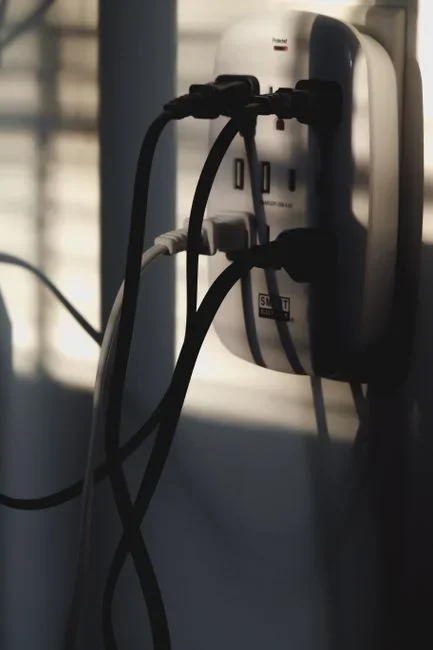
The arithmetic, once, so you never need this article again
Berkeley Lab gives the shortcut: a device drawing 1 watt continuously for a year uses 9 kWh. The US average residential price was 18.44 cents per kWh in May 2026, up from 17.37 cents a year earlier. Multiply, and you get the only number worth memorizing: one watt left on all year costs roughly $1.66.
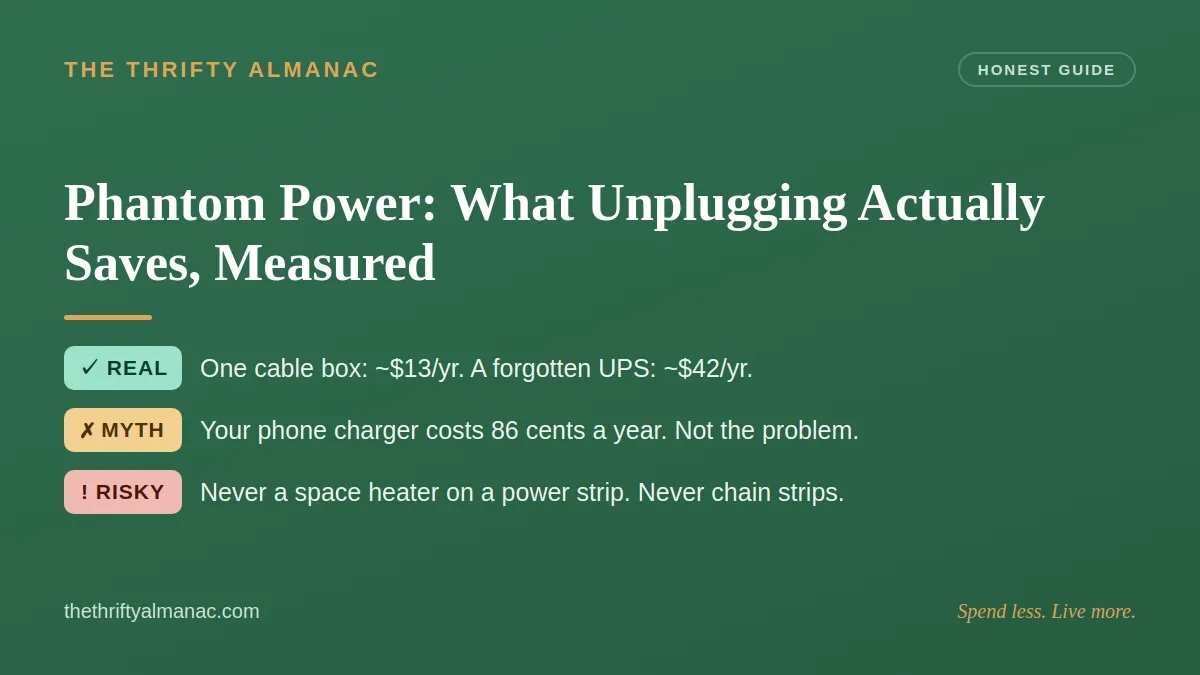
Run it three times and the tier list writes itself: a 0.52-watt charger costs roughly 86 cents a year, an 8-watt set-top box about $13, a 25.5-watt UPS about $42.
Use the rate printed on your own bill. The national average moved about 6% in twelve months and state rates differ widely, so any fixed dollar promise is worth less than one line of your own multiplication.
Tier S: the short list actually worth killing at the strip
Berkeley Lab's measured medians, costed at 18.44 cents per kWh:
| Device (units measured) | Median | Worst measured | Median cost/yr |
|---|---|---|---|
| UPS / battery backup (2) | 25.49 W | 26 W | ~$42 |
| Set-top box or DVR (21) | 8 W | 30 W | ~$13 |
| VCR (4) | 7.4 W | 12 W | ~$12 |
| Security system panel (3) | 6.57 W | 8.2 W | ~$11 |
| Stereo / AV receiver (11) | 4 W | 27 W | ~$6.60 |
| Home theater speakers (9) | 3 W | 12 W | ~$5 |
| Modem / router (13) | 3.32 W | 8 W | ~$5.50 |
How: put the guest-room or basement AV shelf — unused TV, its box, its sound bar — on one switchable power strip and treat that switch as the off button. Then hunt the forgotten UPS. Berkeley Lab's priority list names an uninterruptible power supply connected to nothing, plus unused VCRs, empty battery chargers, rarely used audio gear, and seasonal e-bike or garden-tool chargers.
The limit: these are medians across small samples, not your watts. A router you use isn't waste, and a leased cable box that takes four minutes to reboot may not be worth $13 a year of friction. Never pull a security panel offline to save $11; alarm systems are supposed to draw power.
Tier A: change a setting instead of pulling a plug
Game consoles are the clearest case. Across 21 measured units the median standby draw was 1.7 watts — about $2.80 a year — but the upper quartile was 5.7 watts and the maximum 24.5. Most are cheap to leave in rest mode; a minority are not, and only a meter says which you own.
The settings fix costs one menu visit. For the 2014-2015 generation, ENERGY STAR reported that Energy-saving Power Mode cut Xbox One standby power use by 98%, and a PS4 update dropped standby consumption by over 65%. Those describe that generation, not a PS5 or Series X — no federal agency publishes standby watts for today's consoles.
Berkeley Lab adds two: enable sleep mode on computers, and put a hot water circulation pump on a timer. A desktop left running is active consumption, not phantom load — its standby median is only 2.7 watts.
Tier F: the pennies people feel guilty about
Every item here costs under two dollars a year:
- Phone and battery chargers — 0.52 W and 0.44 W medians. About 86 and 73 cents a year.
- A modern certified TV — ENERGY STAR caps standby at 0.5 W passive, or 1.0 W for network-capable sets.
- Smart bulbs — 0.4 W median across 32 bulbs. About 66 cents.
- Smart plugs themselves — 0.25 W median across five units, about 41 cents a year. The "smart plugs waste power too" warning is true and financially irrelevant.
- The microwave clock — 1.5 W median. About $2.50.
Total the group and you're defending a few dollars a year with a nightly ritual you'll quit in a fortnight. One caveat cuts in the myth's favor: Berkeley Lab warns that meter errors grow larger below about 1 watt, so sub-watt readings are directional, not precise.
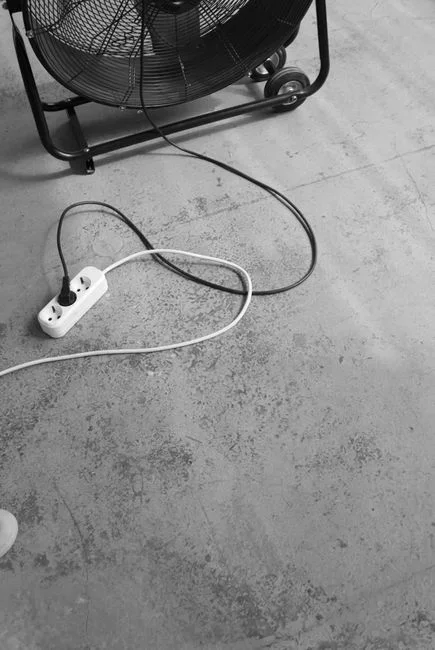
The thing you're actually thinking of isn't phantom power
The garage beer fridge — the biggest single item in this conversation, and not standby draw at all, because the compressor is doing real work all year. ENERGY STAR puts a refrigerator over 15 years old at about $95 a year to run, and an old unit at roughly 20% more energy than a certified model.
So the decision is retire it, consolidate, or replace it — never "unplug it overnight," which spoils food and saves nothing. The other popular fridge claim deserves the same arithmetic: here is what the dirty condenser coil advice really delivers.
How to find your own watts in one evening
Measuring before committing is the habit behind every fix in our household repair and savings reference. Some libraries lend a plug-in watt meter free: Montgomery County (MD) Public Libraries lends the Kill A Watt to account holders aged 14 and up for a 14-day checkout, one per account. Check your branch before buying; stock is limited, so expect a hold.
Then meter the suspects. Berkeley Lab's tell-tale list: anything with an external power supply, an internal battery, a remote control, a continuous display including a single LED, or a constant network connection. Write each device's watts down, multiply by 9, multiply by your rate. Below 1 watt, round to "negligible."
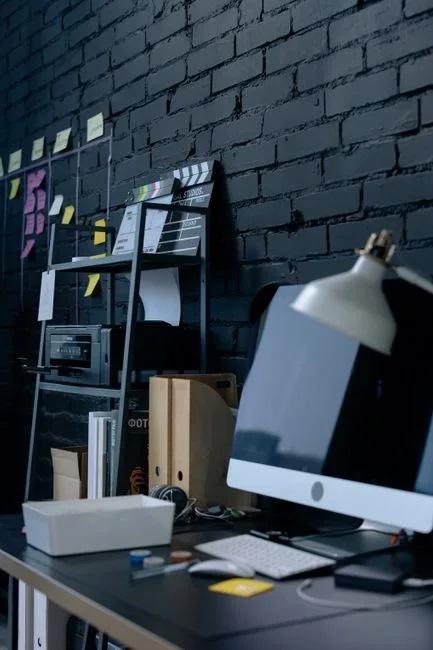
Do not unplug these, and do not chase watts with a power strip
Switching off at a strip is the action that goes wrong when pointed at the wrong device. These are boundaries, not boilerplate.
- Never unplug a refrigerator or freezer for standby watts. Ready.gov notes a fridge holds food cold about four hours without power, a full freezer about 48; food at 40°F or above should be thrown out.
- Never unplug a power-dependent medical device — oxygen concentrators, CPAP machines, refrigerated medicines. Ready.gov's guidance is to plan for outages with your medical provider.
- Never plug a space heater into a strip or extension cord. USFA says to plug space heaters directly into wall outlets, three feet from anything that can burn. Portable heaters were about 3% of home heating fires annually for 2017-2019 but 41% of the fatal ones.
- Never run a major appliance on an extension cord. USFA says refrigerators, stoves, washers and dryers go directly into a wall outlet, and to choose strips with internal overload protection. In 2021 an estimated 24,200 residential building electrical fires caused 295 deaths and over $1.2 billion in losses.
- Never daisy-chain strips. ESFI is blunt that multiple plug outlets cannot be chained together. A 2009 CPSC alert counted about 2,000 residential fires a year from cords or plugs, killing 60 people.
- Don't repeatedly cycle a worn cord. Berkeley Lab's own safety line is not to unplug and replug devices with worn power cords. Replace them.
If a strip runs warm, an outlet is discolored, or a breaker trips when you switch things back on, stop and call a licensed electrician — chasing $13 a year is no reason to test suspect wiring.
The honest bottom line
Berkeley Lab's own verdict deserves quoting because almost nobody in this genre will: limited research suggests an informed, aggressive approach can reduce standby use by about 20%, and there are more productive ways to spend an hour on energy.
Scale explains why. EIA's 2020 survey puts air conditioning at 19% of home electricity, space heating at 12% and water heating at 12%. Standby is a rounding error beside those, which is why where your water heater's thermostat sits matters more than every charger in the house. Kill one set-top box and one forgotten UPS and you're looking at roughly $55 a year, permanently, for twenty minutes of work. Good return — and the entire prize.
Common mistakes
- Unplugging chargers nightly and calling it a strategy. Roughly 86 cents a year, and you'll quit by week two.
- Treating a median as your device. Set-top boxes measured from 0 to 30 watts; only a meter settles it.
- Unplugging a fridge, freezer or anything medical to chase watts. Different problem, real consequences.
- Daisy-chaining strips or putting a space heater on one to make the off switch reach further.
FAQ
Does unplugging a TV actually save money?
Barely, if the set is modern — ENERGY STAR caps certified TVs at 0.5 W passive standby and 1.0 W when network-capable, so under $2 a year. Berkeley Lab's median across 36 televisions was 0.95 W, though the maximum was 23.8 W. An old set is a different conversation; meter it.
What is the worst standby device in a typical home?
In Berkeley Lab's measured table, an uninterruptible power supply at a median 25.49 watts, roughly $42 a year — the device folklore never mentions, and one Berkeley Lab flags when connected to nothing. Set-top boxes are second at a median 8 watts.
Do smart plugs cancel out the savings?
No. Across five measured smart sockets the median was 0.25 W, about 41 cents a year. If it lets you switch off an 8-watt box you'd otherwise ignore, it covers its own draw about thirty times over.
Is it safe to leave a power strip switched on all the time?
Yes, used correctly: plugged straight into a wall receptacle, not chained to another strip, no space heater or major appliance on it, and with internal overload protection. Replace any strip or cord that is cracked, warm or damaged.
The takeaway: Standby power is real but small, so meter the four or five devices that actually draw watts instead of unplugging the charger that never did. Spend less. Live more. — The Thrifty Almanac






0comments