

Your lawn looked fine Thursday. By Saturday it's tan and chewed to stubble, and you're weighing a sprinkler timer against a bottle of insecticide. Hold off on both. Drought doesn't move that fast; caterpillars do, and it feels overnight because a fall armyworm saves most of its eating for the end. Mississippi State Extension reports about 80 percent of total leaf consumption happens in the caterpillar's last two or three days, and describes a hayfield nearly ready to cut Thursday, nothing but stems by Saturday.
Dish soap and a watering can settle it before you spend a cent. But nearly every page explaining that test gets one detail backwards, which is why it comes back "negative." Same habit as our homeowner pest control playbook: identify first, buy second.
The soap flush, done the way extension actually says to do it
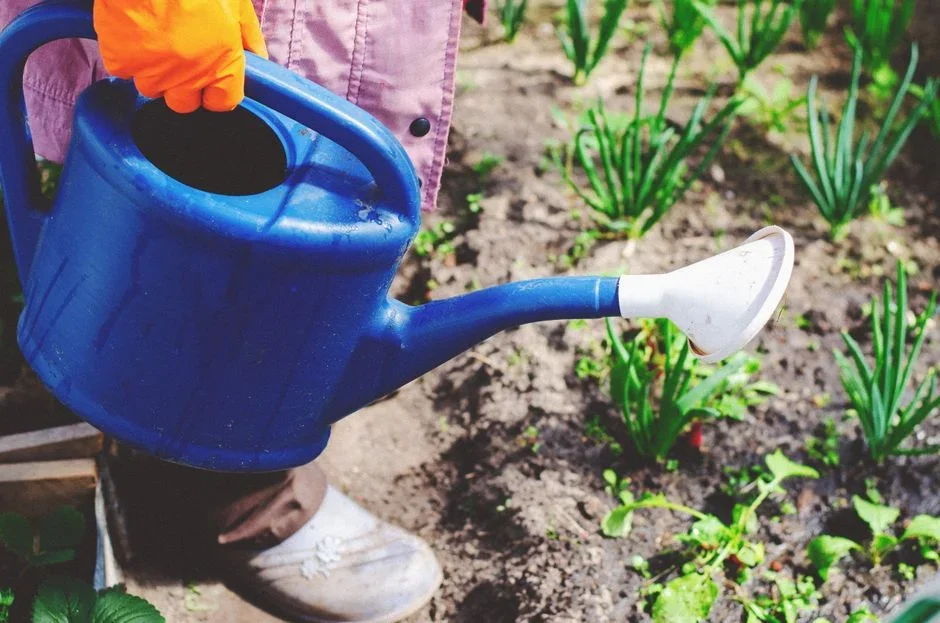
Pour the soapy water on the green turf at the edge of the damage, not the brown patch. North Carolina State Extension is blunt: place the flush in healthy turfgrass around damaged areas, since insects are less likely to be recovered from heavily damaged turf. The larvae ate that spot and moved on; soaping it is how people conclude "no bugs" and go water a lawn full of them.
No single recipe is canonical. Alabama Extension calls for 2 tablespoons of liquid dishwashing soap in 1 gallon of water poured over 1 to 2 square feet. Clemson uses 1 to 2 tablespoons of lemon-scented detergent in 1 to 2 gallons over a square yard, with armyworms surfacing within 10 minutes; NC State's ratio matches Clemson's. Timing beats the ratio: Alabama notes larvae are most active early morning and late afternoon or evening, so a midday flush can under-count.
Confirm it's an armyworm: the inverted Y and the four dots
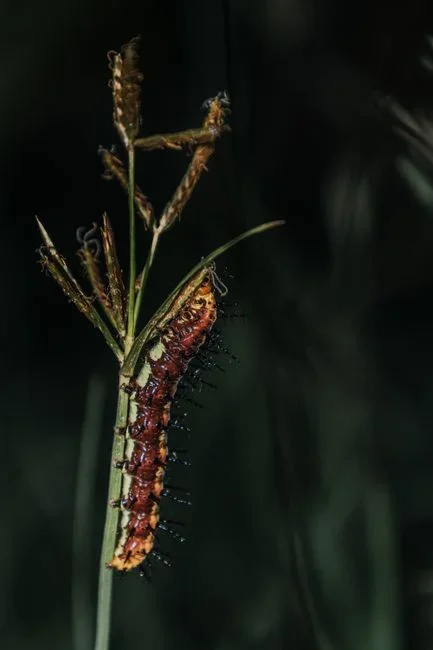
Sod webworms, cutworms, and mole crickets surface too, so check two marks. Texas A&M describes a dark head with a pale but distinct inverted "Y", a black stripe down each side, and a back stripe carrying four black dots per segment. Mississippi State names that Y and the square of four spots as the best confirmers.
Size tells you the trouble you're in: Iowa State puts a full-grown larva at 1.5 to 2 inches, with small greenish ones far easier to control. The earliest tell appears before any browning — NC State describes small larvae eating the underside of leaves, leaving the clear epidermis intact, a translucent windowpane patch. Birds working the lawn is real but late; Mississippi State notes they don't show up until the caterpillars are big.
It's not grubs — and that difference decides everything next
"Must be grubs" sends people to the wrong shelf. Armyworms chew blades at the surface; grubs eat roots underground. UC IPM splits it: armyworms leave leaves and leaf bases chewed in small irregular spots that spread to patches, while heavy grub feeding leaves turf that can be rolled back like a carpet.
The test and the number both change. For grubs, cut the sod and pull back a third to a full square foot of turf; Illinois Extension puts dieback at 10 to 12 grubs per square foot, with skunk and raccoon digging starting as low as 3 to 5 — against the roughly 3 caterpillars per square foot that trigger armyworm treatment. If the sod peels like carpet and nothing surfaces in the soap, you're on the other article — what actually kills grubs and what just sells product.
How many is too many — and what the threshold is really for
Mississippi State's method: vigorously ruffle the grass and count larvae falling into a 1-square-foot area, repeated at several spots. The quoted trigger is more than 3 caterpillars a quarter inch or longer per square foot.
The footnote nobody prints: that number is published for hayfields and pastures, not home lawns. Texas A&M's turfgrass factsheet gives no count at all — it says treat when leaf damage is evident and large numbers of caterpillars are visible, and Clemson's turf factsheet gives none either. Use 3 per square foot as a working number, knowing where it came from.
"The grass is dead" is usually wrong
This is where money burns on panic sod and seed. Clemson is flat about it: caterpillars only eat the blades and do not destroy the stolons and rhizomes, so established warm-season grasses survive. Bermuda, zoysia, St. Augustine, and centipede lose the haircut, not the plumbing.
Water decides survival. Iowa State notes that with blades gone the crown is exposed to environmental stress, so steady moisture keeps it alive while the plant recovers; Clemson advises watering deep and infrequently. Skip the emergency bag of miracle powder — that aisle gets its own warning in our look at cheap lawn powders and what they do to turf.
Two caveats. Virginia Tech is guarded about cool-season lawns: light thinning recovers with proper fertility, but extreme damage may call for fall renovation or reseeding. Late hits are harder — NC State warns bermuda struck when nights turn cool can show slow growth early the next spring. If tall fescue needs seed, Clemson's rate is 5 to 6 pounds per 1,000 square feet.
Before you blanket-spray: the pollinator and pet math
Broadcasting a broad-spectrum insecticide over a whole lawn for caterpillars in one corner is the move to avoid. If clover grows in your grass, UC IPM is explicit that carbaryl should not go on lawns containing clovers or other flowering plants, because it is highly toxic to bees.
Pyrethroids carry their own bill. NPIC's sheet on bifenthrin, common in consumer lawn products, calls it very highly toxic to bees and highly toxic to fish and small aquatic organisms, with soil-bound residue still reaching surface water through runoff — UC IPM likewise warns to keep applications away from streams. Exposed pets may vomit, drool, twitch, or tremor, so keep animals and kids off treated ground for the label's stated time or until sprays dry completely, whichever is longer; granular products may need 24 hours or longer, and residues persist after drying. If a pet or child swallows a product or shows symptoms, keep the label in hand and call Poison Control or your veterinarian right away.
If you do spray, NPIC advises applying in the evening after bees have returned to their hives, keeping spray close to the target pest, and reading the label's Environmental Hazards section. UC IPM lists Bt and spinosad as the least toxic pesticides that kill caterpillars — least toxic is not harmless, and the same page notes spinosad can hurt bees and beneficial insects. Texas A&M also lists halofenozide, for small caterpillars only.
If you treat: the timing that decides whether it works
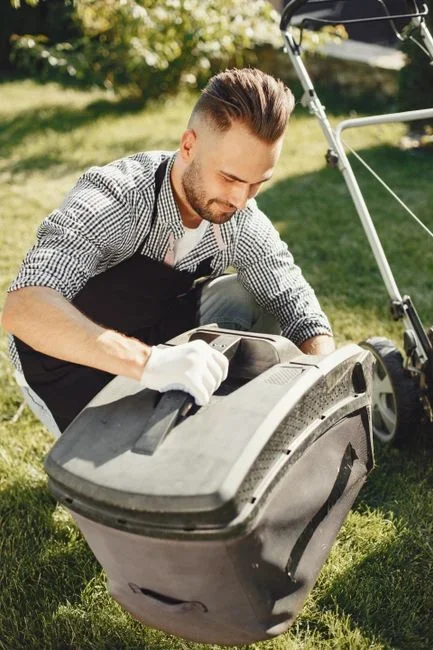
A mis-timed spray is the worst of both worlds: full exposure, no control. Spray early or late, when Alabama says larvae are most active on turf, after light irrigation several hours ahead to draw larvae near the surface. Mow tall turf first for coverage and collect the clippings, per Iowa State. Then keep water off: Clemson says avoid irrigation or rainfall within 24 hours. That's three separate jobs for the hose: wake them up, hold off after the spray, water for recovery later.
Larva size can cancel the plan outright: Virginia Tech says control of large larvae is sometimes difficult with any insecticide, and by then most of the eating is behind you. If a pyrethroid doesn't work quickly, Iowa State says to switch to a different class rather than reapply the same one. Rates and re-entry times come from the label.
The honest tier list
| Move | Verdict | Why |
|---|---|---|
| Soap flush on green turf at the damage edge | REAL | NC State's placement rule; larvae surface in minutes |
| Inverted "Y" plus four rear spots | REAL | Two confirmers, not a guess from damage |
| Steady irrigation to keep crowns alive | REAL | Blades are gone; the crown must survive |
| Flushing the brown patch itself | MYTH | False negative — the caterpillars already left |
| Birds as an early warning | MYTH (late) | They arrive once larvae are big |
| "Armyworms killed my lawn" | MYTH | Warm-season turf keeps stolons and rhizomes |
| Carbaryl broadcast over a clover-flecked lawn | DANGEROUS | Highly toxic to bees; clover is the bee bar |
| Pyrethroid blanket spray near water or a storm drain | DANGEROUS | Runoff reaches fish and aquatic invertebrates |
| Midday spray, then repeats on full-grown larvae | DANGEROUS | Exposure without control; resistance pressure |
Why it keeps happening — and what prevention can honestly mean
Nothing you did caused this. The University of Arkansas notes the pest winters only in southern Florida and Texas, with adults dispersing northward annually. Moths fly in from off your property, so no lawn practice ends it permanently, and damage arrives later as you move north — check your state extension service for local timing instead of a national calendar.
Expect a possible second round. Arkansas puts the summer life cycle at about 30 days, with a larval stage near 10 days, plus egg masses of 100 to 200 and three generations a year in southern Arkansas. Generation counts are regional, but the lesson travels: once the lawn greens up, re-run the soap flush instead of assuming the season is over.
Common mistakes
- Pouring the flush into the brown patch instead of the green grass beside it.
- Waiting for birds instead of checking blades for windowpane feeding.
- Buying grub control for a blade-chewing pest — different depth, test, and threshold.
- Reseeding warm-season turf that only lost blades and needed water.
- Spraying the whole yard at midday, over clover, on full-grown larvae.
- Watering right after spraying and rinsing off what you paid for.
FAQ
How long until the lawn looks normal again?
No extension source publishes a reliable recovery clock, so be skeptical of one. The mechanism matters more: keep moisture on the crowns and established warm-season turf regrows from stolons and rhizomes. Badly damaged cool-season lawns may need seed.
Can I skip the spray entirely?
Often yes, and by the time a lawn is visibly brown that's the likely answer. Most of the feeding is over, large larvae resist insecticides, and water plus patience costs less. Spraying pays off while caterpillars are still small.
When should I call a professional?
After a treatment or two has failed, when the yard is too large to cover at dawn or dusk in one pass, or when surface water, pets, kids, or beehives make exposure the harder problem.
The takeaway: Flush the green grass at the edge, count what surfaces, and let the diagnosis, not panic, decide what you spend. Spend less. Live more. — The Thrifty Almanac




0comments