

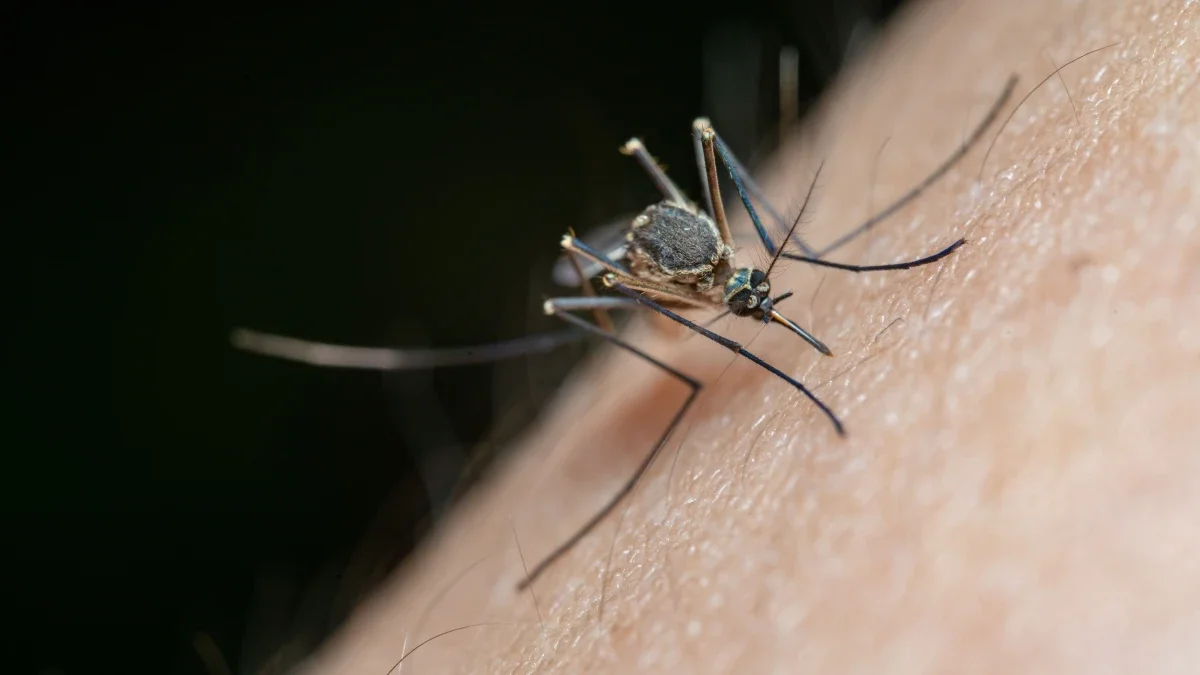
Every June the same thing appears on the garden-center table: a leafy little plant labeled "mosquito plant" or "citronella geranium," sold on the promise that a few pots on the patio will keep the yard bite-free. Brush a leaf and it smells faintly of lemon. It looks like a solution. It isn't — and the entomologists who actually study repellents have been saying so, in plain language, for years.
The honest version is less charming but more useful. A short list of active ingredients has been registered by the U.S. Environmental Protection Agency because they were shown to work. Almost everything marketed as a clever shortcut around that list — the plant, the wristband, the phone app that plays a high-pitched whine, the vitamin you swallow — has not held up under testing. Here is what the public record from the EPA, the CDC, and university extension entomologists actually says, and how to read a repellent bottle so you walk out with protection instead of a nice smell.
WHAT actually works: the short, boring, EPA-registered list
When the CDC tells travelers how to avoid bites, it does not hand out a list of scents or gadgets. It names a category and a handful of chemicals: "Use Environmental Protection Agency (EPA)-registered insect repellents with one of the active ingredients below" — DEET, picaridin, IR3535, oil of lemon eucalyptus (OLE), para-menthane-diol (PMD), and 2-undecanone.
"EPA-registered" is the phrase doing the heavy lifting. It means the product went through a federal review of both effectiveness and safety before it could make a repellency claim on the label. The EPA's own ingredient page keeps a running tally of how these show up on store shelves, and the lopsidedness tells you a lot about track record: "The following are active ingredients in EPA-registered skin-applied insect repellents", with DEET spread across "more than 500 products," picaridin in about 40, and IR3535 in about 45.
| Active ingredient | Also called | How it shows up | The honest read |
|---|---|---|---|
| DEET | N,N-diethyl-meta-toluamide | 500+ registered products | Longest track record against mosquitoes and ticks; the percentage sets how long it lasts, not how "strong" it is. |
| Picaridin | KBR 3023, icaridin | ~40 products | Nearly odorless and doesn't soften plastics and synthetic fabrics the way DEET can. |
| IR3535 | ethyl butylacetylaminopropionate | ~45 products | Common in lower-odor "family" formulas. |
| Oil of lemon eucalyptus / PMD | para-menthane-diol | 6 products | The one plant-derived option the EPA backs — but the refined repellent, not the raw essential oil. Not for children under 3. |
| 2-undecanone | methyl nonyl ketone | 1 product | Derived from wild tomato; newer and far less common. |
| Catnip oil | Nepeta cataria | 4 products | Registered, but rarely stocked. |
One point on that plant-derived line matters, because it's the source of a lot of confusion. The oil of lemon eucalyptus the EPA recognizes is a processed, standardized repellent — not the essential oil sold in the same aisle for aromatherapy. As the University of California's Integrated Pest Management program puts it, "The pure form of OLE is not currently registered by the EPA". Buying a bottle of the pure essential oil and dabbing it on is not the same product the studies looked at.
WHY a higher percentage isn't "stronger" — it just lasts longer

This is the single most misread number on the shelf. People see 100% next to 25% and assume the big number repels harder. It doesn't. Penn State Extension states it about as flatly as an agency can: "Repellent products containing a higher concentration of active ingredients do not necessarily indicate better protection, only that the protection will last longer."
UC IPM says the same thing from the other direction — this is a general rule, not a DEET quirk: "In general, higher concentrations of active ingredient provide a longer protection time, regardless of the active ingredient." A low-percentage product isn't weaker per bite; it just wears off sooner and needs reapplying.
And the duration curve flattens. Past a certain point you're paying for concentration that buys you almost nothing. Penn State again: "DEET efficacy peaks at around 50 percent. Products that contain concentrations exceeding 50 percent DEET do not provide significant improvement in protection." So a 100% DEET bottle is mostly a marketing flex over a 30–50% one. For most people running errands or sitting on a porch, real protection tops out at a few hours regardless — UC IPM notes effectiveness "typically lasts 4 or fewer hours depending on wind, high temperatures, high humidity, and perspiration amounts." Sweat and wind shorten the window; sunscreen worn under it can too.
HOW to buy, then: pick the active ingredient you like, then choose the percentage to match how long you'll be outside. A short evening walk needs far less than an all-day fishing trip. Higher isn't better — it's longer.
HOW to use it so it actually works — and stays safe
A repellent that's registered and effective still fails if you use it wrong, and every one of these products is a regulated pesticide. The EPA's guidance is short and worth taking literally: "For the safe and effective use of pesticide products, always read the product label before using the product." The label is where the reapplication interval, the coverage instructions, and any age notes live — and those differ by product.
Apply it to exposed skin and the outside of clothing, not under clothes. Don't spray it into your face; spray your hands and wipe it on. Reapply on the schedule the label gives once you've been out past the protection window, especially after sweating or swimming.
For kids, the process matters as much as the product. The CDC's instructions are specific: "Do not apply insect repellent to a child's hands, eyes, mouth, cuts, or irritated skin", and "Adults: Spray insect repellent onto your hands and then apply to a child's face" rather than spraying directly at a small face. On the ingredient most parents worry about, the EPA is reassuring when the label is followed: "DEET is approved for use on children with no age restriction."
The plant myth, the gadget myth, and the vitamin myth

Now the part the garden-center tag skips. The reason that "mosquito plant" keeps disappointing people is that it doesn't do the job sitting in a pot — and UC IPM names it directly in a single, unusually blunt sentence listing what does not work: "Wristbands that contain an aromatic repellent, ultrasonic emitters, electric grids, electronic repellers, aromatic plants (the most common one is the so-called mosquito plant, Pelargonium x citrosum), incense coils, vitamin B1, and mixtures of brewer's yeast and garlic are ineffective." That one line covers most of the "natural" and "chemical-free" aisle at once.
The vitamin-and-app crowd gets the same verdict from Penn State: "Vitamin B and 'ultrasonic' devices have not been proved effective in preventing mosquito bites." The app that claims to emit a mosquito-repelling frequency, the clip-on ultrasonic buzzer, the B1 pills marketed to make your blood unappealing — none has stood up to controlled testing.
Citronella isn't a scam so much as an overstatement. A citronella candle can nudge things in your favor, but only in a narrow way: outdoors, in still air, close to you, for a short stretch. It's a mild edge, not a shield — and the leafy geranium sold under the citronella name barely registers at all, because the plant doesn't release enough of anything to matter until you crush and rub the leaves. If you want low-cost approaches that don't rely on a bottle, the trade-off between cheap tactics and real coverage is worth understanding before you spend anything — our look at the $3 "Amish" mosquito trick and at which mosquito traps and baits actually reduce the population both sort the hype from the parts with evidence behind them.
LIMIT: kids, pregnancy, and when a bite is more than an itch
A few honest edges. Oil of lemon eucalyptus and its refined form PMD carry an age floor the others don't — the CDC is explicit: "Do not use products containing oil of lemon eucalyptus (OLE) or para-menthane-diol (PMD) on children under 3 years old." For infants and specific medical situations, the right move is to follow the individual product label and, if you're unsure, ask a pediatrician or pharmacist rather than guessing at an amount. This isn't medical advice, and it deliberately doesn't hand you a dose for a baby — those decisions belong with the label and a clinician who knows the child.
Reactions to the repellents themselves are uncommon when the label is followed, but if skin gets irritated, wash it off with soap and water and stop using that product; if a reaction seems serious, contact a doctor or poison control. And remember why any of this matters: mosquitoes carry disease, from West Nile to dengue. If you develop fever, a bad headache, body aches, or a rash in the days or weeks after being bitten — especially after travel — that's a reason to see a doctor, not to wait it out.
The bottom line

Skip the shopping riddle. The products that work are the ones the EPA registered — DEET, picaridin, IR3535, and the refined oil of lemon eucalyptus (PMD) — and among those the choice is mostly personal preference plus how long you'll be outdoors, since the percentage buys duration, not strength. The plant on the patio, the band on your wrist, the app on your phone, and the vitamin in the cabinet have all been checked and found wanting. Buy one registered bottle, read its label, match the percentage to your afternoon, and reapply when it wears off. For the bigger picture on keeping bugs out of your yard and home without wasting money on gadgets, start with our DIY pest control guide.





0comments