

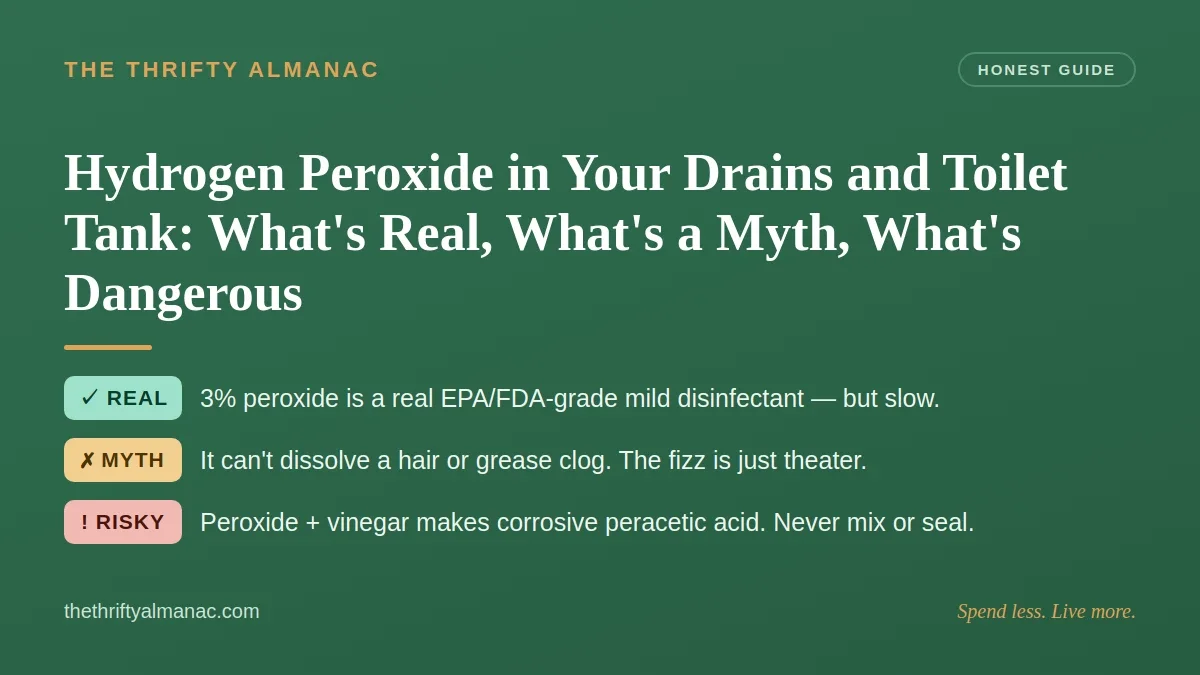
The video always looks the same: someone pours a capful of drugstore hydrogen peroxide down every drain in the house, dumps a little more into the toilet tank "to let it work overnight," and promises miracle unclogging plus a sparkling bowl by morning. Some of that is true. Some of it is harmless theater. And a couple of the tricks trending right now range from irritating to genuinely hazardous.
So let's sort the drain-and-toilet claims the honest way — not "we tested it," but what the EPA, CDC, and the companies that actually make your toilet parts say. (For everything else peroxide does around the house — cutting boards, stains, first aid, the full safety rundown — see the honest guide to peroxide around the house. This piece stays on pipes and tanks.)
The claim vs. the honest verdict (at a glance)
| Popular drain/toilet use | Verdict | The short reason |
|---|---|---|
| "Pour it down to dissolve a hair or grease clog" | MYTH | The fizz can't dissolve hair, grease, or soap buildup — a real clog is physical |
| Brightening a stained toilet bowl (scrub, then flush) | REAL | Mild oxidizer lifts organic staining on contact |
| Freshening a smelly drain | REAL (mild) | 3% peroxide knocks down odor and thin film — but needs dwell time, and won't clear a blockage |
| Leaving peroxide (or any cleaner) sitting in the toilet tank | CAUTION | Oxidizers warp rubber flappers and void plumbing warranties |
| Mixing peroxide with vinegar in the drain "for power" | DANGEROUS | Forms corrosive peracetic acid; never seal it in a bottle |
MYTH: "Peroxide pours away any clog"
This is the big one, and it's the reason a lot of people end up standing over a sink full of gray water an hour later. When peroxide hits organic gunk it fizzes, and fizz looks like work. It isn't. The bubbling is the same "something is happening!" illusion behind the famous baking soda and vinegar routine — a reaction that produces foam but, as one plumbing service bluntly puts it, "cannot cut through grease – at all." Grease only lets go when you hit it with heat plus a surfactant (dish soap) to emulsify it, per plumbing service guidance.

A typical bathroom clog is hair bound together with soap scum and body oils. Household peroxide "will not break apart a dense hair clog the way a mechanical drain snake can," notes a professional plumbing writeup. It can nudge odor and thin organic film, but it does not dissolve the mass causing the backup. The tell is simple: if you have standing water that isn't draining, the clog is physical, and no liquid you pour on top of it changes that.
What 3% peroxide actually does in a drain (and what it can't)
Don't toss the bottle — it just isn't a drain opener. 3% hydrogen peroxide is a genuine mild disinfectant: it will knock down the smell in a stinky drain and brighten organic staining in a toilet bowl if you scrub it in and let it sit. The catch is that it's slow and needs the surface to stay wet to do anything — a two-second splash accomplishes almost nothing. That's the whole honest role here: odor and light film, never a blockage. Its legit non-drain uses (and the ones that are overhyped) are laid out in the full peroxide guide.
CAUTION: don't leave chemicals sitting in the toilet tank
The "pour it in the tank overnight" habit has a hidden cost most videos never mention: the rubber parts. Fluidmaster, one of the biggest toilet-parts makers, flatly warns that in-tank drop-in cleaners containing bleach or chlorine warp the flapper and can "RESULT IN DAMAGE to tank components... MAY CAUSE FLOODING and PROPERTY DAMAGE and VOID FLUIDMASTER WARRANTY," per its flapper-leak guidance. Seals and gaskets exposed to years of concentrated oxidizer turn hard and brittle, and a brittle flapper is a slow, water-wasting leak.
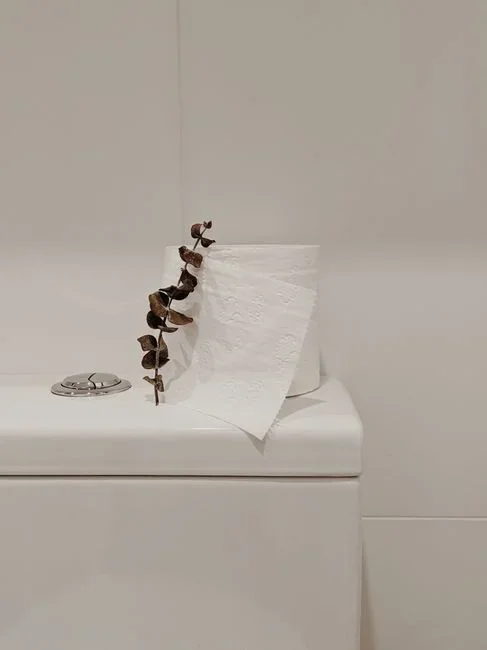
Honest caveat: that documented damage is for bleach and chlorine tablets — no manufacturer specifically tests hydrogen peroxide against a flapper. But peroxide is an oxidizer, the same category of chemistry, so the sensible read is caution. A quick scrub-and-flush is fine. Parking any oxidizing cleaner against the rubber for hours, night after night, is the part to skip.
DANGEROUS: never mix peroxide with vinegar down the drain
The viral "supercharge it" move — splashing vinegar in after the peroxide — forms peracetic acid, a corrosive compound and an eye, skin, and respiratory irritant. Occupational-health reviewers set a short-term exposure limit of just 0.4 ppm because the fumes irritate at low levels — and doing it in a small, unventilated bathroom is exactly the wrong move. Never premix the two and seal them in a bottle either: the reaction keeps generating gas and can pressurize until the container ruptures.
The safe habit is the one every poison control center repeats: one cleaner at a time, don't invent chemistry, and stick to the 3% drugstore bottle (anything above 10% climbs from irritating to corrosive). The full concentration-and-safety breakdown — plus the bleach-vs-peroxide gas mix-up people always confuse — is in the peroxide guide. If you ever mix something and feel throat or eye burning, get to fresh air and call Poison Control.
What ACTUALLY clears a clog
Here's the value the viral trick promised but can't deliver. University facilities crews and plumbers unclog drains with physical methods — no dissolving required. The step-by-step from UC Merced leans on a plunger, a drain auger, and hot water. In order:
- Plunger first. Cover any overflow hole, seal over the drain, and give firm strokes. This clears more clogs than anything you can pour.
- Drain snake / auger. For hair in a bathroom sink or tub, a cheap hand auger or barbed plastic "zip stick" pulls the clump straight out — the tool peroxide only pretends to be.
- Clean the P-trap. Put a bucket underneath, unscrew the curved pipe under the sink, and clear the gunk by hand. Most kitchen-sink clogs live right there.
- Hot water and dish soap for grease — the heat-plus-surfactant combo fizz can't fake. Skip a rolling boil on PVC or porcelain, where very hot water can soften joints or crack the surface; hot tap water is the safer call.
Peroxide and enzyme cleaners still have a role as low-effort monthly maintenance for odor and light buildup between real cleanings. But when there's standing water, or the same drain clogs again and again, that's a deeper blockage — time for a plumber. Knowing which jobs are a quick DIY and which need a pro is the whole game; we break down that line in the cheap fixes that replace a pricey call-out, part of our home hacks.
FAQ
Does hydrogen peroxide unclog drains?
No. It can freshen odor and loosen thin organic film, but it does not dissolve hair, grease, or soap clogs — plumbers say it "will not break apart a dense hair clog" the way a snake does. Standing water means it's a physical blockage.
Is it safe to leave hydrogen peroxide in the toilet tank?
A quick scrub-and-flush is fine; leaving any oxidizing cleaner sitting against the rubber for hours is the risk. Manufacturers document that chlorine/bleach in-tank cleaners warp flappers and void warranties, and peroxide is an oxidizer too — so don't park it there overnight.
Can I mix hydrogen peroxide and vinegar to clear a drain?
No. The two form corrosive peracetic acid, an eye and respiratory irritant limited to just 0.4 ppm for short exposures, and it can pressurize a sealed bottle. Use them separately — and reach for a plunger instead.
The takeaway: in the bathroom, 3% peroxide is good for odor and a stained bowl — never for a clog. Don't leave it soaking in the tank, never mix it with vinegar, and clear a real blockage with a plunger or snake, not a fizz. Spend less. Live more. — The Thrifty Almanac






0comments