

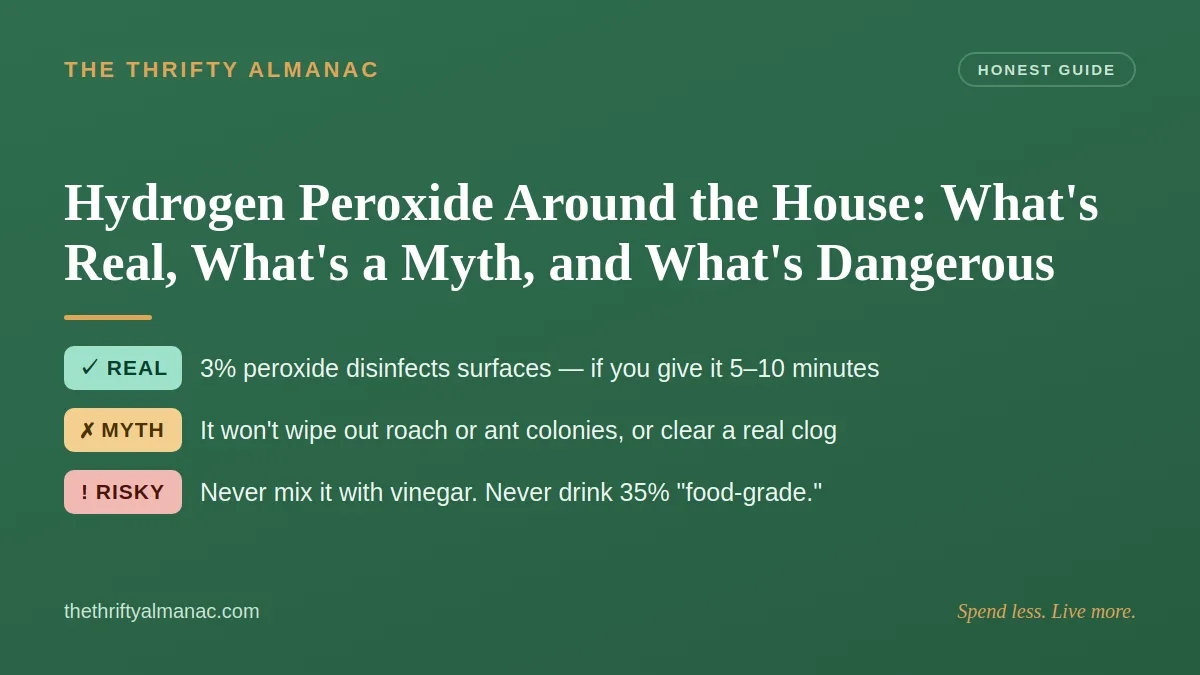
Scroll through TikTok or YouTube long enough and the pitch finds you: a brown bottle of hydrogen peroxide, a breathless voice, and a promise that "exterminators don't want you to know this." Pour it down the drain, dump it in the toilet tank, spray it on a roach nest, or — in the scariest clips — drink a "35% food-grade" version to "oxygenate your body." One word is missing from every single video: limits.
Hydrogen peroxide is genuinely useful and cheap — and, at the wrong strength, genuinely dangerous. Here's the honest tier list — what actually works, what's a myth, and what can send you to the ER — sorted with the CDC, ATSDR, the FDA, and Poison Control instead of hype. If anyone ever swallows a mouthful or takes a concentrated splash to the eye, call Poison Control at 1-800-222-1222 (US) before you do anything else.
TIER 1 — What 3% hydrogen peroxide genuinely does
The stuff in the drugstore bottle is a 3% solution, sold in opaque bottles because light breaks it down. At that strength it earns a place in a frugal cleaning kit — the same kind of low-cost cleaners that actually pull their weight — if you respect its limits.
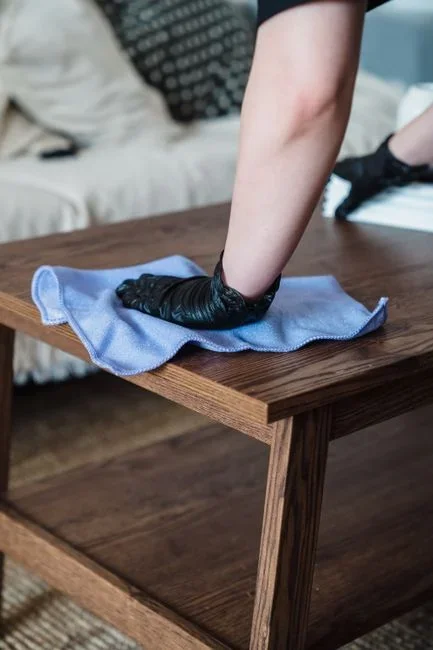
Disinfecting hard surfaces — with a stopwatch
The CDC calls commercially available 3% hydrogen peroxide a stable and effective disinfectant on inanimate surfaces, active against a wide range of bacteria, yeasts, fungi, viruses, and spores. The catch the videos skip is contact time. In lab testing the CDC cites, a 3% solution was ineffective against VRE after both 3 and 10 minutes, managed only a 2-log10 reduction of Acanthamoeba cysts in about two hours, and 3% and 6% both failed to inactivate hepatitis A virus in a one-minute carrier test. Speed depends on the formula — a 0.5% accelerated peroxide was bactericidal and virucidal in one minute. The honest read: it disinfects a surface you've already cleaned, given dwell time — a two-second wipe is not disinfection.
Sanitizing a cutting board (in the right order)
This is one of its best tricks, and order matters. The Ohio State Extension protocol is to wash the board with soap and warm water first, then apply 3% peroxide undiluted and heated to 130°F (55°C), left on the surface for one minute — which kills Listeria monocytogenes, E. coli, and Salmonella. If you skip the heat and leave plain 3% for 10 minutes, it kills E. coli and Salmonella but will not kill Listeria. Peroxide is one of several cheap cleaners that actually earn their spot, but only when you clean first and let it sit.
Lifting organic stains
The same oxidizing action that disinfects also breaks down organic stains — blood, wine, sweat, grass — so on white cotton and grout it works as a mild, low-cost oxygen bleach. Because it's a bleach, treat colored fabric as a hazard, not a use (more below).
A short-term canker-sore rinse — the debriding kind
Diluted peroxide has a legitimate, limited mouth use. FDA-registered oral debriding rinses list it at 1.5% for temporary use on canker sores and minor gum irritation, with the label saying do not use for more than 7 days, rinse about 10 mL for at least one minute then spit — up to four times daily — and do not swallow. That is a short-term, spit-it-out rinse, not a daily mouthwash, and never straight 3% in your mouth.
TIER 2 — The myths (and the "exterminator secret" lie)
Myth: it wipes out roach, ant, and rodent colonies
This is the engine behind the whole viral trend, and it falls apart on mechanism. Hydrogen peroxide is a contact-only oxidizer. Whatever it directly soaks might die, but the colony — the eggs, the nest, the queen — never touches it, so you get zero lasting control. "Exterminators are hiding it" makes even less sense: there's no suppressed miracle to hide. And yes, hydrogen peroxide is registered as a pesticide, but as an antimicrobial that kills microbes and plant diseases, not as an insecticide for kitchen roaches. Real control comes from bait the insects carry home, which is why boric acid bait beats spraying for both roaches and ants.
Myth: pour it in the drain or toilet tank to dissolve clogs
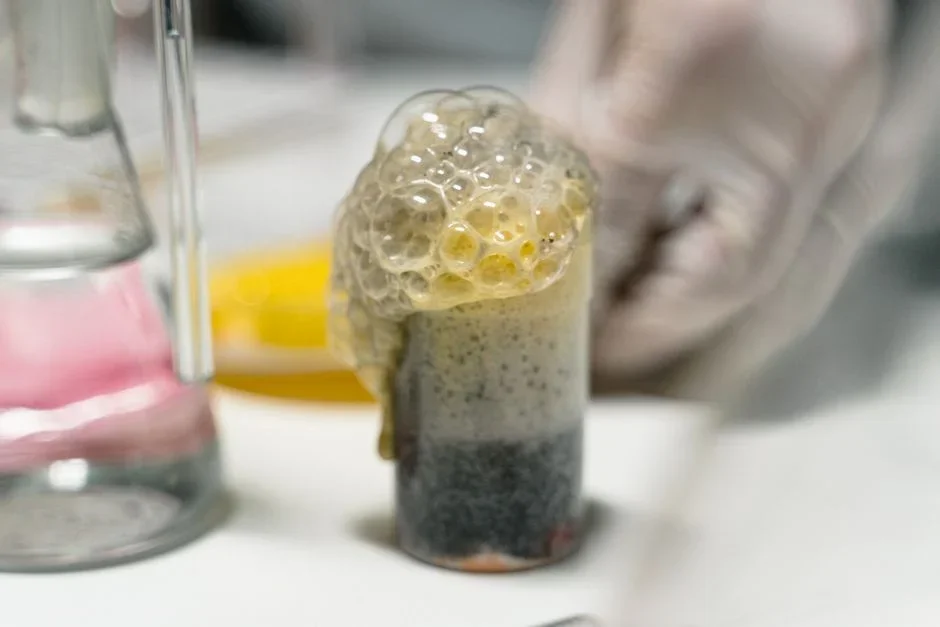
A real clog is hair, soap scum, and grease. Hair is keratin — a tough structural protein peroxide simply doesn't dissolve. It may fizz and shift a little surface film, so the drain looks better for a day, then the slow gurgle returns because the actual blockage never moved. A hair catcher and a drain snake clear clogs; peroxide doesn't, and neither does the fizzing combo behind the baking-soda-and-vinegar drain myth.
Myth: 3% instantly kills everything on any surface
As the CDC data above shows, 3% needs dwell time and still misses some pathogens outright. It's a solid disinfectant on a pre-cleaned surface with time on the clock — not an instant, universal kill.
TIER 3 — Where it gets dangerous
Never mix it with vinegar
The "combine two naturals for a stronger cleaner" tip is where a home hack turns into a chemistry hazard. Hydrogen peroxide plus vinegar (acetic acid) forms peracetic acid, which the CDC/NIOSH describes as a strong sensory irritant, more potent than acetic acid or hydrogen peroxide, and irritating on acute exposure to the eyes, respiratory tract, and skin. Never combine the two in one bottle — a sealed spray bottle is the worst case. If you want both, use one, rinse the surface, then use the other — vinegar has plenty of safe solo jobs, like steam-cleaning a grimy microwave.
Concentration is everything — and 35% is not food
Strength changes everything. At the household 3-to-5% range, ATSDR calls peroxide only mildly irritating to skin and mucous membranes, but above 10% it becomes corrosive to skin, eyes, and mucous membranes. "35% food-grade" is not food. The FDA warns that consuming high-strength hydrogen peroxide for medicinal purposes can be harmful and fatal, and pushes back on false marketing claims that it treats AIDS, cancers, or emphysema. Poison Control notes that people who swallowed concentrated peroxide have suffered severe injuries, and some have died. Per ATSDR, ingesting a 20-to-40% solution can cause rapid loss of consciousness followed by respiratory arrest — and there is no antidote.
The oxygen-bubble danger
ATSDR notes that 1 mL of 3% peroxide liberates about 10 mL of oxygen. Swallow enough and that gas can enter the bloodstream as a gas embolism — which Poison Control calls rare but life-threatening, requiring immediate medical attention.
Kids and pets
Even the 3% bottle deserves respect. Poison Control says eye contact with 3% causes immediate stinging, tearing, and blurred vision though severe injury is unlikely, and skin may whiten briefly. Store it up and out of reach. And do not use hydrogen peroxide to make a pet vomit unless your vet, a poison center, or Animal Poison Control tells you to.
Fabric and color
Because it's a mild bleach, peroxide can lift the color right out of dyed fabric and upholstery. Spot-test a hidden seam before you treat anything you'd hate to fade.
The wound-care myth worth its own section
Your parents poured it on every scrape and watched it foam. Current guidance says stop. Houston Methodist explains that hydrogen peroxide kills healthy skin cells and immune cells inside the wound and slows new blood-vessel formation — preventing healing rather than promoting it. Poison Control agrees it is no longer recommended for disinfecting wounds. For a minor cut, rinse with clean water or saline, add a thin ointment, cover it, and watch for infection. Anything deep or worsening is a call to a clinician, not a bottle of peroxide.
The honest tier-list, at a glance
| Claim | Verdict | The reality |
|---|---|---|
| Disinfect a pre-cleaned hard surface | WORKS | 3% works with real dwell time; not instant, not universal (CDC) |
| Sanitize a washed cutting board | WORKS | 3% heated to 130°F for 1 min, or unheated for 10 min (OSU Extension) |
| Lift blood, wine, and grass stains | WORKS | Mild oxygen bleach; spot-test colored fabric first |
| Short-term canker-sore rinse | WORKS (limited) | 1.5%, up to 7 days, spit — don't swallow (FDA/DailyMed) |
| Kill a roach or ant colony | MYTH | Contact-only; never reaches the nest or queen |
| Dissolve a hair or grease clog | MYTH | Keratin and grease resist it; snake it instead |
| "Exterminators are hiding it" | MYTH | No suppressed miracle exists |
| Pour it on a cut | MYTH / OUTDATED | Damages the cells needed to heal (Houston Methodist) |
| Mix with vinegar for a "stronger" cleaner | DANGEROUS | Forms peracetic acid, an eye/lung/skin irritant (CDC/NIOSH) |
| Drink 35% "food-grade" | DANGEROUS | Harmful and fatal; no antidote (FDA / ATSDR) |
| Use above 10% around the house | DANGEROUS | Corrosive to skin, eyes, mucous membranes (ATSDR) |
Bottom line: 3% peroxide is a cheap, real disinfectant and stain-lifter — full stop. Store it out of reach of kids and pets, keep Poison Control (1-800-222-1222) in your phone, and ignore the rest of the viral list.
Common mistakes
- Wiping a surface for two seconds and calling it disinfected — it needs to stay wet and sit.
- Skipping the soap-and-water step before sanitizing a cutting board.
- Sealing peroxide and vinegar together in one spray bottle, creating peracetic acid.
- Trusting "food-grade 35%" because the label says food — it isn't food.
- Spraying a nest, seeing a few dead bugs, and assuming the colony is gone.
- Leaving the bottle where a child or pet can reach it.
FAQ
Can I mix hydrogen peroxide and vinegar?
No. The two form peracetic acid, which the CDC/NIOSH flags as a strong irritant to the eyes, lungs, and skin. Use one, rinse, then the other — never sealed together in a bottle.
Is 35% "food-grade" hydrogen peroxide safe to drink?
No. The FDA says consuming it can be harmful and fatal, and ATSDR notes there is no antidote for serious poisoning. If anyone swallows it, call Poison Control at 1-800-222-1222.
Does it kill roaches and ants?
Only the individual bugs it directly soaks — never the colony, since it can't reach the eggs, nest, or queen. For lasting control, use bait the insects carry home, like boric acid done right.
Can I unclog a drain with it?
No. Real clogs are hair (keratin) plus grease and soap scum, which peroxide doesn't dissolve. Use a hair catcher and a drain snake instead.
Can I use it to make my dog throw up?
Not on your own. Poison Control says do not induce vomiting in a pet unless your vet, a poison center, or Animal Poison Control tells you to. Call them first and follow their exact instructions.
The takeaway: Hydrogen peroxide is a cheap, real surface cleaner and stain-lifter — not a pest exterminator, drain opener, wound antiseptic, or anything to drink. Spend less. Live more. — The Thrifty Almanac




0comments