

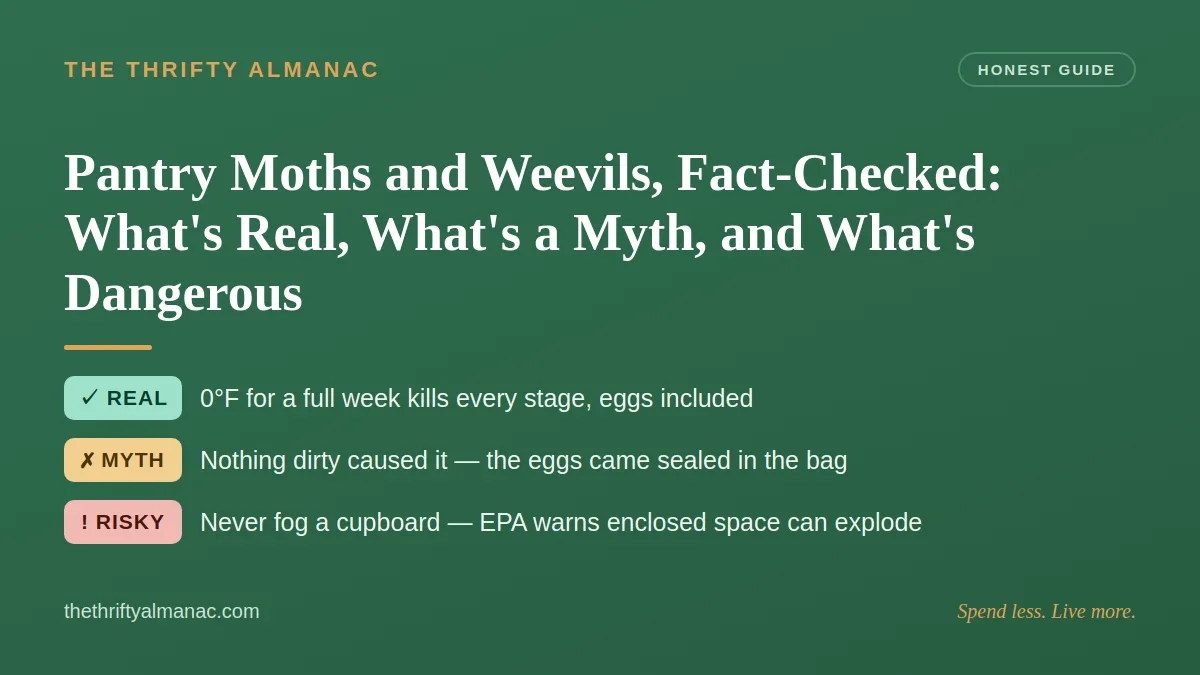
Something moved in the flour, and now you're pulling every box off the shelf — half convinced the cupboard is ruined, half convinced this says something about you.
It doesn't. Pantry moths and grain weevils carry one of the worst myth-to-fact ratios in home pest control: the folk fixes are cheap, the real protocol is tedious. Here's the honest tier list, from what entomology extensions and the EPA publish.
The 30-second verdict
| Verdict | What it is | Source |
|---|---|---|
| REAL | Freeze salvageable goods, 0°F for 4 to 7 days | Utah State |
| REAL | Or heat: 140°F for 15 minutes — never flour | Iowa State, Utah State |
| REAL | Inspect every package, sealed ones and pet food too | Maryland, MSU |
| REAL | Vacuum shelf cracks and seams, then wash | UC IPM, NC State |
| REAL | Re-house food in rigid, sealed containers | UC IPM, Utah State |
| MYTH | A dirty kitchen caused it | UF/IFAS |
| MYTH | The bad bag is gone, so it's over | Maryland, Clemson |
| MYTH | Bay leaves or mint gum repel them | Clemson; absent from every protocol |
| MYTH | A pheromone trap ends an infestation | UC IPM |
| DANGEROUS | Insecticide in a food cabinet or on food shelving | Maryland, UC IPM, MSU |
| DANGEROUS | A fogger in a kitchen — or inside a cupboard | EPA |
MYTH: your kitchen was dirty
Start here, because shame drives the worst decisions in this situation. University of Florida extension puts it flatly: "The presence of stored food pests is not an indication of uncleanliness, since infestation may be brought home in purchased food." Maryland gives the mechanism — eggs that escaped detection in milling or packaging — and NC State confirms most affected people received food infested before purchase.
What raises your risk isn't dirt, it's time. Flour or birdseed sitting unopened for a year gives a small population room to build — a rotation problem, and a first-in-first-out shelf system beats any cleaning product for it. Clemson notes infestations can also start in a garage and migrate in, so "always the store" would overstate it.
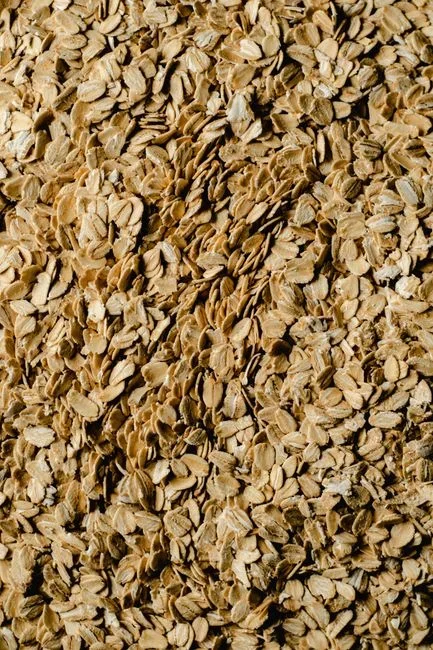
Moth or weevil? Webbing vs. beetles in intact rice
Indianmeal moths are loud about it. The larvae spin massive amounts of silk that accumulate fecal pellets, cast skins and eggshells — that webbing is the damage, and why cereal looks clumped. One female can lay up to 400 eggs, so one overlooked package matters.
Rice and granary weevils hide instead. Larvae develop inside whole kernels, with no external evidence until the adult chews out about a month later — the rice looked perfect the whole time. Maryland's tell: rice weevils fly and come to light, granary weevils do neither.
REAL: freezing, with the actual numbers
| Source | Temperature | Duration |
|---|---|---|
| UF/IFAS | 0°F (-18°C) | 4 days |
| Iowa State, weevils | 0°F | 3 days, all stages |
| Iowa State, moths | freezer | 1 week |
| Utah State | 0°F or lower | 4 to 7 days |
| Texas A&M | -4°F (-20°C) | at least 7 days |
Take the long end. Utah State explains why: the goal is making sure the entire contents are thoroughly frozen, and a five-pound bag freezes far slower than a sleeve of crackers. Texas A&M frames that week-long window as what kills eggs and larvae — the stages surface cleaning never touches.
Freeze in a sealed bag, as UF/IFAS suggests, so condensation doesn't soak the flour on thaw. And confirm your freezer actually holds 0°F — a cheap thermometer answers that. No extension says home freezers run warm; that's reasoning from the temperature these protocols require, the same way other freezer habits for stretching food depend on the box being genuinely cold.

REAL: heat, the weaker home option
Heat works, and the numbers are specific: 130°F for 30 minutes (UF/IFAS), 130 to 140°F for 30 to 60 minutes (Utah State), or 140°F for 15 minutes (Iowa State).
Two limits, and the second is a real hazard. Home ovens are least reliable at the bottom of the dial, where these numbers sit, so check whether yours holds 130°F before trusting it with rice. More important, Utah State warns: "Do not heat finely ground grains such as flour due to the danger of fire or explosion in the oven." Flour goes in the freezer, never the oven. Keep heat as the backup.
MYTH: bay leaves and mint gum "repel" them
The extension protocols contain removal, cold, heat, vacuuming and airtight containers. No aromatic repellent appears in any of them. Clemson, reviewing repellent-plant claims broadly, found the idea that plants mask scent to keep pests away hasn't held up to scientific scrutiny: airborne fragrance dissipates into the air and can be minimized with a breeze, and effects appeared only where leaves were crushed or oils applied directly. Clemson didn't test bay leaves on pantry moths — but the mechanism people assume is working isn't one that works.
The illusion is survivorship: a bay leaf in a canister that was never infested looks like a success forever — the trap running through most scent-based pest deterrents. Harmless alone, harmful when it replaces the real protocol while larvae pupate in your shelf seams.
Pheromone traps earn a gentler verdict. UC IPM recommends them to detect pests that remain after the source is removed; they catch males only, which may reduce their ability to produce eggs. NC State credits pheromone traps with monitoring and suppressing populations — suppress, not eliminate. A trap tells you whether it's over. It doesn't make it over.
MYTH: the bad bag is gone, so it's finished
- Examine every dry package — Maryland is explicit that unopened containers must also be checked, since a factory seal isn't always adequate.
- Include dry pet food — MSU lists it alongside flour, noodles and cake mixes, and it's the reservoir people skip.
- Discard anything webbed or crawling; freeze the rest as above. A bare-looking shelf isn't proof, since UC IPM notes some pests are capable of living for many weeks without food.
- Vacuum shelves and seams with a crevice attachment, targeting cracks where food particles accumulate.
- Wash with warm soapy water, then replace the shelf paper.
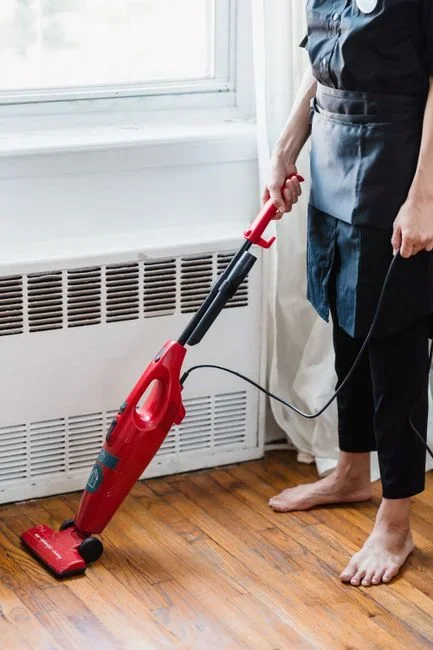
Why they come back weeks later
Here's the mechanism behind every "I cleaned and they came back" story: mature larvae leave the food before you find them. UC IPM reports larvae turning up far from the original food source because they travel to pupate. Clemson notes moths crawl up walls to pupate on ceilings, and Texas A&M finds them on ceilings, walls and counter tops.
So the bag went in the trash while a dozen future moths sat in a shelf seam, emerging on a schedule set by kitchen temperature — UF/IFAS gives a life cycle of 27 to 305 days. The countermeasure is a crevice tool and looking up.
REAL: the container rule
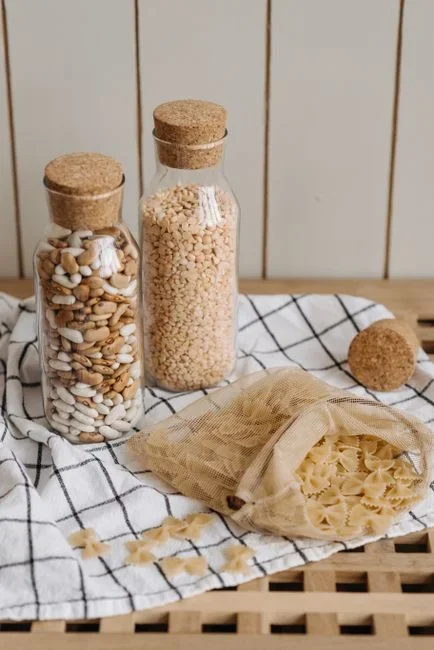
Packaging is not a barrier: larvae chew through thin cardboard, paper, foil or cellophane, and UC IPM says plastic bags aren't adequate. The variable is rigid versus film, not plastic versus glass. Utah State's rule is air-tight, rigid plastic or metal; Texas A&M adds that ordinary metal kitchen canisters are not tight enough, and Maryland that pests crawl under loose fitting lids. Screw-top or gasketed, then, kept in a cool dry place. Nothing is insect-proof, but a sealed jar stops the next infested bag from becoming a pantry-wide event.
DANGEROUS: never spray a food cabinet or bug-bomb a kitchen
Four extensions independently reject insecticides in food storage areas — a sharper limit than the one governing home pest control elsewhere. Maryland states plainly, on two separate pages, "Do not spray any food storage areas with insecticides." Iowa State says sprays are not recommended in stored food cupboards, MSU because chemical contamination may occur. UC IPM goes furthest: spraying on or near food may cause greater harm to you and your family than the pests would.
The record isn't unanimous, and flattening it would be dishonest. Clemson calls spraying a last resort, never on food products, and only per label instructions. Texas A&M permits a labeled treatment — but only in empty cupboards, drawers and pantries, after all food, utensils and containers are removed, and UF/IFAS adds that spray must dry before food goes back. The defensible absolute: never on food, never on food-contact shelving, never with food present.
Foggers fail twice over. EPA warns that fogger propellants are typically flammable, so improper use may cause a fire or explosion, and to keep the can six feet or farther from all ignition sources — a kitchen with a gas range is full of pilot lights and cycling appliances. EPA also says never to use one in a closet or cabinet, because use in an enclosed space may cause the product to explode, ruling out the exact cupboard you meant to treat. Any use means removing children, pets, toys and uncovered food, staying out two to four hours, then ventilating.
Then futility. Writing about bed bugs, EPA notes that if the material does not reach the cracks and crevices where they are hiding, they will not be killed — a limit of the delivery method, not a statement about pantry moths, but your pupae sit in seams where settling fog doesn't reach. It's the gap between what a fogger promises and what it treats, same as with roaches.

The honest bit: you probably ate some
MSU answers directly: grain-loving pantry pests contaminate food, but do not cause foodborne illness. Asked whether they're harmful, Utah State says "Generally, they are not" — while noting insect activity in stored food can introduce and spread molds and bacteria and cut nutritional value.
That caveat decides the sweep: lightly affected goods can be frozen and kept, a bag matted with webbing goes in the trash. If anyone feels unwell after eating affected food, ask your doctor or Poison Control, not a search engine.
Common mistakes
- Freezing "for a couple of days." A thick bag may not freeze through.
- Putting flour in the oven. Utah State flags fire and explosion risk — freeze it instead.
- Treating a pheromone trap as treatment. Catches mean you aren't finished.
FAQ
Can I still bake with flour I froze?
Freezing kills the insects but doesn't remove fragments or webbing. Extensions frame it as salvage, so it's a judgment call: sift and use lightly affected flour, and discard anything visibly webbed.
How long until I know it's over?
Longer than feels fair. UF/IFAS puts the Indianmeal moth life cycle at 27 to 305 days depending on temperature. Keep a pheromone trap up and call it done when the trap stays empty through a full cycle.
When should I call a professional?
If moths keep appearing after a full cleanout, something is still feeding somewhere — a spill behind a drawer, birdseed in the garage. A licensed operator can find it, which beats escalating chemicals where you eat.
The takeaway: The eggs came home in a bag, cold or heat at the published numbers is what kills them, and anything you spray in a food cabinet is a risk without a payoff. Spend less. Live more. — The Thrifty Almanac



0comments