

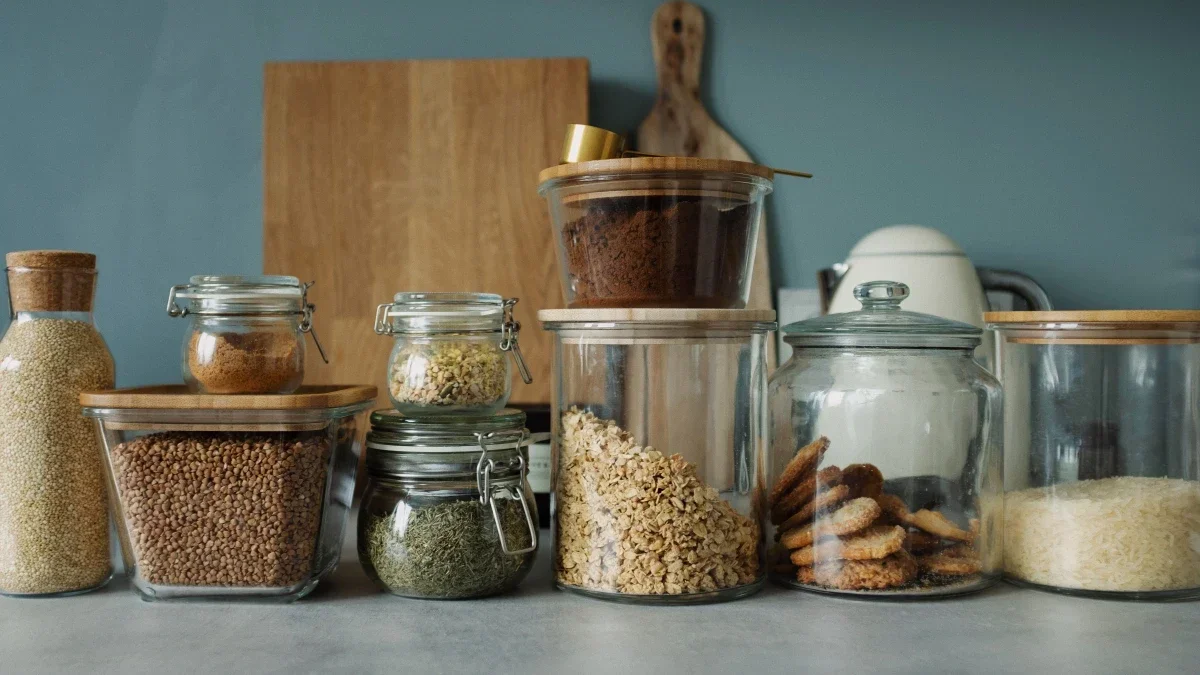
Open your pantry and count the half-empty bags of pasta you can actually see. Now count the ones you can't — shoved behind the cereal boxes. That gap between what you own and what you can see is where grocery money leaks out: you buy a fourth bag because you forgot the other three, and a can of coconut milk from two summers ago quietly rusts in the back corner. A messy pantry isn't just annoying to look at. It's one of the places household food waste hides, and that waste is a big, expensive problem.
The good news: you don't need matching containers, a label maker, or a magazine-worthy makeover. You need a system built for real kitchens and real budgets, using jars you already own — and every step below is backed by federal food-safety and food-waste guidance, not aesthetics. It's the same see-it-to-save-it approach behind the rest of our practical home hacks for a tight budget.
Why a Disorganized Pantry Quietly Drains Your Grocery Budget
Start with the scale. Federal agencies estimate that food waste in the United States runs between 30 and 40 percent of the food supply — food grown, shipped, bought, then thrown out. In dollars, the USDA's older and most-cited figure is that the average American family of four loses roughly $1,500 a year to uneaten food. A newer EPA analysis from April 2025 puts it higher, at $728 per consumer per year — about $2,913 for a household of four, or $56 a week. The two rest on different years of price data, but they point the same way: real money leaving the house.
Here's what makes your own pantry the right place to fix it: much of the food lost at the retail and consumer levels happens in homes and away-from-home eating — not in the grocery store. The waste is downstream, in kitchens like yours. And it adds up: food is the single largest component of what Americans send to landfills, at about 24 percent of landfilled municipal solid waste.
No study has measured what a disorganized pantry specifically costs you, so we won't pretend one has. But the mechanism is plain: clutter hides food, hidden food gets forgotten, forgotten food expires. When you can't see what you own, the trap works three ways:
- Duplicate buys. You can't see the two jars of cumin behind the flour, so you grab a third. Multiply that across a year of spices, sauces, and staples and the doubles pile up.
- Forgotten, expired food. Anything pushed to the back gets forgotten. Beans, broth, baking supplies, and snacks quietly age out and hit the trash — the household waste the USDA and EPA are describing.
- Panic takeout. When the pantry looks chaotic, "we have nothing to eat" turns into a delivery order — even though three dinners were sitting in there.
Fixing the system fixes all three at once. You're not organizing to look tidy — you're organizing so your eyes do the inventory for you.
The 4-Step Reset: Empty, Group, Decant, Use-First

This is the whole method. You can do it in an afternoon, and you don't have to buy a thing to start. If a full teardown feels like too much, work one shelf at a time.
Step 1: Empty and wipe
Pull everything out onto the counter — everything. This is the only way to see what you actually own, and it's the step people skip, which is why their pantry looks the same a month later. As you empty, toss anything expired or stale, and set aside sealed items you'll never eat for a food-bank donation.
Then wipe the shelves. This isn't just tidiness — it's pest prevention, and cooperative-extension specialists say so directly. Many of the same pantry staples already in your cabinet double as cheap shelf cleaners. To prevent the Indian meal moth, a common pantry moth, Clemson's Home & Garden Information Center advises keeping cabinets clean and free from food spillage, and vacuuming up all dust and debris. Crumbs and sticky rings in the corners are exactly what larvae live on, so a clean shelf is part of a real pest-control plan.
Step 2: Group like with like
Before anything goes back, sort your pile into categories: baking, pasta and grains, canned goods, breakfast, snacks, oils and vinegars, spices. Two things happen at once — you see your duplicates (there's the fourth box of pasta), and you learn what your household actually stocks. Once items live with their own kind you never have to hunt, and you spot a gap in one glance. Grouping is what surfaces the buy-it-twice leak before it costs you again.
Step 3: Decant into clear, airtight containers
Move the loose stuff — flour, sugar, rice, oats, pasta, nuts — into clear, airtight containers. Clear, so you can read the level at a glance; airtight, because sealed storage keeps dry goods fresher longer — and a handful of these, like sugar, salt, and white rice, barely expire at all when kept cool and dry and shuts pantry moths out of their favorite foods. The container has to be hard-sided, though: the National Pesticide Information Center warns that pantry-moth larvae can chew through plastic bags and thin cardboard, so it recommends thick-walled glass or plastic. And these pests aren't picky — the University of Maine Cooperative Extension lists Indian meal moths infesting flour, cereal, pasta, spices, dried fruit, nuts, and even pet food and birdseed.

You do not need an expensive matching set. A washed pasta-sauce jar with a tight lid is airtight and clear — it does the job. Label each one with a strip of tape: what it is, plus any date you're tracking. That turns a jar of mystery white powder into "flour — Mar."
Step 4: Set up a "Use First" bin
Grab one bin, basket, or shoebox and label it Use First. Anything close to its date, any odd leftover ingredient, any open bag goes here — front and center at eye level — and you check this bin before you cook. This single container does more to kill food waste than anything else on the list, because it gives your almost-expired items one obvious home instead of letting them vanish into the back, where most household food waste hides. Fresh produce turns fastest of anything in that bin, so it helps to know which fruit keeps better on the counter and which belongs in the fridge.
The 3-Zone Rule: Put the Everyday Stuff at Eye Level
Where you put things matters as much as how you sort them. The rule is simple: what you reach for most should meet your eyes; what you rarely touch can live up high or down low. What you can see, you eat before it expires — what's buried gets re-bought or wasted.
| Zone | Height | What goes here |
|---|---|---|
| Prime zone | Eye level to chest | Daily items and the "Use First" bin — snacks, breakfast, go-to dinners |
| Reach zone | Waist to just below eye level | Weekly staples — pasta, canned goods, baking basics |
| Storage zone | Top shelf and floor | Backstock, bulk buys, appliances, rarely-used items |
This is common-sense ergonomics, not a lab finding — treat it as a rule of thumb. One safety note that isn't optional, though: keep heavy items like big glass jars and bulk cans off the very top shelf. A jar of rice coming down on your head is a real way to end an organizing project. Heavy and bulky belongs low.
FIFO: The Two-Second Habit That Stops Expired-Food Waste
FIFO stands for "first in, first out." When you bring home a new can of beans, the new one goes to the back and the older can slides to the front, so you always reach for the oldest first. It sounds fussy, but it's the specific, expert-endorsed method for using food before its date.
This isn't a folk tip. Michigan State University Extension recommends the FIFO system at home — date your food, put older items in front, use them first — and notes it keeps food safe while saving money by reducing what you discard. The University of New Hampshire Extension describes the same stock rotation as the way facilities minimize food waste and financial loss. It's a standard food-safety practice, applied to your own shelves.

To make it automatic, put newer groceries behind older ones every time you unpack. A cheap can organizer or a shoebox laid on its side turns a shelf into a self-rotating lineup, so cans roll forward as you use them.
Cheap Fixes That Work as Well as the Pricey Bins
Organizing content online loves expensive matching bins. You genuinely don't need them — and buying them before you've sorted is the classic way to waste money on the wrong sizes. Here's how to solve the common pantry problems for a few dollars or nothing. And when the pantry is really just a cabinet, the same thinking scales into renter-safe vertical storage under $20.
| Problem | Cheap fix |
|---|---|
| Loose flour, rice, and pasta going stale or drawing moths | Wash and reuse glass jars (pasta-sauce, pickle, large mayo jars). Free, airtight, hard-sided, and clear. |
| Snacks and packets tumbling everywhere | Sturdy shoeboxes as bins. Cut the lids off; cover with contact paper if you want them prettier. |
| Spices and oils lost at the back of a deep shelf | A discount-store turntable — or a DIY one: a dinner plate on a few marbles, or a cake stand you already own. |
| Tall gaps of wasted vertical space | An inexpensive shelf riser, or stack sturdy canned goods to make your own second tier. |
| Cans rolling around and getting lost | An empty magazine holder or a shoebox on its side, so cans stack and roll forward FIFO-style. |
| Labels needed | Masking tape and a marker. Legible beats fancy every time. |
The point isn't to look like a catalog — it's to see everything and reach everything. A row of clean spaghetti-sauce jars does that job just as well as a designer set, and keeps the whole project true to a real budget.
Keep It That Way: The Post-Shopping Habit and Common Mistakes
A pantry falls apart the way it got messy — a little at a time. The fix is one small habit tied to something you already do: putting groceries away. It's the same no-spend, habit-stacking move that quietly lowers your power bill. Before you shove the new stuff in, run this loop:
- Decant the new flour, rice, or pasta straight into its jar.
- Slide older cans and boxes to the front, new ones to the back (FIFO).
- Move anything nearing its date into the "Use First" bin.
- Do a quick eyeball scan so next week's list writes itself.
A few minutes after each grocery run and you rarely need the big teardown again — the system maintains itself because you're catching clutter the moment it enters the house.
Common mistakes to avoid

- Buying the containers first. The biggest trap. Sort first, buy containers last (if at all) — otherwise you end up with the wrong sizes for what you own.
- Faint or missing labels. A jar you can't identify at a glance is as good as hidden. Write big, write clear, add the date.
- Organizing once and walking away. Without the post-shopping habit, you're back to chaos in a month. The maintenance is the system.
- Overfilling to look "full." A crammed shelf hides things just like clutter does. Leave breathing room so you can see and reach.
- Ignoring the crumbs. A sticky shelf is a welcome mat for pantry moths — which is exactly why Clemson's guidance pairs "keep the area free of spillage" with sealed containers. Wipe as you go.
Frequently Asked Questions
Do I really need airtight containers, or can I keep food in the original packaging?
Original packaging is fine for anything you'll use up fast or that stays sealed, like canned goods. But for flour, rice, pasta, cereal, and nuts, a hard-sided airtight container keeps them fresher and keeps pantry moths out — the National Pesticide Information Center notes larvae chew right through thin bags and cardboard — and once moths or weevils are already in the cabinet, sealing up is only half the job. Reused glass jars count as airtight, so this doesn't have to cost anything — and those bulk nuts are the starting point if you ever try grinding your own peanut butter.
How often should I do a full pantry cleanout?
If you're keeping up the post-shopping habit, a full teardown a couple of times a year is plenty — a light one before the holidays and one in spring. That's a practical suggestion, not a rule; the point is that you almost never need the big overhaul again.
What's the best first step if I only have a spare 20 minutes?
Set up the "Use First" bin. Pull out everything near its date and anything already open, put it in one labeled bin at eye level, and cook from it first. Since most food waste happens at home after the food is bought, that one move stops the most money from hitting the trash while you find time for the rest.
The takeaway: An organized pantry saves money because you can finally see what you own — so you stop buying doubles and stop tossing forgotten food, which is where most household food waste hides; sort first, use free jars and shoeboxes, keep a "Use First" bin at eye level, rotate FIFO, and give it a few minutes after each grocery run. Spend less. Live more. — The Thrifty Almanac






0comments