

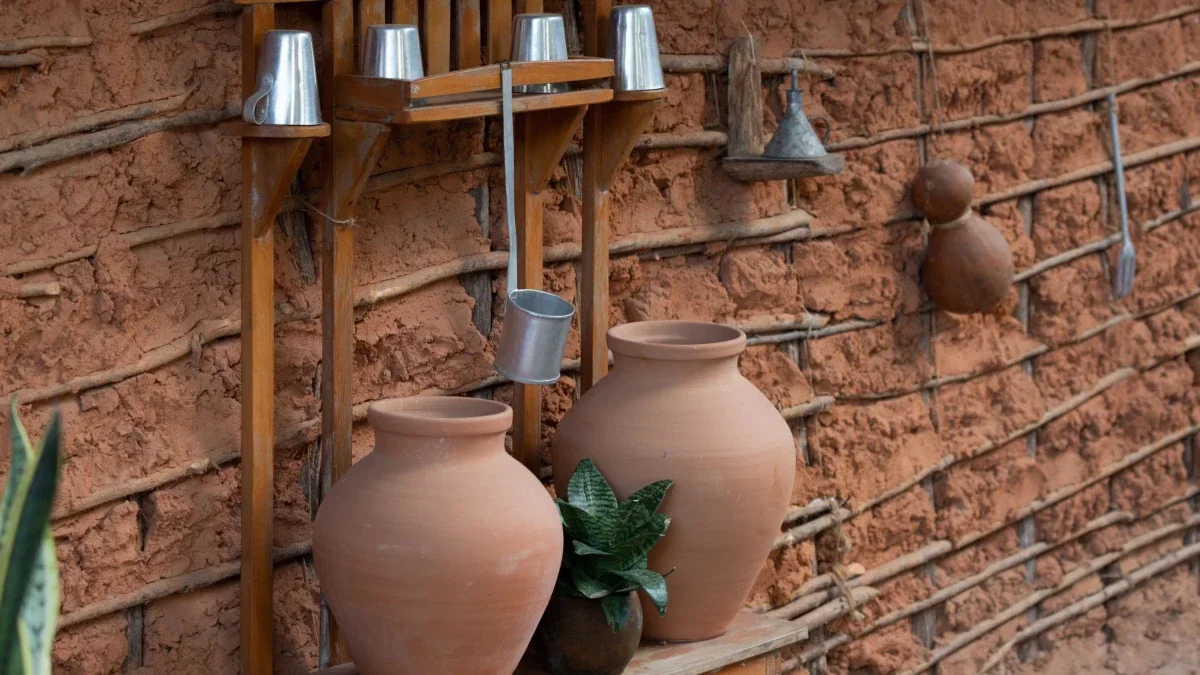
You have seen the video: someone drops a fat clay pot into a raised bed, fills it with a hose, and promises you will never water again. It is a beautiful idea, and the ancient part is true — buried unglazed pots called ollas have watered gardens for thousands of years. What the thirty-second clip skips is the one number that decides whether an olla works for your bed: how far the water actually travels. Spoiler — it is measured in inches, not feet.
This is the honest version. Ollas are real, they are frugal, and university extension research backs the mechanism. But the "bury it and forget it" pitch quietly leaves out where the method breaks — the same overpromise that dogs other viral frugal water tricks, like the $12 water-from-thin-air rig. Get the spacing right and it is one of the cheapest watering upgrades you can make. Get it wrong and you have buried an expensive terracotta paperweight next to a row of thirsty, dying plants.
What an olla actually is (and what it can't do)
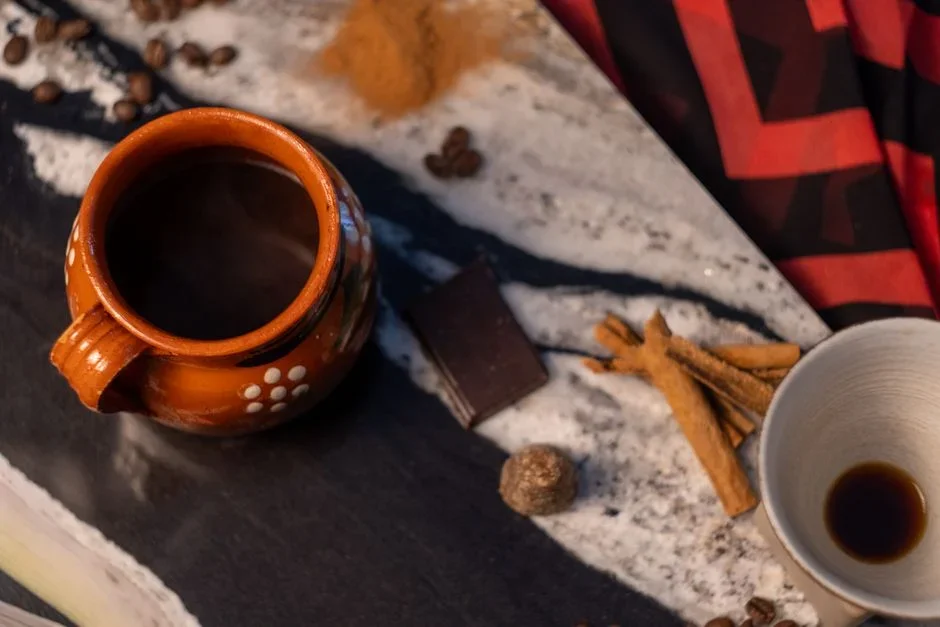
WHAT: an olla (say "OY-yah") is an unglazed clay pot you bury up to its neck, fill with water, and cap. Water seeps slowly through the porous walls into the soil, and nearby roots drink from that damp zone. That is the whole machine — no pump, no timer, no electricity.
The correction that matters most: an olla wets a small zone, not the whole bed. Extension guidance from the University of Arizona puts the reach at roughly twice the pot's own diameter. Their example is concrete: an 8-inch flower-pot olla delivers water to plants within about a 16-inch-diameter ring around it. Independent coverage from Colorado State Extension reports the measured maximum reach of moist soil at about 20 centimeters — roughly seven inches — out from the pot.
WHY this changes everything: "one olla waters my raised bed" is the single biggest myth. A 4-foot bed is 48 inches across. A single 8-inch olla covers a 16-inch circle in the middle. The corners stay bone dry. You do not need a bigger promise — you need more pots, or plants clustered tight around each one.
LIMIT: those radius figures come from extension guidance and a small handful of studies. Real reach shifts with soil texture, climate, and how porous your particular pot is. Treat "twice the diameter" as a starting point to test in your own dirt, not a guarantee.
How it works: soil-moisture tension, explained plainly
WHAT: the science is simpler than the videos make it sound. It runs on soil-moisture tension — water moving from where there is a lot to where there is little.
HOW: follow one drop. Inside the full olla, water sits at high concentration. The dry soil outside is at low concentration. Because unglazed clay is porous, water seeps through the walls and fills the pore spaces of the surrounding soil until that soil reaches field capacity — the point where it holds all the water it can against gravity. Roots then pull that moisture in as they need it. Research from the University of Arizona describes exactly this: keep the pot sufficiently full and the delivery zone stays at field capacity.
WHY it is nearly foolproof — once it is going: because the olla supplies a steady amount, the plants nearby "will always have access to the correct amount of water regardless of external factors, without danger of over or under watering," per the same Arizona guidance. Roots even grow toward the pot and wrap around it, parking themselves right at the tap. The soil, in effect, meters the water for you. That is the part the ancient gardeners understood and the viral clips flatten into "magic."
LIMIT: the self-regulating trick only holds two ways — once roots have actually reached the pot, and while you keep it topped up. An empty olla waters nothing.
The numbers that turn a vibe into a plan
Here is what the research gives you to work with, so you can size a system instead of guessing.
| Question | Working figure | Source |
|---|---|---|
| How far does water reach? | ~2x the pot's diameter; an 8-in pot wets a ~16-in ring | Univ. of Arizona |
| Measured max reach of moist soil | ~20 cm (about 7 in) from the pot | Colorado State |
| How close to set plants? | A maize study found up to 20-30 cm spacing may be enough | Univ. of Arizona |
| How much water does it save? | Roughly 60-70% vs. conventional surface watering | Univ. of Arizona |
WHY these matter: now you can do the math. Ring your plants within about 7 inches of each pot, and space the pots so their wet zones roughly touch. The payoff is the reason people bother — that 60-70% water savings comes because water goes straight to the root zone with almost no evaporation or runoff.
LIMIT: these figures come from a few studies, several in desert conditions. The 60-70% saving is measured against plain surface watering under Arizona extension conditions. In a cool, wet climate — or compared to an existing drip line — your savings will be smaller. Use the numbers to plan, then trust what your own soil tells you.
Why it fails: the four ways ollas quietly quit
This is the section the "never water again" videos never film. Every one of these has a documented cause and a simple fix.
- Salts clog the pores. Dissolved salts build up inside the pot over time and block the tiny holes water seeps through — a listed disadvantage of the method. Warning sign: a full olla that drains slower and slower, or plants drying out despite a topped-up pot. Fix: dig it up periodically and clean the walls; a scrub and a soak restore the seep.
- Freezing cracks the pot. Water is nearly unique in expanding as it freezes — its volume grows a little over 9% as it turns to ice, per Penn State. Trapped inside porous terracotta, that expansion splits the clay. Fix: empty and, ideally, remove ollas before a hard freeze. Note the freeze-thaw catch below — this is not just a deep-winter problem.
- Woody plants break the clay. Trees and shrubs are not recommended because their roots are strong enough to break the pots. Ollas are built for herbaceous plants — vegetables, grasses, flowers. Fix: keep ollas for the soft-stemmed crowd and water woody plants a different way (more below).
- New plantings still need you. "Bury it and never water again" is false for anything young. Seedlings and fresh transplants need supplemental hand-watering for some time — up to a month or more — until their roots grow out far enough to tap the olla and subsist on it alone. Fix: hand-water new plants for the first few weeks; the olla takes over once roots reach it.
Pick the right tool: a task-based map
The smartest frugal move is not forcing an olla onto every job — and the same match-the-tool logic runs through our complete guide to frugal home hacks. Match the method to what you are growing.
- Small beds and herbaceous plants (veggies, herbs, flowers): the olla is the sweet spot — and many of those crops you can start for free by regrowing kitchen scraps. Cluster plants inside the ~7-inch wet ring and keep the pot full.
- Shrubs and trees: not an olla job. Woody plants need water deeper than an olla reaches — Utah State Extension recommends moistening soil to a depth of 18-20 inches, watering deep and infrequent, because that "encourages deeper rooting and a more drought tolerant plant." A vertical deep-pipe that carries water down to that zone fits the requirement far better than a shallow pot.
- Short rows and thirsty patches: a simple drip line off a rain barrel spreads water along a row in a way a point-source olla cannot.
- Containers and small self-watering setups: a wicking bed with a reservoir — with the overflow rule below.
LIMIT: the deep-pipe idea is drawn from the depth principle, not a specific product. The Utah State source verifies that shrubs want water 18-20 inches down; it does not endorse any particular DIY pipe. Use the depth as your target and build to it.
Wicking beds without the rot: the overflow rule
WHAT: a wicking or self-watering bed holds a reservoir at the bottom and lets soil pull moisture upward. The failure people run into is a permanently soaked lower layer — waterlogged soil starves roots of air and can turn anaerobic and sour.
HOW to avoid it: drill an overflow hole at the top of the reservoir, so once water rises past that line it drains out instead of climbing into the root zone. Pair it with free-draining media above. The point is to keep the upper soil air-filled — roots need oxygen as much as water.
LIMIT: treat the overflow as required best-practice design rather than a proven law. The specific "no overflow rots your roots" outcome shows up in gardening forums, but it is not something a .gov or university-extension source confirmed for this piece. The physics of waterlogging is well understood; build the overflow in and you sidestep the whole debate.
One safety note before you bury anything
Ollas are as low-stakes as garden gear gets — no chemicals, no pressure, no electricity. The one real hazard is the freeze crack, and it is sneakier than "wait for winter." Because the danger is water expanding and contracting, the worst damage happens during freeze-thaw cycling, not only in deep cold. A mild, fluctuating winter that dips below freezing at night and thaws by day can crack a full pot just as surely as a hard freeze. If your region swings across the freezing line, empty your ollas the moment overnight frosts start — do not wait for the first snow.
Common mistakes recap
- Trusting one olla to water a whole bed — the wet ring is only about twice the pot's diameter.
- Setting plants outside the ~7-inch reach, then wondering why they wilt.
- Skipping hand-watering for seedlings, which still need weeks of help until roots arrive.
- Leaving pots full through freeze-thaw weather and cracking them.
- Sticking ollas next to a shrub or tree whose roots will break the clay.
- Building a wicking bed with no overflow outlet.
FAQ
Can one olla really water my whole raised bed?
No — and this is the myth worth killing first. A single olla wets a ring roughly twice its own diameter, so an 8-inch pot covers about a 16-inch circle. For a full bed you need several pots or plants clustered tight around each one.
How often do I have to refill it?
It depends on pot size, soil, and weather, so check it like you would a pet's water bowl rather than trusting a schedule. The savings come from slow seepage, but "slow" is not "never" — a hot week empties a pot faster than you expect.
Do ollas work for tomatoes and peppers?
Yes — herbaceous vegetables are exactly what ollas are built for. Just remember new transplants need hand-watering for the first few weeks until their roots reach the pot, and set the plants within a few inches of it. Grow enough of them and the next frugal win is making sure none of that harvest rots on the shelf — that is where a budget-friendly system for cutting food waste earns its keep.
Will an olla survive my winter?
Only if you empty it. Water expands over 9% as it freezes and cracks the porous clay from the inside. Empty and, ideally, dig up your ollas before hard frosts — and be extra careful in climates that freeze and thaw repeatedly.
The takeaway: an olla genuinely waters your garden for you, but only the small ring around each pot — so plant tight, keep it full, hand-water seedlings until their roots arrive, and pull the pots before the freeze. And once the bed is thriving, the other half of the battle is what you don't want growing — here is the honest truth about killing weeds for good. Spend less. Live more. — The Thrifty Almanac






0comments