

Somewhere on your feed, a video is promising that vinegar, salt, and a squirt of dish soap will "kill weeds permanently — no chemicals!" The weeds brown in an afternoon, the comments cheer, and two weeks later the same dandelions are back. That's not bad luck. It's chemistry.
Here's the honest grade for every popular hack — what's real, what's a myth, and what quietly wrecks your soil — each claim tied to university extension research, not a before-and-after clip. We bring the same honest grade to the other viral yard cures crowding your feed — including whether you can really clear fleas out of a yard without poisoning the cat.
Why almost every "permanent" DIY weed cure fails
The word that matters is contact. The National Pesticide Information Center classifies acetic acid — the active ingredient in vinegar — as a non-selective contact herbicide: it must touch the foliage to work, and it does not travel through the plant. Salt, boiling water, and flame work the same way: they destroy what they touch and nothing else.
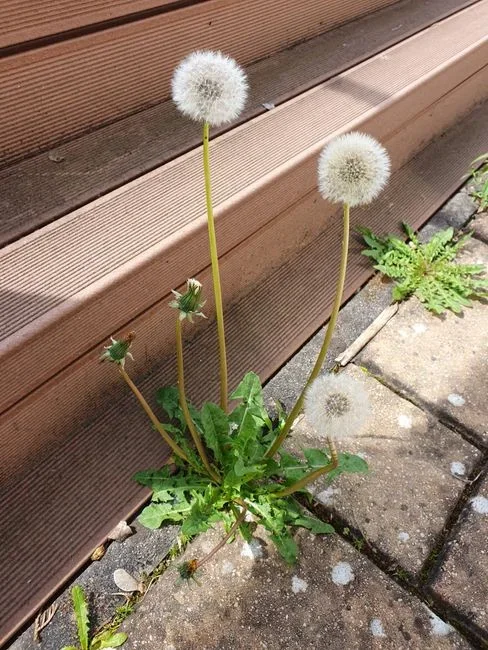
A perennial weed — dandelion, bindweed, creeping charlie — stores energy in its roots; burn the top and the root sends up new growth. The University of Maryland Extension notes perennial weeds hit with vinegar show initial damage but generally recover. A contact kill is a haircut, not an execution.
The vinegar myth: 5% household vinegar
What it is: kitchen white vinegar runs 4–6% acetic acid, per NPIC. How people use it: spray on a hot, sunny day until leaves are soaked. Why it seems to work: the acid ruptures leaf cells, so the weed browns within hours — great footage.
The limit: Maryland Extension found that low-strength vinegar gives viable control only of very small, young weeds with 1–2 leaves; anything with three or more leaves usually bounces back. Illinois Extension is blunter: because acetic acid doesn't move within the plant, any weed with an established root system can regrow.
The "cheap" part collapses at scale, too. A study cited by Maryland Extension put acetic-acid treatment at more than three times the cost of glyphosate per square foot — roughly $360–$2,400 per mile versus about $20. It's one data point, but the direction is clear: vinegar is only cheap for a few driveway-crack seedlings.
Honest verdict: fine for baby weeds in pavement. Not a lawn solution, and never a permanent one.
Horticultural vinegar (20%): stronger — and a DANGER-labeled chemical
When the 5% spray disappoints, the videos push the "upgrade": horticultural vinegar. NPIC notes that acetic-acid products actually registered as herbicides run typically 20% or more — and every one carries the signal word DANGER, the strongest warning on a pesticide label.
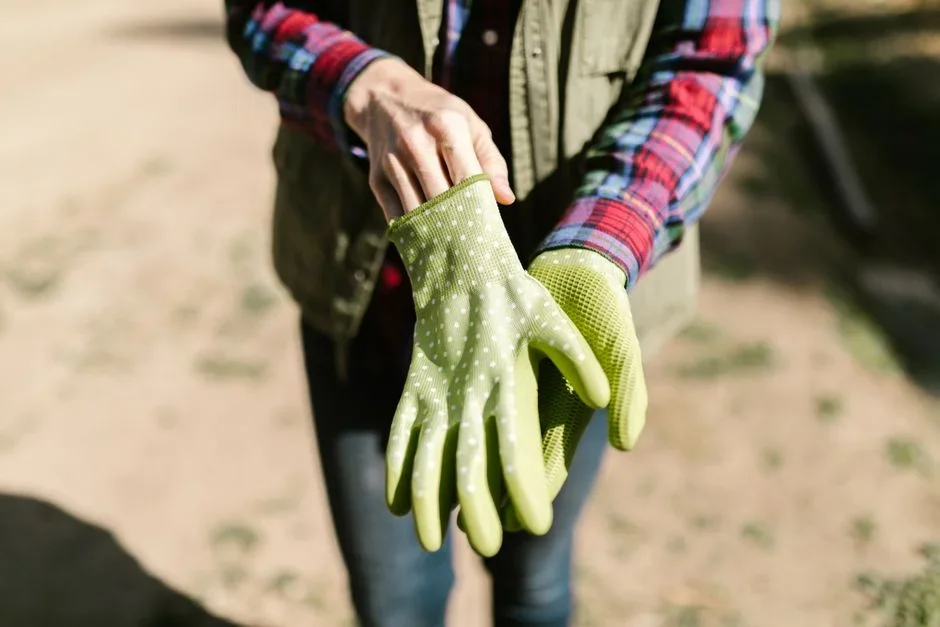
This is not stronger salad dressing. Maryland Extension warns that vinegar at 11% acetic acid or greater can burn skin and cause severe eye injury, including blindness — the hazard starts well below the 20% strength on the shelf. NPIC adds that acetic acid can permanently damage the corneas and burn the mouth and throat, and says protective eyewear and chemical-resistant gloves belong on anyone handling it.
If you use it anyway: goggles, chemical-resistant gloves, long sleeves, no wind, kids and pets indoors until it dries. If it splashes an eye, rinse with water immediately and call Poison Control. The limit: even at 20% it's still a contact killer — an established perennial's root can survive and resprout. You've bought a corrosive acid for a temporary result.
Salt: kills the weed, poisons the soil (for a while)
The classic recipe — salt, vinegar, dish soap — leans on salt to pull water out of plant tissue. First: the dish soap kills nothing. It's a surfactant, breaking surface tension so the spray wets the leaf instead of beading up. Soap's job flips with the target: it kills nothing on a weed, but it's the working ingredient the day you knock aphids off your plants.
The real problem is where the salt goes next. Illinois Extension warns that salt is soluble and highly mobile in soil, spreading to beds of vegetables and ornamentals and damaging them.
The honest nuance: salted ground is not cursed forever. The same Illinois source says the effects are not long-term and can be remediated by repeated soakings that leach salt below the root zone. How long depends on soil and rainfall — nobody can honestly promise a timeline. Persistent, not permanent. That title belongs to the next hack.
Borax: unreliable results, damage that actually sticks
The viral "magic powder" is usually borax, pitched for creeping charlie. Two universities graded it; the grades are ugly. Iowa State Extension does not recommend borax for weed control: results are inconsistent, and the margin between what plants need and what poisons them is very small. Wisconsin Horticulture found it "typically not very effective" and prone to injuring surrounding turf — too little does nothing, too much hurts everything nearby.
Here's the part the videos never mention: Wisconsin's turf researchers report that boron does not break down or dissipate in the soil, so repeated applications can leave bare areas where nothing grows — and unlike salt, you can't rinse it away. If any hack here earns the word "permanent," it's borax: permanent damage to your soil, not a permanent kill on your weeds. It's the same trap we flagged with slug baits that can kill a dog in hours — "household product" and "safe" are not synonyms.
Instead, for creeping charlie: hand-pull small patches, thicken the turf, or use a labeled broadleaf herbicide — Illinois Extension's advice is to skip homemade pesticides in favor of EPA-registered products used per the label.
Boiling water and flame weeding: the honest niche tools
These two never claimed to be systemic — they're heat, applied precisely.
Boiling water
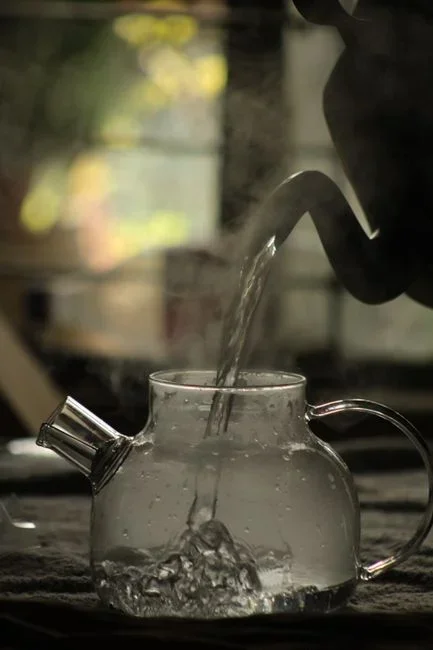
Iowa State Extension confirms boiling water will not kill roots or other plant parts in the soil. It shines on young annual weeds in patio and sidewalk cracks — the same seams that open up along a homemade stepping-stone path — away from plants you want — and one pour rarely finishes the job, so plan to retreat 7–10 days later. Use a kettle for control — this is a scald hazard in flip-flops.
Flame weeding
A flame weeder's heat ruptures plant cell walls, killing top growth, not roots, per UVM Extension. It's weaker on grassy weeds and usually needs repeat passes. The goal is wilt, not char. UVM's safety list is non-negotiable: never flame near buildings, plastic, mulch, or dry plant material, skip dry or windy days, and keep water within reach. Check local fire rules too — some areas restrict open-flame tools during drought or fire season.
What actually wins long-term (the part the recipes skip)
Everything above kills tops. Lasting control means denying weeds light and removing roots — slower, cheaper, and actually durable.
Mulch deep. UC IPM recommends 3–4 inches of coarse organic mulch — about 2 inches if it's fine-textured — to block the sunlight weed seeds need to germinate. No light, no seedlings, season after season.
Dig the roots, not the leaves. For established perennials, UC IPM says to use a dandelion knife to dig up all roots and underground parts, and to pull young weeds before they set seed. A cheap hand tool does the one thing a jug of horticultural vinegar can't: remove the root. And for the biggest root job in the yard — a leftover tree stump — there are patient, no-rental ways to rot it out instead of renting a grinder.
Plant densely. Bare soil is an invitation. UC IPM's same guidance: crowd the space with plants you chose so they shade out weeds first.
The honest limit: even the winners have one. UC IPM warns that field bindweed and nutsedge carry enough root reserves to punch through even thick mulch. For those two, smother, then dig every resprout — a campaign, not a weekend. It's the same rule as our moles, voles, and gophers tier list: the fixes that work are boring.
The honest tier list
| Method | Kills roots? | Soil-safe? | Hazard | Verdict |
|---|---|---|---|---|
| 5% household vinegar | No — contact only | Yes | Low | MYTH as "permanent." OK on 1–2 leaf seedlings in cracks |
| 20% horticultural vinegar | No — contact only | Mostly | DANGER label: burns, blindness risk | Works better, still temporary. Full PPE or skip it |
| Salt (+ dish soap) | Top-kill; harm spreads in soil | No — persistent but leachable | Kills neighboring plants | DANGEROUS near beds and lawns. Hardscape cracks only, if ever |
| Borax | Unreliable | No — boron never breaks down | Bare soil patches | DANGEROUS and it doesn't even work reliably. Skip |
| Boiling water | No | Yes | Scald risk | REAL but niche: young weeds in pavement, repeat in 7–10 days |
| Flame weeding | No | Yes | Fire risk | REAL but niche: hardscape only, never near mulch or in dry wind |
| Mulch 3–4 in. + dense planting + digging roots | Yes (dig) / prevents (mulch) | Yes | Low | REAL. The only "permanent" on this list |
Common mistakes
Believing brown means dead. Contact killers brown leaves in hours; perennial roots resprout. Judge results in a month, not an afternoon.
Treating 20% vinegar like kitchen vinegar. It's a DANGER-labeled corrosive; the burn-and-blindness risk starts at 11%. Goggles and chemical gloves, every time.
Salting near plants you want. It migrates through soil into beds and lawn — the same trap behind the $2 lawn powder myth. Hardscape cracks only, if at all.
Using borax at all. Unreliable kill, and boron never leaves your soil. The only permanent effect is the bare patch.
Flaming near mulch or in dry wind. Mulch is fuel. Follow UVM's rules and your local fire code.
Skipping the boring winners. Deep mulch, dense planting, and digging roots are what extension services actually recommend.
FAQ
Does vinegar kill weeds down to the root?
No. NPIC classifies acetic acid as a contact herbicide that doesn't travel through the plant, so roots survive. Perennials typically regrow; only tiny 1–2 leaf seedlings stay dead.
Is horticultural vinegar safer than Roundup because it's "natural"?
It's a different risk, not a smaller one. Every registered 20%+ acetic-acid herbicide carries the DANGER signal word, and concentrations of 11% or more can cause blindness. "Natural" is a marketing word; the label is the truth.
How long does salt ruin soil?
No honest fixed number exists — it depends on soil and rainfall. Illinois Extension says salt damage can be remediated by repeated water soakings. Think months to years, not forever. Borax is the one that doesn't leave.
What's the cheapest method that actually lasts?
A dandelion knife and a load of coarse mulch. UC IPM's lasting-control playbook is dig all the roots, mulch 3–4 inches deep, and plant densely. Clearing edges and fence lines this way also removes the tall vegetation ticks use to reach your yard.
When should I call a pro?
If bindweed or nutsedge keeps returning, or the area is more than you can dig, a licensed applicator with a labeled systemic herbicide beats more vinegar. And if concentrated vinegar gets in eyes or on skin, rinse thoroughly and call Poison Control right away.
The takeaway: Every viral spray is a contact killer that spares the root — the only truly permanent weed plan is deep mulch, dense planting, and digging the roots out. Spend less. Live more. — The Thrifty Almanac



0comments