

A crew swaps the meter on the side of your house. Two bills later you're staring at a number that makes your stomach drop, and the internet has an explanation ready: the new meter is skimming money. It's a tidy story, and the bill in your hand feels like proof.
The observation is real. The explanation falls apart once you read the public record.
The claim that keeps going viral — and the part that's true
The U.S. Energy Information Administration counted about 119 million advanced metering installations in 2022, roughly 72% of all electric meters, about 73% of residential ones. Millions got a new meter and a new bill in the same season — the exact condition under which coincidence gets mistaken for cause.
So separate two questions: did your bill go up (often yes), and did the meter measure wrong (the tested answer is no)? Same instinct as the rest of our practical home fixes — find the mechanism first.
Five documented reasons the bill went up
1. The price per kWh rose
EIA forecast the nominal U.S. average electricity price to climb 13% from 2022 to 2025, outpacing inflation. Where to look: the cents-per-kWh figure, against the same month last year.
2. The fixed charge you owe regardless
Lawrence Berkeley National Laboratory puts the basic customer charge — the floor you pay before using a single kilowatt-hour — at $5 to more than $20 a month, and rising. No conservation touches it. Where to look: the basic or service charge line.
3. Estimated reads ended, and the tab came due
When a reader can't reach the meter, the utility estimates from past usage. Snohomish County PUD spells out what follows: once an actual read arrives, the bill is adjusted — crediting prior over-estimates or adding charges for prior under-estimates. If yours read low for months, the first real read collects the difference at once. Where to look: pull thirteen months of bills and mark every read code ("EST" vs "ACT").
4. Your rate schedule changed
Meter swaps often arrive with a move to time-of-use pricing, where evening kWh cost more. Check your state first: California's Public Utilities Code § 745 bars defaulting a residential customer onto time-of-use without a year of interval data, then a year of bill protection capping the total at the old schedule, and lets customers decline at no charge. Most states offer no such protection. Where to look: the rate schedule name.
5. The meter it replaced may have run slow
This never makes the viral posts. Reviewing historical results for 86,756 old electromechanical meters, Navigant found 3,594 — about 4% — had failed the ANSI ±2% standard, and noted such meters commonly slow down over time, averaging over 20 years old. A slow meter under-bills you; replace it with one reading true and the bill rises — the old one had been quietly generous. Where to look: kWh, not dollars, before and after the swap.
MYTH: the digital meter reads high
The Public Utility Commission of Texas hired Navigant to settle it. Navigant bench-tested 5,627 advanced meters; 5,625 fell within the ±2% the PUC requires, and all but five within ±0.5%, attributing the higher bills primarily to severe winter weather and usage changes. Comparing customers on new versus old meters, it found no statistically significant difference in average usage.
The honest part: two meters did fail. Not zero — which is why the testing rights below matter. Texas rule 16 TAC § 25.121(e) bars any meter violating ANSI calibration limits from service and requires meters be adjusted "as closely as practicable to the condition of zero error."
The limit: 2010, three Texas utilities, and meter models have changed since — not a census of every U.S. meter.
MYTH: the radio signal is making you sick
The California Council on Science and Technology, assessing this for the state legislature, found the FCC standard provides an adequate factor of safety against known RF-induced health impacts of smart meters, with no clear evidence more standards are needed. The Minnesota Department of Health points the public to Vermont's health department, WHO and FCC resources rather than a contrary finding. The comparison most households never make is the Wi-Fi router in the next room, transmitting far more of the day than a meter that reports in short bursts — and when that router is the thing genuinely irritating you, the answer is a handful of no-cost Wi-Fi changes, not a meter opt-out.
The sharpest test came in court: in Povacz II, the Pennsylvania Supreme Court required customers claiming RF harm to prove by expert testimony, to a reasonable degree of scientific certainty, that emissions cause adverse health effects and caused their specific harm; "inconclusive evidence" and a "mere possibility" of harm fell short. The limit: that describes who has carried a burden of proof, not proof of safety, and the CCST work dates from the same era as the Texas testing.
MYTH: rip it out and you'll save money
Run the arithmetic on a filed tariff. FirstEnergy's Ohio opt-out, approved by the Public Utilities Commission of Ohio in Case No. 20-385-EL-ATA, costs a one-time $41.72 exchange fee plus $28.29 every month for manual reading — roughly $339 a year for identical kWh at an identical rate. Disabling only the transmitter still keeps the monthly charge. There's a ceiling on refusal, too: Pennsylvania's high court read Act 129 to mandate system-wide installation with no opt-out provision. The limit: two states, not a national rule — some offer generous opt-outs, some none.
Safety line: never obstruct, shield, block or bypass a meter. Tampering is treated as theft of service and can lead to disconnection, and the meter base is live at full service voltage — opening or pulling one is licensed-electrician work.
What IS a real risk — the socket, not the antenna
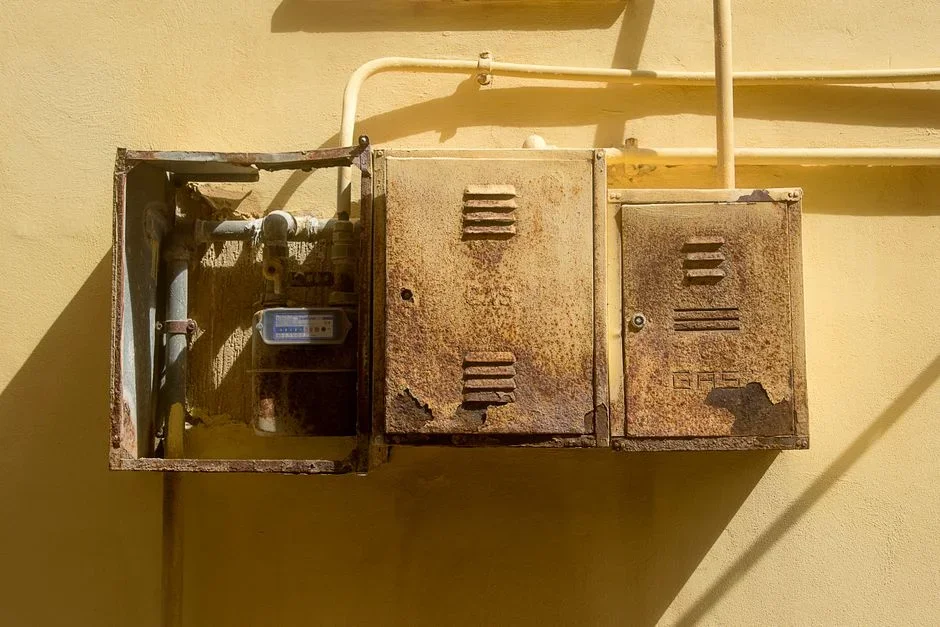
The documented failures involve connections and components, not radio waves. After 29 overheating and fire incidents, PECO told the Pennsylvania PUC that it and the manufacturers most likely traced the cause to external problems in the panels meters plug into, not device defects. Separately, Portland General Electric replaced 70,000 Sensus meters after three caught fire from internal component failures. Two episodes, both acted on — not a wave of house fires, but worth watching for. Call your utility the same day if you notice, at the meter:
- Scorch marks, soot or melted-looking discoloration on the meter or base
- Buzzing, crackling or sizzling
- A burning or hot-plastic smell near the panel
- A base radiating heat you feel from a step away
- Breakers tripping repeatedly
The limit: report it, don't diagnose it. Never touch, open, pull or try to cool the meter. If you smell burning or see smoke, get everyone out and call 911 first.
Turn the meter around: pull your own interval data

The device accused of stealing from you is the only tool that shows which hours are expensive. Green Button lets customers download their usage, and Connect My Data is, per NC State's Clean Energy Technology Center, an open standard letting authorized third parties securely obtain interval meter data; meters report in real time or every 15 minutes or hour.
Your flattest overnight hour is your always-on baseline. Find the daily peak block, then compare a weekday you were out against one you were home. Isolate loads by switching one thing off and re-reading — the meter records whole-premise kWh and cannot name an appliance.
The limit: access is uneven — some utilities skip Green Button for proprietary portals, some offer only monthly figures, and several states restrict data sharing. A summer afternoon spike usually points at cooling, its own diagnosis — see why the second floor runs so much hotter. Once you know which hours cost you, the fixes in our list of no-cost billing changes stop being generic.
Weather check: was it the meter, or was it January?
NOAA's Climate Prediction Center publishes free heating and cooling degree day data by state and climate division, with 1981–2010 normals. Compare kWh (never dollars) for the same month year over year, then that month's degree days. Similar kWh with higher dollars is a price story. The limit: degree days are a regional proxy, and a new baby, pet, EV or space heater will swamp the signal. A cold winter also exposes leaks you'd never notice in mild weather, which is where cheap weatherstripping and caulk earn their keep.
When to demand a formal meter test
If the autopsy comes up empty, escalate in order: an actual re-read, your rate schedule in writing, a formal meter test, then your state commission if refused.
Cost depends on where you live. Virginia's 20VAC5-10-10 requires one free meter test per 24-month period, against a 98–102% tolerance. Pennsylvania is not free: 52 Pa. Code § 57.22 requires payment up front — $20 basic, $38 transformer-rated or polyphase, plus $11 for demand registers — refunded only if the meter is found outside limits. The limit: fees vary by state and utility — check your own commission. This is a diagnostic, not a refund coupon, and not legal advice.
The honest scorecard
| Verdict | Claim | What the record shows |
|---|---|---|
| REAL | Your bill went up | Prices up 13% 2022–2025; a $5–$20+ fixed charge (EIA; Berkeley Lab) |
| REAL | The first accurate bill can spike | True-ups charge for prior under-estimates (Snohomish PUD) |
| REAL | The old meter may have under-billed you | 4% of 86,756 electromechanical meters failed ANSI ±2% (Navigant) |
| MYTH | The meter reads high | 5,625 of 5,627 within ±2%; weather blamed (Navigant) |
| MYTH | The RF is making you sick | FCC margin adequate; no claimant met the burden of proof (CCST; Povacz II) |
| MYTH | Removing it saves money | About $339 a year in Ohio for identical kWh (FirstEnergy/PUCO) |
| DANGEROUS | Ignoring a scorched or buzzing base | PECO's 29 incidents; PGE pulled 70,000 meters |
Common mistakes
- Comparing dollars instead of kWh. Only kWh says whether the house used more.
- Skipping the read codes. The estimated-to-actual true-up is printed on the statement.
- Assuming the old meter was the honest one. Spinning-disc meters drift slow, and slow means under-billed.
- Watching the antenna, ignoring the socket. Discoloration or buzzing is a call to the utility today.
FAQ
Can my utility see which appliances I'm running?
The meter records whole-premise kilowatt-hours at intervals — hourly, or as often as every 15 minutes. It sees the house as one number, not a list of devices.
My bill doubled the month after installation. Isn't that suspicious?
It's the most common pattern, and ordinary explanations stack: a true-up from estimated reads, an old meter that drifted slow, a rate change timed with the rollout, and weather. Check read codes, then rate schedule, then degree days.
How old is the evidence that these meters are accurate?
The strongest regulator-ordered bench test on record is the 2010 Texas study, and the California RF assessment is from the same era — a real limitation, and still better evidence than a screenshot with no source.
The takeaway: The meter isn't lying to you, but your bill is telling you five things at once — read the codes, the rate schedule, and the weather before you blame the hardware. Spend less. Live more. — The Thrifty Almanac





0comments