

Your counter is buried in green beans, the jars are washed, the water is on. Stop for sixty seconds and answer one question, because it decides everything: is this food above or below pH 4.6?
That line separates food you can safely process in boiling water from food that needs a pressure canner, and getting it wrong doesn't ruin the flavor — it risks botulism. This is not another canning how-to; it is the decision guide that belongs beside our other household guides. Processing times stay on the tested recipe pages linked below.
One question decides everything: above or below pH 4.6
The National Center for Home Food Preservation draws the line plainly. Low-acid foods have pH values higher than 4.6; acid foods have a pH of 4.6 or lower. Place your food in ten seconds:
- Acid (boiling water bath is enough): fruits, pickles, sauerkraut, jams, jellies, marmalades, fruit butters.
- Low-acid (pressure canner, or don't can it): red meats, seafood, poultry, milk, and all fresh vegetables except most tomatoes.
That number is roughly where Clostridium botulinum stops growing. The spores need a moist, low-acid food, a temperature between 40°F and 120°F, and less than 2 percent oxygen to produce toxin — a description of an under-processed jar of vegetables on a pantry shelf.
The limit: don't settle this with pH strips at home. On a mixed, chunky food the reading is unreliable, and the answer is already built into tested recipes — let the recipe pick your canner. If a food has no tested recipe, drying it with equipment you already own or freezing beats improvising.
Why 212°F is not 240°F, and why altitude makes it worse
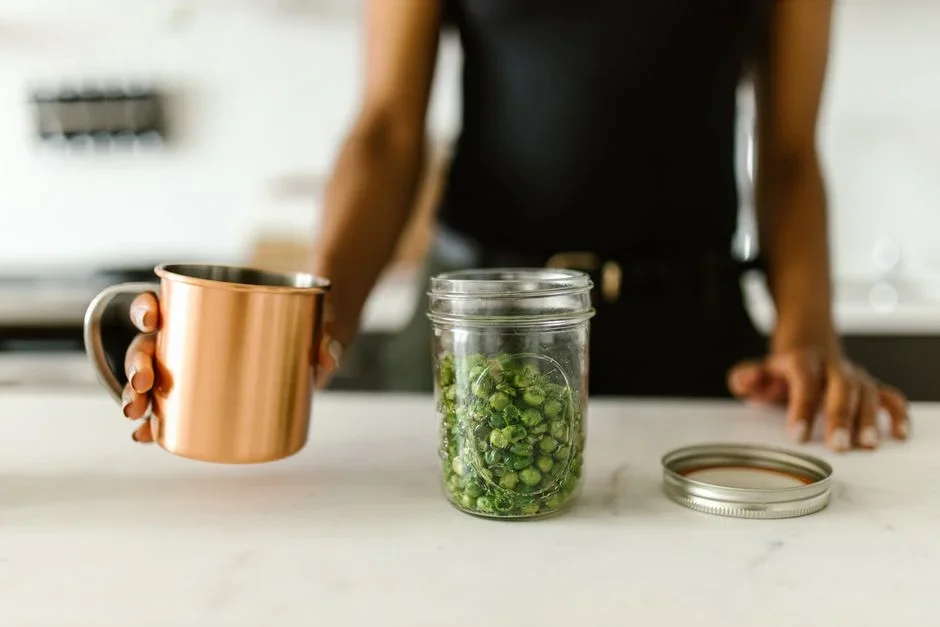
A boiling water canner will never be more than 212°F at sea level, regardless of how long the water boils. Low-acid food needs 240°F to 250°F, attainable with pressure canners operated at 10 to 15 PSIG.
The fact that ends the "my grandmother boiled hers for two hours" argument: the spores of C. botulinum are not affected by boiling water temperatures (212 degrees Fahrenheit). Eight hours at 212°F is still 212°F.
Now the counterintuitive part: mountains do not make a water bath fiercer. Water boils cooler as you climb, dropping about 1°F for each 500-foot increase in elevation, per NCHFP's elevation table:
| Elevation | Water boils at |
|---|---|
| Sea level | 212°F |
| 2,000 ft | 208°F |
| 4,000 ft | 204°F |
| 6,000 ft | 201°F |
| 8,000 ft | 197°F |
| 10,000 ft | 194°F |
Altitude weakens a water bath, never strengthens it. That is why tested recipes add time above 1,000 feet in a water bath, while in a pressure canner extra pressure is added. Look up your elevation once and write it inside a cabinet door.
Five practices to retire today
Most US botulism cases begin at home. Peer-reviewed surveillance covering 2001 through 2017 counted 326 laboratory-confirmed foodborne cases; of the 299 with a known preparation method, 94 (29%) were home-canned and 154 (47%) other home-prepared foods. A 2015 Ohio outbreak traced to potato salad made with boiling-water-canned potatoes.
- Water-bathing low-acid food. NCHFP states flatly that there is no safe option for processing green beans in a boiling water canner. Vinegar does not create one.
- Oven canning. Dry heat is slow to penetrate jars, and jars "may crack or explode if processed in the oven."
- Dishwasher canning. There is little control over temperature, pressure and processing time.
- Microwave canning. There is no standard temperature among microwaves, so no process can be validated.
- Open-kettle and inversion sealing. With open kettle, jars may seal, but bacteria are not destroyed. Flipping a hot jar of jam is not processing either: the food "doesn't reach a high enough temperature for the appropriate amount of time," and it can compromise the seal.
NCHFP puts the last four on one list of equipment and methods not recommended, warning there that canning food without its covering liquid risks under-processing and, for vegetables, botulism.
One method that does not belong there: the atmospheric steam canner. After peer-reviewed research, Clemson Extension accepts it with hard limits — only for naturally acidic or properly acidified foods at pH 4.6 or lower, never vegetables or meats, and only where total time including altitude adjustment stays under 45 minutes. The recipe booklet in the box is not research-tested.
The one to add: your Instant Pot is not a pressure canner
Every kitchen has an appliance with a "pressure" button, and the box invites the assumption. Utah State University Extension tested multi-cookers including the Instant Pot and Power Pressure Cooker XL and found that electric pressure cookers do not always reach or sustain the temperatures necessary for canning low-acid food safely at Utah altitudes. Its recommendation: a stove-top pressure canner for USDA-approved low-acid canning. These machines cook dinner well; they do not preserve it.
The tomato trap: acid food until you add an onion
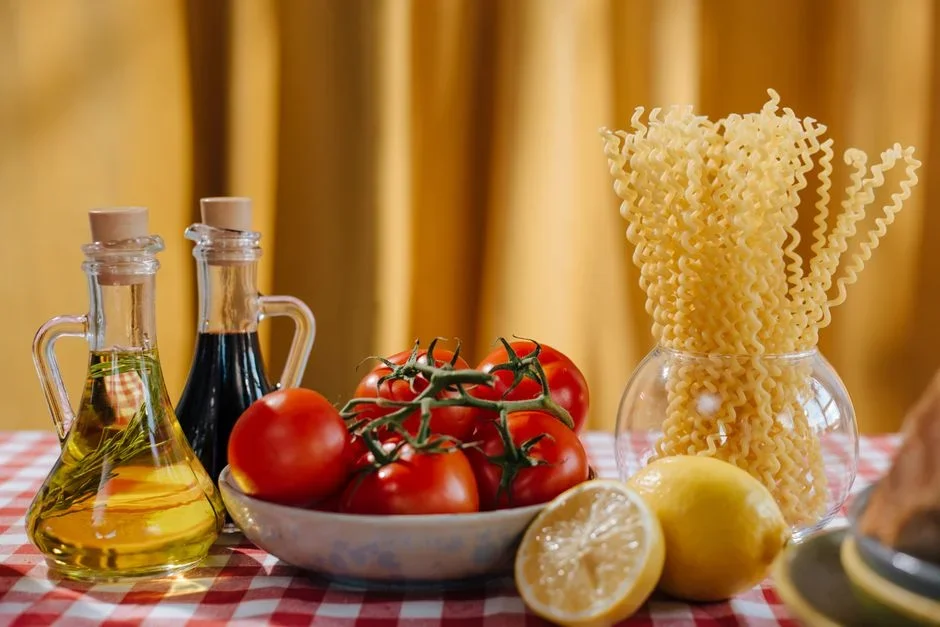
Tomatoes lost their automatic acid-food status years ago. Some now have pH values slightly above 4.6, so canning them as acid foods needs acidification — two tablespoons of bottled lemon juice or 1/2 teaspoon of citric acid per quart, one tablespoon or 1/4 teaspoon per pint. Bottled, not fresh; bottled acidity is standardized.
The bigger trap catches careful people. Add onions, peppers, mushrooms or meat and the batch turns low-acid whatever lemon juice you stirred in. NCHFP's meatless spaghetti sauce is a pressure-canner recipe only, with an explicit caution not to increase the proportion of onions, peppers, or mushrooms. Doubling the peppers because your garden went wild is a recipe change, and the tested process no longer covers it.
A sealed lid is not proof the food is safe
The vacuum forms from cooling and pressure change inside the jar, whether or not the process destroyed anything. An under-processed jar seals with a satisfying ping and looks flawless — the seal is evidence about air, not pathogens. Nebraska Extension adds the recipe-drift risk: when ingredients are added or proportions changed, the processing time may not be adequate.
Your senses are no backup. Ohio State Extension is blunt: botulinum toxin cannot be seen, smelled, or tasted. Discard bulging containers and do not taste food that is foamy or has a bad odor — then accept the reverse: a perfect-looking jar proves nothing. Canning allows none of the everyday sensory judgment behind our fact-check on which staples truly keep forever.
Two maintenance jobs almost nobody does
Test your dial gauge every year. Gauges drift. NCHFP's rule: if the gauge reads high or low by more than two pounds at 5, 10 or 15 pounds pressure, replace it. County extension offices often test gauges cheaply or free, though availability varies — call yours first. Weighted gauges have no dial to drift and, per Illinois Extension, do not need testing. And vent properly: once a continuous funnel of steam appears, set a timer for 10 minutes before closing it — trapped air makes the gauge lie.
Buy new flat lids. They are single-use because the gasket compound in used lids may fail to seal on jars, resulting in unsafe food. Unused ones last about five years from manufacture, and cranking bands down backfires — fingertip tight, thumb and ring finger. Be thrifty elsewhere: freezer habits stretch food with no safety trade-off.
Before you eat it: the boil rule, stated correctly
The version circulating online — "boil it 10 minutes" — is incomplete, and wrong for the foods most often canned badly. Clemson Extension states it fully: heat to a rolling boil, then cover and boil corn, spinach, and meats for 20 minutes and all other home-canned low-acid food for 10 minutes before tasting. NCHFP adds altitude: 1 additional minute per 1,000 feet at and above 1,000 feet elevation, and warns that even a taste of food containing this toxin can be fatal.
Two caveats. Boiling destroys toxin; it does not kill spores and cannot make a bad process retroactively safe. It is a safety net for jars already on the shelf, never a reason to shortcut processing. If someone has eaten suspect home-canned food and feels unwell, treat it as an emergency: call Poison Control or 911.
The honest tier list
| Tier | Practice | Why |
|---|---|---|
| REAL | Water bath for fruits, pickles, jams | pH 4.6 or lower blocks C. botulinum |
| REAL | Steam canner, acid foods only | Approved under 45 minutes |
| REAL | Yearly gauge test; new lids each batch | Catches what you cannot see |
| MYTH | "It sealed, so it's fine" | The vacuum forms from cooling alone |
| MYTH | "I'd smell or see spoiled canned food" | The toxin has no look, smell, or taste |
| MYTH | "Boil everything 10 minutes" | Corn, spinach and meats need 20 |
| MYTH | "Longer boiling replaces pressure" | Spores survive 212°F indefinitely |
| DANGEROUS | Water-bathing green beans | No safe boiling-water process exists |
| DANGEROUS | Oven, dishwasher, microwave canning | Uncontrolled heat; jars may explode |
| DANGEROUS | Electric multi-cookers for low-acid food | May not hold canning heat |
| DANGEROUS | Sauce with extra onions, water-bathed | Added vegetables turn it low-acid |
Where the actual numbers live
This page publishes almost no processing times, on purpose: time and pressure are specific to the recipe, jar size and elevation. One example shows how granular it gets — green beans run 20 minutes for pints and 25 for quarts, at 11 pounds on a dial gauge at 0–2,000 feet, rising to 14 pounds at 6,001–8,000 feet, while a weighted gauge uses 10 pounds up to 1,000 feet and 15 pounds above that. The meatless spaghetti sauce has its own. Take every figure from a research-tested source, unchanged, and heed Clemson: do not use a recipe from your mother, your grandmother, your friend, your neighbor, or the internet unless you know it arrived intact.
Common mistakes
- Assuming a food is acid because it tastes sharp. Taste is not pH.
- Believing a water bath gets hotter at altitude. It gets cooler.
- Acidifying tomatoes, then adding onions and staying in the water bath.
- Treating a sealed lid as a safety certificate.
- Skipping the vent step, so the gauge reads pressure the jars never felt.
- Repeating the incomplete "boil 10 minutes" rule for corn or meat.
FAQ
Can I make green beans safe for a water bath by adding vinegar?
No. NCHFP states there is no safe boiling-water option for green beans, and no home acidification method has been tested to change that. Pressure can them, freeze them, or follow a tested dilly-bean pickle recipe.
Is a steam canner safe, or another shortcut?
Legitimate within limits: acid or properly acidified foods at pH 4.6 or lower, total process under 45 minutes including altitude adjustment. Never for vegetables or meats.
What do I do with a jar I'm unsure about?
Do not taste it to find out. Discard bulging, foamy or foul-smelling containers, and remember a normal-looking jar proves nothing. If you have eaten from one and feel unwell, seek emergency care.
The takeaway: Decide pH first — below 4.6 a boiling water bath is enough, above it only a stove-top pressure canner will do, and every other canning question is downstream of that one. Spend less. Live more. — The Thrifty Almanac



0comments