

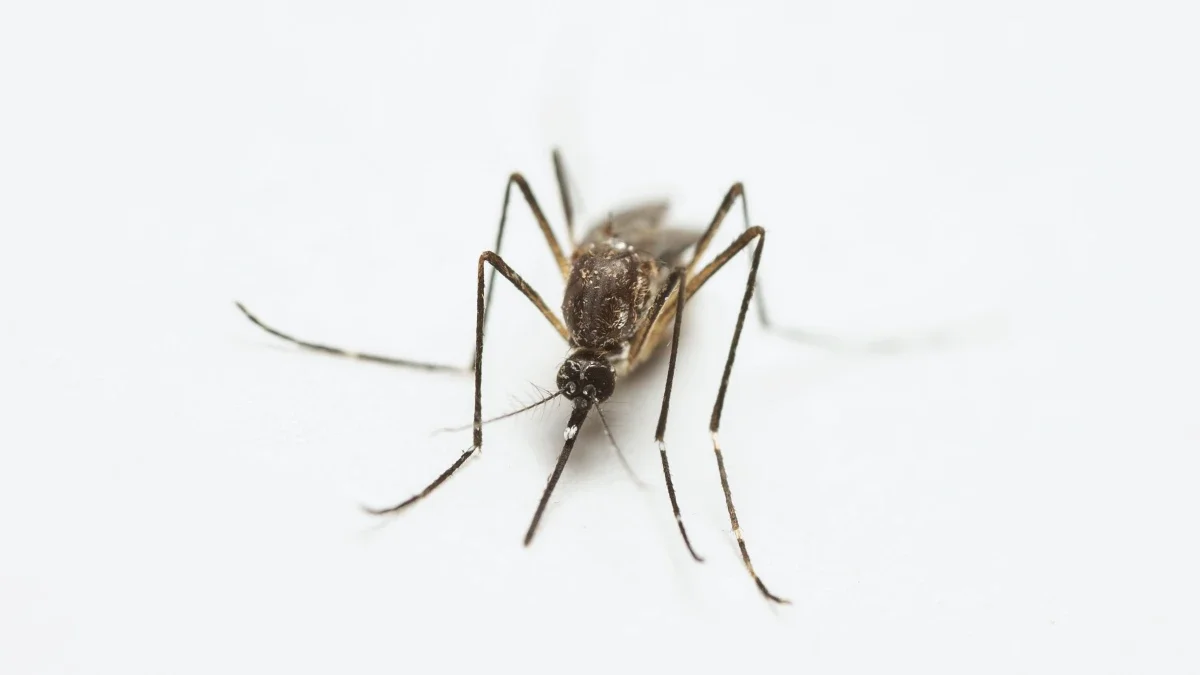
A mosquito whining past your ear at 2 a.m. sends a lot of people to one of two familiar fixes: plug in a bug zapper, or go outside and spray the yard. Both feel like doing something. Both usually leave you swatting at the same whine an hour later.
The honest version is less dramatic and a lot more effective. A mosquito indoors is there for concrete reasons — a puddle to breed in, a gap it walked through, a dark corner to wait out the daylight — and every one of those is something you can take away. University extension entomologists and the EPA have mapped the whole chain. Here is what actually clears a room, in the order that works. (For the bigger picture on doing this yourself, we keep a running DIY pest control guide as a hub.)
Why the bug zapper and the yard fogger let you down
WHY: Bug zappers pull insects in with ultraviolet light. Mosquitoes barely care about UV light — the females that bite you are hunting the carbon dioxide and body heat you give off, not a purple glow across the patio. That mismatch shows up brutally in the data. In a University of Florida write-up on the devices, entomologist Jonathan Day reported that "Out of some 10,000 insects destroyed by one bug zapper during a one-night test period, only eight were mosquitoes." His verdict on them was blunt: "They are a total waste of money. Bug zappers will not control mosquitoes or other biting insects." The insects they do kill are mostly harmless — moths, midges, beetles — so you are running a nightlife for the wrong bugs.
The outdoor fogger has a different problem. A fog of adulticide knocks down the flying adults it physically touches, then drifts off and breaks down within hours. It never reaches the mosquito resting in your hall closet, and it does nothing to the eggs already sitting in a saucer of water on your windowsill. That is why the EPA ranks fogging near the bottom of the toolbox: "Egg and larva interventions are generally the most effective, least costly, way to control mosquitoes." Spraying grown adults is what the agency saves for "when source reduction and larval control have failed or are not feasible." Indoors, you have far better options than a fog you can smell for the rest of the night.
Step one: find and drain the water they are breeding in

HOW: Mosquitoes do not need a pond. They need a teaspoon of still water that sits long enough. Writing for UC Agriculture and Natural Resources, the authors note that "even one ounce of standing water can support a population of larvae" — one ounce is a couple of tablespoons. And the clock is short: the same source says the trip "from egg to adult, requires as little as one week when conditions are favorable." A dish you have not thought about in a week is long enough to hatch a new batch of biters inside your walls.
Walk the house looking for anything holding water that has gone undisturbed. The usual indoor culprits:
| Where water hides indoors | The fix |
|---|---|
| Flowerpot and houseplant saucers | Empty and wipe dry weekly; do not let runoff pool |
| Vases, decorative bowls, self-watering planters | Change the water at least weekly or drain when unused |
| Drip pans under the fridge, dehumidifier, or window AC | Empty and scrub; check the AC pan every few days in summer |
| Slow floor drains, shower drains in a spare bath | Run water weekly so the trap stays sealed and clean |
| Pet water bowls left out for days | Rinse and refill daily |
| Trays under a dish rack, spare toilets in an unused bathroom | Dry out or flush weekly |
The wording that matters is empty and scrub, not just tip out. Mosquito eggs stick to the sides of a container above the waterline and can survive drying; a quick rinse leaves them ready to hatch when water returns, so wipe the inner walls. Purdue Extension frames the whole strategy the same way: "The most effective control of mosquitoes around the home is to prevent them from breeding." Kill the nursery and you stop refilling the room with adults faster than you can swat them.
The same rule runs outside your door — rain gutters, old tires, buckets, and plant trays are the yard version of that flowerpot saucer. If the outdoor side is your real battle, we break down the cheap options in the three-dollar Amish mosquito trick and sort the store-bought gadgets in mosquito traps and baits: what actually works.
Step two: close the gaps they walked through
HOW: If mosquitoes are appearing indoors and you have ruled out breeding sites, they are commuting in. Mosquitoes are weak, low fliers that drift in through the openings you stop noticing. Purdue's guidance starts at the screen: prevent them "by keeping windows and porches tightly screened," and "Inspect screens in windows, doors, and porches for holes or tears." A single dime-sized tear in a screen is an open door.
Then seal the frame itself. The extension's next line is to "Fill gaps around windows and doors with weather-stripping." In plain terms, work through this list:
- Patch or replace any window screen with a hole, and press the screen frame flush so there is no gap at the edges.
- Add a door sweep to exterior doors — the strip of light you see under the door at dusk is a mosquito-width opening.
- Run weather-stripping around doors and any window that no longer closes tight.
- Check where cables, dryer vents, and AC lines pass through the wall; caulk the gaps around them.
- Keep the garage-to-house door shut. Garages are a favorite daytime hideout, and that interior door is a straight shot into the living space.
Step three: hunt the resting spots and treat them directly

HOW: A mosquito does not fly all day. It bites, then finds somewhere cool, dark, humid, and out of moving air to digest and wait. Entomologists point to the same kind of shelter indoors that they describe outdoors — Purdue notes the adults "like to rest in vegetation," and inside your house the equivalent is the still, shadowed corner. Look low and in the shade: under beds and furniture, behind curtains and hanging clothes in closets, in the laundry room, under the bathroom sink, in the dark corner of a pantry or an unused room. A flashlight held at a low angle makes them easier to spot against a wall.
Once you find them, deal with them where they sit. A handheld vacuum is the cleanest option — no residue, and it collects them in one pass along a resting wall. For an active indoor problem, an aerosol works: Purdue notes that "Space sprays or aerosols containing synergized pyrethrins are effective against mosquitoes found in the home." The limits are real, though.
LIMIT: A space spray drops the adults that are flying or resting when you use it, but it leaves no lasting barrier — new mosquitoes wandering in later are unaffected, so it needs repeating and is a patch, not a cure. Always follow the product label for the rooms and surfaces it is cleared for, keep it away from food-prep areas, and ventilate afterward. Spraying is the last step for a reason: if you skipped the water and the gaps, you will be reaching for the can again next week.
When indoor mosquitoes are a health question, not just an annoyance
LIMIT: Most mosquito bites in the United States are nothing more than itchy welts. But mosquitoes are the reason we care so much — in parts of the country they can carry viruses such as West Nile, which is why public-health agencies treat breeding water as a community issue and not just a backyard nuisance. That is the logic behind the EPA putting "Egg and larva interventions" at the top of the list.
For the household, that means two things. First, take the breeding water seriously even when it is just a few ounces — it is the step that protects everyone in the house, not only the person getting bitten. Second, watch the bites themselves. A high fever, a severe headache, a stiff neck, or confusion in the days after being bitten is a reason to call a doctor promptly; a bite that turns hot, swollen, and spreading may be infected and worth a check. This isn't medical advice, and most people never need it — but knowing the line matters more than any gadget.
The bottom line

The bug zapper and the yard fog fail indoors for the same reason: they chase the wrong stage of the problem. Mosquitoes come inside to breed, get in through gaps, and hide in dark corners — so you win by emptying and scrubbing every dish of standing water weekly, patching screens and weather-stripping the gaps, and only then vacuuming or spraying the resting adults you can find. It is unglamorous, it costs almost nothing, and it is the version the entomologists and the EPA have been quietly recommending the whole time.






0comments