


You found a crack in the basement wall, and now every creak in the house sounds like a countdown. Take a breath. The concrete industry's own guidance says it plainly: "Some cracking is normal in concrete basement walls," and it "is not necessarily a sign of poor materials or workmanship or a structural problem."
This is a read-your-own-wall triage guide built from public engineering and extension documents — not an inspection. Nobody here has seen your house. The goal is sorting a wall to watch from a drainage chore from one worth an engineer's time.
The one-minute triage: direction first, movement second, width last
Most articles sort cracks by width. The only sourced decision rule is about behavior: NRMCA tells homeowners to "seek professional advice to evaluate and repair active cracks that are widening with time." Not wide cracks — widening ones.
| What you see | Tier | Usual cause | Next move |
|---|---|---|---|
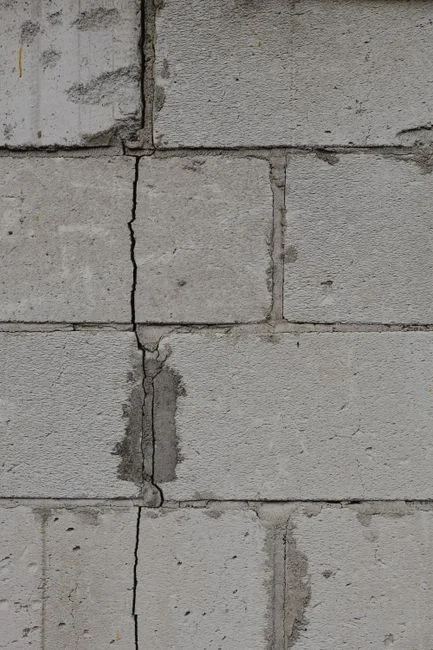
| Thin vertical/diagonal crack, poured concrete, dry, no offset | REAL, usually benign | Drying and thermal shrinkage | Mark, date, watch 90 days |
| Diagonal crack off a window or door corner | REAL, usually benign | Re-entrant corner stress | Watch; seal only if it leaks |
| Horizontal line partway up the wall | DANGEROUS | Lateral soil or water pressure | Engineer — don't seal it |
| Stair-step cracking along mortar joints | DANGEROUS | Differential settlement | Engineer |
| Any bulge, bow, lean, or wall-floor gap | DANGEROUS | Wall losing its shape | Engineer, whatever the width |
| Crack that weeps or stains after rain | REAL, fixable | Water where it shouldn't be | Drainage first, sealant second |
| "Cracks under X inches are always safe" | MYTH | Number borrowed from another document | Ignore the rule of thumb |
That last row matters: no government, university, or industry body publishes a safe crack width for homeowners. If the wall is otherwise sound, our everyday home repair playbook beats a caliper.
The two numbers everyone quotes — and what they mean
1/8 inch is a contract term. NRMCA says "a typical warranty will require repair only when cracks leak, have measurable vertical displacement, or if the crack width exceeds 1/8-in. (3 mm)." That's the width at which a builder owes you a fix — not a line below which you're safe.
Two inches is federal disaster triage. FEMA's damage matrix files "multiple small vertical cracks in the foundation" under Minor, while Major covers "crumbling, bulging, collapsing, horizontal cracks of more than two inches." Crumbling and bulging carry no width — a bowing wall qualifies unmeasured. The third stray number, the masonry association's 0.02 in. (0.51 mm), is a coating spec.
Cracks that are just concrete being concrete
Fresh concrete is at its largest volume the day it's placed, and "as concrete hardens it dries and starts to shrink." NRMCA's false-alarm list: diagonal re-entrant cracks off window and door corners, cold joints and pour lines, form lines, and restraint cracks where wall meets footing.
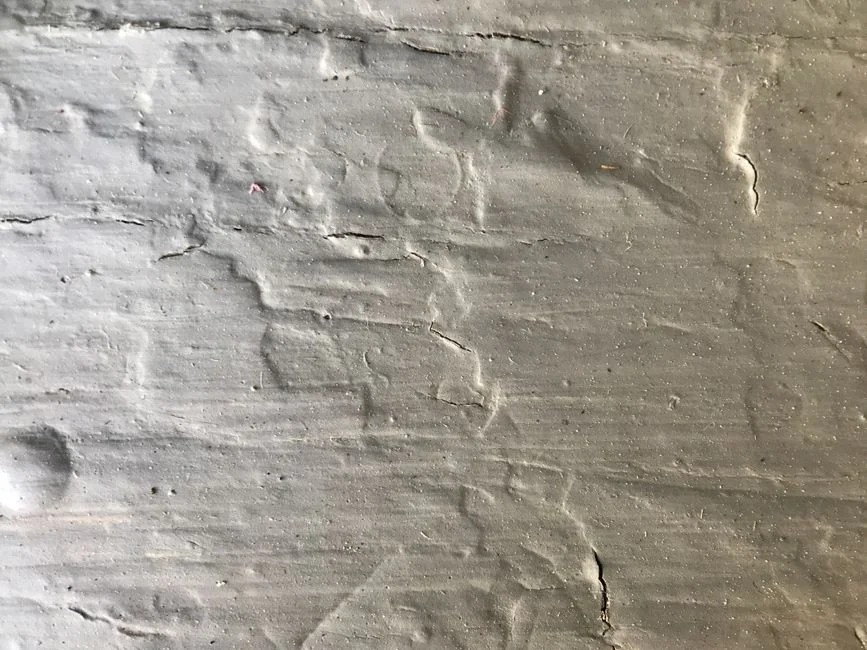
Pour lines cause the most panic. They run dead straight and horizontal — the pattern that should worry you — except a pour line is a color and texture change, not a separation. If a blade won't enter and nothing has moved, that's construction history. For how masons sealed old concrete, see our notes on water glass and cracked walls.
Cracks that are your soil sending an invoice
Stair-step cracking is settlement. The masonry association is specific: "Foundation settlement typically causes a stair-step crack along the mortar joints in the settled area," driven by weak or poorly compacted soil under part of the footing. Something below is sinking.
Horizontal cracking with bulging is pressure from the side. When soil around the wall saturates, NDSU notes, "the pressure exerted against the soil side of the basement wall is increased." Expansive clay multiplies it — such soils expand up to 20% by volume when wetted and exert "a force of up to 30,000 pounds-per-square-foot."
Why sealing a moving crack buys you nothing
Epoxy injection is a legitimate structural repair. The myth isn't that it fails — it's that it fixes anything on a wall still moving. The US Army Corps of Engineers is blunt: "unless the crack is dormant... it will probably recur, possibly somewhere else in the structure." A moving crack needs a sealant that lets it "function as a joint."
EPA lands in the same place from another direction: on radon it "does not recommend the use of sealing alone" because "normal settling of your home opens new entry routes and reopens old ones." Houses keep moving; sealant does not. (Radon is a lung-cancer risk — test for it rather than trusting caulk.)
USACE also calls injection a job that "requires personnel with a high degree of skill," warning "excessive pressure can propagate the existing cracks." A rented kit in untrained hands can lengthen the crack, and the resins want the label's gloves and ventilation.
Almost always the same root cause: where your roof water goes
Water isn't the only cause — non-uniform footing support, backfill damage from heavy equipment during construction, and thermal movement are all on NRMCA's list. Water is just the one you control.
Grade first: "slope ½ to 1-in. per foot... for at least 8 to 10 feet" away from the foundation, with downspouts discharging past that zone. If the basement smells damp after every storm, work through the fix order for gutters, downspouts and grading before you spend a dollar on the crack itself. Colorado's geological survey names the habits that undo it: "permitting the ponding of water near a foundation" and planting beds against the wall so irrigation soaks in. NC State Extension adds "at least one foot" of shrub clearance.
Order matters. NRMCA: "Before repairing leaking cracks, the drainage around the structure should be checked and corrected," and exterior waterproofing "is generally better than negative side (inside)." A slow indoor leak, rather than rain, is often one of the small plumbing repairs worth doing yourself. Once dry, damp responds to a cheap salt-based moisture trap.
The half nobody writes about: drought cracks foundations too
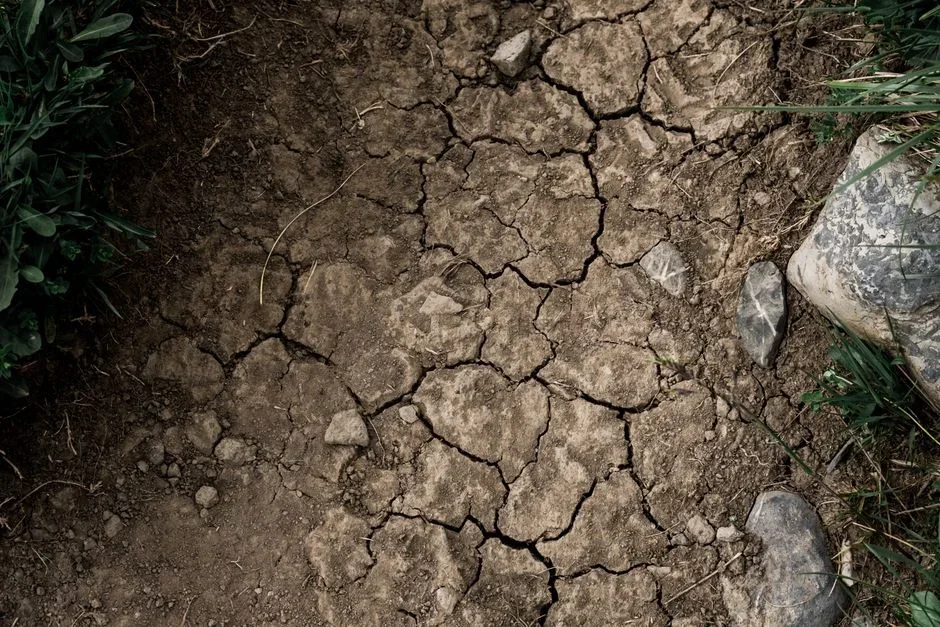
Dry summers do their own damage. NDSU Extension explains that "as clay or other fine-particle soils dry, they shrink, creating gaps around the basement walls," removing support until the building shifts enough to "cause a crack to form." Same tells — sticking doors, new cracks — no storm required.
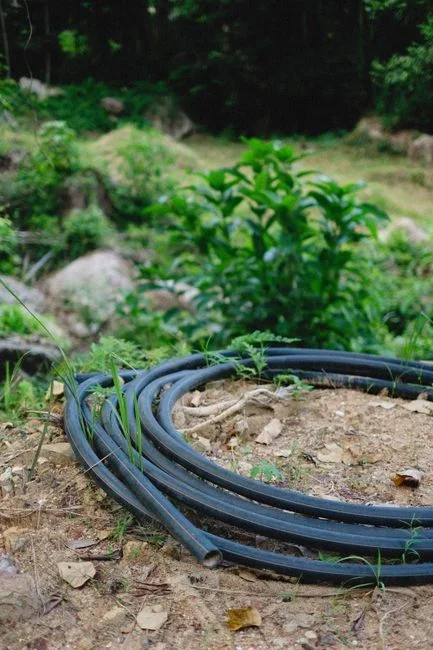
The safe response is slow water kept off the wall: "Apply water 1 to 2 feet away from the foundation edge" with a soaker hose, slowly, "with rest periods of several hours." The Texas-style "water your foundation" instructions circulating online no longer resolve to a live extension source, and overwatering just recreates the saturated-soil problem.
Three things not to do — one of them can kill you
Don't fill the drought gap with soil. NDSU: "When the soil gets wet, it will expand, pushing on the basement wall, possibly with enough pressure to crack the wall." Don't pour water in the gap either — it "may cause water intrusion into the basement." The tidy fix breaks the wall from outside.
Don't dig alongside your footing. This one has a body count. OSHA notes "one cubic yard of soil can weigh as much as a car, nearly 3,000 pounds," requires cave-in protection above 5 feet, and warns workers "can suffer death or serious injury within minutes." Those rules bind job sites, not your yard — but physics doesn't check paperwork. Digging there also strips the support the wall leans on. Hire someone who shores it.
Don't rush to pump a deeply flooded basement. NDSU: "if the basement is flooded with more than 6 inches of water, don't be in a big hurry to pump it out" because "floors may push up and walls cave in." Remove about a third per day. Treat a flooded basement as an electrical hazard until power there is off, and run the pump from an external source, not house circuits.
How to watch a crack for 90 days before spending a dollar
Since the trigger is movement, gather movement data. Pencil a line and today's date at each end of the crack, add two marks straddling it at its widest point, and measure between them. Photograph monthly with a coin for scale, noting recent rain. Escalate early if it lengthens, one side sits proud of the other, or water arrives. Mark-and-date is craft practice, not a published standard, but it builds the record an engineer needs.
What it costs to find out
A structural engineer's report runs roughly $500 to $1,000, a soil report $500 to $3,000 — against that publisher's 2026 national average repair of $5,179, piering at $1,000 to $3,000 per pier, and lifting and leveling at $20,000 to $23,000. One publisher's estimates, wide regional variance, but the ratio holds: diagnosis costs a fraction of the cure, and may rule it out.
Two free moves first. Check your soil on USDA's Web Soil Survey, covering more than 95 percent of US counties. Then read your policy — Virginia's state geological survey notes standard homeowner's insurance does not cover expansive-soil damage, though terms vary. And older homes don't crack from some banned method; the same survey blames "rerouted drainage, leaking pipes, downspouts, or the presence of large trees."
Common mistakes
- Judging by width, not movement. The sourced trigger is widening.
- Treating 1/8 inch as a safety line. It's a warranty threshold.
- Sealing before fixing drainage. You seal a wall still being loaded.
- Epoxying an active crack. It recurs; excess pressure extends it.
- Panicking over a pour line. Not a separation at all.
- Backfilling the summer gap. That soil swells when it rains.
- Ignoring a bulge because the crack looks small. Bulging needs no width.
FAQ
Is a vertical crack serious, and why does a horizontal one matter more?
Vertical is usually the least alarming pattern — FEMA files multiple small vertical foundation cracks as minor damage, and shrinkage cracking is normal as concrete dries. Direction reflects loading: horizontal cracking with bulging signals pressure from the soil side, and FEMA's major-damage language lists crumbling, bulging and collapsing with no width attached.
Can I just fill the crack with epoxy or hydraulic cement?
Only if it's dormant and the cause is gone. On a moving crack, USACE warns it will probably recur, possibly elsewhere. Fix drainage first, then use a flexible sealant if the crack still needs room to move.
My doors stick in a dry summer with no water problem. Why?
Drought. Fine-particle soils shrink as they dry, opening gaps beside basement walls and removing support — which NDSU ties to sticking doors and new cracks. Water slowly with a soaker hose 1 to 2 feet out; never fill the gap with soil.
Engineer or foundation contractor?
Engineer first for horizontal or stair-step cracking, any bulge, vertical displacement, or growth over your monitoring window. An engineer sells you a diagnosis; a repair company sells you a repair.
The takeaway: Direction and movement tell you whether a foundation crack matters — width mostly tells you which document someone was quoting. Spend less. Live more. — The Thrifty Almanac






0comments