


A musty basement feels mysterious, so people treat it that way: waterproofing paint, a dehumidifier, a quote for an interior drain. Almost nobody starts on a ladder with a trowel — where federal guidance begins.
EPA is blunt about the ranking: "in most climates, rain is the largest source of water in buildings." Rain lands on your roof and then either leaves or doesn't. Here's the honest order, and what can hurt you.
First: wet, or just damp?
Liquid water arriving stains where wall meets floor, during or right after a storm. EPA names the cause — "water in the basement can result from the lack of gutters or a water flow toward the house" — and its mold course adds the culprit: "landscaping, gutters and down spouts that direct water into or under a building."
Humid air condensing is different: sweaty walls, musty smell, no storm correlation, worst in July. It's the cold glass of iced tea — "when warm, humid air contacts a cold surface, condensation may form." If growth is visible, fix the water first; our walkthrough on removing mold so it stays gone covers the other half.
The fix order isn't the one the internet gives you
The National Park Service's brief on controlling moisture lists the sequence: slope grades to redirect rain, dispose of downspout water well away from the building, develop drainage, reduce splash-back. Then the sentence that belongs taped to the sealant aisle: "the excavation of foundations and the use of dampproof coatings and footing drains should only be used after the measures of reducing ground moisture listed above have been implemented."
EPA orders it the same way: change the landscape to divert water away first, and only then does the building need a storm water runoff system. Cheapest-first isn't a preference here; it's the published order. Caveat: that brief covers older masonry buildings, so its mechanisms travel to any block wall but it isn't general guidance for a 2005 poured-concrete basement.
Fix 1: Clean gutters
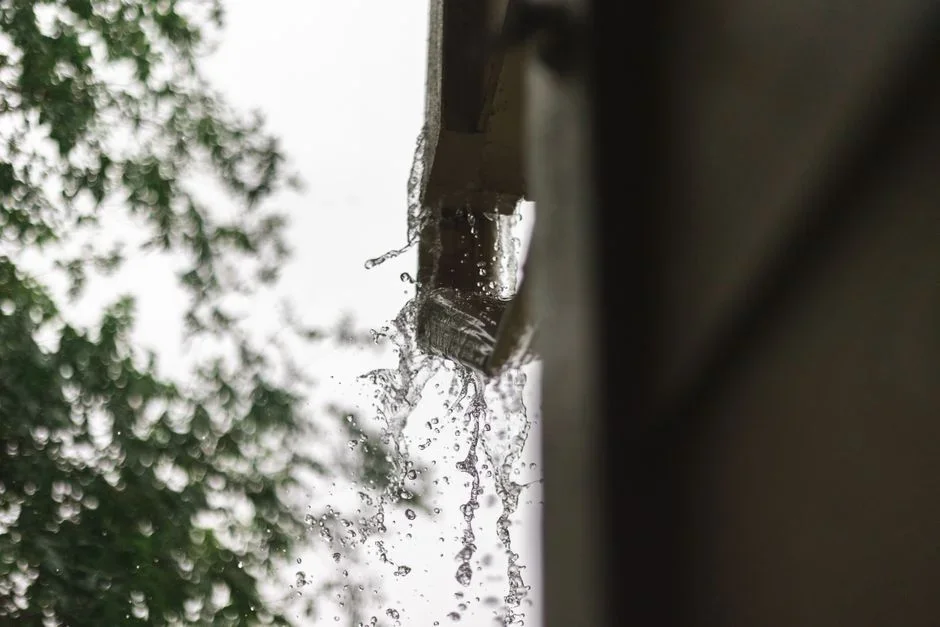
Run the numbers. Penn State Extension's formula: inches of rain × roof square footage × 0.6 = gallons. One inch of rain on a 2,000-square-foot roof is roughly 1,200 gallons. A clog doesn't make that vanish; it moves the delivery point to the base of your wall. The Park Service adds that 2 inches of rain per hour can produce 200 gallons of downspout discharge in one hour.
NC State says inspect the house every 6 months; EPA just says clean gutters regularly. "Spring and after leaf drop" is inference.
The limit: clean gutters do nothing if the water then lands two inches from the wall.
Fix 2: Extend the downspouts, 6 to 10 feet
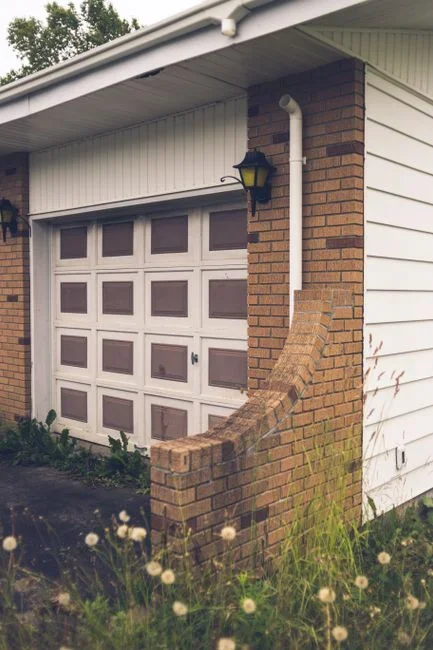
The highest-leverage cheap fix. Most houses have gutters; few discharge far enough. NC State Extension gives the target — "the downspouts should extend 6-10 feet from the foundation." The "10 feet minimum" rule all over the web traces to contractor marketing.
Two failure modes hide behind a downspout that looks fine, both flagged by the Park Service: broken subsurface drainage that "can leak into the builder's trench and dampen walls some distance from the source," and sprinkler heads set too close, adding a tremendous amount of moisture at foundation level. If a downspout feeds a buried pipe you've never traced, stand outside in a storm and watch.
The limit: an extension dumping onto ground that slopes back toward the house is theater.
Fix 3: Re-grade so the soil slopes away
Backfill settles, and the trench around your foundation sinks into a shallow bowl that collects runoff. The Department of Energy gives the spec: slope the final grade away at minimum 0.5 inch per foot for 10 feet — about 5 inches of fall. EPA's moisture guidance specifies a 5 percent slope, 6 inches per 10 feet, to the finish grade away from the foundation, and NC State says about 6 inches. Call it 5 to 6 inches of drop in the first 10 feet.
Check with a string and a line level: stake at the wall, stake 10 feet out, pull it level, measure down. No room? DOE's fallback is swales or drains that transport water away from the foundation. EPA's rule fits one line: "provide drainage and slope the ground away from the foundation."
The limit: don't pile soil above the foundation top to hit a number, and don't shove earth against a wall that's already bowing.
Reading the evidence on your own wall
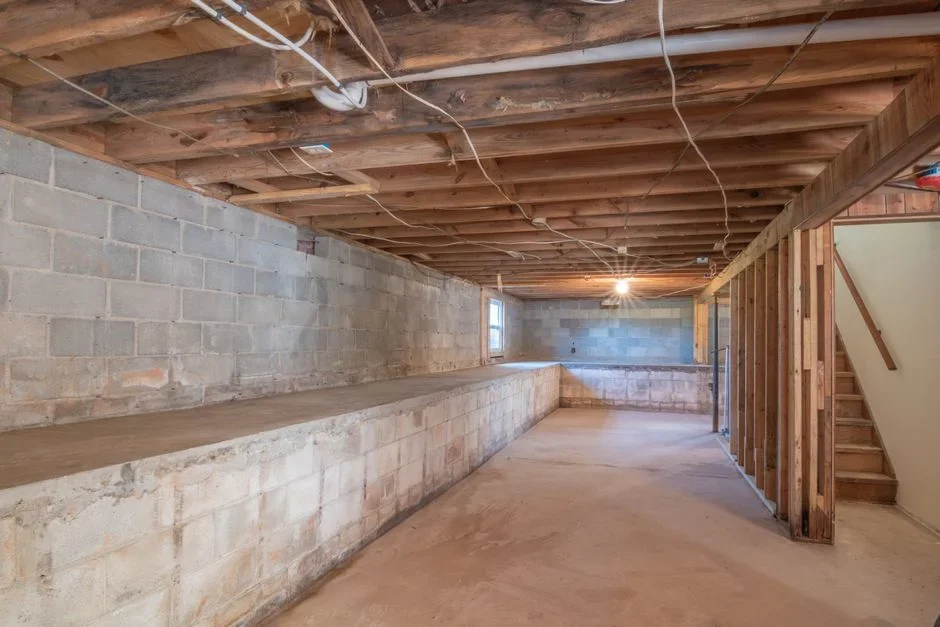
Chalky white crust on masonry is efflorescence — proof water is moving through the wall and evaporating out. The Park Service calls capillary rise "a whitish stain or horizontal tide mark of efflorescence that seasonally fluctuates about 1-3 feet above grade," warning it "should not, however, be confused with moisture that laterally penetrates a foundation wall through cracks."
So: a band a foot or three above grade means ground moisture wicking up; a stain at the wall-floor joint after storms means water coming in sideways; sweating with no rain means condensation. That reading is inference from the mechanisms, not published protocol. If the cracks worry you, start with telling a harmless foundation crack from a serious one.
The honest tier list
| Verdict | The measure | Why it lands there |
|---|---|---|
| REAL | Clear gutters, downspouts 6-10 ft out, grade sloping away | The published sequence, near-zero cost |
| REAL, narrow | Dehumidifier | For humid air; useless against liquid water |
| MYTH | Waterproofing paint inside a damp wall | Traps moisture and forces it higher up the wall |
| DANGEROUS | Gutter-height ladder work; wet basement, power on; fast pump-out | Falls, shock, wall collapse |
The myth: sealing the inside of a wet wall
Waterproofing paint sells because it's the only fix you can do in slippers, on a Sunday. It doesn't stop outside water, and the mechanism is documented. Per the Park Service, a coating inside damp walls "will only increase the pressure differential as a vertical barrier and force the capillary action, and its destruction of materials, higher up the wall." The brief photographs the result: "this waterproof coating trapped moisture from the leaking roof, causing portions of the masonry parapet to fail."
There's a structural tell too: in EPA's guidance these coatings sit on the exterior face of below-grade walls, with gravel and a footing drain that "carries rainwater and ground water away from the footing and the floor slab." The product's engineered home is buried outside. Sealer chemistry has real uses on concrete — see densifying versus sealing versus waterproofing — but none moves water away from the house.
The half-myth: what a dehumidifier can't do
Calling the dehumidifier a scam would be wrong. EPA recommends it when outdoor air is warm and humid, targeting below 60 percent relative humidity, ideally 30 to 50 percent. NC State adds the step everyone skips — empty and clean the drip pan. Check with a $10-$50 hygrometer; for a closet, the bowl-of-salt trick has a narrow use.
It can't stop water entering. EPA is unambiguous: "if you clean up the mold, but don't fix the water problem, then, most likely, the mold problem will come back." Dry fast, too — materials dried within 24-48 hours usually won't grow mold. Same logic as our home maintenance playbook.
Danger: the ladder is the likeliest thing to hurt you
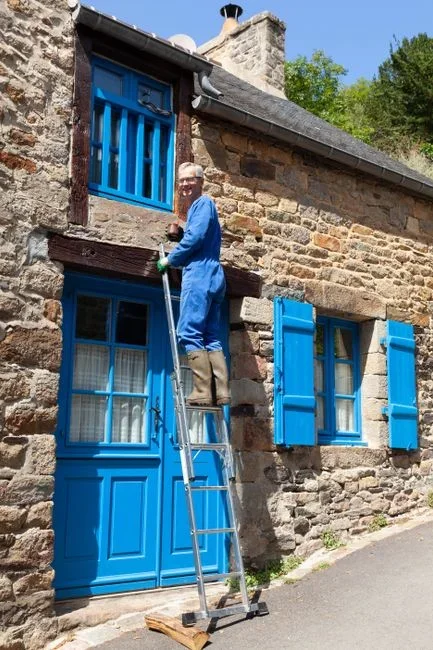
Your real risk isn't water damage. A peer-reviewed analysis of emergency-department data found ladder injuries averaging 136,118 cases a year, with 97.3% in non-occupational settings such as homes and farms. The fall-height breakdown comes from CDC's review of work-related ladder falls — borrowed here as the best evidence available, not as a claim about homes — and it still kills the "it's only one story" excuse: nearly 90% of nonfatal falls were from under 16 feet, and 6-10 feet was the most common height, at 50% of ED-treated cases. Single-story gutter height, exactly.
OSHA's rules are workplace standards, not homeowner law, but they're the best documented anywhere. Set the ladder so the horizontal distance from top support to foot is about a quarter of the working length, then extend it 3 feet above the point of support, keep three-point contact, and check overhead — no metal ladder near power lines or exposed energized equipment. And not on slippery surfaces unless secured or on slip-resistant feet. Two-story gutters or a steep roof: hire it out.
Danger: electricity, standing water, pumping too fast
University of Nebraska-Lincoln's disaster extension: "never go into a flooded basement unless you know the electricity is off." Ready.gov agrees — don't touch electrical equipment if it's wet or if you're standing in water. If reaching the panel means wading, call the utility.
Counterintuitive: don't pump a flooded basement dry all at once. UNL says pump the level down 2 to 3 feet, mark it, wait overnight, repeat daily — drained too fast, pressure outside the walls exceeds pressure inside and may crack and collapse the floor and walls.
Keep the chemistry boring: never mix bleach with ammonia or other cleaners, ventilate, keep kids and pets out until dry. Fumes plus symptoms mean fresh air, then Poison Control at 1-800-222-1222.
When it stops being a DIY job
If the outside fixes are done and water still arrives every storm, you're at the edge of the cheap tier — likewise if walls bulge or crack progressively, or the basement floods. The Park Service says difficult cases call for technical evaluation by consultants specializing in moisture monitoring, naming architects and engineers. No authoritative source publishes a crack width for that call, so ignore anyone quoting one.
A money note: Ready.gov says homeowner's insurance policies do not cover flooding, and an NFIP policy typically takes up to 30 days to take effect.
Common mistakes
- Buying sealant before touching a gutter. The published sequence puts coatings after drainage.
- Downspouts discharging at the wall. A splash block is not 6 feet.
- Sprinklers aimed at the foundation. One misaimed head undoes the rest.
- Treating a one-story gutter as low risk. That's the most common height in the ladder-fall data.
FAQ
Will a dehumidifier fix a wet basement?
It fixes humid air, not incoming water. Hold the space below 60 percent relative humidity, ideally 30 to 50 percent — but EPA doesn't count a moisture problem resolved until the water source is fixed.
Is interior waterproofing paint ever right?
Not against water arriving from outside. Coatings on the inside of a damp wall force capillary action and its damage higher up the wall; EPA specifies them for the exterior below-grade face.
How much slope does the ground need?
About 5 to 6 inches of drop in the first 10 feet — DOE gives 0.5 inch per foot over 10 feet, EPA 6 inches per 10 feet. Tight lot? A swale or drain.
The takeaway: Move the roof water 6-10 feet away and slope the soil before you spend a dollar on anything that comes in a can. Spend less. Live more. — The Thrifty Almanac






0comments