


The chirping starts behind the dryer after dark and stops the second you walk in. Or you flip on the basement light and something tan and humpbacked launches at your shin. Either way, they arrived the week the nights cooled — and that timing is the story.
Crickets are not a sign your house is dirty. Minnesota Extension says outright they are not a serious pest in homes. But the fix depends on which cricket you have, and most advice blends all three into one useless pile.
Start here: which cricket is it?
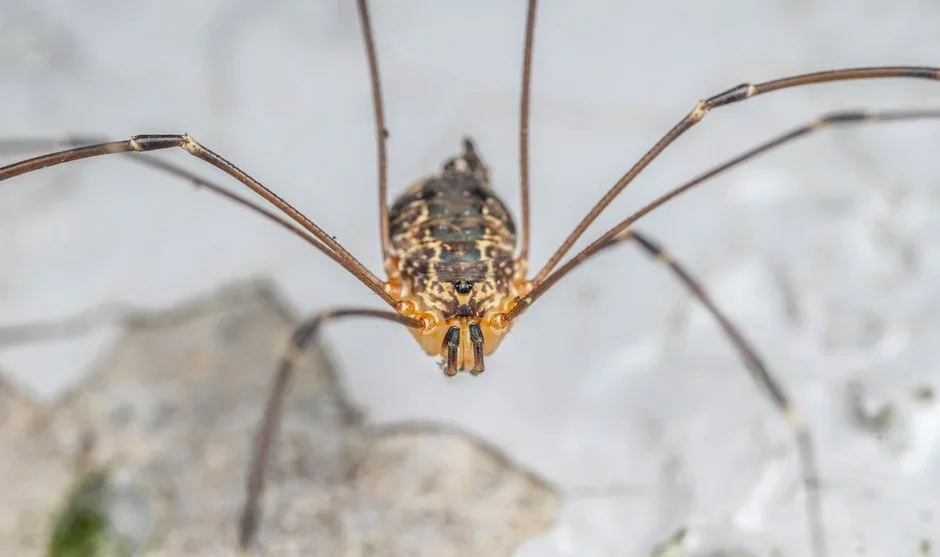
One question does most of the work: is it chirping? If nothing chirps, you have a camel cricket, and every bit of porch-light advice below is irrelevant. Camel crickets are wingless and unable to chirp; NC State confirms they do not chirp.
| Species | Looks like | Sound | Where you find it |
|---|---|---|---|
| Field cricket | Dark brown to black, 0.5–1.25 inch, rear wings like pointed coat tails | Loud chirp | Garage, entryway, near doors |
| House cricket | Yellowish-brown, three dark bands behind the head, long pointed wings, about 3/4 inch | Chirp | Warm spots, behind appliances |
| Camel cricket | Tan, humpbacked, long legs, no wings, roughly 0.5–1.5 inch | Silent | Damp basements, crawlspaces, garages |
Why they showed up now and not in June
Field crickets invade homes most often in fall in response to cooler nighttime temperatures, and night lights pull them against the building first. Minnesota reports the same late-summer entry, with one generation per year; farther south, Texas A&M notes nymphs mature in about 12 weeks, with up to three generations a year. Timing shifts by region — think "when nights cool," not a date.
Cool nights plus a ground-level gap is the setup behind the wave of spiders that turns up indoors every autumn, and it has the same answer.
The honest bad news: the loud one is already dying
Field crickets that wander in rarely reproduce indoors and normally die by autumn or early winter. The black cricket screaming behind your washer is, unsatisfyingly, temporary.
The exception is the boring one. For the house cricket, Missouri states that all stages are able to live in buildings year-round, and Maryland adds that house and camel crickets may both reproduce indoors. It is the feeder and bait species: UF/IFAS describes Acheta domesticus as probably native to southwestern Asia, reared in commercial cricket factories, and able to complete its life cycle in two to three months at 80°F to 90°F. If you keep a reptile, that is a plausible origin story.
Fix #1, and it is not close: seal the way in
Missouri names the usual entry as open or poorly fitted doors. Maryland is the practical version: doors should fit tightly — adjust, repair or replace weather-stripping and thresholds, then seal basement window frames, dryer vents and plumbing and wiring entrances, and screen crawlspace vents. Minnesota adds caulk for foundation cracks.
Door first, foundation second. It is the only step that works on all three species, it is one-time, and it is the cheapest — price a sweep and threshold at the store, not from an article. It is the same job as our cheap ground-level sealing walkthrough for keeping mice out. Exclusion before chemicals also anchors how we rank every pest fix on this site.
Limit: no source puts a percentage on how much sealing reduces entry. It is extension consensus and mechanism, not a measured effect.
Fix #2: turn down the outdoor draw (chirping species only)
Cut weeds and tall grass at the foundation, move firewood, brush and bricks away from the wall, and limit outdoor lighting. Where you need light, Minnesota recommends yellow bulbs instead of white, neon or mercury vapor. Field and house crickets are strongly attracted to lights; camel crickets are not.
The caveat most articles skip: change every bulb on the house and a camel cricket population will not notice. If deterrents were your plan, see which natural repellents actually hold up first.
Limit: yellow-versus-white is as far as verified guidance goes. Ignore anyone quoting a specific LED color temperature.
Fix #3: for the ones already inside, a vacuum and glue boards
Maryland calls the vacuum cleaner one of the most effective and least toxic means of eliminating invading crickets. Missouri adds: remove the dead ones, or they feed ants and beetles.
Glue boards — the flat ones sold for cockroaches and mice — go along wall-floor junctions, in corners, and near the gaps you just found. Minnesota notes camel crickets especially are attracted to these traps; Maryland suggests placing them where you hear singing. They double as monitors, naming the species and the doorway. Tuck them under and behind things — glue sticks to fur and small hands too.
Limit: no catch rates exist. Place boards for information and cleanup, not for a number.
If it does not chirp, you have a moisture job
Maryland is blunt: a camel cricket's desire for dark moist places almost always restricts them to damp basements and crawl spaces, and NC State describes them as attracted to cool, moist or humid areas. They mark your dampest, darkest harborage — not necessarily a structural defect, since they also come in to overwinter.
So dry it out. Minnesota calls a fan or dehumidifier especially effective for camel crickets. EPA's target is indoor relative humidity below 60 percent, ideally 30 to 50 percent, and it flags bare-earth crawlspaces as hidden-mold sites. Down there the Department of Energy spec is at least 6-mil polyethylene, seams lapped 6 to 12 inches and sealed, lapped at least 6 inches up walls and piers and sealed around pipes — vented or unvented alike. If you find mold or standing water, handle that first.
One detail nobody else will tell you: it is probably not native. A citizen-science census found 24.4% of 1,719 US households reported camel crickets, and of the 163 that sent identifiable photos or specimens, 88% showed the introduced Asian genus Diestrammena rather than the native Ceuthophilus. Pitfall traps in Raleigh yards took 158 camel crickets, with catches falling off the farther a trap sat from the house — they live against your foundation, not in the yard.
Limits: those households were self-selected and heavily North Carolina, so read that share as "of homes that sent a photo," not of US homes. The sources also disagree on damage: Minnesota says paper and rarely fabric, Missouri says they seldom damage items in the home, NC State warns about garments and linens packed in boxes. Honest read: low and situational, worst in undisturbed storage.
The tier list: what's real, what's a myth, what's dangerous
| Move | Verdict |
|---|---|
| Thresholds, sweeps, sealing foundation and utility gaps | REAL |
| Vacuum and glue boards along walls | REAL |
| Dehumidify, crawlspace ground cover | REAL (camel only) |
| Yellow bulbs, fewer outdoor lights | REAL (chirpers only) |
| Outdoor perimeter band, after sealing | REAL, last resort |
| Ultrasonic plug-in repellers | MYTH |
| "They're breeding in the walls" | MYTH |
| Broadcast indoor spraying | MYTH |
| Indoor fogger ("bug bomb") | DANGEROUS |
Myth: ultrasonic plug-in repellers
The FTC sent warning letters to more than 60 manufacturers and retailers in May 2001 demanding scientific substantiation, having already acted against six such companies between 1985 and 1997; its complaints alleged the devices do not control insects. Arizona Extension concludes commercially available devices are ineffective, citing a trial where nine devices produced no response in German cockroaches — equal numbers entered rooms with and without the sound.
The limit, stated precisely: crickets have not been the test species — the documented failures are in ants, cockroaches and mosquitoes. No such device has worked on any insect tested, and nobody has tested crickets.
Myth: "a cricket in the house is good luck, so leave it"
Half right, and worth respecting. Crickets are a nuisance, not a health threat, and nothing in the extension record says they harm children or pets. But leaving them is not free: Minnesota notes field crickets eat cotton, linen, silk and wool, especially material soiled by food or perspiration, and Texas A&M adds furs and carpeting. Scale decides: for two crickets the folklore wins; for a chorus in the laundry room it does not.
The dangerous move: bug-bombing a walk-in insect
Foggers are the wrong tool and a documented injury source. CDC identified 3,222 acute fogger-related illnesses across 10 states from 2007 to 2015 — 92% of exposures in private residences, 21% moderate severity, 0.7% high severity, four deaths. The commonest causes were not leaving during application and reentering too soon; EPA's 2012 label overhaul produced no statistically significant reduction in the three years after.
The propellants are flammable — EPA recommends placing a fogger six feet or farther from all ignition sources, and everyone including pets must leave. It also misses: if the material does not reach the cracks and crevices where insects hide, they will not be killed. That record covers foggers as a class, not cricket incidents — which is the point: it is what happens when people bomb a house over a walk-in nuisance.
Minnesota's summary of indoor chemicals is one sentence: pesticides are generally not effective or necessary indoors. What extension supports instead is an outdoor perimeter band, last, after sealing — and only per the product label, which is legally binding, with children and pets kept off treated ground until it dries. If invasions repeat after that, call a licensed pest control operator. If anyone is exposed and feels unwell, call Poison Help at 1-800-222-1222, or 911 for trouble breathing.
Common mistakes
- Treating a camel cricket like a field cricket. New bulbs, zero change. Silent and wingless means dehumidifier, not lighting.
- Spraying baseboards instead of sealing the door. Missouri calls insecticide on large exposed surfaces mostly ineffective.
- Assuming an infestation. Field crickets almost never breed indoors; the tan banded house cricket is the one that establishes.
- Buying a plug-in, or bug-bombing a basement. One does nothing; the other is the riskiest move here.
FAQ
How long until the chirping stops on its own?
Field crickets that wandered in normally die by autumn or early winter without reproducing indoors. If chirping continues through winter in a heated house, suspect house crickets, which live indoors year-round.
Do camel crickets bite or hurt pets?
Nothing in the extension record supports it — all three are classed as nuisance pests, not a health or pet hazard. Damage is minor: paper, and fabric in long-undisturbed storage.
Is it worth spraying around the outside of the house?
As a last step, yes. Missouri Extension endorses a treated band starting one foot out from the foundation and ending one foot up from the soil — but only after outdoor habitat is cleared and entry points repaired. Follow the label exactly; it is the law.
The takeaway: Identify by sound, seal the ground-level gaps, then let a vacuum and a dehumidifier finish — the chemicals most people reach for first are the least useful part. Spend less. Live more. — The Thrifty Almanac






0comments