

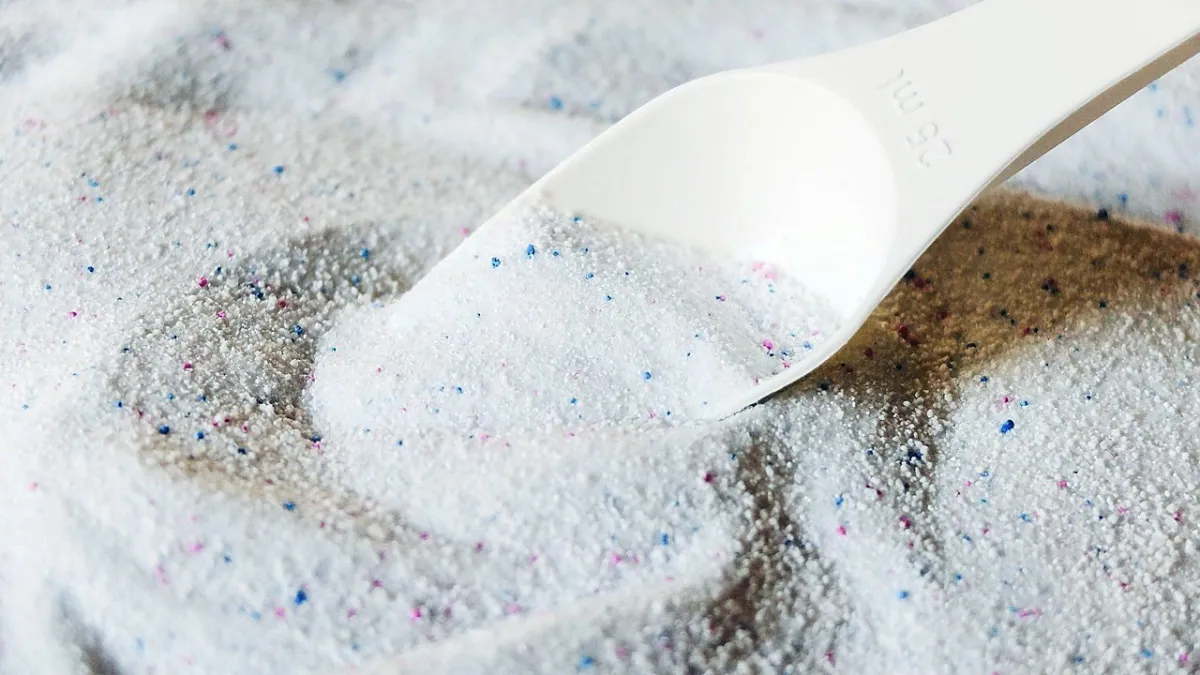
A recipe for homemade laundry soap calls for a cup of washing soda, and the pantry holds only baking soda. The washing soda vs baking soda question starts right there: the names sound close, and a swap looks harmless.
This guide compares the two powders, then covers the oven trick for turning one into the other, and borax and OxiClean.
Washing soda vs baking soda: different chemicals, and washing soda is the stronger alkali
Start with the chemical name on the box. Washing soda is sodium carbonate, a stronger alkali than baking soda, which is sodium bicarbonate. Arm & Hammer, which sells both, says its Super Washing Soda is 100% sodium carbonate and its Baking Soda is 100% sodium bicarbonate, that "they are not the same," and that washing soda does not contain baking soda.
The gap shows up in strength. The University of Arkansas Cooperative Extension rates baking soda mild and washing soda strong, with borax in between. The pH numbers point the same way: a 1% sodium carbonate solution measures 11.37 at 77°F in NIH's Hazardous Substances Data Bank, while Church & Dwight's 2015 safety data sheet (SDS) for baking soda lists a pH of 8.2 for a 1% solution.
| Washing soda | Baking soda | |
|---|---|---|
| Chemical name | Sodium carbonate | Sodium bicarbonate |
| pH, 1% solution | About 11.4 | About 8.2 |
| Strength (Arkansas Extension) | Strong alkali | Mild alkali |
| Workplace SDS hazard class | Eye irritant (H319) | Not classified |
| Food use (Arm & Hammer) | Never ingest | Baking, toothpaste |
Treat the pH row as a comparison of the two powders at the same strength, not as the pH of a wash load. The safety data sheets behind the hazard row may, by their own wording, hold health hazard information not found on the product label.
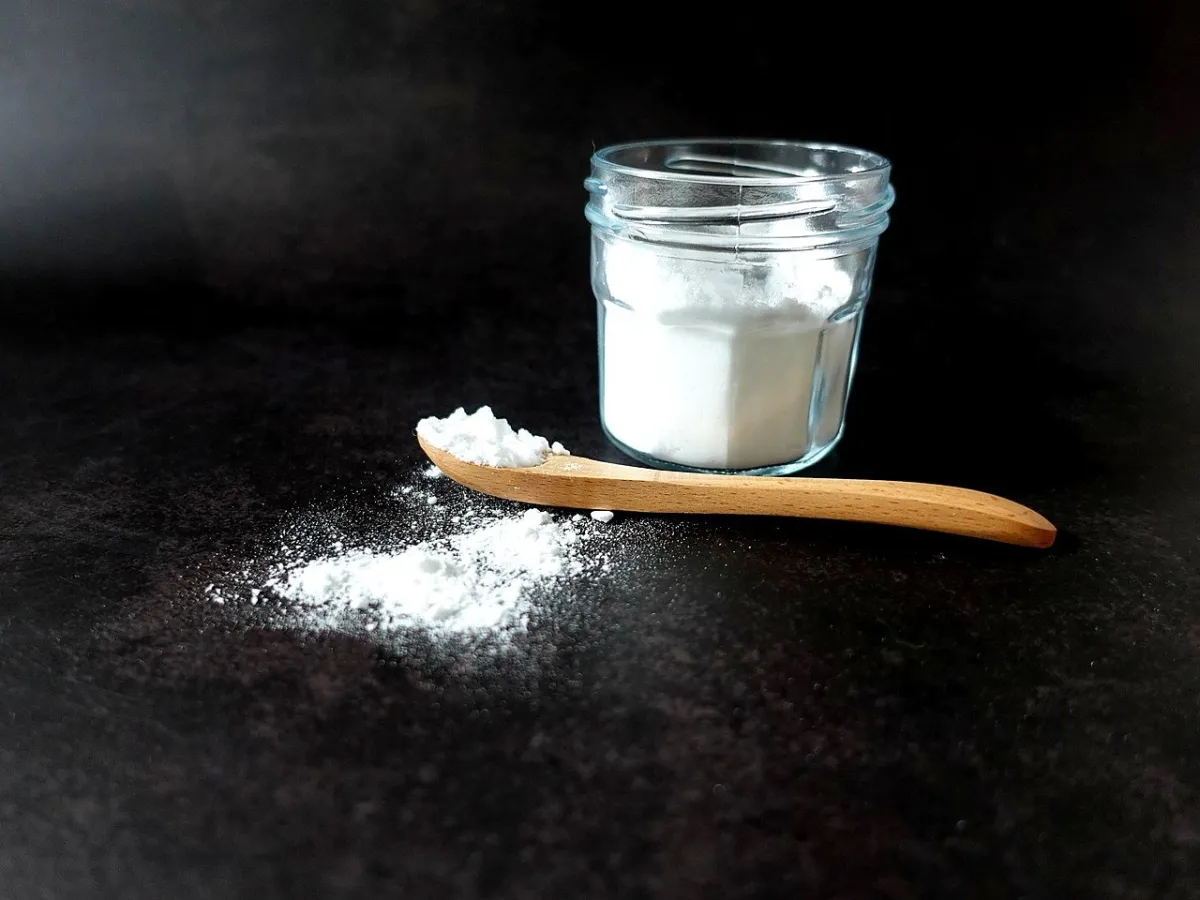
Soda ash is sodium carbonate under another name. Arm & Hammer says "washing soda" generally means sodium carbonate combined with water, while "soda ash" is the anhydrous form. Church & Dwight's 2019 ingredient disclosure for Super Washing Soda lists sodium carbonate and water (the FAQ says 100% sodium carbonate), and 20 Mule Team calls sodium carbonate the common name for washing soda, so sodium carbonate is the name to look for in an ingredient list.
Can baking soda stand in for washing soda? Arm & Hammer says both can improve liquid laundry detergent and both can clean around the house. Its directions use different amounts: ½ cup of washing soda per load (regular or HE) but 1 cup of baking soda in an HE washer. Arkansas Extension advises starting with as mild a cleaner as you can and trying a stronger one if elbow grease and time do not work; that is advice for cleaning chores, not a test of baking soda in a washing soda recipe. None of these directions tests a one-for-one swap, so they do not show that baking soda can replace washing soda.
What washing soda does in the laundry room and around the house
Washing soda softens water, which is one way it boosts a detergent. Arm & Hammer says the sodium carbonate binds to the minerals that harden water, and that as an alkali it also raises the pH of the water. North Dakota State University Extension, which calls it sal soda (a name NIH's database gives for hydrated sodium carbonate), explains the mechanism: the sodium carbonate combines with calcium and magnesium to form solid particles that settle out with the dirt during washing. NDSU adds a limit: those particles can cling to fabric, so the method may not fully clean your laundry.
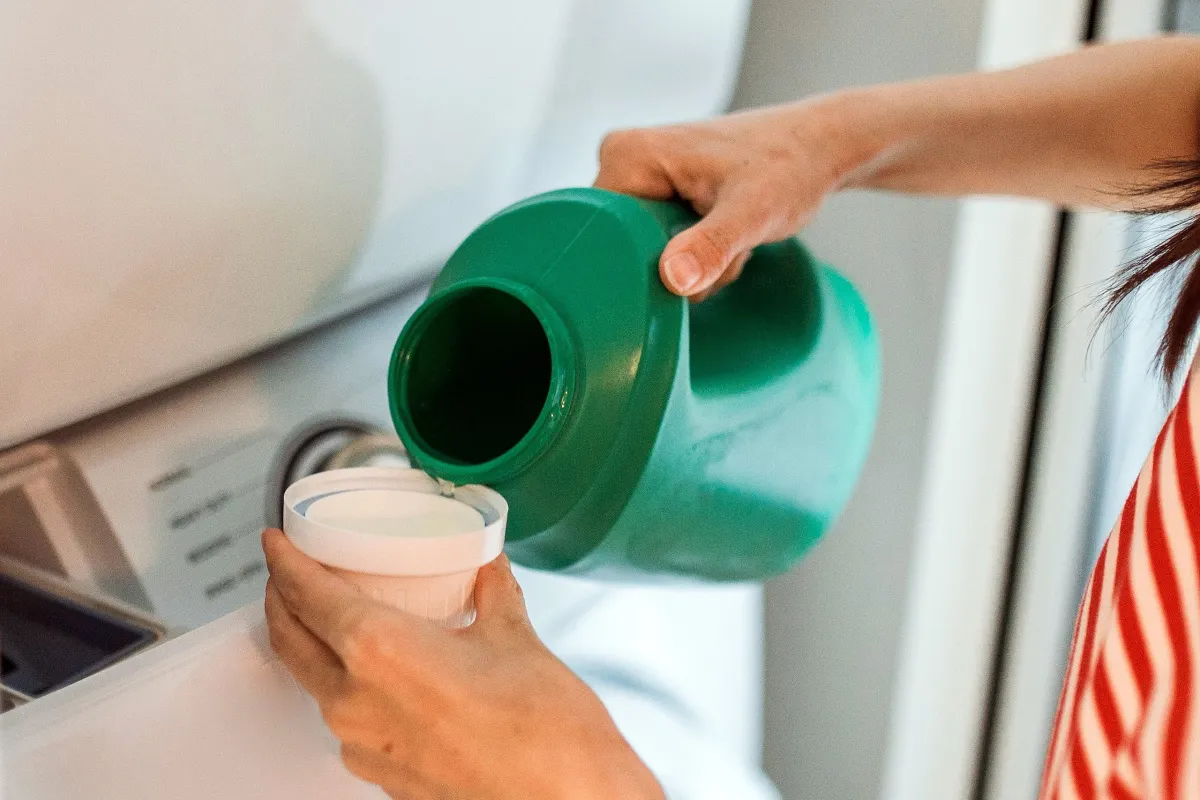
Arm & Hammer sells it as a detergent booster and claims up to 15% better liquid detergent performance on mustard and blood stains versus a leading value detergent alone, a marketing figure. Its online usage article gives these amounts:
- A regular wash: ½ cup added with the usual amount of detergent at the start of the cycle.
- Large, heavily soiled loads: 1 full cup. Hard water gets the same treatment as a heavily soiled load.
- A stain paste: 4 tablespoons of washing soda in ¼ cup of warm water. Test a small, hidden area of fabric for colorfastness before pre-treating, and wear rubber gloves.
- Large bathroom surfaces: ½ cup dissolved in a gallon of warm water. Wear rubber gloves, and rinse everything after scrubbing.
For how homemade soap performs in hard water, see the guide to homemade laundry soap versus detergent.
Arm & Hammer names surfaces where washing soda does not belong:
- Aluminum: "NOTE: DO NOT USE ARM & HAMMER™ SUPER WASHING SODA ON ALUMINUM COOKWARE." The outdoor-grill section adds "DO NOT USE IT ON ALUMINUM SURFACES."
- Fiberglass: "Do not use it on fiberglass bathroom utilities."
Safety: washing soda can irritate eyes and skin, and baking soda is not harmless in large amounts
On workplace safety data sheets, washing soda is classified as an eye irritant and baking soda is not classified, yet swallowing a lot of baking soda can still be dangerous.
Safety note: Washing soda can irritate eyes and skin, and its dust may irritate mucous membranes, with coughing and shortness of breath afterward. Avoid breathing the dust and open a window or run an exhaust fan. Keep children and pets out of the area while you clean, and store cleaning products in cabinets with child-resistant latches (Poison Control). Arm & Hammer says to avoid contact with eyes and limit prolonged skin contact, and that wearing gloves is always a good idea.
If it gets on skin, remove contaminated clothing and drench the area with water for at least 15 minutes, and get medical attention if irritation develops or persists. For eye contact, rinse cautiously with water for at least 15 minutes, remove contact lenses if present and easy to do, then keep rinsing and get medical attention.
If someone swallows washing soda, rinse the mouth. Give a glass of water unless symptoms make swallowing hard or a health care provider says otherwise. Do not induce vomiting; if poison control or a health care professional says to, follow them. Seek immediate medical help: call Poison Help at 1-800-222-1222 or the local emergency number (such as 911). Arm & Hammer also says to contact a physician.
Sources split on the eye risk. The EU's ECHA inventory classifies sodium carbonate as H319, "Causes serious eye irritation," and Church & Dwight's 2015 safety data sheet gives Super Washing Soda the same class. The International Chemical Safety Card (ICSC) calls it severely irritating to the eyes, and PubChem also lists Japan's NITE and Safe Work Australia with H318, "Causes serious eye damage."
MedlinePlus says sodium carbonate is usually not very toxic in small amounts. Swallowing a large amount may cause throat swelling that makes breathing hard, along with severe pain in the mouth, throat, chest or abdomen. In that rare situation long-term effects and even death are possible without quick and aggressive treatment. Arm & Hammer says its Super Washing Soda should never be ingested.
Baking soda has its own limit. MedlinePlus calls it nontoxic when used in cooking and baking but says it can be poisonous in large amounts. Poison Control says swallowed baking soda quickly makes a large volume of carbon dioxide that can build dangerous pressure in the stomach, and advises against a homemade antacid in favor of an over-the-counter product such as calcium carbonate (Tums), while Arm & Hammer's FAQ lists antacid among baking soda's uses. Poison Control says mild alkalis such as baking soda are not caustic and are generally safe around children and pets; its spring-cleaning page lists sodium carbonate, also called washing soda, as an alkali but does not place it in that mild group.
Keep washing soda away from acids: its safety data sheet lists acids and lime as incompatible and says it reacts with acid to form carbon dioxide. For vinegar and baking soda, see the fizzing cleaning myth, and for clogs, the drain myth.
Can you make washing soda from baking soda? Reference data say yes for the dry powder
Heated dry, baking soda breaks down into sodium carbonate, carbon dioxide and water. NIH's Hazardous Substances Data Bank says it starts decomposing above 122°F, with total decomposition at 518°F. The ICSC card for sodium bicarbonate (April 2024) and USDA's 2025 report, which repeats NIH, give the same two temperatures. An Alameda College lab manual says that heating above 230°F, short of red heat, produces water and carbon dioxide and leaves a white solid.
Recipe blogs turn this into oven settings, and they disagree. Nature's Nurture gives 400°F for 30 minutes to an hour; Mommypotamus gives 425 to 450°F for about an hour. Both oven settings sit below the 518°F figure for total decomposition, and none of these sources measures how much of a home-oven batch becomes sodium carbonate. Since sodium carbonate is the product you are aiming for, treat the baked powder with the washing soda precautions above.
Arm & Hammer says not to use washing soda on aluminum cookware, and Nature's Nurture calls for a shallow metal pan that is not aluminum, so skip aluminum baking sheets. The ICSC card for sodium bicarbonate lists irritating fumes among the products of heating it, so ventilate the kitchen. Nature's Nurture says never to inhale the dust.
Borax and OxiClean are not washing soda either
Borax is a different compound. 20 Mule Team, Henkel's borax brand, gives borax as sodium tetraborate and washing soda as sodium carbonate, and says borax softens water "in the same way washing soda does." The guide to borax uses at home covers borax on its own.
OxiClean Versatile Stain Remover is a blend. Church & Dwight's January 2026 ingredient disclosure lists sodium carbonate and sodium carbonate peroxide, an oxygen bleach, along with a surfactant and fragrance, among other ingredients; other OxiClean products have different formulas. Its maker says OxiClean Versatile Stain Remover should not be mixed with chlorine bleach or household chemicals other than in the wash with regular detergent.
The short list: which claims hold up
The short version, by label:
| Label | Claim | Why |
|---|---|---|
| REAL | They are different chemicals | Formula and pH differ |
| REAL | Dry baking soda becomes sodium carbonate when heated | NIH data; no source tests a home oven |
| MYTH | Washing soda is baking soda renamed | Maker: "not the same" |
| RISKY | Washing soda on aluminum or fiberglass | Arm & Hammer says do not |
| RISKY | Baking soda as a homemade antacid | Poison Control says don't |
In short: washing soda is sodium carbonate, a stronger alkali than baking soda, and it calls for gloves and eye care. Baking soda is gentler, though a large swallowed dose is still a poison-control call. If a recipe says washing soda, buy sodium carbonate.
Sources and how we checked
We started from federal agencies and university extension services, then read the makers' own pages. Every source was viewed on October 18, 2026. We read Arm & Hammer's web articles and FAQ, not the printed label on a box, so amounts above are the maker's online directions. The two safety data sheets are 2015 copies hosted by third parties, and we could not confirm they are current. We found no agency instructions for making washing soda at home; the oven settings come from two recipe blogs and are not measurements. The University of Georgia Extension page on laundry products returned an access error and was not used. No figure in this guide comes from a forum.
- NIH / National Library of Medicine: PubChem, sodium carbonate and sodium bicarbonate (records without a revision date), including data from the Hazardous Substances Data Bank; MedlinePlus, sodium carbonate poisoning (reviewed July 12, 2024); MedlinePlus, baking soda overdose (reviewed April 8, 2025).
- ILO and WHO: International Chemical Safety Cards 1135, sodium carbonate and 1044, sodium bicarbonate (April 2024).
- USDA Agricultural Marketing Service: Technical Report, Sodium Bicarbonate, Handling/Processing (June 17, 2025).
- Poison Control: Baking soda (updated January 18, 2026) and Spring cleaning (updated January 22, 2026).
- Extension services: North Dakota State University, Water Softening (Ion Exchange) (revised May 2022); University of Arkansas, Clean and Green Homemade Cleaners (undated); University of Florida IFAS, Homemade Household Cleaners (revised February 2025).
- Alameda College: Chem 1A, Experiment 7, thermal decomposition of sodium bicarbonate (corrected December 2019).
- Arm & Hammer / Church & Dwight: Super Washing Soda usage directions; FAQ; Super Washing Soda product page (all undated); ingredient disclosures for Super Washing Soda (September 23, 2019) and OxiClean Versatile Stain Remover (January 26, 2026); safety data sheets for Super Washing Soda (October 2, 2015, third-party copy) and baking soda (March 12, 2015, Purdue copy); OxiClean Versatile Stain Remover (undated).
- Henkel, 20 Mule Team: Borax vs. Washing Soda (undated).
- Recipe pages, used only for the oven settings they state: Nature's Nurture (updated June 3, 2026) and Mommypotamus (published September 12, 2020).
Updated: October 17, 2026



0comments