

You grate a bar of soap, stir in some borax and washing soda, and a jar that costs pocket change replaces the plastic jug you have been buying for years. The recipe is everywhere, and half the comments swear by it while the other half say it wrecked their towels. Both groups are telling the truth. The reason they disagree comes down to one fact the viral videos almost never mention.
That homemade "detergent" is not detergent. It is soap — a chemically different product — and whether it works for you depends almost entirely on what comes out of your tap. This is not a lab test or a controlled wash trial. It is the established chemistry of why the same jar can leave one person delighted and another with a stack of scratchy, water-repelling towels.
The mislabel: "homemade detergent" is actually soap
Start with the words, because the words are the whole story. Soap and detergent sound interchangeable, but they are two different classes of cleaner.
Soap is, chemically, a salt of a fatty acid. You make it by cooking fats or oils with a base — a reaction called saponification (LibreTexts). Every bar of soap you grate into that recipe is exactly that. Detergent, by contrast, is a synthetic surfactant — a lab-built cleaning molecule, most often built on a sulfonate group, engineered specifically to behave better than soap in the one situation soap is bad at (LibreTexts).
The standard homemade recipe — grated bar soap, borax, washing soda — contains no synthetic surfactant anywhere in it. Calling it "detergent" is not a small marketing fib. It is naming the product after the one thing it is not, and that mislabel hides the single variable that decides whether the recipe works: your water.
Check if it will work for YOU: test your water first
WHAT: before you grate a single bar, find out whether your water is soft or hard. This is the pre-step the "strictly better and cheaper" crowd skips entirely, and it is the one that predicts your result.
HOW: water hardness comes down to how much dissolved calcium and magnesium your supply carries (Penn State Extension). You can measure it two ways:
- Buy a hardness test strip (cheap, sold for aquariums, pools, and home water) and dip it under your tap.
- Or pull your municipal water quality report — most utilities publish an annual one — and look for hardness listed in grains per gallon (gpg) or milligrams per liter.
WHY it matters: the classification line is not vague. Water from 7.0 to 10.5 gpg counts as hard, and anything above 10.5 gpg is very hard. Land in that range and the chemistry below is working against you; sit comfortably under it and you have a green light.
LIMIT: hardness is a household-level number, not a town-level one. Two houses on the same street can differ if one runs a softener or draws from a private well. Test your own tap; do not assume your neighbor's result is yours.
Why it ruins towels: the hard-water soap-scum reaction
WHAT: the number-one complaint about homemade laundry soap is towels that go stiff, scratchy, and stop absorbing water — plus clothes that feel greasy or look dull and dingy. There is a specific reaction behind every one of those symptoms.
HOW: soap cleans by forming tiny clusters called micelles that grab onto grease and lift it into the water. Calcium and magnesium are divalent cations — they carry a double positive charge — and in hard water they crash that process. As the chemistry text puts it, "these divalent cations cause aggregation of the micelles, which then deposit as a dirty scum" (LibreTexts). The soap reacts with the minerals to form an insoluble white solid — the same stuff that leaves the ring around your bathtub.
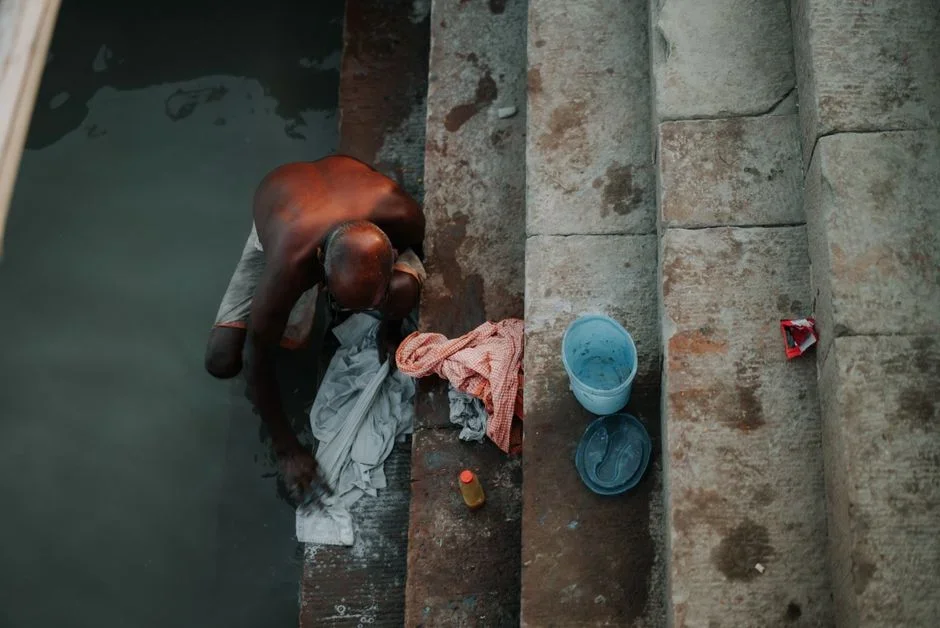
In the wash, that curd does not rinse away. It precipitates directly onto the fabric. On a cotton towel, whose whole job depends on thousands of tiny fibers wicking water inward, a coating of insoluble soap scum clogs those fibers. The towel feels stiff because it is literally crusted, and it stops absorbing because the passages that pull water in are blocked. That is your scratchy towel, explained.
WHY a real detergent does not do this: the sulfonate group on a synthetic detergent is far less willing to bind those hard-water minerals. The text is blunt about it — detergents "are more soluble in hard water, because the polar sulfonate (of detergents) is less likely than the polar carboxylate (of soap) to bind to calcium and other ions" (LibreTexts). The detergent stays dissolved, does its job, and rinses clean. This is the exact problem synthetic detergents were invented to solve.
LIMIT: the buildup is cumulative, not a one-wash event. A single load may look fine; it is load after load of deposit that finally turns a towel into a board. And the instinct to fix it by adding more soap backfires — more soap in hard water simply means more curd. The recipe was never the problem. The water was.
Why borax and washing soda don't save it
The fair rebuttal at this point is: "But the recipe already includes water softeners. Doesn't that cancel the problem out?" It is a good question, and the honest answer is: partly, and usually not enough.
WHAT they are: washing soda (sodium carbonate) and borax are builders — a completely separate class from surfactants. Builders are water softeners. They "remove the hard water ions through precipitation, chelation, or ion exchange" (LibreTexts). Their job is to pull calcium and magnesium out of the way so a cleaner can work.
WHY they don't fix it: a builder does no cleaning of its own. In a real detergent, "surfactants are responsible for most of the cleaning performance" — they emulsify the grime and cut the water's surface tension so it can wet the fabric (LibreTexts). The homemade recipe brings builders (borax, washing soda) and a soap, but no synthetic surfactant. So the softeners are propping up the wrong kind of cleaner. Even where they help, home ratios rarely soften hard water completely, so enough calcium and magnesium survive to keep forming scum. The builders blunt the problem; they do not erase it.
LIMIT: a note on borax specifically. It is a water-softening builder, and that is all this article says about it. It is not "chemical-free," it is not a food product, and it is not something to handle casually around children or pets. Store and use it like any laundry chemical, and do not read any health or safety endorsement into its appearance in a recipe.
The honest verdict, and a version that actually works
So should you stop buying laundry detergent? The honest answer refuses to be a blanket yes or no, because it flips entirely on the water test you ran earlier.

Soft water: go for it. Hard water: expect the problems above, and plan around them or skip it.
If your water is genuinely soft, the case for homemade soap is real. Without much calcium and magnesium to react with, the scum reaction largely doesn't happen, towels stay soft, and you get a cheap, simple cleaner. This is the crowd whose glowing reviews are completely honest — they just rarely mention that soft water is doing the quiet heavy lifting.
If your water is hard, you have two sane paths:
- Use a real detergent. It is the tool built for your water, and it will not curd up your towels. There is no shame in it.
- Commit to the DIY route with eyes open. Soften the water more aggressively than the basic recipe does, accept that you may need an extra rinse cycle, and plan to clean your machine periodically — because the same scum that coats towels can build up in the washer, which is why hard water is known to leave "detergent curds in the washing machine" (Penn State Extension). That same film in the drum is where a washer's musty smell usually starts.
To rescue towels that have already gone stiff, the goal is to dissolve and rinse out the accumulated soap scum rather than pile more soap on top. A hot wash with a water softener, or an acidic rinse (plain white vinegar in the rinse cycle is the common home approach), helps strip the mineral-soap deposit so the fibers can wick again. Never mix vinegar with chlorine bleach in the same load — the combination releases hazardous chlorine gas. Then decide whether to keep going with DIY or switch.
And here is the frugal reality check the "save money" pitch leaves out: a saving is only a saving if it does not cost you elsewhere. If the homemade jar shortens the life of your towels, forces extra rinse cycles, or means you are cleaning your machine more often, the math quietly tips the other way. Cheap on the shelf is not the same as cheap over a year. The same gap between a big promise and a thin payoff deflates plenty of viral money-savers, like the claim that you can pull free water out of thin air.
Common mistakes recap
- Calling it "detergent" and assuming it behaves like one — it is soap, and soap fails in hard water.
- Making a batch before ever testing your water hardness.
- Reading contradictory reviews as "some people did it wrong," when the real split is soft water versus hard water.
- Fixing stiff towels by adding more soap, which only deposits more scum.
- Treating borax as a harmless natural additive rather than a laundry chemical to store safely.
FAQ
Is homemade laundry soap really cheaper than detergent?
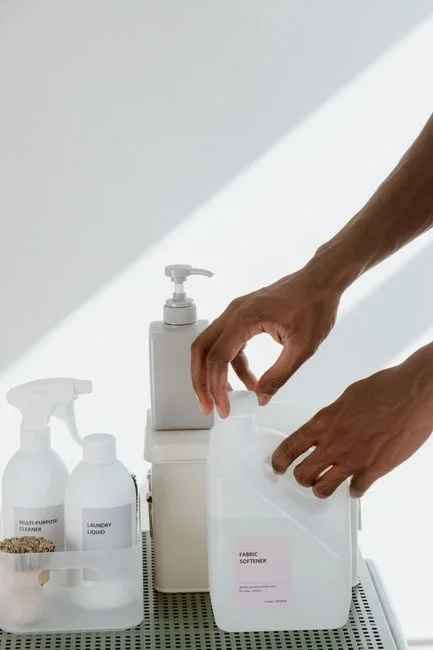
On the shelf, usually yes. Over a year, only if it does not degrade your towels or add extra rinse and machine-cleaning cycles. In soft water the saving tends to hold up; in hard water the hidden costs can eat it. Test your water before you count the savings.
My towels went stiff — did I use the wrong recipe?
Almost certainly not. Stiff towels are the signature of the hard-water scum reaction, where soap and dissolved calcium/magnesium form an insoluble deposit that coats the fibers (LibreTexts). The fix is softer water, not a different recipe — and definitely not more soap.
Can I just add extra borax or washing soda to make it work in hard water?
It helps at the margins but rarely solves it. Those are builders (water softeners), not cleaners, and home ratios usually leave enough calcium and magnesium behind to keep forming scum (LibreTexts). More reliable in hard water is a whole-house softener or simply using a real detergent.
How do I know if my water is hard?
Dip a hardness test strip under your tap, or read your utility's annual water quality report. Water at 7.0 gpg or above is hard, and above 10.5 gpg is very hard (Penn State Extension). That single number tells you which side of this article you are on.
The takeaway: the viral "homemade detergent" is really soap, and soap works in soft water but curds up your towels in hard water — so test your tap before you trade a small saving for a stack of scratchy towels. Spend less. Live more. — The Thrifty Almanac




0comments