

The patch went brown in August, a corner of the sod lifts like a loose carpet seam, and something dug up the yard overnight. Every store display gives one answer: buy the bag. Wait ten minutes.
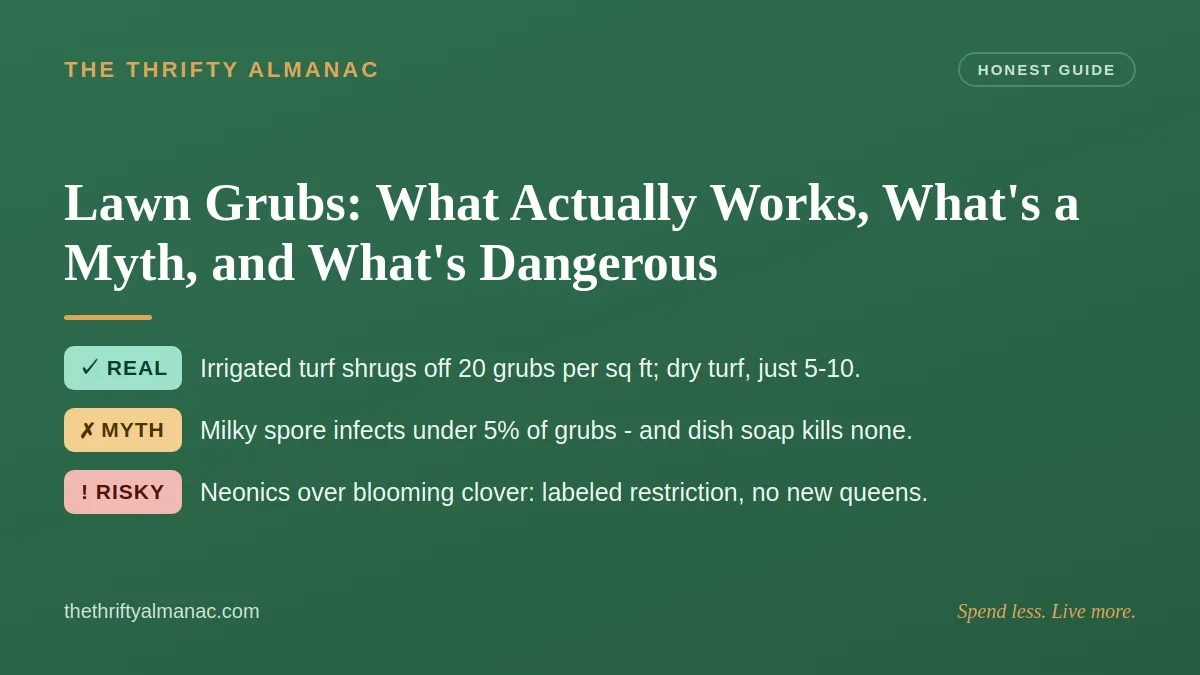
Most lawns treated for grubs never had a population worth treating, and most "grub killer" sold in fall lands on grubs too big for it to touch. Everything below comes from state extension bulletins and pesticide labels: count first, check the calendar second, pick a product last.
Before you buy anything, cut one square foot of sod
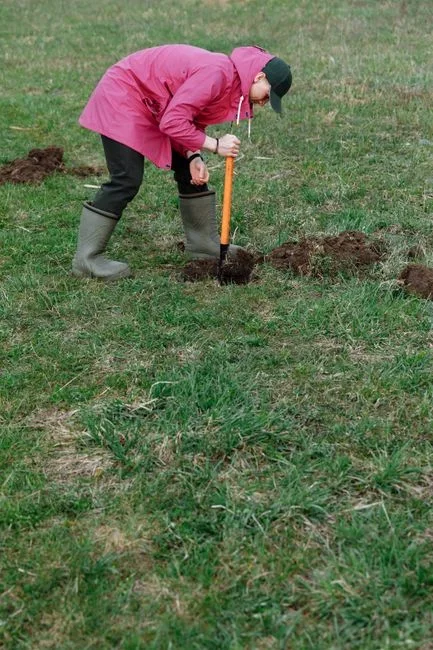
Michigan State Extension is blunt about the order: dig up a few squares of turf around the edges of the damage and look for C-shaped white grubs around the roots. Same rule as our approach to handling pests yourself — identify before you treat.
- Work at the margins of a damaged area, not dead center.
- Cut three sides of a one-square-foot area with a spade and pry the flap back.
- Take turf and soil two to four inches deep; count the fat, C-shaped larvae.
- Repeat at several spots.
- Lay the sod back, pack it in firmly, and water it.
If you find two, stop. Michigan State: "If there are enough grubs to cause visible damage to your lawn, you won't have any trouble finding them." The same service says plainly that not everyone needs to treat their lawn for grubs.
| Source | Treatment threshold, per square foot |
|---|---|
| Penn State | 5–10, depending on species |
| Michigan State | 5–10 without irrigation; up to 20 tolerated with it |
| Ohio State | more than 10 for annual species |
| Illinois | about 12 |
Limit: those figures are not interchangeable; they cover annual species like Japanese beetle and masked chafer. Ohio State puts black turfgrass ataenius grubs at 30–80 per square foot in spring and 15–40 in summer. Which grub you have moves the line.
The number that changes everything: do you water this lawn?
Here is the fact nobody selling product leads with. Michigan State: five to 10 grubs per square foot in a lawn without irrigation is high enough to cause issues, while irrigated lawns withstand up to 20. Same count, two lawns, two outcomes.
Grub damage is a root-mass problem. Drought-stressed turf does not have as large a root system, and MSU research found that leaving top growth of 3 or more inches develops a deeper one. Raising the mower deck costs nothing and beats another bag of miracle powder — the same reason we are skeptical of cheap fix-it-all lawn powders.
One honest trade-off: Colorado State notes Japanese beetle eggs and early larvae are very susceptible to drying, so letting the top couple of inches dry during July and early August kills many — while stressing the roots you are protecting. Pick one per season.
Four look-alikes, four free tests
Treating the wrong cause is the expensive mistake here, and it puts pesticide on a lawn that never needed it. Water deeply, wait a week; that free test separates two of four.
| What you see | Free test | Verdict |
|---|---|---|
| Spongy turf that rolls back like a piece of carpet | Cut the square-foot flap and count | Grubs, if the count clears your state's threshold |
| Broad browning in a dry spell | Water deeply; dormant turf greens up again | Drought dormancy — no insecticide |
| Brown in the sunniest, driest strips that stays brown after rain because it is dead | Part the turf when dry and above 75°F; look for 1/8-inch black bugs | Chinch bugs — a different product |
| Straw-colored spots 3 to 6 inches across with dark green perimeters | Note where the dog goes | Dog urine, often mistaken for dollar spot. NC State points to lactic acid, not just salt |
Reading the night shift: skunks, raccoons, and what the digging means
Skunks are nocturnal, so the soil disruption happens overnight, leaving shallow holes ringed with loosened soil; raccoons use their front paws like hands and flip pieces of sod.
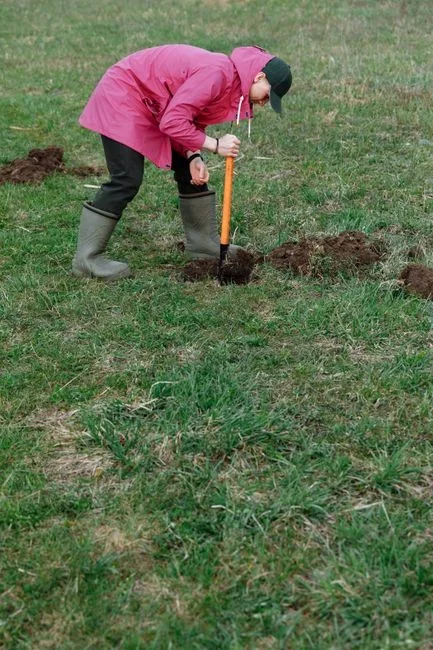
Then go back to the count. Both are after earthworms, grubs and other soil insects, so digging proves soil invertebrates, not a treatable grub population — and no extension source we found promises that killing grubs stops it. Raised tunnels or mounds instead point to a burrowing animal problem rather than an insect one.
Timing beats product choice
Michigan State: imidacloprid, thiamethoxam, clothianidin and chlorantraniliprole are preventive products that work very well on newly hatched grubs present in July, and do not work well on large grubs found from September to May. A bag bought in October is the wrong tool, not a weak dose.
| Window | What the grubs are doing | What actually works |
|---|---|---|
| April – mid-July | Adults emerge, eggs laid, hatch begins | Preventives: chlorantraniliprole April to mid-July; imidacloprid, thiamethoxam or clothianidin in June or July. Penn State's window is mid-June to mid-July |
| August – mid-September | Small grubs feeding near the surface | The curative window — Penn State treats August through mid-September. Nematodes fit here |
| Late September – late October | Grubs large, feeding slowing | Only carbaryl and trichlorfon, sliding from 20–80% control in September to 20–55% in late October |
| Late fall, winter | Grubs cease feeding and burrow deep as temperatures drop | Nothing. Repair turf, plan next summer |
| Spring, before early May | Large grubs feed briefly, then pupate | Carbaryl or trichlorfon only, and nothing curative after May 15. Illinois does not suggest spring treatment |
Residual length explains the windows: Ohio State reports up to 8 weeks for imidacloprid and thiamethoxam, up to 12 for clothianidin and chlorantraniliprole. Those dates are Pennsylvania, Michigan, Ohio and Illinois; elsewhere egg hatch moves, so pull your own state's bulletin.
Safety, every time: irrigate any product in according to specific label directions. For granular grub products MSU says water with 0.5 inches before you apply, then another 0.5 inches immediately after. Keep children and pets off treated turf until it is watered in and dry, per the label. If anyone swallows a pesticide, call Poison Control immediately; for other questions the National Pesticide Information Center answers at 1-800-858-7378.
Nematodes work — but they are alive, and you can kill them first
Penn State reports Heterorhabditis species usually perform better against white grubs than Steinernema; Colorado State applies them as a soil drench against Japanese beetle grubs, and UF/IFAS lists white grubs among the pests Heterorhabditis bacteriophora targets. When they fail, it is usually procedure.
- Time of day. Apply in early morning or evening hours — UF/IFAS notes they are susceptible to freezing, hot temperatures, desiccation and UV light. Colorado State prefers cool, overcast periods.
- Water immediately. Colorado State says they must be immediately watered into the turfgrass; UF/IFAS says keep the area wet for at least 8 hours.
- Keep watering. Ohio State asks for daily watering continued for a week.
Limit: they want the same small-grub window curatives do, and a midday application onto dry soil is money poured out. No daily watering for a week, wrong tool.
Three things that don't do what the internet implies
Milky spore. Penn State says milky disease suppresses Japanese beetle grubs but is of little or no value in controlling other scarab species, and may need three to five years to establish. Where it has long been widespread in the eastern US, Colorado State's assessment is less than 5% of grubs infected annually. Non-toxic and specific — and useless against this year's damage.
Dish soap. Wrong in both directions. Colorado State says larger insects including beetle larvae are generally immune to soap sprays, which have no residual effect; dish soaps also contain detergents that can injure plants, damage soil and contaminate waterways. Nor is it the counting method: Clemson assigns the soap drench to caterpillars, spittlebugs and mole crickets — surface dwellers. Grubs sit in the root zone and get the sod flap.
Blanket annual treatment. Michigan State calls it an erroneous philosophy: because European chafers and Japanese beetles are around, people assume they must treat every year — "This is not true." A preventive earns its place next summer only if you confirmed 10 or more grubs per square foot.
Mow the clover first: the pollinator step that is also the law
Penn State Extension: pesticide labels are legal documents, and using one inconsistently with its labeling violates federal law. Neonicotinoid labels carry pollinator restrictions, and a peer-reviewed turf study shows why: bumble bee colonies on clothianidin-treated weedy turf had delayed weight gain and produced no new queens, and clover nectar hit directly by spray held 171±44 ppb clothianidin.
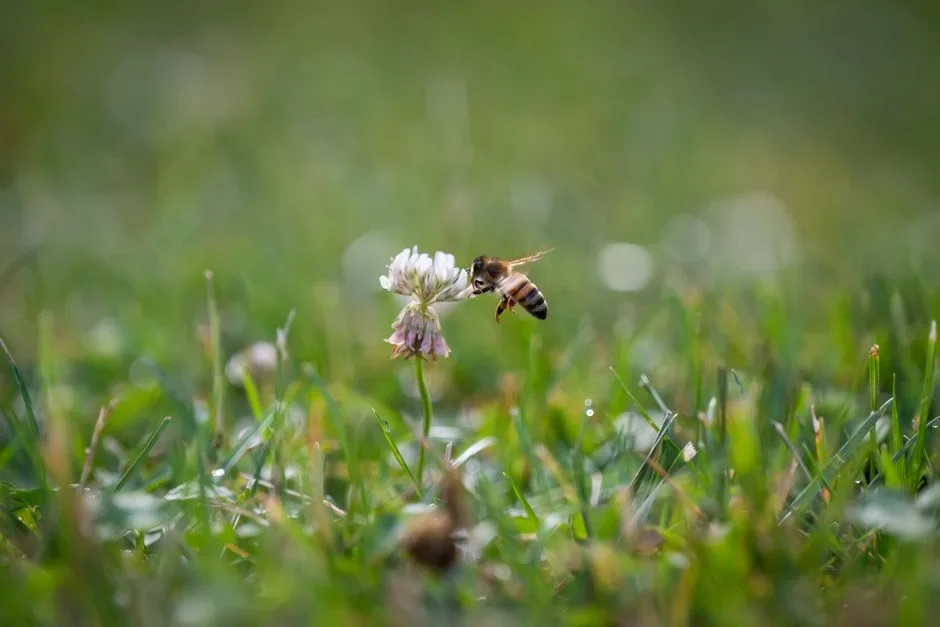
The fix costs nothing. In the same study, neither insecticide adversely impacted colonies on turf mown to remove the blooms present at treatment. So: mow off flowering clover and dandelions, treat, water in per the label. That study tested clothianidin and chlorantraniliprole, not every product on the shelf — read the pollinator statement on your own bag.
The honest tier list
| Tier | What belongs there |
|---|---|
| REAL | The square-foot count. Irrigation and a 3-inch mowing height. Preventives in June–July. Curatives or Heterorhabditis nematodes in August, watered in. |
| MYTH | Milky spore as a fix for this year's damage. Dish soap as a grub killer or a grub counter. "Treat every year because the beetles are around." |
| DANGEROUS | Spraying a neonicotinoid over blooming clover — a labeled restriction with measured colony harm behind it. Applying any pesticide off-label, a federal violation. |
Common mistakes
- Buying grub control in late fall, after feeding has already stopped.
- Treating a brown patch that was drought, chinch bugs or the dog.
- Counting two grubs and treating anyway.
- Applying nematodes at midday onto dry soil, then not watering after.
- Spraying a neonicotinoid over clover in bloom instead of mowing it off first.
FAQ
How many grubs per square foot is too many?
It depends on the grub and the extension service: Penn State says 5–10, Ohio State more than 10, Illinois about 12, and Michigan State 5–10 without irrigation but up to 20 with it.
Is it too late to treat in fall?
Mostly. Preventives do not work well on large grubs from September to May, and only carbaryl and trichlorfon do anything then — MSU puts control at 20–80% in September, falling to 20–55% in late October. After that grubs stop feeding and burrow deep.
When should I call a professional?
If damage recurs after correctly timed treatments, if you cannot identify which grub you have, or if someone recommends a restricted-use product. A licensed applicator can identify the species, which sets your threshold.
The takeaway: Cut one square foot of sod and count before you spend anything, because timing and irrigation decide this fight far more than which bag you buy. Spend less. Live more. — The Thrifty Almanac






0comments