

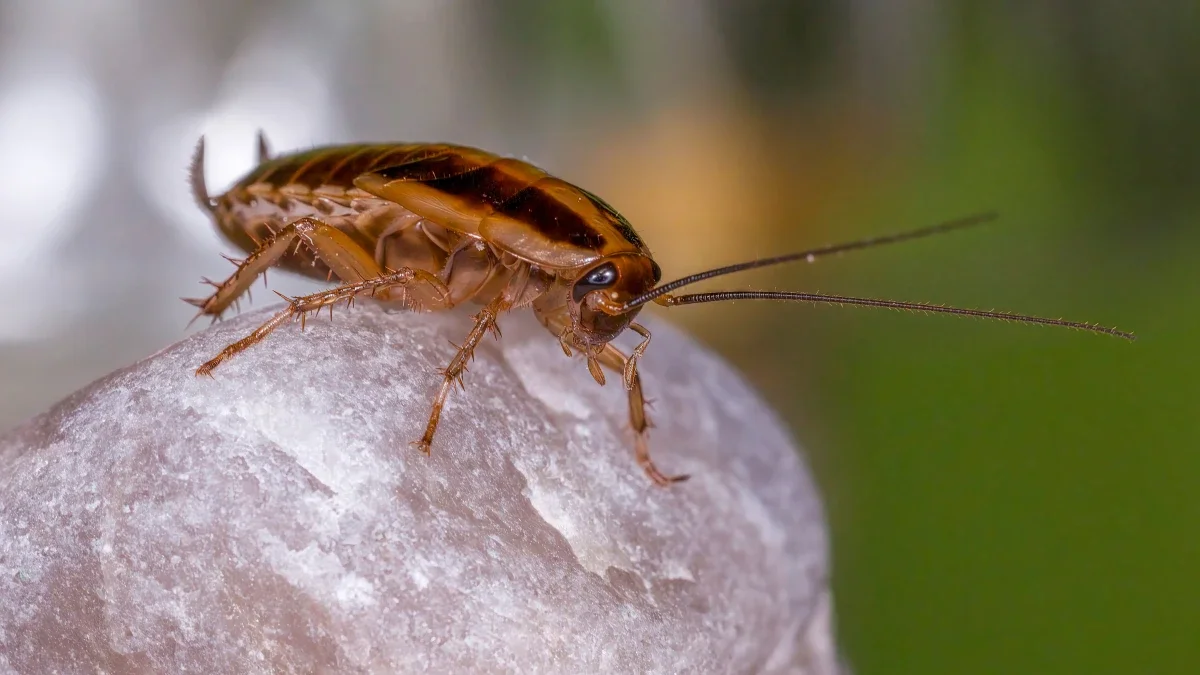
It's 2 a.m., you flip on the kitchen light, and something brown scatters for the gap under the cabinet. Your first instinct is to grab whatever spray is closest and call it a roach. But "roach" isn't one problem — it's at least two very different ones, and the species scuttling across your floor decides whether the money and effort you're about to spend actually works.
Here's the honest version the panic-buy skips: the two cockroaches you're most likely to meet indoors — the German and the American — live differently, breed differently, and get beaten by nearly opposite strategies. Treat an American cockroach like a German one and you'll pour weeks of effort into the wrong rooms. This is the first, cheapest step in any do-it-yourself pest-control plan: name the bug before you buy anything. Below is the plain-language, extension-sourced way to tell them apart.
The two-second test: size and color
| Feature | German cockroach | American cockroach |
|---|---|---|
| Size | ~½ inch (coffee-bean small) | ~1½–2 inches (large) |
| Color | Light, tan brown | Reddish-brown |
| Shield behind head | Two dark parallel stripes | Pale, yellowish margin — no stripes |
| Flight | Doesn't meaningfully fly | Can fly/glide (rarely, in warm weather) |
| Usually found | Kitchens, bathrooms, near food & warmth | Basements, drains, sewers, damp dark spots |
| The real problem | Breeds indoors → true infestation | Usually wanders in from outside |
The fast read: small and tan, think German; big and reddish, think American. The size gap alone settles most cases.
German: tiny. The University of California's IPM program lists the adult German cockroach at "0.5 inch" and "light brown" with "2 dark stripes on pronotum." Half an inch is about the length of a coffee bean — small enough to vanish into a hairline crack.
American: a giant by comparison. Penn State Extension describes the adult as "approximately 1½ inches long and reddish-brown, with fully developed wings that cover the entire length of the abdomen," and UC IPM puts the largest near "2 inches." This is the roach people call a "water bug" or "palmetto bug" because they can't quite believe something that big is just a cockroach.
Look at the shield behind the head

WHAT: When size is ambiguous — a young roach, a half-second glimpse — the pronotum, the flat shield just behind the head, is the tell.
German: two dark, roughly parallel stripes running front-to-back on an otherwise tan shield. UC IPM's identification is exactly that: "2 dark stripes on pronotum." Those twin racing stripes are the single most reliable German marker.
American: no stripes. Instead, a pale, yellowish border rims the darker reddish shield — what UC IPM calls "edges of pronotum are light colored" and Penn State describes as "faded yellow edges on the thorax." A solid reddish body with a light-colored margin, not two lines.
Does it fly?
WHAT: Flight is a surprisingly clean divider — and the source of a lot of late-night horror stories.
American: yes, it can. Penn State is blunt: "American cockroaches are capable of flying but rarely do in northern areas of the United States." In warm conditions a startled American can launch into a clumsy glide, which is why a "flying roach" sighting almost always points American, not German.
German: effectively no. German cockroaches have wings but aren't meaningful fliers — they sprint rather than take off. If it flew at you, you're very likely not looking at a German infestation.
Where you found it says even more

WHAT: Location is a strategy clue, not just an ID one — it hints at where the bug is breeding and where it came in from.
German — kitchens and bathrooms, close to food and warmth. UC IPM notes they "prefer food preparation areas, kitchens, and bathrooms," favoring warm spots around 70–75°F. A German cockroach on the counter almost always means a breeding population living inside — behind the fridge, inside the dishwasher's motor housing, in the seams of cabinets — the same warm, hidden spots worth checking and sealing first.
American — damp, dark, and lower down. Penn State places them in "dark, warm, and moist areas of basements and crawl spaces, and in and around bathtubs, clothes hampers, floor drains, pipe chases, and sewers." UC IPM adds "sewers, water meter boxes, storm drains." An American cockroach indoors is frequently a visitor that wandered up from a drain, basement, or crawlspace — not necessarily a colony living in your cupboards.
Why the ID changes your entire plan
This is where getting the name right pays off — the two species reward almost opposite tactics.
German = an indoor breeding problem. Fight it inside. The German cockroach is the one that becomes a true infestation, because it breeds fast and indoors. UC IPM calls it "the most common indoor species in California (and perhaps worldwide)" and "the most persistent and troublesome," and the math shows why: each egg case holds "about 30 young," and "a female may produce a new egg case every few weeks." The EPA likewise calls German cockroaches "the most common cockroach found in the United States." Beating it means relentless indoor sanitation plus targeted gel bait rather than foggers, and the patient thin-film boric acid method in the hidden voids where they actually live. Misting the open floor barely dents it.
American = usually an invader from outside. Seal and dry it out. The American cockroach breeds more slowly — UC IPM lists "about 12 young" per egg case — but don't wave it off: the same source warns "a female and her offspring can produce over 800 cockroaches in one year." Still, indoors it's typically arriving from a drain, basement, or sewer connection, so the winning move is exclusion and moisture control — cover floor drains, seal gaps around pipes, fix the damp basement corner, and cut off the humid harborage it needs. Deep-cleaning kitchen cabinets, the German playbook, does little against a roach that lives in the sewer and only visits. That mismatch is also why roaches can show up in a spotless home — the trigger is usually an entry route or moisture, not your dishes.
The reason it's worth getting right: the health angle

There's a quieter reason not to shrug off an indoor roach — especially the German kind that actually lives with you. Cockroaches are a documented asthma and allergy trigger. The EPA states plainly that "cockroaches and their droppings may trigger an asthma attack," and that "cockroach feces, skin sheddings and saliva can cause asthma and allergies, especially in children." Because the German cockroach is the species that breeds indoors in kitchens and bathrooms, it's the one most likely to build up those allergens right where your family breathes.
That's not a reason to panic, and it isn't medical advice — if someone in your home has asthma or another respiratory condition, questions about triggers belong with their doctor. But it is a solid reason to treat a confirmed German infestation as worth clearing properly rather than learning to live with. If you're weighing how much to worry, here's what the research says about whether cockroaches are dangerous.
The honest bottom line
Before you spend a dollar, spend two seconds on the ID. Small, tan, two stripes, up on the kitchen counter — German, and you're facing an indoor breeding problem to attack with sanitation and bait. Big, reddish, pale-edged shield, maybe a startling flutter, found near a drain or down in the basement — American, and your job is sealing entry points and drying out the damp spaces it drifts in from. Same word, two different fights — and now you know which one you're in. From here, the rest of the DIY pest-control toolkit finally has a target.



0comments