

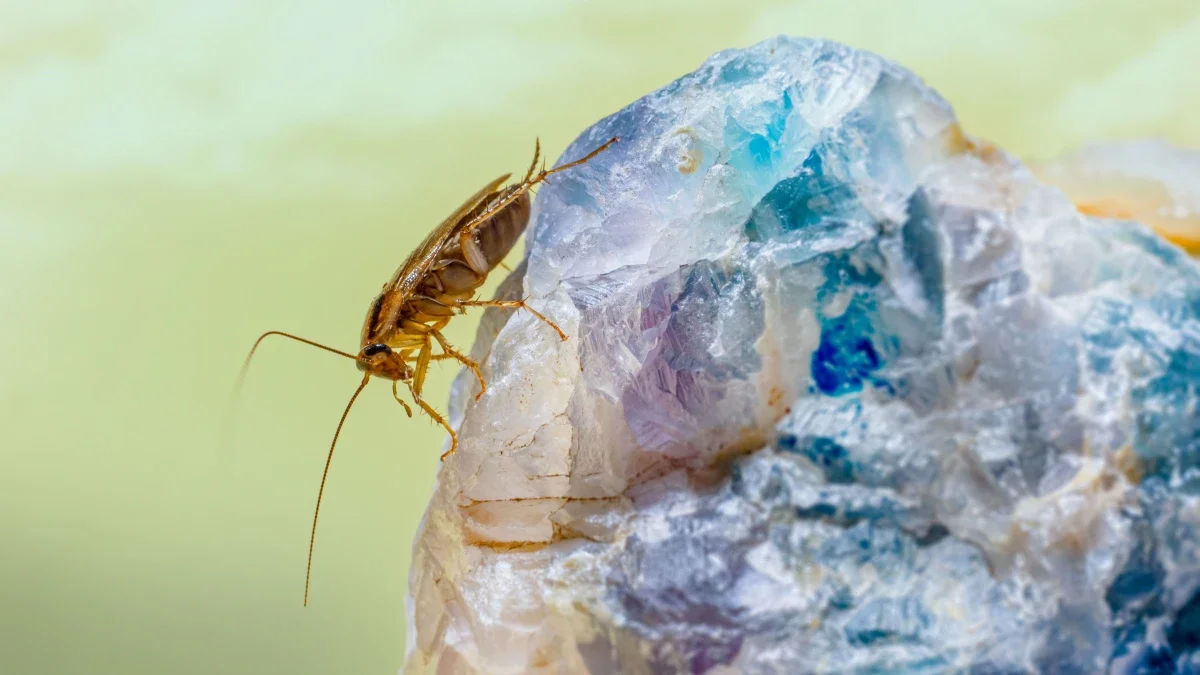
You keep a clean house. Counters wiped every night, dishes never left in the sink, floor swept before bed. Then one night you flip on the kitchen light and something the color of a coffee stain skitters under the refrigerator. Your first thought isn't "how did that get here" — it's the sinking, private assumption that you did something wrong, that a roach is a report card and you just got an F.
Here's the honest version the "just clean better" advice skips. Cockroaches don't grade your housekeeping. They follow four resources — water, food, warmth, and tight hiding spots — and a spotless kitchen with a slow drip under the sink, a stack of cardboard in the garage, and a warm fridge motor is, from a roach's point of view, beachfront property. According to UC IPM, "Cockroaches thrive in both indoor and outdoor environments where they can find food, water, and shelter." Clean surfaces address exactly one slice of that, and usually the least important one.
It's a resource map, not a cleanliness verdict
WHY: A roach moving in is an availability problem, not a character flaw. It needs a drink, a bite, a warm crevice, and a door. Give it all four and it settles in regardless of how the counters look. German cockroaches — the small tan ones that infest kitchens — are drawn to specific conditions. Penn State Extension notes that they "usually prefer a moist environment with a relatively high degree of warmth," and UC IPM adds that they favor "warm (70° to 75°F), humid areas." That temperature band is just room temperature with a little steam — every occupied home in America qualifies. The variable that actually decides whether they stay is whether the other three needs are met, and the biggest of those is water.
Water is the one they can't skip

WHAT: Moisture is the single strongest draw, because a roach can outlast a hunger strike but not a drought. Penn State notes that Oriental cockroaches — the dark, sluggish "water bugs" — can survive "for a month without food" but only "two weeks" without water. Food is a luxury; water is the leash. That's why the classic roach hotspots are all plumbing-adjacent: under the sink, behind the toilet, around the water heater, beneath the dishwasher.
HOW: Get a flashlight and look for standing dampness, not spilled food. A supply line that weeps a drop an hour, a P-trap that sweats, condensation on cold pipes, a bath mat that never fully dries — any of these is a water station. Penn State describes Oriental roaches as preferring "dark, damp, and cool areas such as those under sinks and washing machines, and in damp basements." UC IPM's first-line advice is blunt: "Fix plumbing and irrigation leaks to reduce sources of water." Cut the water and you've pulled the one resource they can't live without for long.
Food access isn't just crumbs on the counter
WHAT: This is where clean homes get blindsided. You can wipe every visible surface and still run an all-night buffet, because roaches eat things you don't picture as food. The grease film that fogs the wall behind the stove. The gunk in a kitchen drain. Pet food left in the bowl overnight. The starchy paste on a stamp or a cardboard box. Even the film inside a recycling bin.
HOW: The fix is aimed cleaning, not more cleaning. Penn State places German roaches "in kitchens (near dishwashers, stoves, and sinks) and in bathrooms of homes" — so degrease behind and under the appliances you never move, run a brush and hot water through drains, and put pet food away at night instead of leaving the bowl down. UC IPM's guidance is the same logic: keep trash in sealed containers and clean up residues, because "pesticides alone will not solve a cockroach problem." Starve the hidden spots and the visible counter barely matters.
Warmth and clutter build the hiding economy

WHY: Roaches are thigmotactic, a five-dollar word meaning they like to feel squeezed. UC IPM puts it plainly: they "hide in dark, warm areas, especially narrow spaces where surfaces touch them on both sides." A roach wedged in a crack with its back and belly both touching a surface feels safe; out in the open it feels exposed. That's why harborage — the count of tight, dark, warm hiding spots — often matters more than square footage of clean floor.
HOW: Cardboard is the worst offender, and it hides in plain sight. Corrugated cardboard is a triple threat: the fluted channels are pre-made crevices, the glue holding it together is edible, and the paper wicks and holds moisture. A stack of flattened Amazon boxes in the pantry is a roach apartment complex. UC IPM's advice is direct: "Remove piles of papers, cardboard boxes, and other clutter, especially in kitchens and bathrooms." Warm appliances stack the deck further — the motor housing behind a refrigerator or the underside of a dishwasher gives them heat and shelter in one spot.
How they actually get in (and why it feels sudden)
There are two routes, and neither has anything to do with how often you mop.
Route one is architecture. Every home has gaps where utilities pass through walls and floors, and roaches read those as doors. Penn State notes that Oriental roaches "frequently move into the home along plumbing (e.g., up through the floor from underneath the crawl space) and under door or window jams." UC IPM points to entry "if pipes are damaged, screens are missing, or water traps in drains are faulty." A dry floor drain — the one in the basement or laundry room that hasn't seen water in months — loses its water seal and becomes an open pipe straight from the sewer.
Route two is hitchhiking, and it's the reason a genuinely spotless newcomer can wake up to roaches. They ride in. Penn State is candid that "it is difficult to keep cockroaches from entering homes via boxes, grocery bags, suitcases, and the like." UC IPM tells inspectors to look for entry "from items being brought into the building, especially appliances, furniture, boxes, and items that were recently in storage." A used microwave off Facebook Marketplace, a secondhand bookshelf, the grocery bags from a store with a back-room infestation, moving boxes from a friend — any of these can smuggle in an egg case. One German cockroach egg case (ootheca) holds roughly 30 to 40 eggs, so a single stowaway is not one roach; it's a starter colony. If you're not sure which species you're dealing with, our guide on telling German from American cockroaches apart tells you what the hitchhiker likely wants.
The "suddenly" part often tracks the weather. Penn State observes that during dry spells "there may be considerable movement into structures, apparently in search of higher humidity," and the same pressure runs in reverse when a cold snap pushes outdoor roaches indoors for warmth. So a home that was fine all spring can light up in a single hot, dry week — nothing about your habits changed, the weather did.
| Common home roach | What pulls it in | Where you'll find it |
|---|---|---|
| German (small, tan) | Warmth + humidity, 70–75°F; hitchhikes in boxes and bags | Kitchens near dishwashers, stoves, sinks; bathrooms |
| Oriental ("water bug," dark) | Dampness and cool; enters via plumbing and drains | Basements, under sinks and washers, floor drains |
| American (large, reddish-brown) | Warm, humid spaces above ~82°F; sewers and crawl spaces | Ground floors, drains, basements, utility rooms |
Check these five spots before you blame yourself

- Under the kitchen sink. The most common ground zero: a slow supply-line drip plus a dark cabinet plus the gap where the drain pipe leaves the wall. Feel for dampness, look for a coffee-ground-like speckling (that's droppings).
- Behind and under the fridge and dishwasher. Warmth from the motor, grease that drifts back there, and condensation on the coils. Pull the appliance out once and look — most people never have.
- The bathroom. Around the base of the toilet, under the vanity, and along failing tub caulk where water seeps behind the wall.
- Basement, laundry, and floor drains. The water heater's drip pan, damp corners, and especially any floor drain that's gone dry and lost its seal.
- Storage clutter. Stacks of cardboard, paper grocery bags, and anything secondhand you brought in and haven't fully unpacked.
LIMIT: Finding one roach in these spots tells you the conditions are right, not that you have an infestation yet — and finding none doesn't fully clear you, because they're nocturnal and good at hiding. A single German cockroach in a kitchen, though, is worth taking seriously, since that species breeds fastest indoors.
Once they're in, prevention alone won't clear them
Removing water, food, and clutter is what keeps roaches from moving in and what starves a new arrival before it becomes a colony. But if a population is already established — you're seeing them in daylight, or finding egg cases — sealing leaks won't evict the ones already breeding behind the dishwasher. At that point you pair the environmental fixes with a slow-acting bait they carry back to the harborage. Our walkthroughs on using boric acid the right way and the honest comparison of gel bait versus foggers cover which approaches actually reach the hiding spots and which just scatter the colony deeper into the walls.
The honest bottom line
A roach is a resource verdict, not a hygiene one. It showed up because something in the house offered water, a bite, warmth, and a crevice — most likely a leak you couldn't see and a stack of cardboard you stopped noticing. The people who stay roach-free aren't the ones who scrub hardest; they're the ones who fixed the drip, sealed the gap around the pipe, and stopped storing boxes in the kitchen. UC IPM's summary holds for prevention and cleanup alike: "Good sanitation and exclusion are important for effective control; pesticides alone will not solve cockroach problems." Start with the five spots above, cut the water first, and read the rest of the DIY pest control guide before you buy a single product. The bug isn't judging you — it's just thirsty.






0comments