

Most dishwasher advice came from kitchen tables, not a lab. Some is right, some is nonsense, and one popular combination can hurt you.
Below, every common claim is sorted into WORKS, MYTH, or DANGEROUS, with the source named on each line and a note where the evidence runs out. For the rest of the house, see the home hacks guide.
The three-tier verdict, up front
| Claim | Verdict | Why | Source |
|---|---|---|---|
| Scrape, don't pre-rinse | WORKS | Rinsing first wastes water and energy | ENERGY STAR, EPA WaterSense |
| Keep rinse aid topped up | WORKS | Water sheets off, so no spots | GE Appliances |
| Run the hot tap first | WORKS (conditional) | Long pipe runs only; inlet needs 120°F | GE Appliances |
| Clean the filter by hand | WORKS | Food clogs filters, hurting wash | GE Appliances |
| Crack the door at the end | WORKS | Releases moist air; replaces heated dry | GE Appliances |
| Only run full loads | WORKS | Same water and energy either way | ENERGY STAR |
| Vinegar in the rinse-aid slot | MYTH | That slot needs a surfactant, not an acid | Mechanism mismatch |
| The tablet cleans the machine | HALF TRUE | Tub self-cleans; filter and scale do not | GE Appliances |
| Packing it fuller cleans better | MYTH | Overloading blocks water from dirty dishes | GE Appliances |
| Bleach product plus an acid | DANGEROUS | Acid plus hypochlorite makes chlorine gas | Poison Control |
| Cast iron, wood, thin plastics | DANGEROUS (to your stuff) | Heat and detergent strip, warp, melt | The item's care label |
WORKS: scrape, don't rinse — with one carve-out
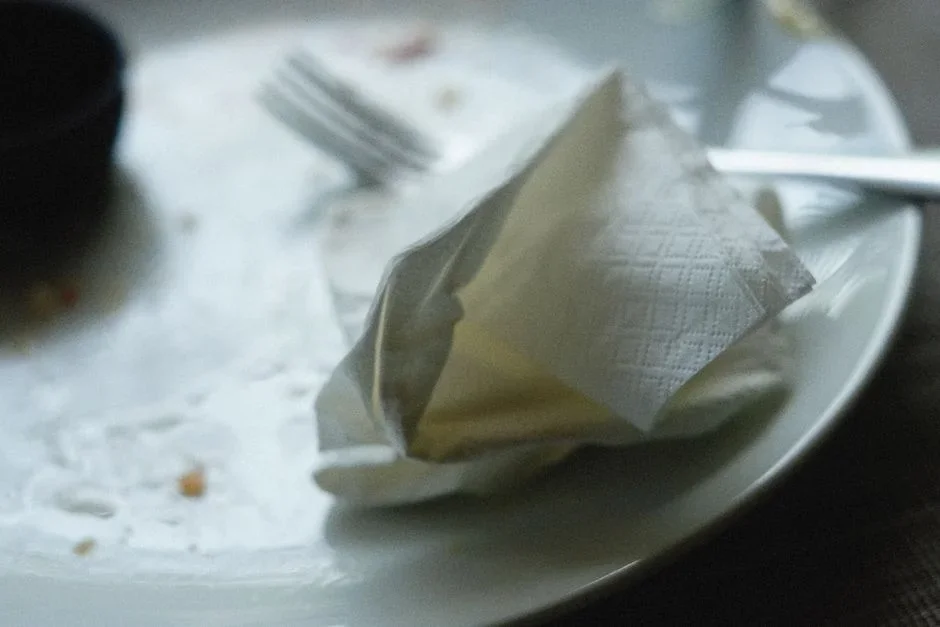
Three sources agree. ENERGY STAR: "Scrape, don't rinse! ENERGY STAR certified dishwashers and today's detergents are designed to do the cleaning." Its product page adds that rinsing first increases water and energy used. EPA WaterSense: scrape your plate instead of rinsing it. Virginia Cooperative Extension prices the habit: pre-rinsing "can use up to 20 gallons of water."
The mechanism is not magic. ENERGY STAR credits certified machines with soil sensors that detect whether water coming off the dishes is dirty or clean, plus better filtration and jets. Peer-reviewed work on detergent enzymes splits the labor: protease takes protein, amylase starch, lipase fat.
Two limits. The popular "enzymes need food to activate" line has no authoritative source, and Virginia Tech's 20 gallons is an upper bound on a habit, not a per-load saving. The carve-out is ENERGY STAR's own: if dishes sit overnight, use the machine's rinse feature, which "uses a fraction of the water needed to hand rinse."
WORKS: rinse aid is the drying step, not an upsell
Frugal instinct says rinse aid is there to sell a second bottle. GE's documentation describes physics: "A rinse agent breaks down the surface tension of water, improving water flow off the dishes." GE calls it important especially in hard water, and names an empty dispenser a cause of spotting.
Water either beads up and dries in place, leaving its mineral behind, or sheets off and carries it away. Sheeting makes skipping heated dry realistic, so the bottle buys an energy substitution, not cosmetics — the logic behind the economics of pantry-staple cleaning. Two limits: nobody publishes what it saves, and while GE says rinse aid matters "especially" in hard water, no source confirms soft-water homes can skip it.
WORKS: hot tap first, filter regularly, door open at the end
Hot water, but only if you need it
GE specifies that water entering the dishwasher "must be at least 120 degrees Fahrenheit and not more than 150 degrees Fahrenheit", its drying guide narrowing that to 120 to 140°F. Running the sink hot first fixes one problem: a long pipe run of cold water. Beside the tank, it is a ritual.
Do not chase it at the tank. The Consumer Product Safety Commission recommends setting water heaters no higher than 120°F, warning that 150-degree water burns skin in about a second — a real risk to small children and older adults. GE's minimum and the CPSC's maximum are the same number: purge the line.
The filter is not optional
GE says "Excessive amounts of food may clog the Dishwasher filters and reduce wash performance" and that filters should be cleaned monthly. Its filter guide says every other month or more, depending on usage — both figures are GE's, so pick by how hard you run the machine. Rinse with warm soapy water and a sponge; GE warns scouring pads can damage it. Clear blocked spray-arm jets with a paper clip or tweezers.
Open the door when it finishes
GE's instruction for skipping heated dry: open the door several inches immediately after the dishwasher turns off, letting warm, moist air escape. That keeps air-drying from meaning damp glasses, and ENERGY STAR lists the ability to turn off heated dry among options worth having. The limit: no agency publishes what air-drying saves. The repeated "15%" traces only to blogs. Direction, yes. Number, no.
WORKS: full loads — and why "full" is not "packed"
ENERGY STAR: "Dishwashers use about the same amount of energy and water regardless of the number of dishes inside, so run full loads whenever possible." GE pushes back, telling you to check the loading so water can reach all soiled surfaces, and not to overload.
Both are true; most articles pick one. Fill every slot, but nothing should nest inside another item, overlap a neighbor, or lean on a spray arm. If water cannot reach a surface, no cycle cleans it. The limit: rack layouts differ, so use your manual.
MYTH: vinegar in the rinse-aid compartment
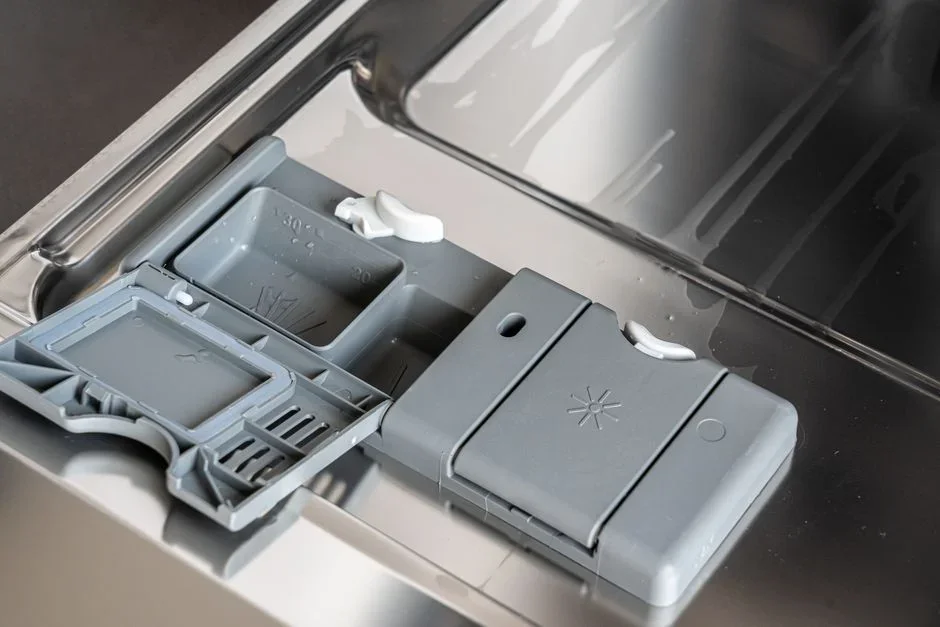
The most-repeated hack here, and the verdict beats a flat no. Rinse aid lowers surface tension, a surfactant's job. Vinegar is an acid, so it cannot do that job, and no manufacturer endorses it there.
GE recommends vinegar for a different job: "Pour 1 cup of vinegar into the Dishwasher just after the detergent cup opens and let the Dishwasher complete the wash cycle." Repeatable several times a year, with citric acid named as an alternative. So the rule is not "never use vinegar." It is right product, wrong compartment: vinegar goes in the tub, not the dispenser.
One claim got cut: that vinegar eats gaskets, seals and hoses has no manufacturer, .gov or .edu source. Vinegar draws the same over-claiming as the fizzing baking soda trick, where the real chemistry disappoints. The tub treatment has one prerequisite, below.
HALF TRUE: "the tablet cleans the machine"
Partly right, and worth conceding: GE states that "The Dishwasher interior is self-cleaned through normal use and operation." Normal cycles miss two things, though. The filter needs your hands, on the schedule above. And hard-water film needs an acid or a dedicated product — GE says a dishwasher cleaner will break up mineral deposits and remove hard water film and stains. Diagnose by symptom: grit and a smell mean the filter; cloudy film means minerals. No brand required — GE gives the vinegar and citric acid routes itself.
DANGEROUS: never put a bleach product and an acid in the same machine
Poison Control states it directly: "When an acid is mixed with a hypochlorite solution (such as bleach), chlorine gas is formed." Bleach with an ammonia-based cleaner makes chloramine gas. Exposure burns the eyes, nose and throat; worse exposure brings lung damage, wheezing, chest pain and pneumonia. If it happens, leave the area immediately and breathe fresh air. In the US, Poison Control is 1-800-222-1222 — call 911 if anyone struggles to breathe.
Some dishwasher detergents are chlorine-bleach-based, and a hot sealed cabinet is the last place you want that meeting an acid. So the vinegar or citric acid treatment gets a cycle by itself: no detergent, no bleach-based cleaner, nothing else, and never to "boost" a bleach product. Check the label for hypochlorite first, and ventilate the kitchen if unsure what ran last. The limit: Poison Control documents this at household level; no dishwasher-specific case turned up. It is chemistry that applies inside the machine, not a reported incident.
DANGEROUS: the items that come out ruined
- Cast iron — detergent and heat strip the seasoning, inviting rust.
- Most aluminum — discolors and dulls.
- Wooden boards and wood-handled tools — absorb water, warp and crack.
- Non-stick and sealed cookware — unless the maker says otherwise.
- Thin or unmarked plastics — warp or melt near the heating element.

The money question: is the dishwasher cheaper than the sink?
- ENERGY STAR: a new certified machine uses under half the energy of hand washing, saves 8,400 gallons a year, and cuts bills about $220 yearly and $3,300 over its lifetime.
- ENERGY STAR: a certified standard-size machine costs about $50 a year to run and is roughly 30% more water efficient than standard.
- Virginia Cooperative Extension: about 4 gallons per cycle qualified versus 6 non-qualified, at least 41 percent less energy.
Now the qualifier nobody includes. Virginia Tech's annual figure is 5,000 gallons, $40 in utility costs and 230 hours of your time — ENERGY STAR's direction, five times smaller in dollars, because the two use different baselines. Both assume US rates and a wasteful sink routine. A careful two-basin hand washer who never runs the tap beats a half-empty dishwasher, which loops back to the full-load rule.
Common mistakes
- Rinsing every plate under a running tap.
- Letting rinse aid run empty, then blaming the machine.
- Never touching the filter, then assuming the machine is dying.
- Putting vinegar in the dispenser, or into a cycle holding bleach-based detergent.
- Turning the water heater above 120°F to chase a better wash.
- Cramming in one more bowl so it overlaps the plate behind it.
FAQ
Does my dishwasher sanitize dishes?
Only on a sanitize cycle, which heats the final rinse well beyond a normal wash and costs more energy. No source says an ordinary cycle sanitizes, or that sanitize works as maintenance. If someone at home is immune-compromised, ask a doctor.
Is a hotter cycle always a better clean?
Not necessarily. Researchers formulating an enzyme detergent found their protease and amylase peaked at moderate heat, concluding "the best energy-saving working temperature of these ADDs is 50 °C." That was a research formulation, not supermarket tablets — reason to doubt the maximum-heat instinct, not a spec.
Why do my dishes come out with sandy grit?
GE says "A sandy grit left on dishes is typically from water not being hot enough to dissolve liquid or dry detergent." Check water temperature first, then the filter.
The takeaway: Scrape instead of rinsing, keep rinse aid in the dispenser and vinegar in the tub, clean the filter by hand, and never let an acid meet a bleach product inside a hot sealed cabinet. Spend less. Live more. — The Thrifty Almanac






0comments