

You scrub the shower on Saturday. By Thursday the lines between the tiles are gray again — and the tile itself still looks fine. That gap is why most grout advice fails by the second week.
Grout is not a hard surface with dirt on it. It is porous cement, and the stain is inside it. Once that clicks, the honest ranking sorts itself out: physical removal first, alkaline chemistry second, and a third category that isn't cleaning at all.
Why the grout goes black and the tile beside it doesn't
The Tile Council of North America, the tile industry's standards body, says it plainly: cementitious grout "is porous – it can absorb a stain." Glazed tile is essentially non-absorbent. Soap film, body oil and mold spores land on both; only one holds on. LATICRETE is equally blunt — "no cement based grout is self-cleaning or absolutely stain-resistant."
So a cleaner that reaches only the top skin of the joint looks like it quit by midweek. It never got in. That one fact reorders the whole shelf of hacks — the way our fix-it-yourself playbook starts with the material, not the product.

What works: a stiff brush, hot water and detergent
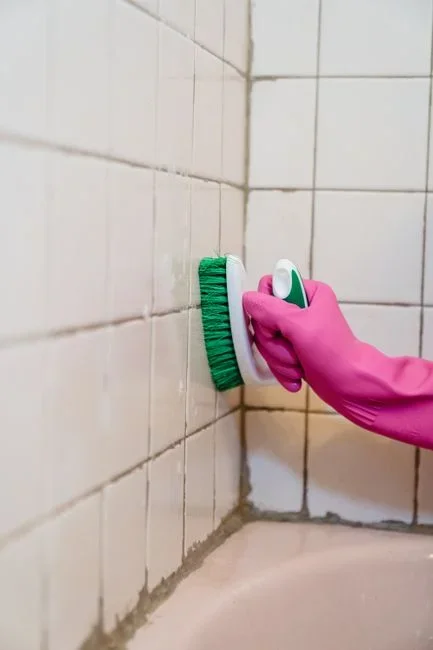
The government answer is boring, and correct. Minnesota's health department: "Scrub surfaces with a stiff brush, hot water and household detergent." The EPA agrees — "Scrub mold off hard surfaces with detergent and water, and dry completely." Work the bristles along the joint, not across the tile. The drying is the half everyone skips.
Here is what nobody explains: killing is not removing. OSHA states that "the mold must be removed, since the chemicals and proteins… are present even in dead mold," and the EPA agrees chlorine bleach "is not recommended as a routine practice during mold cleanup." A bleached joint looks clean and is still full of what made it dark — the removal-first logic behind any serious mold cleanup plan, not just grout.
For what the brush leaves behind, the rule is pH, not brand. TCNA recommends "an alkaline cleaner… than an acid based cleaner," noting that cleaners which lift a clothing stain should work on grout — the family oxygen bleach and enzymes belong to. That is a category, not a podium finish: nobody has tested grout cleaners head to head, and no authority publishes a dwell time. Spot-test "a small inconspicuous area" first, one product at a time.
The honest tier list
| Method | Verdict | The limit |
|---|---|---|
| Stiff brush, hot water, detergent, dried | REAL | Slow; the only method agencies endorse |
| Alkaline, non-acidic cleaner (oxygen bleach, enzymes) | REAL, by category | Never tested head to head; no dwell time |
| Diluted bleach on moldy silicone caulk | REAL, with conditions | Ventilation, gloves, goggles, no second product |
| Baking soda and vinegar paste | MYTH | The two cancel out; salt water is left |
| Vinegar as the weekly routine | MYTH, and damaging | Acid dissolves the cement matrix over time |
| Steam cleaner as the cure | MYTH | Loosens soil; won't remove embedded growth |
| Vinegar or acid cleaner with (or after) bleach | DANGEROUS | Makes chlorine gas — worst in a small bathroom |
Myth 1: the baking soda and vinegar fizz
The bubbles are the two ingredients destroying each other. Physicists at the University of Illinois describe a plain acid-base swap leaving sodium acetate and carbonic acid — and carbonic acid is "really also just dissolved CO2 and a water molecule." The fizz is carbon dioxide leaving, not cleaning power arriving.
TCNA says the quiet part out loud: "As baking soda and vinegar react, so do grout and vinegar." The limit, fairly: baking soda is a mild abrasive, so scrubbing the paste does move soil. But abrasion is the brush's job, and the brush does it without spending both ingredients — the same reason that fizz fools almost everyone elsewhere in the house.
Myth 2: vinegar is the safe, natural grout cleaner
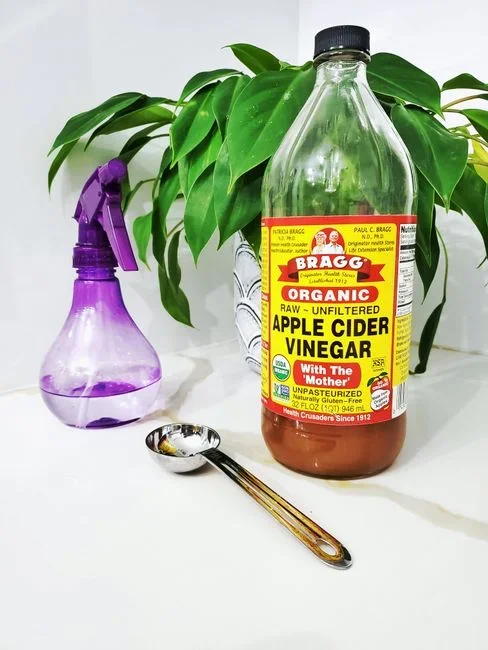
This one is dose-dependent, and saying so beats another absolute rule. Cement "is alkaline based and is dissolved by acids," which is why grout manufacturers don't advocate them; heavy acid use can end in a regrout. Penn State's civil engineering notes give the mechanism: acid reacts with the calcium hydroxide in cement paste to make soluble calcium salts, "easily removed… thus weakening the paste's structure." Acetic acid — vinegar's active ingredient — is named among the more aggressive ones.
The lab number needs its conditions attached. Portland cement mortar immersed in an "acetic acid solution of 1.0 molar concentration (pH = 2)" lost 17% of its mass by 44 days, with the deteriorated layer roughly 4 mm deep. That is a harsh accelerated test, far beyond one wipe of kitchen vinegar, and nobody has tested household-strength vinegar on grout over years. So the answer is frequency, not panic: an occasional diluted pass is no emergency; vinegar as your weekly cleaner is how a joint goes soft and sandy. That is why cleaning guides and tile-industry advice seem to contradict each other. TCNA adds that acid strong enough to work "can strip some color out of grout."
The mistake that sends people to the ER
The two myths above put vinegar in the bathroom. Bleach is already under the sink. Poison Control: "You should never mix vinegar with chlorine bleach. The combination creates highly irritating chlorine gas." Any acid plus a hypochlorite does it, and the gas "can stay in the air for just a few minutes to several hours." Acidic toilet-bowl cleaner counts; so does ammonia window cleaner with bleach, which creates chloramine gas.
The sequencing trap catches careful people: product A, a lazy rinse, then product B is still mixing. The rule is "never mix household cleaning products," and it says to ventilate "especially small spaces such as bathrooms," with gloves and goggles for strong cleaners. A lungful brings "burning of the eyes, nose, and throat, as well as a cough." Leave, breathe fresh air, and in the US call Poison Control at 1-800-222-1222; real trouble breathing is a 911 call.
Myth 3: the steam cleaner will fix it
It is the purchase people make once the cheap hacks fail. In a Journal of Occupational and Environmental Hygiene comparison on mold-contaminated household contents — wood and carpet, not grout, so read it as directional — "steam cleaning was unsuccessful in inactivating any of the tested mycotoxins" and eliminated no fungal spores completely, while bleach-and-detergent washing was more effective overall.
The second failure is structural. A crumbled joint cannot be topped up — TCNA: "generally it is not possible to grout directly over the old grout without cutting the old grout out." Steam loosens surface soil with no chemicals — a helper, not a cure, and it rebuilds nothing.
When it isn't dirt at all
Black grout is three problems wearing the same color, with three price tags.
1. Surface soil and mold in porous cement. Brush and detergent take it off, and it stays off for weeks.
2. Mold that has infiltrated the pore structure. OSHA notes "molds can infiltrate porous substances… fill in empty spaces or crevices," and the EPA agrees mold in porous material can be impossible to remove completely. That is a regrout, not a cleaning job.
3. A water problem you can't see. The EPA: "If you clean up the mold, but don't fix the water problem… the mold problem will come back" — and it lists hidden mold inside walls around leaking pipes. Minnesota advises periodic checks of plumbing, roofing and gutters.
The home test is recurrence speed: scrub, dry completely, wait a week. Black back within days points at moisture — a prompt to investigate, not a diagnosis, and neither the EPA nor CDC supports identifying mold by look. The EPA says "if the moldy area is less than about 10 square feet… you can handle the job yourself" (US guidance); above that, call a professional.
Grout vs caulk: two materials, two jobs
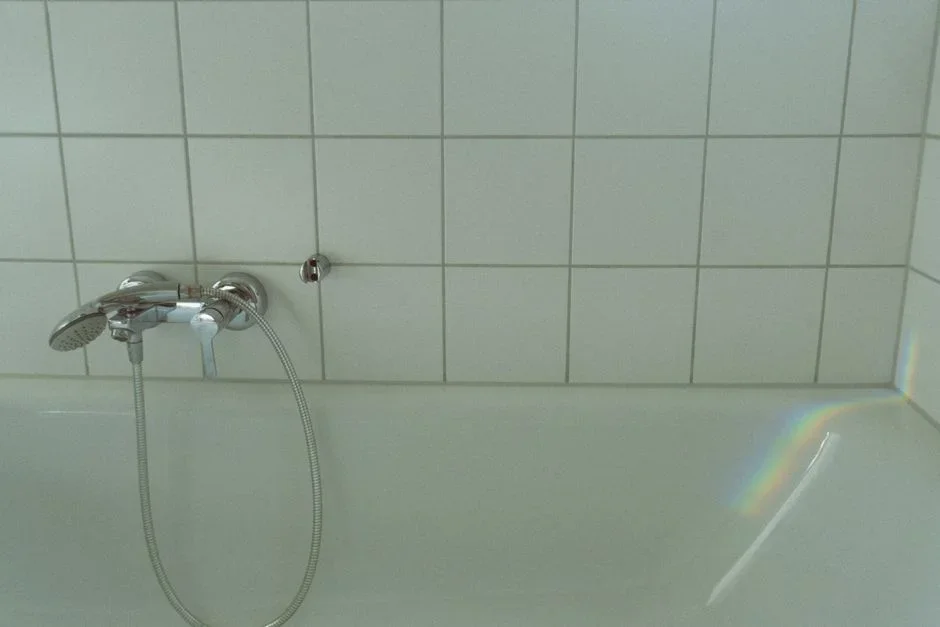
The corner line that keeps going black usually isn't grout. The tile industry treats inside corners as movement joints, which TCNA says exist "to eliminate stresses that can occur between the substrate and the tile," specified more often where moisture is expected. They get flexible sealant, not grout — which is why they stain, and why they are built to be replaced rather than scrubbed.
One popular warning is backwards: bleach does not eat silicone. Sealant maker GE says to "mix one part bleach with three parts water in a spray bottle" and leave it several minutes on moldy caulk — with their own reminder that "you should never mix different cleaning solutions." Fan on, door open, gloves and eye protection, nothing else in the room. If the stain won't lift, cut the caulk out and replace it. The EPA is explicit: "Do not paint or caulk moldy surfaces."
Staying clean is a ventilation problem
The cheapest fix isn't a product. The EPA advises keeping "the indoor humidity below 60%, ideally between 30 and 50%" (US guidance) and to "run the bathroom exhaust fan or open the window when showering," vented outdoors, not into the attic. For mold that keeps returning in the shower, its answer is more ventilation plus more frequent cleaning — in practice, the fan running a while after you get out and a squeegee along the joints. Nobody has quantified how many weeks that buys — mechanism, not a promise.
Common mistakes
- Wiping the top of the joint instead of scrubbing into it, then leaving the wall wet.
- Making vinegar the weekly routine. Occasional and diluted is fine; standing is not.
- Using two products back to back in a small bathroom without rinsing between.
- Cleaning the same spot monthly without asking where the water comes from.
FAQ
Is oxygen bleach better than regular bleach for grout?
It sits in the safer family — alkaline, not acidic — the split TCNA points to for cement grout. But nobody has tested it against a plain alkaline detergent, so treat "best cleaner" claims with suspicion. Ignore the soak times online too: published dwell figures are for laundry fabric, not cement.
How do I know if it's mold or just soap scum?
By behavior, not appearance — neither the EPA nor CDC supports identifying mold by look. Scrub, dry completely, then watch the calendar: ordinary soil stays gone for weeks; something back within days points at moisture. Cloudy patches on the shower door are a separate problem with its own answer — that is hard-water mineral film, and sometimes etching no cleaner will lift.
When should I stop cleaning and call someone?
When the joint is crumbling rather than dirty, when black returns within days of a proper clean and dry, or when the area passes roughly 10 square feet. Three calls: a regrout, a plumber, a remediation contractor.
The takeaway: Grout is porous cement, so the black comes out with a stiff brush, detergent and a dry wall — not with fizz, not with vinegar, and never with two cleaners in the same small room. Spend less. Live more. — The Thrifty Almanac






0comments