

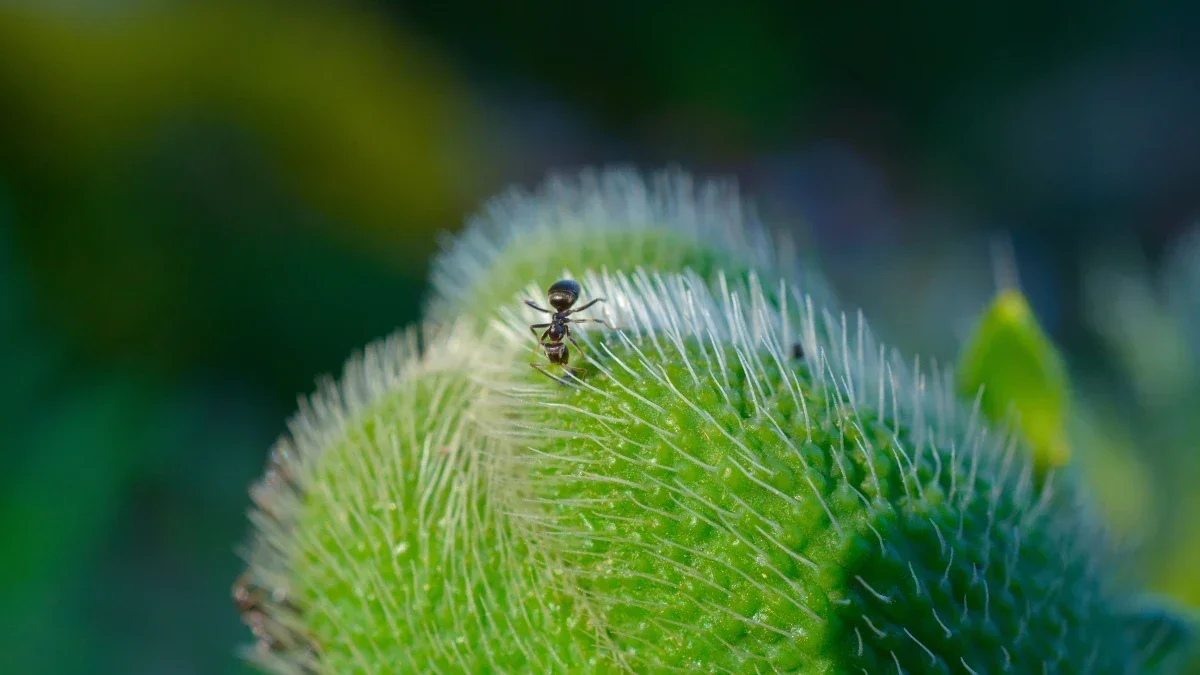
You wiped the counter, sprayed the line of ants marching toward the sugar bowl, and felt pretty good about it. Two days later they're back — same trail, same spot, like nothing happened. That's not bad luck, and it usually isn't a bad product. Ants come back for a short list of specific reasons, and once you can name yours, the fix is simple. Here's how to diagnose why the reruns won't stop — the same do-it-yourself, spend-little approach behind tackling household pests on your own — and where to get the step-by-step cure.
The one fact behind every rerun: messengers vs. the colony

Start with the one fact that explains everything else: at any moment only a small fraction of the colony is out of the nest. University of Minnesota Extension puts it plainly — killing foraging workers has little effect, because most of the colony (including the queen) never leaves home, and the queen is the one you have to reach (UMN Extension). UC's statewide IPM program agrees: the foragers you see typically represent only a small proportion of the colony (UC IPM).
As long as the queen is alive and fed, the colony rebuilds its foraging crew as fast as you can wipe it out. So when ants keep returning, it means one thing: nothing you've done has reached the queen. The reasons below are the usual culprits — work down the list, because your rerun is almost always one or two of them.
The hidden reasons ants keep coming back
1. Something is still feeding them. If a crumb trail, a greasy stovetop, open pet food, or a dripping faucet is still on offer, ants have every reason to return. UC IPM calls eliminating food and water the first and most important step, and flags fixing leaky faucets, since water attracts ants (UC IPM). Close the buffet and your bait becomes the most attractive thing in the room — the full routine is in the step-by-step battle plan.
2. You're spraying, not baiting. A can of spray feels productive because ants die on contact — but it kills only the disposable messengers. UC IPM is direct: spraying around the foundation won't provide permanent control, because it kills only foraging ants without killing the colony and the queens (UC IPM). Worse, a barrier spray outside can seal ants in rather than out (UC IPM). The fix is the opposite of instinct: leave the live ants alone and let them carry a slow bait home to the queen.
3. Your bait is too strong — or the wrong flavor. Homemade borate bait only works weak. UC IPM warns that once a borate bait climbs above 1% it becomes repellent and ants avoid it, so a heavy hand makes the bait less effective, not more (UC IPM). Flavor matters too: sweet baits pull Argentine ants year-round while protein baits work mainly in spring, and some ants prefer grease (UC IPM). If a sugar bait sits untouched, switch to protein. The battle plan has the exact 0.5–1% recipe most people get wrong.
4. You sprayed around the bait. This is the number-one cause of "bait doesn't work." People set bait, then spray "just to be safe" — and the repellent quietly cancels it. UC IPM is blunt: don't use any insecticide sprays while you are using baits (UC IPM). Spray near the bait and ants avoid the whole zone, so it never gets carried home. To clear a visible line without wrecking the plan, wipe it with soapy water — which removes the scent trail (UC IPM).
5. You sealed the cracks too soon. Caulking is the right last move — but do it last. Seal an active, hungry colony inside and it simply chews a new path. Bait first, wait for the traffic to die down, then seal; those same few dollars of caulk and weatherstripping do double duty sealing the gaps mice slip through before winter.
6. The nest is in your walls — carpenter ants. This is the one case where bait-and-wait is the wrong call, because the nest is somewhere you can't bait it. Carpenter ants don't eat wood like termites; UC IPM explains they excavate wood to nest, often starting where there's water or wood-decay damage (UC IPM Pest Notes) — a carpenter ant problem is usually a moisture problem in disguise. Tell-tale signs, and the quickest way to tell them from ordinary kitchen ants: big dark ants 1/4–1/2 inch long, piles of coarse fibrous sawdust (frass), or winged ants indoors in late winter, which means the colony is inside the building (UMN Extension). UMN Extension recommends leaving carpenter ant control to an experienced professional with the products to reach a hidden nest (UMN Extension).
The fix, once you've named the reason

Naming the reason is most of the battle. The cure is the same order every time: starve them, set a deliberately weak slow bait right on the trail, leave it alone while it rides home to the queen (expect a surge at the bait first — that's it working), and seal the gaps last. Because the toxicant is passed mouth to mouth, it reaches ants you could never spray. The full step-by-step — the exact bait strength, where to place it, and how long it takes — is in How to Get Rid of Ants Naturally. For the folk remedies people reach for first, see which natural repellents actually hold up.
FAQ

Why do I see more ants after putting out bait, and how long until they're gone?
The surge means it's working — foragers are recruiting the colony to the bait. UC IPM says it can take 5 to 10 days to see fewer ants and several weeks or more for full control; UMN Extension says a large colony can take 1 to 5 months (UC IPM; UMN Extension). If nothing improves after weeks of proper baiting with no spraying, the nest may be indoors — reassess.
Do vinegar or cinnamon actually get rid of ants?
Not the colony. Soapy water and vinegar wipe up the scent trail and food residue — UC IPM confirms soapy water removes the ant's scent trail (UC IPM). But no extension source endorses vinegar, cinnamon, or citrus as something that kills a nest. Use them to support baiting, not as your main plan.
The takeaway: Ants keep coming back for a reason — a hidden crumb, a spray that never reached the queen, bait mixed too strong, or a nest in the wall. Name it, then follow the bait-and-wait plan that actually ends the cycle instead of pausing it. Spend less. Live more. — The Thrifty Almanac



0comments