

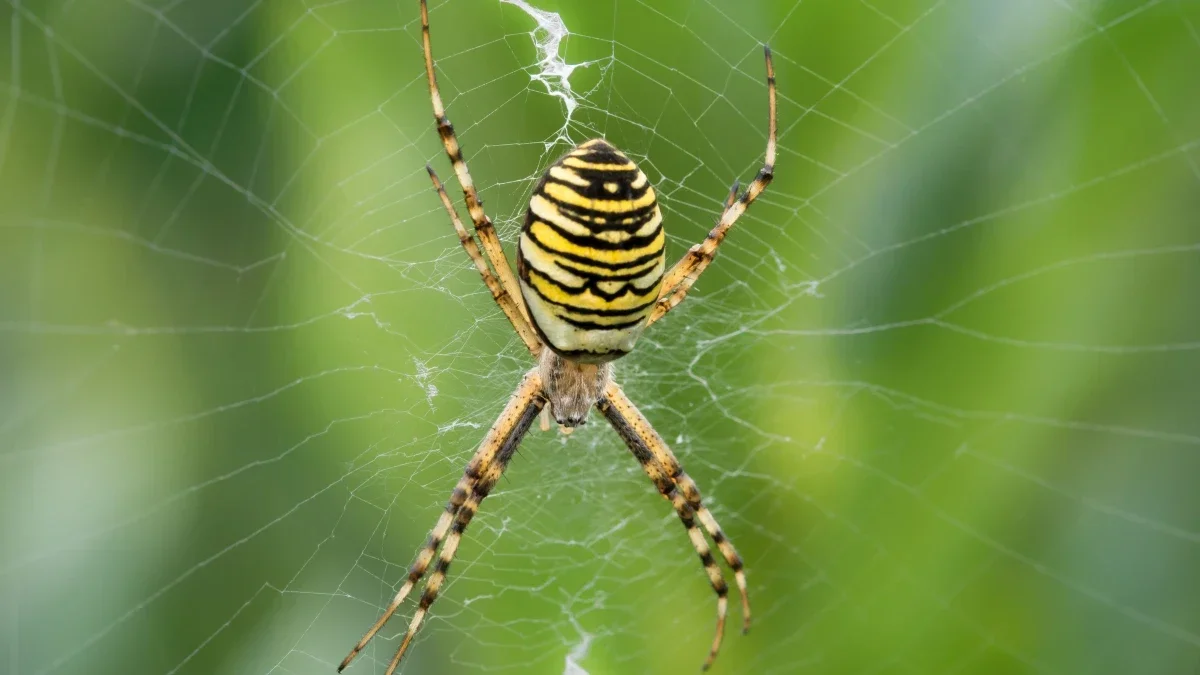
It is a warm afternoon in late August, you carry a plate out to the porch, and the yellowjackets find it in seconds. What you do not see is the nest: a hole the size of a dime in the lawn, and three feet under it a paper city that can hold a thousand workers or more by late summer, according to extension entomologists at land-grant universities like Ohio State and Virginia Tech. Here is the honest version the viral "kill every wasp in a half-mile" videos skip: a bottle by your table clears the foragers, but it does not empty the nest. Those are two different jobs — and getting them mixed up is how people waste a summer.
First, the free layer: stop feeding them
Before you spend a dollar, do the free work, because it makes everything else work better. In late summer and fall, yellowjackets change their diet. Earlier in the season they hunt protein for their growing young; as nights cool and the larvae stop demanding meat, the workers switch to sugar — ripe fruit, soda, juice, anything sweet (Virginia Tech Extension).
- Keep food and sweet drinks covered outdoors, and clear fallen fruit under trees.
- Rinse recycling; a sticky soda can is a billboard.
- Keep trash lids closed and move bins away from where you sit.
Deny the easy meal and the pressure at your table drops before you build anything.
The $3 feeding station — and why it is not a "trap"
WHAT: a cheap, slow tool that clears a yard over weeks. The key mental shift: you are not trying to drown wasps. You want every worker to land, drink, and fly home carrying a slow poison back to the colony.
HOW:
- Use a clear plastic jug (an empty juice or water jug works).
- Make a bait the workers will carry home, not a puddle they drown in — add a small "escape ladder" (a stick or mesh) so they can leave.
- Use boric acid as the active ingredient, mixed into a diluted sweet bait.
- Hang it a good distance from where people sit — and, as you will see, a good distance from the nest too.
The single most common mistake online: "boric acid" is not borax. Borax is a laundry booster; boric acid is a different, more refined product (often sold ~99% pure). The top comment on the most-viewed wasp video — with thousands of likes — is a former exterminator correcting exactly this. Use boric acid, and label the container clearly so no one mistakes spiked juice for a drink.
Before you mix anything, know the law. In the US, "the label is the law" — it is a federal violation (FIFRA) to use any pesticide in a manner inconsistent with its labeling, and general-purpose boric acid (like 99% roach powder) is not registered for outdoor wasp baiting. The safest, legal route is a store-bought bait labeled for wasps/yellowjackets, used exactly per its label; if you want boric acid specifically, ask your local extension office or a licensed applicator first (EPA on pesticide labels).
WHY it works: boric acid is a slow-acting stomach poison. Because it is slow, a forager does not die at the jug — it survives long enough to carry the bait back and share it through the colony (NPIC boric acid fact sheet; slow-acting bait study). A fast knock-down kills the messenger; a slow one reaches the queen.
COST / LIMIT: pennies of boric acid plus a jug. But a feeding station is useless right at the nest — foragers will not feed at their own doorstep, so place it a good distance away. Expect a colony to weaken over roughly two to three weeks, not overnight; it depends on bait uptake and colony size.
Timing is the real secret
The viral videos bury this at the end, if they mention it at all. You can run a station any time wasps fly, but two windows do far more work than the rest of the year.
- Spring (prevention): there are no big nests yet — just the lone queens that survived winter, out looking for food. A station now can kill queens before they ever build, stopping nests before they start. (Effectiveness varies by region and species — treat it as prevention, not a guarantee.)
- Fall (break existing nests): when workers are sugar-hungry and the colony is large, a sweet station pulls hard and carries poison home.
Three mistakes that backfire
- Making the bait too sweet and putting it in the flower garden. This is where well-meaning people kill the insect they wanted to protect. "Safe for honey bees" is conditional, not absolute: during a nectar dearth, honey bees will take a strong sweet bait (Oregon State Extension; UF/IFAS on robbing behavior). Dilute the bait, add a splash of vinegar (bees dislike the acidity more than wasps do), lean on protein bait in late season, and place stations away from blooms.
- Confusing borax with boric acid — covered above, and worth repeating because it is the number-one error.
- Treating the station as an emergency tool. It is a slow, gentle clearer. For an angry nest by the door, it is the wrong tool — see below.
When to put the jug down and call a pro
This is the line where being handy stops and being smart begins. Call a licensed professional when:
- The nest is inside your home — a wall void, attic, or crawlspace. Never seal a wall nest; trapped workers chew toward the light, which can mean into your living space.
- The nest is large, high up, or you cannot reach it from solid footing.
- Anyone in the home has a sting allergy.
The stakes are real but worth keeping in proportion: the CDC recorded nearly 800 hornet, wasp, and bee sting deaths in the US across 2011–2021 — about 72 a year — most in people with an allergic reaction (CDC MMWR; ACAAI). A jug of bait is never worth an ambulance ride.
Common mistakes recap
- Placing the station too close to the nest (foragers won't feed there).
- Using borax instead of boric acid.
- Leaving spiked bait unlabeled around kids or pets.
- Running only in high summer and skipping the spring queen window.
FAQ
Will a soda-bottle trap get rid of the whole nest?
On its own, no. A drowning trap removes foragers at your table. To reach the colony you need a feeding station with boric acid that workers carry home, plus time.
Is boric acid safe around pets and kids?
No — treat it as a real poison, especially for pets. A sweet liquid bait is exactly what a curious dog wants to drink, and dogs are actually more sensitive to boric acid than rodents; swallowing it can cause vomiting, seizures, and in large doses death, and it has documented reproductive and developmental effects (NPIC boric acid fact sheet). Place stations completely out of reach of pets and children, label the container, and if an animal or child ingests any, call your vet, the Pet Poison Helpline, or Poison Control right away. It is also restricted in some countries, so check your local rules.
Won't this hurt honey bees?
It can if you do it wrong. Dilute the bait, add vinegar, switch to protein bait late in the season, and keep stations away from flowers. Done right, honey bees largely ignore a plastic-jug sugar station.
How long until it works?
Usually a couple of weeks to noticeably weaken a colony — longer for a big one. It is a season-long strategy, not an afternoon fix.
The takeaway: take away the free meals first, set out a cheap feeding station with real boric acid (not borax) and an escape ladder so workers carry it home, run it hardest in spring and fall, and dilute your bait to spare the bees. And when the nest is in a wall or someone's allergic, the cheap move is the phone call. Spend less. Live more. — The Thrifty Almanac




0comments