

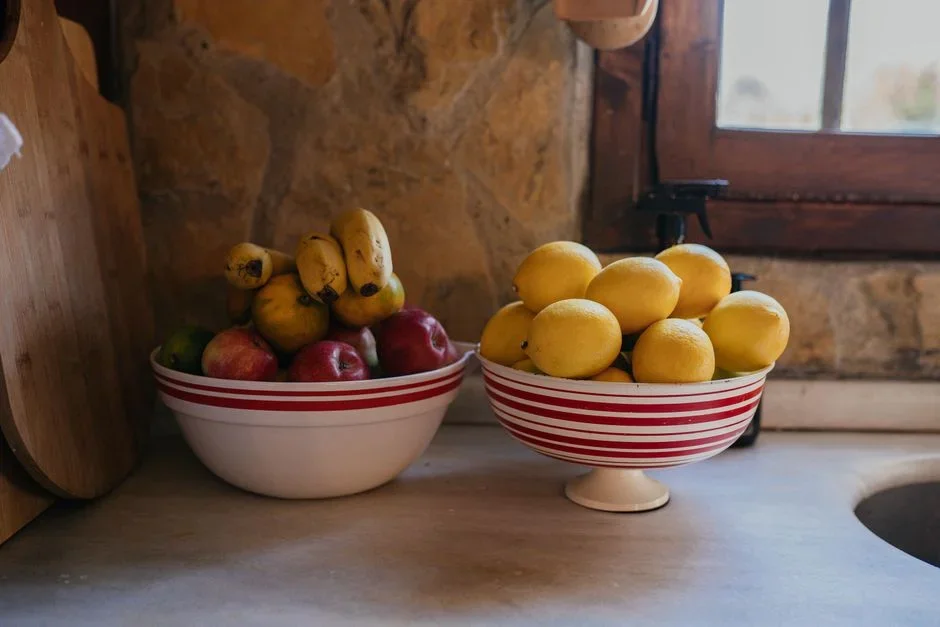
A video going around promises bananas stay fresh for two months if you wrap the crown a certain way. It is charming, confidently narrated, and its central number does not survive the research.
The frustrating part is that it points at something real. One mechanism governs almost everything about how long produce lasts, and learning it beats memorizing hacks.
The two-month banana claim, measured against the research
Start with the number. A peer-reviewed packaging study states plainly that ethylene-treated bananas are very perishable and their life typically does not exceed 3 to 5 days. Ethylene-treated means ripening is already triggered — essentially every banana in an American supermarket. In the same trial, the best engineered packaging extended shelf life by four days against open containers. Four. Not fifty-five.
Multi-week banana storage is real, but only for un-ripened mature-green fruit at a controlled temperature inside a shipping container — not something a countertop reproduces. Careful handling buys days, sometimes a couple of weeks on hardier items, never months. For groceries that do last, we covered which pantry staples outlive their printed dates separately — dry goods follow different rules.
Ethylene: the plant science that explains your whole kitchen
Here is what the video circles. Penn State Extension describes ethylene as a natural hormone that plants produce and use to regulate growth and development. Output climbs as fruit matures and again when it is bruised or cut. It drifts, and whatever sits beside the emitter ripens faster. The damage has names — russet spotting on lettuce and yellowing in broccoli, so brown freckles on romaine are often gas exposure, not age.
Now the nuance nearly every article skips: ethylene damage generally does not occur in less than 24 hours of exposure, and exposures are cumulative. A fruit bowl out during a dinner party is not an emergency; this is a storage-week problem. It does explain the other cost of an overripening bowl, namely the fruit flies that show up to celebrate.
The separation map: who gasses, and who wilts
Extension services sort produce into emitters and victims. Keeping them apart is the highest-value move here, and it is free.
| Ethylene producers (isolate these) | Ethylene-sensitive (protect these) |
|---|---|
| Apples | Broccoli |
| Avocados | Cabbage |
| Bananas | Cauliflower |
| Melons | Leafy greens |
| Peaches | Lettuce |
| Pears | |
| Tomatoes |
Both columns come from extension guidance on storing producers apart from sensitive items, and Penn State names the worst pairing outright: apples, which release high ethylene levels, with sensitive crops like broccoli.
There is a wrinkle. Michigan State lists climacteric fruit — apple, avocado, banana, cantaloupe, peach, plum and tomato among them — as fruit that keeps developing after it leaves the plant while being sensitive to the gas it makes itself. Both arsonist and building, which is why a crowded bowl speeds its own decline. If you do one thing: apples and bananas on the counter, greens in a closed crisper.
Counter or fridge? A table with real degrees on it
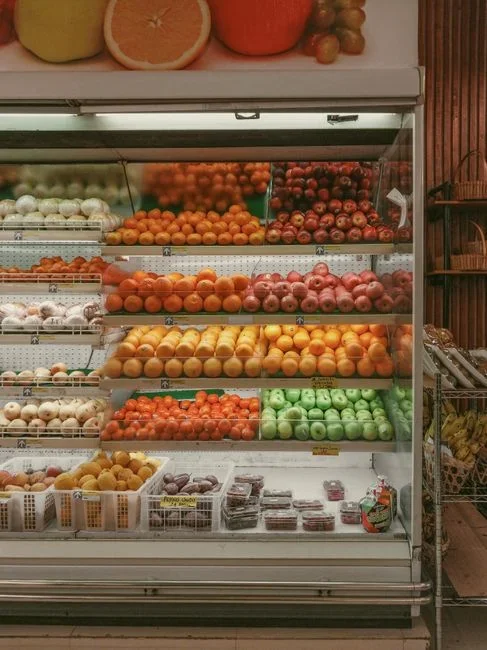
Most storage advice bottoms out at "a cool dry place." Nebraska Extension publishes actual numbers.
| Item | Target temperature | Storage life | What goes wrong if too cold |
|---|---|---|---|
| Apples | 30–40°F | 3–8 months | Nothing — but it gasses everything nearby |
| Lettuce | 32°F | 2–3 weeks | Nothing; cold is its friend |
| Broccoli | 32°F | 10–14 days | Nothing, provided apples stay away |
| Berries | 31–32°F | 2 days to 3 weeks by type | Nothing, provided they go in dry |
| Tomatoes (colored, firm) | 46–50°F | 4–10 days | Flavor loss |
| Tomatoes (mature green) | 55–70°F | 1–6 weeks | May lose the ability to ripen |
| Cucumbers | 50–55°F | 10–14 days | Pitting and shriveling |
| Avocados | 50–55°F | 3–10 days | Stalled ripening, poor texture |
| Late potatoes | 40–45°F | 2–9 months | Off-flavor, internal darkening |
| Dry onions | 32°F | 1–8 months | Nothing, but they need dry air |
Every figure is from Nebraska Extension publication G1264, where berries run from blackberries at 2 to 3 days to sweet cherries at 2 to 3 weeks. One caveat: your fridge is a single compartment near 35–40°F, so the 50–55°F rows are not a dial you can turn — they explain why cucumbers go slimy and avocados stall. Use the warmest zone you have, or the counter. Michigan State sums it up: tomatoes, potatoes, bananas, squash and pumpkins store longer above 50°F, while most other produce suits a standard fridge.
Nebraska defines that last column as prolonged exposure to low but not freezing temperatures interrupting the ripening process, with symptoms including dark circular pits, shriveling, internal darkening, loss of the ability to ripen, and off-flavor. Tropical produce is most at risk.
The tomato rule needs a dose qualifier
"Never refrigerate tomatoes" is repeated as an absolute; it deserves a timer. Research on tomato aroma found refrigeration cut most volatiles within 3 to 5 hours. But the same work found that after 5 days at 4°C recovery on rewarming was almost complete, while after 10 and 15 days it was only partial. A day or two of cold to save a ripe tomato is recoverable. A fortnight is not.
Why the fridge blackens banana peels — and why the flesh is usually fine
The fridge is genuinely chilling territory. Peer-reviewed work puts the threshold for mature green banana at 13.3 to 14.4°C, with a putative threshold of 14.0°C — roughly 57°F, far above any home refrigerator.
But look where the damage lands: that study found the peel more sensitive to chilling injury than the pulp, with obvious gray skin only under severe chilling at 5.0°C. Michigan State files the effect under chilling injury too: banana skin turns brown.
So the rule splits in two. Refrigerating an already-ripe banana is legitimate — you trade appearance for a few more days of good fruit. Refrigerating a green one is the mistake, because chilling injury includes losing the ability to ripen. An ugly banana is still a banana; a green one that never ripens is compost. The limit: days, not weeks.
Wash later, not sooner — the free fix nearly everyone gets backwards
Rinsing the whole haul at the door, so it is grab-and-go, shortens its life. Virginia Cooperative Extension is direct: avoid rinsing produce prior to storage, because moisture speeds microbial spoilage. Instead, rinse produce with clean, running tap or distilled water immediately before use. Berries are the extreme case — Nebraska's instruction for blackberries, blueberries, cherries and strawberries is do not wash before storing, rinse just before using.
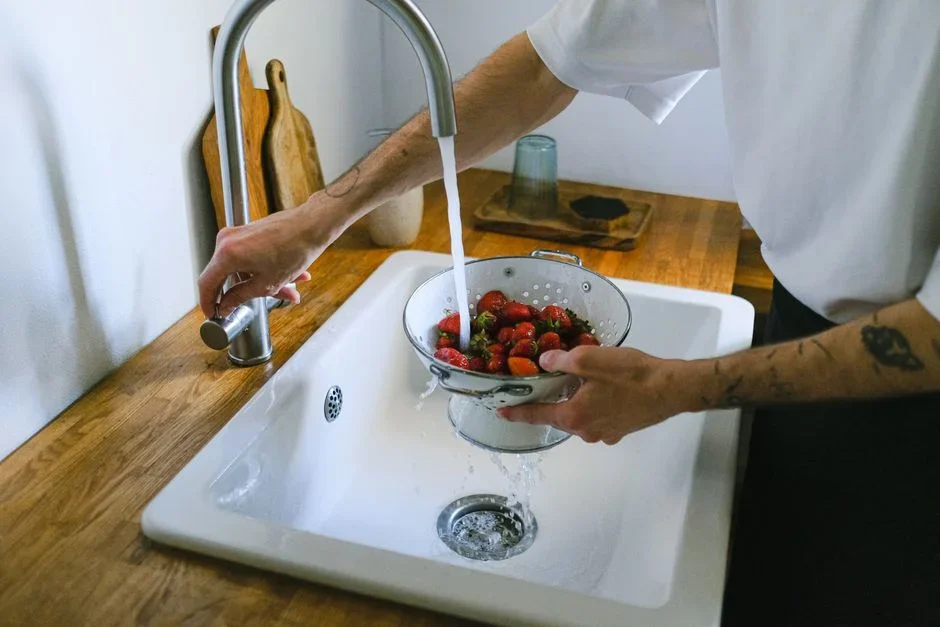
About the famous vinegar berry soak: we went looking for the study behind the numbers everyone quotes — the 1:3 ratio said to kill 98% of mold spores, credited to Cornell Cooperative Extension. It traces to neither Cornell nor any extension service, and the identical phrasing repeats across content farms. The soak is harmless; drying the fruit completely is the part doing real work.
The gadgets: what has evidence, and what doesn't
Crown-wrapping. Plausible, unquantified. The cut crown is a real ethylene emission site and the practice is used commercially, so the mechanism is sound. But every figure circulating — a 50% reduction, a 3.8-day extension — traces to AI-generated pages citing studies that do not exist. Costs pennies; attach no number.
Ethylene-absorbing bags and sachets, and splitting the bunch. No independent evidence either way: every effectiveness claim we found came from manufacturers and resellers. That is not proof they fail — it is the absence of anyone neutral checking.
Three habits that go past wasteful into unsafe
Everything above is about quality. These three are about not getting sick.
1. Cut melon and bagged greens left sitting out. Virginia Extension: discard produce if it has not been refrigerated within four hours after cutting, peeling, or cooking, shrinking to one hour above 90°F. Perishable produce belongs at 41°F or below. Refrigeration is a required control, not a rescue for produce left warm. An outage changes the rules enough that we covered keeping food cold without a refrigerator as its own guide.
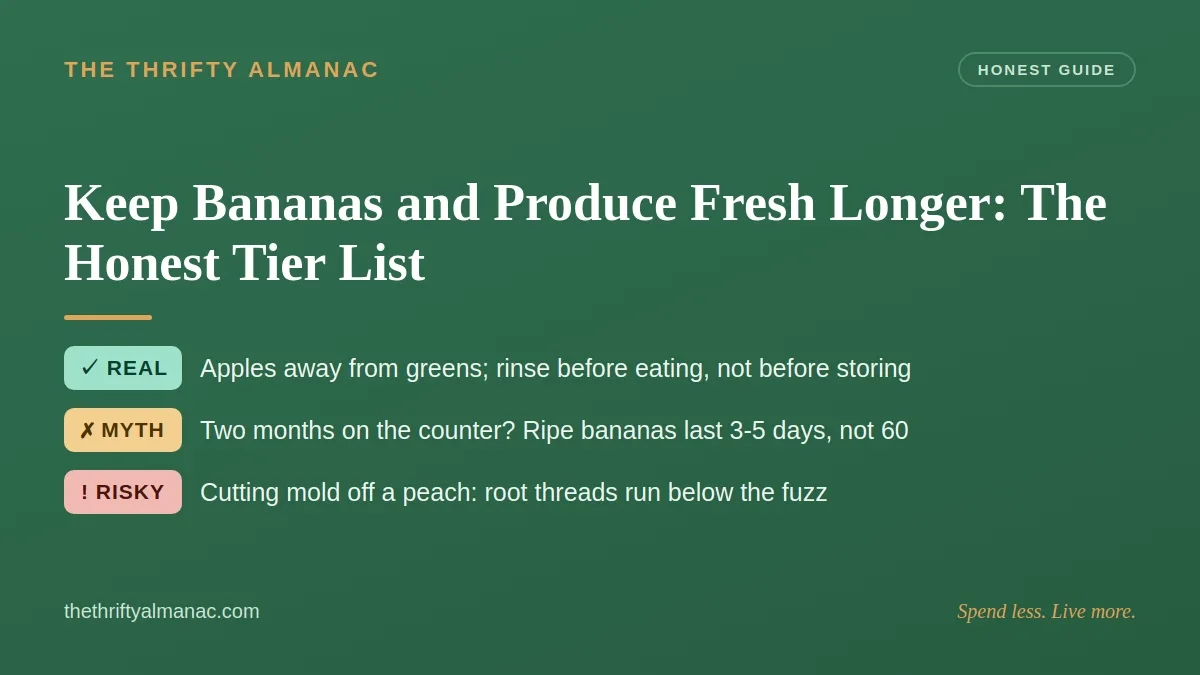
2. Cutting the moldy bit off soft fruit. NC State Extension is blunt: soft fruits and vegetables such as cucumbers, peaches and tomatoes are a pitch, because they have high moisture content and can be contaminated below the surface. Beneath the fuzz sit root threads running deep into the food, and some molds make mycotoxins that heat does not destroy, so baking a moldy peach into a crumble rescues nothing. NC State flags older adults, young children and anyone immunocompromised as most at risk. Salvage applies only to firm, low-moisture produce — carrots, peppers, cabbage: cut at least one inch around and below the moldy area, and do not put the knife used to cut the mold into the uncontaminated area. Cannot tell if an item is firm enough? Throw it out.
3. Thawing on the counter. Clemson Extension puts the danger zone at 40°F to 140°F, where certain bacteria can double in as little as 20 minutes. Counter thawing parks food there. Safe methods: the fridge, cold water at 70°F or less changed every 30 minutes, the microwave, or thawing as you cook. The same logic governs what genuinely survives a home freezer.
The honest tier list
| Tier | Practice | Confidence |
|---|---|---|
| Real, and free | Separate ethylene producers from sensitive greens in storage | Extension-backed |
| Real, and free | Rinse before use, never before storage; dry anything that gets wet | Extension-backed |
| Real, and free | Match items to the right shelf; some belong on the counter | Published temperature data |
| Plausible, unquantified | Wrapping the banana crown; vinegar berry rinse, dried thoroughly | Mechanism sound, numbers fabricated |
| No evidence either way | Ethylene-absorbing bags, sachets, splitting the bunch | Manufacturer claims only |
| Dangerous | Warm cut melon or greens past four hours; mold cut off soft fruit; counter thawing | Documented illness risk |
Common mistakes
- Washing the haul at the door. Moisture speeds spoilage; rinse as you eat.
- Refrigerating green bananas. Chilling injury includes losing the ability to ripen. Ripe ones are fine.
- Treating separation as an hourly emergency. Damage needs more than 24 hours and builds up.
- Trusting the fridge to fix warm cut produce. Past four hours it is bin, not crisper.
- Applying the one-inch mold rule to berries or peaches. It is for firm produce only.
FAQ
Does wrapping the banana crown actually do anything?
Probably a little, and it costs nothing. What it will not deliver is the day-counts you have seen quoted — those trace to content farms citing studies that do not exist.
My bananas turn brown in the fridge. Have I ruined them?
The peel, mostly — research found it more sensitive to chilling than the pulp. If the fruit went in ripe, you traded looks for extra days.
How long can careful storage realistically buy me?
Days on soft fruit, weeks on greens and firm vegetables, months only on apples, potatoes and onions. Ripening-initiated bananas run 3 to 5 days; the best packaging in a peer-reviewed trial added four.
The takeaway: Keep the gassers away from the greens, wash at the bowl instead of the door, and judge every viral trick by whether it survives the research. Spend less. Live more. — The Thrifty Almanac




0comments