

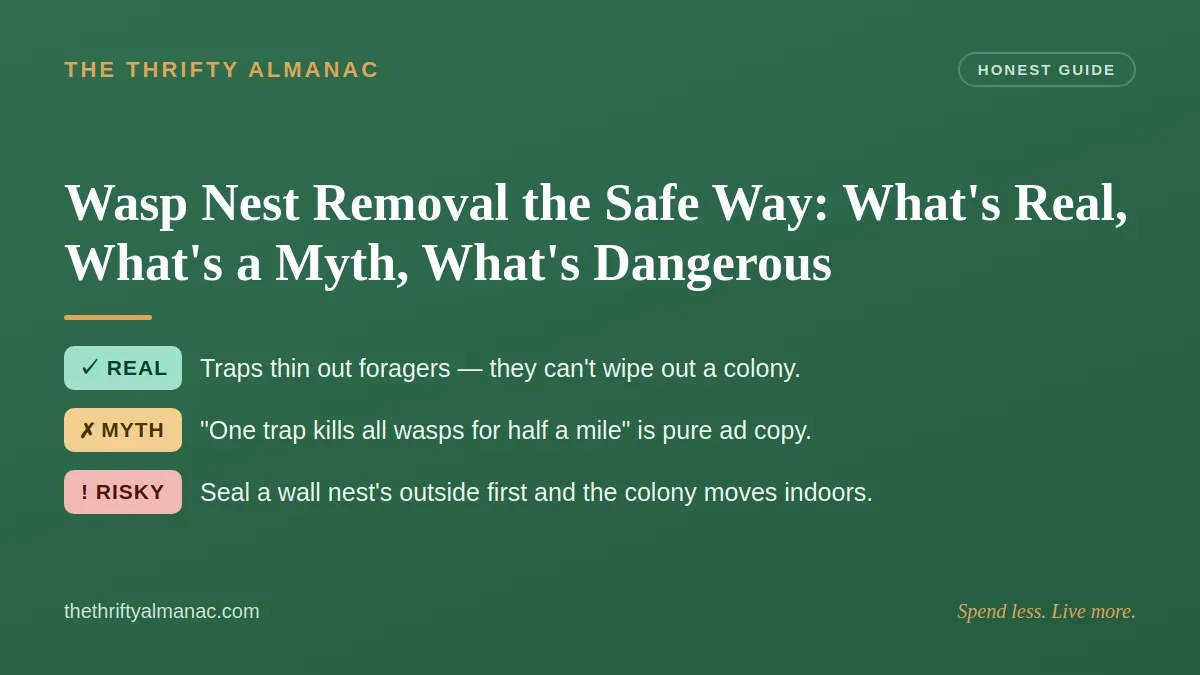
You've seen the video: a soda-bottle trap on a fence, a caption promising it "KILLS ALL wasps for half a mile — totally safe for honey bees," and comments swearing it's the trick exterminators hide. It's a great hook — and mostly wrong. Following it can leave a live colony right where it started, or drive one into your walls.
Here's the honest version from university extension entomologists: traps thin out the wasps buzzing your picnic, but they don't kill a nest. Getting rid of a nest means treating the nest itself — carefully, at the right time, and sometimes not at all.
The viral promise vs. what actually happens
Two claims drive most of these videos: that one lure trap wipes out every wasp in a wide radius, and that you should "stop spraying" because traps are all the pros secretly use. Both fall apart under UC IPM's guidance, which is that lure traps only reduce localized foraging workers and don't eliminate large populations or the colony itself. No consumer trap clears a half-mile circle. And a scent bait can't tell a wasp from a honey bee; it draws whatever the smell attracts. Honey bees, for the record, aren't wasps at all.
The quick tier-list
| Verdict | Claim or method | The reality |
|---|---|---|
| REAL | Traps catch foragers; night treatment of an accessible nest works | Limited — traps don't kill the colony, and even a clean night job still risks stings |
| MYTH | "One trap kills all wasps for half a mile and spares the bees" | No trap clears a radius, and scent bait can't spare honey bees |
| DANGEROUS | Gasoline or fire, sealing a wall-void nest, daytime knock-downs | Fire and fumes, the colony driven indoors, peak defensiveness |
First, identify what you actually have
The right move depends entirely on which insect you're looking at — the same identify-before-you-treat approach behind safe, effective DIY pest control. Most wasps earn their keep — Texas A&M entomologists note that all wasps and hornets are beneficial predators and pollinators, eating caterpillars, aphids and spiders. Killing every one you see is bad pest control; a docile nest that isn't in your path is usually best left alone.
| Insect | Look | Nest | Attitude |
|---|---|---|---|
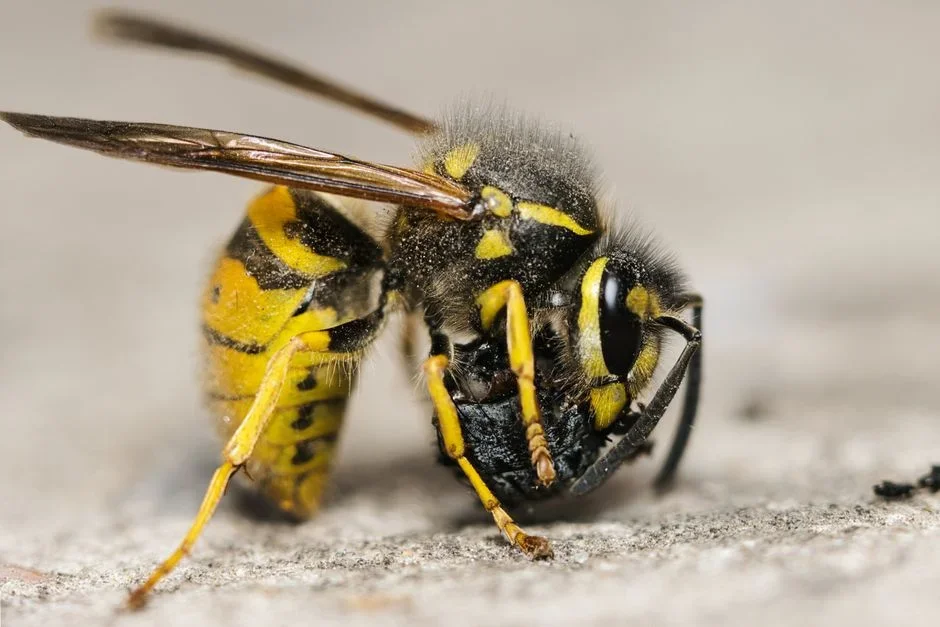
| Yellowjacket | Half an inch to an inch, jagged yellow-and-black | Underground or in wall voids | Aggressive scavenger, defends the nest hard |
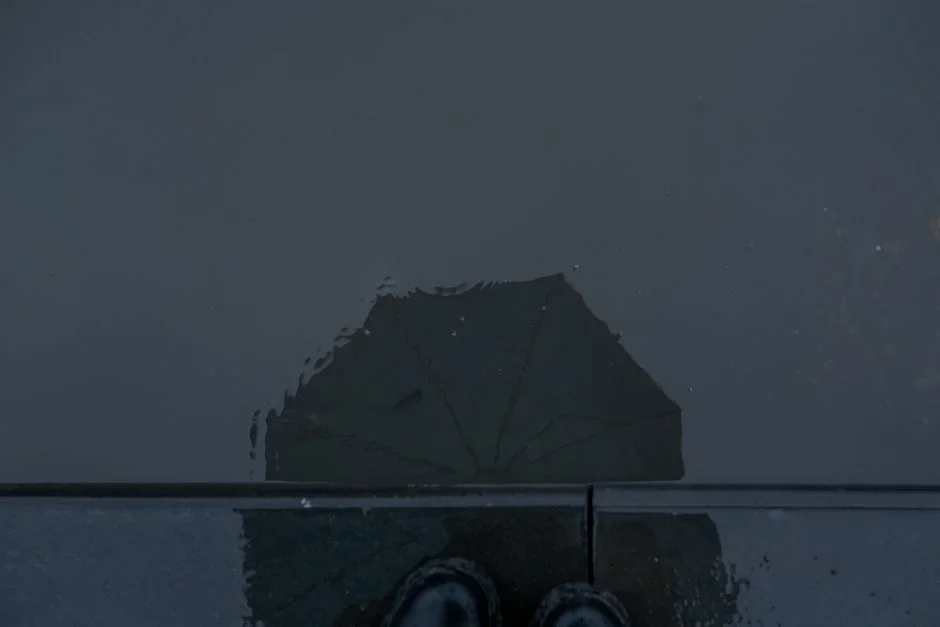
| Paper wasp | Long slender waist, legs dangling in flight | Open umbrella of cells under eaves | Rarely aggressive away from the nest |
| Mud dauber | Thread-thin waist | Mud tubes on walls | Very docile; stings only if handled |
| Honey bee | Fuzzy, golden-brown — not a wasp | Wax comb; colony lives year-round | Calm foraging; call a beekeeper, never spray |
Location and behavior are the tell. A tidy nest under an eave with a few slow wasps is usually harmless paper wasps. A steady stream diving into a lawn hole or siding gap, bolder as summer wears on, is a yellowjacket problem.
Why traps can't clear a colony
The biology is the whole story. A trap catches scavenging foragers, but the queen and brood stay in the nest, producing replacement workers faster than any trap empties them. UC IPM is blunt that traps work best as queen traps in late winter to early spring, and in summer and fall usually don't knock foragers to acceptable levels. A single colony can hold between 1,500 and 15,000 individuals at peak.
Traps aren't useless: in early spring they catch founding queens, and at a picnic they pull nuisance foragers off the food. If that's your goal, our guide to the soda-bottle wasp trap that actually works covers the honest use case. Just don't expect a jar of bait to end an active nest.
When it's OK to DIY — and the exact night protocol
There's a narrow green-light case: a single accessible nest — a ground nest you can reach flat-footed, or a low exposed paper-wasp nest — and no one in the household with a known sting allergy. Outside those lines, call a pro.

In the green zone, timing and gear are everything. Penn State's rule is to plan your methods during the day, but do the work at night, when the wasps are back inside and sluggish. Wear protective clothing over the entire body — veil or head net, gloves, eyewear, long sleeves, pants tucked into socks. Plan a clear escape path, and stand to the side of the opening, never over it. Use a wasp spray that fires a stream, not a mist — UC IPM notes formulations shoot an insecticide up to 20 feet so you can keep your distance. Follow the product label; it's the law and it's the dose.
Don't treat this as risk-free. UC IPM is clear that even at night, even with a 20-foot spray, stings are still likely. If anyone in the home has a known venom allergy, don't attempt any of this.
STOP — call a pro or vector control
Some situations are non-negotiable. Hire a professional (or, in parts of California, ask your local mosquito and vector control district) when the nest is:
- Inside a wall, attic or other void
- High up or reachable only from a ladder
- A large late-season colony, or defenders that are already aggressive
- Anywhere near a household member with a known sting allergy
The wall-void case catches people every year. Do not seal the outside opening of an active wall nest. Penn State's rule is to treat or seal the interior entry before the exterior, to avoid pushing the whole colony indoors — plug the exterior first and you drive the colony into your living space. UC IPM's bottom line is that when nests must be eliminated it is easiest and safest to call for professional help. And if anyone in the household has a known sting allergy, DIY is off the table entirely — a pest-control visit is cheap next to an emergency-room bill. Cost-wise, professional wasp nest removal averages about $525, with most jobs running $300 to $700 — as little as $100 for a small, reachable nest, up to about $1,300 for wall voids and big late-season colonies. Real money, but it buys the ladder work, the gear and the guarantee.
Dangerous "hacks" to never try
- Gasoline or fire. A fire, explosion and toxic-fume hazard that doesn't even work well — survivors just come out angrier. Use a night application of stream wasp spray, or a pro.
- Plugging a wall opening. Sealing the outside of an active wall nest drives the whole colony indoors. Treat wall and void nests as a call-a-pro job, full stop.
- Daytime knock-downs with a broom. Daylight is when foragers are out and the colony is most defensive. Scout by day, treat at night.
- Essential-oil or dish-soap sprays as a colony killer. No authoritative evidence these clear a nest. Our reviews of essential oils for pests and natural pest repellents that actually work lay out what the research does and doesn't support.
Stings, allergy, and the real emergency
This is the part the "easy hack" clips leave out. A honey bee's stinger is barbed and usually stays in the skin, with venom entering for 45 to 60 seconds — so scrape it out fast with a fingernail or card rather than pinching. Wasps and yellowjackets don't lose their stinger the way a honey bee does, which is why they can sting more than once and why you should keep your distance and never swat.
First aid for an ordinary sting: wash the area, apply ice, and watch it. The real danger is an allergic reaction. Call 911 immediately for trouble breathing, swelling of the face, lips or throat, dizziness, fainting, or hives spreading across the body — and for any sting on the neck or in the mouth, where UC IPM warns swelling can cause suffocation and needs immediate care.

The stakes are real: stings from bees, wasps and hornets are linked to about 60 or so deaths a year in the U.S., nearly all from anaphylaxis. If you've had a severe reaction before, CDC/NIOSH advises you carry an epinephrine auto-injector and wear medical ID, and to lower your odds of a sting, wear light-colored, smooth-finished clothing, skip perfumed products, and stay calm and still if a single insect is buzzing around you. None of this is medical advice — when in doubt, call emergency services.
The patient option: let the season end it
Often the smartest, cheapest, safest move is to do nothing. In cold-winter regions, paper wasp, yellowjacket and hornet colonies are annual. Penn State's decision guide explains that after the first hard frost these colonies die completely, with only mated queens overwintering, and the nest is not reused. Honey bees are the exception — their colonies persist year-round.
So a nest that isn't in a walkway, doorway or play area can be waited out until the first hard frost. Come spring, the cheaper move is making the eaves less inviting before queens start building. One caveat: this only works where you get a hard freeze. UC IPM notes that in very mild winters and coastal California south of San Francisco, some yellowjacket colonies survive for several years and become quite large. There, "wait for frost" isn't a plan.
Common mistakes
- Trusting a trap to kill a nest — it only thins foragers.
- Treating in daylight, when the colony is out and most defensive.
- Sealing a wall-void opening and pushing the colony into your living space.
- Reaching for gasoline or fire — dangerous, and it just makes survivors meaner.
- Spraying a honey bee nest a beekeeper would happily relocate.
- Doing any DIY removal when someone in the home has a known sting allergy.
FAQ
Will a wasp trap get rid of my nest?
No. Traps catch foraging workers, not the queen or brood, so the colony keeps replacing them. UC IPM finds traps don't eliminate populations in summer or fall. To end an active nest, treat the nest or wait for frost.
Is it safe to remove a wasp nest myself?
Only in a narrow case: a single accessible nest, no allergy in the household, treated at night in full protective gear with a stream spray and a planned exit. Even then stings are likely; a wall, height, or any allergy makes it a pro's job.
What should I never do to a wasp nest?
Never use gasoline or fire, never seal the outside opening of an active wall nest, and never knock a nest down in daytime. Each raises your risk of injury or of driving the colony indoors.
When do wasp nests die on their own?
In cold-winter areas, paper wasp, yellowjacket and hornet colonies die at the first hard frost and the nest isn't reused. In mild, frost-free climates some colonies last multiple years, so waiting doesn't always work.
When is a sting a 911 emergency?
Call 911 for trouble breathing, throat or facial swelling, dizziness, fainting, or spreading hives — or any sting to the neck or mouth. Those are signs of anaphylaxis.
The takeaway: Identify first, treat the nest itself rather than the myth, and call a pro the moment a wall, a ladder, or an allergy enters the picture. Spend less. Live more. — The Thrifty Almanac






0comments