


You flip on the bathroom light at 11 p.m. and something silver bolts for the baseboard. Your instinct says spray. The entomologists who study this insect would hand you a humidity meter.
Silverfish are less a pest problem than a moisture readout with legs.
The bug is a humidity gauge, not an infestation
| Source | Relative humidity | What it describes |
|---|---|---|
| UC IPM | Above 75% | What silverfish need at 71–90°F |
| Ohio State Extension | 75–95% | Preferred range in damp, cool spots |
| EPA (mold guidance) | 30–50%, never above 60% | Where a healthy house should sit |
A room hosting happy silverfish runs roughly 15 to 35 points wetter than EPA says a house should be. That EPA number is mold guidance, not a silverfish threshold — but NPIC, a joint service of Oregon State University and EPA, states that their presence "indicates too much moisture in the area." The bug found the leak before you did — the same principle as the rest of your household pest work: fix the condition, not the creature.
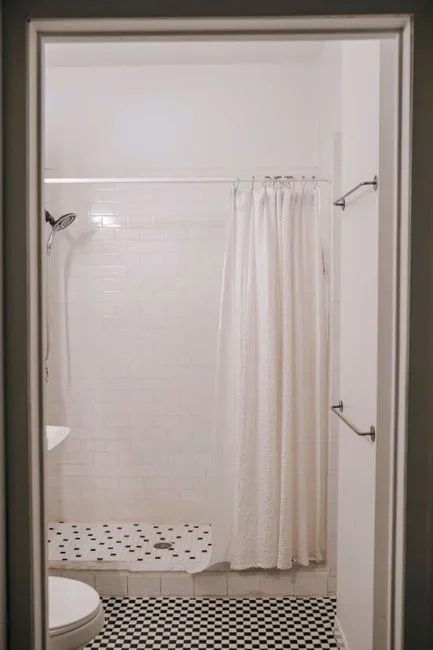
What they actually are, in plain terms
Silverfish carry gut enzymes that digest cellulose, so they eat paper with glue or paste, wallpaper sizing, book bindings and starch in clothing; Clemson adds linen, rayon and dried meats, with damage showing as irregularly chewed patches. They go months without feeding, so starving them out is not a plan.
No extension fact sheet documents bites on people, and UC IPM notes their mandibles are so weak they scrape rather than bite even paper. On disease, one source says it outright: University of Maine Extension calls them "not associated with any diseases or with the spread of any diseases." The others are silent, and silence is not agreement.
Why "slow breeding" depends on your thermostat
UC IPM reports an average clutch of 50 eggs (range 1 to 200) hatching in 19 to 32 days, with adults living about 3 years. Ohio State and Clemson both say about 100 eggs per lifetime and two to eight years. The sources disagree, so both are printed here.
| Room temperature | Time to reach adult |
|---|---|
| Above 75°F (warm damp bathroom) | As little as 60 days |
| Below 50°F (cold basement) | Up to 500 days |
The honest tier list
| Tier | Method | Verdict |
|---|---|---|
| REAL | Drying the room: leaks, dehumidifier, bath fan | The only thing UC IPM says settles large populations |
| REAL, second shelf | Traps, sealing gaps, paper off damp floors | Useful; does not fix the cause |
| MYTH | Baits, boric acid dusts, foggers | UC IPM: rarely work, useless on firebrats, not recommended |
| UNPROVEN | Cedar, essential oils, cucumber peel | No .gov or .edu sheet lists them |
| DANGEROUS | Pool or filter-grade diatomaceous earth indoors | Calcined DE is a listed synonym for cristobalite, a carcinogen |
Tier REAL: drop the humidity, because nothing else settles it
UC IPM puts it plainly: "It is almost impossible to control large populations of silverfish and firebrats unless you have removed dripping water and moist surfaces."
Measure first: EPA notes humidity can be read with "a small, inexpensive ($10-$50) instrument available at many hardware stores." UC IPM then advises repairing leaks and drips, patching holes around pipes and conduits, and keeping basements, laundry rooms and bathrooms — especially shower stalls — clean and dry. Dehumidifiers and fans can pull humidity below what silverfish tolerate. EPA adds the deadline after a spill: dry it within 24 to 48 hours and in most cases mold will not grow.
If a damp closet is the trouble spot, see what a bowl of salt can and cannot do for damp air first; if dark speckling shows on the grout, handle the mold in the same pass. The limit: no source gives a timeline for numbers to fall after a room dries.
Tier REAL: the bath fan you already own and use wrong

DOE's Building America guidance gives real numbers. ASHRAE recommends 50 cfm intermittent or 20 cfm continuous for bathrooms, sized to the larger of 50 cfm or 8 air changes per hour — room volume in cubic feet times 8, divided by 60.
Running it matters as much as rating it. DOE notes timers let the fan run 20 minutes or more before shutting off, and that a humidistat "makes an excellent bath fan control because it runs the fan until acceptable humidity levels are reached." Then the rule people fail: ducts expelling water vapor must exhaust directly to the exterior, never into attics or crawl spaces. A mis-ducted fan just moves the problem upstairs. The limit: these are ventilation figures, not silverfish thresholds — the target is EPA's 60% ceiling.
Tier REAL, second shelf: food, harborage, traps and gaps
Paper is food and shelter at once. UC IPM notes that collections of magazines, papers and books provide food and harborage, and suggests occasionally moving these items around in your bookcase. Work room by room: under-sink cabinet, basement storage, damp-wall bookshelf. Swapping cardboard for sealed bins follows from that biology, but no extension source recommends it — reasoning, not a citation.
They are nocturnal, so you usually will not see them; UC IPM recommends cockroach sticky traps in corners and along edges. Its caveat matters: because they travel long distances looking for food, it can be difficult to pinpoint the source. Traps are a thermometer, not a map.
Tier MYTH: the remedies that do not hold up
Tested, does not work. UC IPM states that baits aren't very successful because silverfish tend not to feed on them, that boric acid dusts are ineffective against firebrats, and that foggers aren't recommended — three products people actually buy. It also says insecticides aren't required to control light infestations.
Never tested either way. Cedar blocks, essential oils and cucumber peel appear on every listicle and on no extension fact sheet. EPA's cedarwood oil reregistration covers five products used against moths and fleas and to retard mildew, three of them solid cedar blocks for clothing — silverfish are not on that list. Most botanicals sell as minimum-risk products, which do not need to be registered with EPA; because EPA "does not review exempted products," claims implying agency approval are misleading. That is a different verdict from "it failed," and the same gap runs through the oils marketed for other household pests.
DANGEROUS: diatomaceous earth, and the grade that must never come indoors

Start with the practical limit. UC IPM says inorganic dusts remain effective indefinitely in dry locations, but if deposits get wet and then dry they cake, making them difficult for insects to pick up; NPIC likewise says it "remains effective as long as it is kept dry and undisturbed." DE performs worst in exactly the damp rooms where silverfish live.
Now the hazard. New Jersey's Department of Health Right to Know sheet 1657 lists "Calcined Diatomaceous Earth" as a synonym for Silica, Cristobalite, rates it Health 4 (severe), and states it "is a CARCINOGEN in humans". USGS reports that "Most filter grades are calcined," and filter grades are what pool suppliers sell by the sack. OSHA describes silicosis as "an incurable lung disease that leads to disability and death," alongside raised risk of lung cancer, COPD and kidney disease.
Scope it fairly: OSHA's data is occupational, and one homeowner puffing a bag once is not that scenario. The point is simpler — no reason to bring a classified carcinogen indoors when NPIC counts over 150 registered silicon dioxide pesticide products, food-grade versions purified.
If you use one: puff a fine layer into cracks with a bulb duster, never a drift across open floor — UC IPM warns a layer that is too thick makes the surface slippery. NPIC notes exposure happens when applying the dust or entering a treated area before it settles, and that breathing it irritates the nose. Keep children and pets out, follow the label, and if someone inhales a large amount or reacts badly, call Poison Control at 1-800-222-1222.
The crawlspace advice most articles get backwards
Standard advice says add crawlspace vents. In a humid climate that can backfire, and DOE has the data: across three years in 12 North Carolina homes with identical floor plans, humidity in the vented crawlspaces swung widely and stayed above 70% during warm months, while closed crawlspaces with ground vapor retarders "provided far better performance under the harshest conditions than the vented crawlspaces did under even the mildest conditions," using 15% to 18% less heating and cooling energy. Outside air in a humid region is often wetter than crawlspace air.
The limits: 12 homes, one humid climate, not a national rule. DOE notes that in dry Western and marine Pacific Northwest climates both types performed adequately, and that the findings influenced 2009 and 2012 International Residential Code changes (R408.3) allowing unvented, conditioned crawlspaces. Closing one affects combustion appliances and radon, so call a licensed pro if a gas furnace or water heater lives down there.
Your weekend plan, cheapest first

- Read a humidity meter for a week against EPA's 30–50% target.
- Fix the drip: supply line, shower pan, cold-pipe condensation.
- Run the fan 20 minutes or more after each shower, or fit a humidistat.
- Confirm the duct terminates outside, not in the attic.
- Get paper and cardboard off damp floors.
- Set sticky traps in corners and edges; read them after a week.
- Seal gaps around pipe penetrations.
- Only then, if needed, a registered food-grade dust in dry cracks. Never pool grade.
Common mistakes
- Spraying first. UC IPM says insecticides are not required for light infestations.
- Running the fan only during the shower. Moisture is still airborne when you flip it off.
- Assuming the duct goes outside. Go look; attic-terminated fans are common.
- Buying the big cheap bag of DE. Filter and pool grade are the calcined kind.
- Venting a crawlspace in a humid climate. DOE's data points the other way.
FAQ
Do silverfish bite people?
No extension fact sheet documents bites on humans. UC IPM says their mandibles are too weak to bite even paper, and Ohio State calls them generally considered harmless.
Do they carry disease?
University of Maine Extension says they are not associated with any diseases or their spread. No other extension source addresses it.
Will a dehumidifier get rid of them?
Lowering humidity is the only measure UC IPM says can settle large populations. No source gives a setting or timeline, so treat "gone in two weeks" promises as guessing.
Is food-grade diatomaceous earth safe indoors?
It is purified and sold as registered pesticide products, but NPIC warns that breathing the dust irritates the nose. Fine layer into cracks, follow the label, keep kids and pets out, and never substitute pool grade.
The takeaway: Silverfish are a leak detector you never bought — fix the water and the bug problem fixes itself. Spend less. Live more. — The Thrifty Almanac






0comments