

You have probably seen the clip: someone lights a couple of tea lights, sets an upside-down terracotta pot over them, and claims their whole room is now toasty for pennies. Lovely idea — but physically impossible in the way the video says, and the reason is about 30 seconds of high-school science, not a heating-industry conspiracy.
Here is the honest version. The candle-and-pot setup is a real object that gets warm, and people who try it are not imagining things. But it cannot raise a room's temperature, because the pot never adds a single watt of heat. Let's walk through why, why your room still "feels" a little warmer anyway, and what genuinely keeps you warm cheaply. It is really the winter cousin of a whole genre of viral comfort hacks — the same reflex that, come summer, sends people hunting for ways to cool a room without cranking the AC.
The claim, and the 30-second physics that sinks it
The viral claim is that one or two candles under a clay flowerpot will heat a room. The one-line answer: the heat coming out equals the candle's energy going in — the pot cannot create more.
This is the first law of thermodynamics. As Erich Muller, Professor of Thermodynamics at Imperial College London, put it: "In layman's terms, you cannot create energy. So, a 'free lunch' is not possible." The terracotta, he explains, is "just forcing some of the warm air from the candles to stay in place and not dissipate so rapidly, but it is doing nothing additional other than the illusion of a little heater" (Big Issue / Imperial College).
That is the whole trick exposed. The myth rests on a hidden assumption — that covering the flame multiplies its output. It doesn't. If you tried it and it didn't work, you weren't doing it wrong; the premise was never sound.
What a candle actually puts out
WHAT: a single tea light produces a small, fixed amount of heat — and the pot changes nothing about that total.
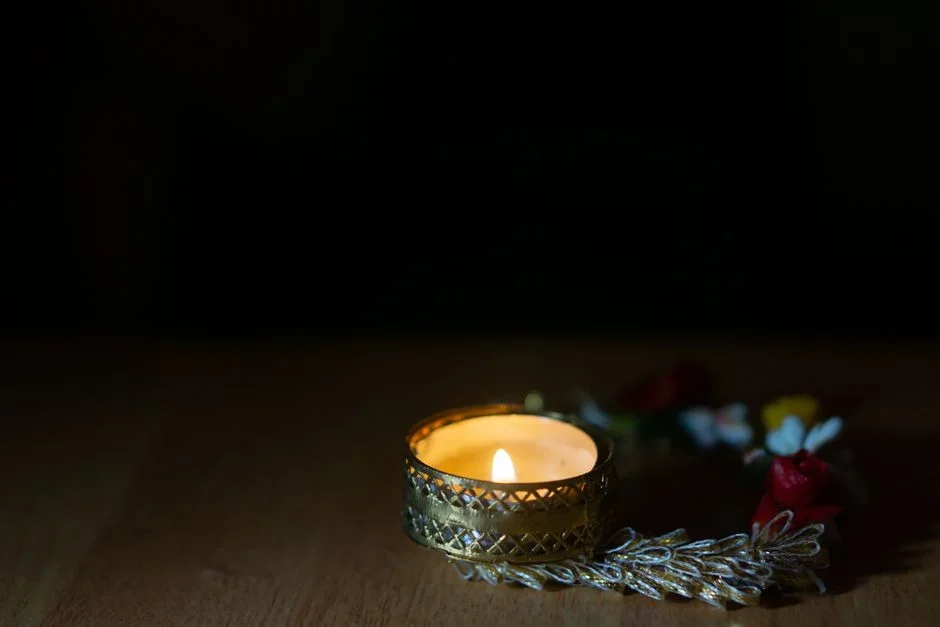
HOW: the numbers are humble. GardenMyths, walking through the energy budget, states that "a candle outside a clay pot or inside a clay pot still produces 30 watts of heat" — about 30 watts per tea light. A larger candle runs hotter; thermodynamics expert Prof. Joan Vaccaro of Griffith University put a typical candle at the top end, noting "you only have 80 W of heat power (a typical candle) in total... The pot doesn't increase that" (AAP fact-check). So call it roughly 30 to 80 watts, depending on wax, wick, and size.
WHY it matters: that range is the ceiling. Whatever heat is in the room came from the flame and nowhere else — the pot is a middleman, not a machine.
LIMIT: treat the wattage as a range, not a hard figure — candle output varies. But even the generous end is tiny, as the next section makes clear.
How a room actually gets warm — and why one candle can't
WHAT: warming a whole room of air takes far more power than a candle can deliver.
HOW: what actually heats a room is a furnace, a heat pump, or an electric space heater — which the U.S. Consumer Product Safety Commission calls a "high-wattage" appliance for good reason (CPSC). A real heater pours out many times the trickle a candle manages; set a 30-to-80-watt flame against that and the gap is enormous.
WHY it works out that way: even if the pot delivered its heat with perfect efficiency, it still can't overcome that shortfall. As MIT's Prof. John H. Lienhard summed it up, "neither a light bulb nor a candle releases enough energy to heat a standard room" (AAP fact-check). It is a magnitude problem, not a technique problem — you would need dozens of candles burning at once to approach one modest heater.
LIMIT: how far short depends on room size and insulation — but no realistic room is heatable by a couple of candles.
Why it still "feels" warmer — and no, you're not making it up
Plenty of folks swear their room feels warmer with the pot going, and dismissing that is both rude and inaccurate. There is a small, real effect — it is simply not the effect the video promises. Two honest things are happening:
- Radiant surface. The clay pot heats up into a warm object sitting right next to you. Hold your hands a foot away and you feel that warmth directly — the same way you feel a mug of tea or a sunbeam. It is local and close-range, not room-wide.
- Thermal mass. The pot stores heat and lets it go slowly. GardenMyths notes that once the flame is out, "the clay pot heater keeps radiating heat into the room until the pot is the same temperature as the room" (GardenMyths). So the warmth lingers after the flame dies — which feels like the device is "producing" heat, when it is just doling out the same candle heat over a longer stretch.
Prof. Muller's phrase nails it: "the illusion of a little heater" (Big Issue). You feel something real near the pot, but not a warmer room — the thermometer on the far wall does not budge.
The limit that really matters: this hack can hurt you
An honest debunk can't stop at "it doesn't work." The bigger problem is that it can be genuinely dangerous, and that danger is easy to miss because the setup looks so cozy.
Fire. This is not hypothetical. Derbyshire Fire and Rescue Service called the hack "very dangerous" after a November 2022 house fire in Derby linked to the method forced roughly 50 people to evacuate (AAP / Derbyshire Fire). Any open flame left burning unattended is a recognized risk: the CPSC warns never to leave a heat source "operating while unattended, or while you are sleeping," and to keep anything that can burn — "beds, sofas, curtains, papers, and clothes" — well clear (CPSC). The terracotta can also crack under thermal stress, dropping hot shards below.
Indoor air. Any flame is a combustion source. The EPA lists "candles" among the things that "can all produce PM" (particulate matter) indoors and advises: "Ensure proper ventilation is available when burning candles and incense indoors" (EPA).
Carbon monoxide. One well-ventilated candle is not a CO emergency. But the danger climbs sharply when you cluster several flames in an enclosed pot in a sealed, poorly ventilated room — precisely what this hack encourages. The CDC is blunt: carbon monoxide "is an odorless, colorless gas that kills without warning," it is "found in fumes produced any time you burn fuel," and it "can build up indoors and poison people and animals who breathe it." Early symptoms — "headache, dizziness, weakness, upset stomach, vomiting, chest pain, and confusion" — are "often described as 'flu-like'" (CDC).
Never use candles as an emergency heat source during a power outage. A sealed room, hours of burning, and no ventilation is the worst case for both fire and CO. If you lose heat, follow your local fire service's emergency-heating guidance instead, and keep a working CO alarm in the home. If anyone develops those flu-like symptoms, get to fresh air and seek medical help right away.
This article is a myth-busting explainer, not a heating-safety authority. For any real heating decision, follow the manufacturer's instructions and your fire service.
What actually keeps you warm cheaply: heat the person, not the room
The candle myth fails for an instructive reason: it tries to warm a whole room of air, the expensive way to feel warm — like most of the home hacks worth stress-testing. The cheap move flips it around — warm your body and the small zone right around it. That is why a heated blanket or a small radiant heater aimed at you feels good so fast: it warms you directly instead of waiting to heat every cubic foot of air. Translate that into low-cost, low-risk tactics:
- Layer up and cover the extremes. Warm socks, slippers, a hat indoors, and a blanket over your lap trap your own body heat — free, and more effective than most people expect.
- Shrink the space you heat. Close doors to unused rooms and spend your evening in one cozy room rather than warming the whole house — the same room-by-room, dollars-per-degree logic that decides which fixes pay off for an overheating floor.
- Aim heat at you, not the ceiling. If you use a space heater, sit near it so the warmth reaches your body directly — and use it safely: plug it into a wall outlet, never an extension cord or power strip, and keep anything that can burn "at least 3 feet" away (CPSC).
- Block drafts and let in the sun. A rolled towel at a drafty door and open curtains on the sunny side by day cost nothing — the same instinct behind the passive design that kept old houses comfortable long before central heat or AC.
Same goal as the candle dream — feel warm without a big bill — but achieved by heating you instead of fighting a whole room of air.
Common mistakes recap
- Believing the pot multiplies the candle's heat. It only redistributes the same 30 to 80 watts more slowly — it never creates more.
- Mistaking the local warmth near the hot pot for a warmer room. Radiant surface plus thermal mass is real, but tiny and close-range.
- Thinking "radiation is the secret." Radiation versus convection changes how the heat is delivered, not how much there is.
- Treating it as a harmless free-heat trick — ignoring the fire risk, cracking terracotta, and indoor combustion.
- Reaching for candles as backup heat in a power outage — the riskiest scenario for both fire and carbon monoxide.
FAQ
So the pot does absolutely nothing?

It does one small thing: it stores the candle's heat and releases it slowly, so the warmth near the pot lingers a bit longer. What it cannot do is add heat — the total is still just the candle's 30 to 80 watts, pot or no pot.
Why does my room genuinely feel warmer, then?
You are feeling the hot pot as a radiant object right beside you — real warmth, but local and small, like sitting near a warm mug. It is not the same as raising the room's air temperature, which is what the viral claim promises.
Could I just use a lot of candles to match a heater?
In principle you would need dozens of tea lights to rival a single electric heater — but please don't. That many open flames indoors is a serious fire and air-quality hazard, and it would cost more in candles than running an actual heater. It shows how far short one candle falls, not a plan to follow.
Are candles ever safe for heat in a blackout?
No — treat candles as light and ambiance, never as a heat source, and never in a sealed room during an outage, the highest-risk situation for carbon monoxide and fire. Keep a working CO alarm, ventilate, and follow your fire service's emergency-heating advice instead. The same caution applies to the other open-flame fallback people reach for in an outage — what oil lamps can and can't safely do indoors comes down to the same ventilation math.
The takeaway: a candle under a flowerpot only reshuffles its own 30-to-80-watt trickle — it can't warm a room, and clustering flames to try is a real fire and carbon-monoxide risk, so skip it and warm your body instead of the air. Spend less. Live more. — The Thrifty Almanac



0comments