

The video always runs the same way. Hands scoop dirt into a bucket, add ash and water, smear the paste on a wall, and a caption promises a material stronger than concrete — knowledge supposedly buried for five centuries. The comments fill with people who now think cement is a scam.
The honest version beats both the hype and the debunk. The materials are real: lime and pozzolans are ancient, and pozzolans still sit in the concrete under your car. But the ranking is upside down. Lime mortar and earthen walls are built to be weaker than what they touch, on purpose. Understand why and you find the one repair where the old cheap material wins — worth knowing before you touch anything else in our library of low-cost home fixes. The wilder clips also claim the wall stops bullets; no authoritative source supports that.
The real material: lime plus pozzolan
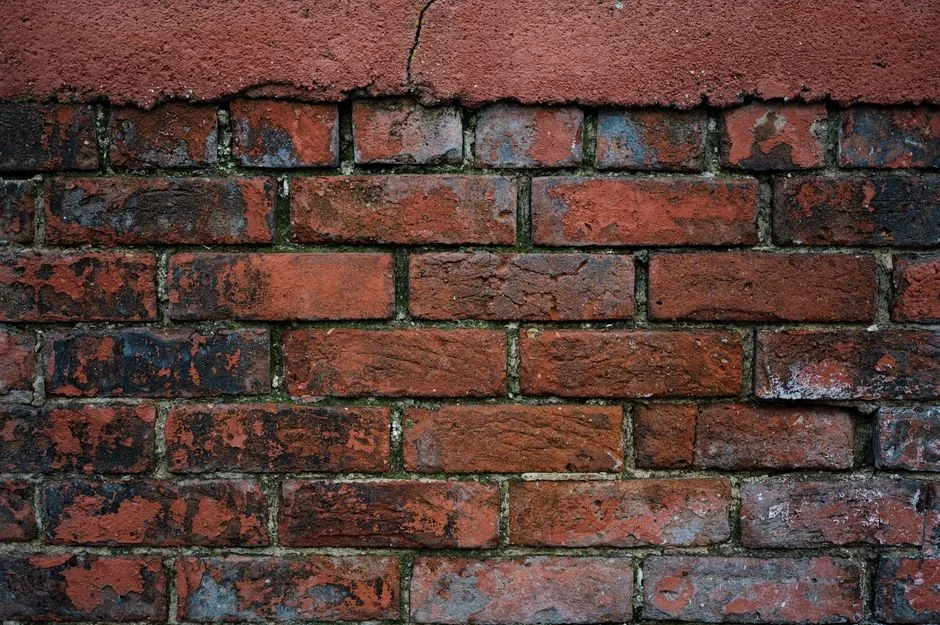
Lime-and-sand mortar, the National Park Service notes, "has been used as an integral part of masonry structures for thousands of years." The traditional mix was 1 part lime putty to 3 parts sand by volume, sometimes with crushed shells, brick dust, clay or animal hair. That is the recipe the videos garble.
A pozzolan is the other half, and no binder alone. The Federal Highway Administration describes the reaction plainly: calcium hydroxide plus silica makes the calcium silicate hydrate that glues things together. Volcanic ash supplies silica. No lime, no set.
The Roman durability finding behind the trend is real, and narrower than advertised. MIT researchers reported in 2023 that hot mixing with reactive quicklime leaves "lime clasts" — calcium reservoirs — and that in lab samples cracks healed within two weeks. The paper records flow stopping after 30 days, with cracks up to 0.5 mm sealed. Half a millimeter is hairline, and the paper makes no strength comparison — its subject is durability. Lime mortar is likewise slightly water soluble and "able to re-seal any hairline cracks that may develop." That fixes nothing structural, and will not tell you whether the crack in your own wall is cosmetic or serious.
The numbers that end the argument
Every row is quoted from a standard, a code, or a government brief.
| Material | Published compressive strength | Source |
|---|---|---|
| Type K mortar (most lime) | about 75 psi | NPS Preservation Brief 2 |
| Type O / Type N mortar | about 350 / 750 psi | NPS Preservation Brief 2 |
| Type S / Type M mortar | about 1,800 / 2,500 psi | NPS Preservation Brief 2 |
| Rammed earth and adobe units | 300 psi minimum | New Mexico earthen building code |
| Structural concrete, code minimum | 2,500 psi; 3,000 exposed to weather | Published building code, ACI minimums |
Lime-rich mortar lands roughly seven times weaker than code-minimum concrete, thirty times weaker at the Type K end. Two limits: the mortar figures are approximate ASTM property-spec values quoted by NPS, and code numbers are floors — residential concrete is usually specified higher, widening the gap. Strength is also one property among several. Lime and earth are chosen for vapor permeability, thermal mass and repairability, the physics that kept old houses livable before air conditioning. Judging them on psi settles the "stronger than concrete" claim and nothing else.
Where lime mortar genuinely beats cement — probably on your house
Save this part. On soft old brick or stone, hard modern mortar is not an upgrade — it is damage.
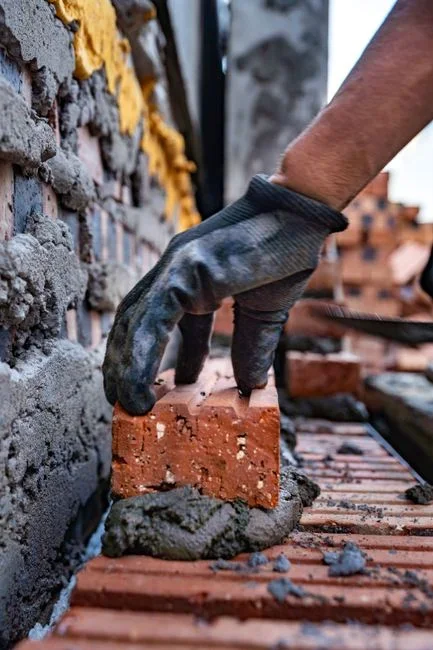
What: repointing means raking out failed joints and refilling them. How: NPS gives the rule directly — new mortar "should be softer or more permeable than the masonry units and no harder or more impermeable than the historic mortar." That means hydrated lime meeting ASTM C 207, Type S or SA, not bagged masonry cement, which usually has no hydrated lime and yields high-strength mortars NPS does not recommend on historic walls.
Why: mortar historically acted "as a bedding material—not unlike an expansion joint—rather than a 'glue.'" A joint stronger than the brick will not give, so movement is relieved through the bricks, "resulting in permanent damage to the masonry, such as cracking and spalling, that cannot be repaired easily." Impermeable joints trap moisture too: NPS documents a wall where water pressure popped the brick faces off. It names the error at the center of the viral clips — "It is a common error to assume that hardness or high strength is a measure of appropriateness."
Limit: identifying an existing mortar is no glance-and-guess job, and the work is "both expensive and time consuming due to the extent of handwork." Repoint only failed joints; whole-wall work pays off once roughly 25 to 50 percent of a wall needs it. Run a test panel first, about 3 feet by 3 feet on brickwork. Leave the grinder in the box: "the use of power tools by unskilled masons can be disastrous for historic masonry, particularly soft brick."
"Hidden since 1453" meets a free PDF
The suppressed-knowledge hook is what spreads these clips, so remove it. The full method is a free National Park Service download. The 2023 mechanism was published openly and covered by MIT's newsroom. Pozzolan chemistry is routine highway practice: FHWA notes that 15 to 30 percent of the portland cement in ordinary concrete is already replaced with fly ash. The secret ingredient is in the road outside your house. Whether anything was deliberately hidden is a claim no source we checked addresses; the knowledge is public now.
Rammed earth and adobe: real, coded, nothing like the bucket
Earthen building is a legitimate structural system, which is why the video version fails. New Mexico's code, the clearest published US example, requires qualified soil to hit 300 psi compression and 50 psi modulus of rupture, holds adobe units to a 300 psi average, caps adobe at two stories, and requires two-story rammed-earth documents sealed by a registered architect or engineer. Most jurisdictions have no earthen provisions at all, so the route elsewhere is a stamped design plus a permit. Earth wins on thermal mass and cost, not crush strength.
The "liquid that turns sand into stone"
The companion format is sodium silicate, sold as water glass — a real soil-stabilization technique with narrow boundaries. A literature review found some evidence of added strength in sandy soils under mild climates, but almost no field evidence where freeze-thaw cycling occurs, and it covers roads and soils, not walls. Read what water glass actually does on concrete before buying a jug.
The burn nobody in the videos mentions
Every clip shows bare hands in the mix. Quicklime is a DOT-classified corrosive that boils when water hits it; contact "can severely irritate and burn the eyes and skin," and higher inhalation exposures risk pulmonary edema, a medical emergency. Limits are OSHA 5 mg/m³, NIOSH 2 mg/m³. Bagged hydrated lime, the product sold for mortar and whitewash, can also severely burn skin and eyes, at an OSHA limit of 15 mg/m³ total dust.
Alkali eye burns are the most sight-threatening chemical injury because alkalis saponify cell membranes and drive deep through the cornea; clinical references name lime and cement among construction alkali agents. Speed decides the outcome: "prompt, copious irrigation to normalize ocular surface pH constitutes the most critical initial intervention," a minimum of 30 minutes, with severe injuries needing 2 to 4 hours of lavage. Flush immediately and keep flushing on the way to emergency care — it is first aid, never a substitute for it. Wear sealed eye protection and impermeable gloves before the bag is open, and call Poison Control or 911 for any eye or airway exposure, a child's or a pet's included.
Silica dust: the injury that shows up in twenty years
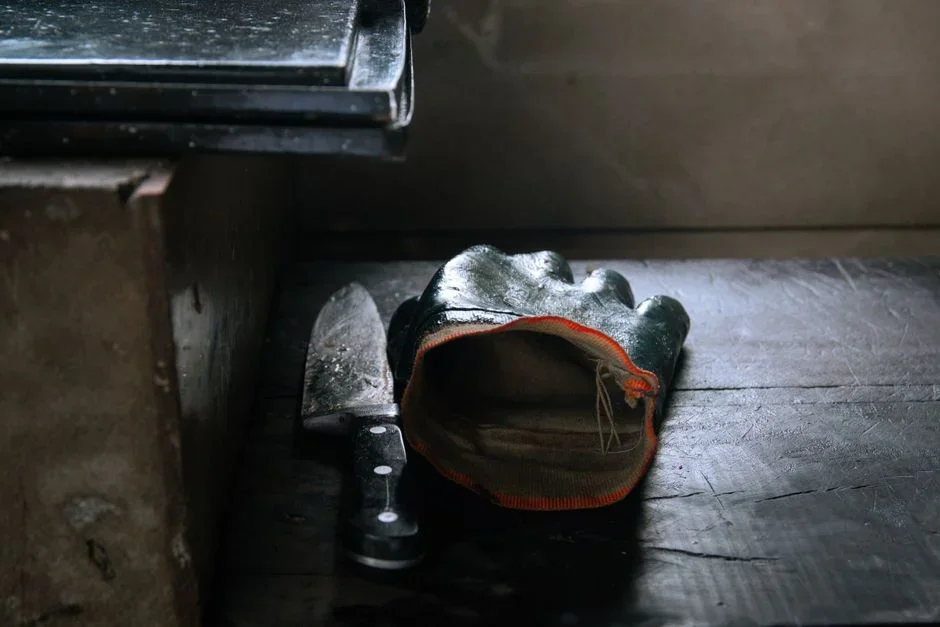
The second hazard hurts nothing on the day. OSHA warns that cutting, grinding or crushing concrete, brick and mortar sends respirable particles "deep into workers' lungs," causing silicosis — incurable and sometimes deadly — plus lung cancer and kidney disease. The construction limit is 50 µg/m³ over 8 hours, action level 25 µg/m³. The specified control is engineering, not a paper mask: water on the blade and vacuum collection. Those rules do not bind you at home; your lungs do not care who owns the grinder.
The honest tier list
| Tier | Move | Why it lands here |
|---|---|---|
| REAL — do it | Hand-repoint a few failed joints on soft old brick with soft mortar, after a test panel | Documented NPS method, small scale, prevents costly damage |
| REAL — hire it | Whole-wall repointing once a quarter to half the joints fail | Cheaper by then; matching historic mortar is skilled work |
| OK with limits | Small non-structural lime or earth work, full PPE and wet cutting — the care any backyard pour deserves | Nothing carries load; a bad batch costs a weekend |
| MYTH | "Stronger than concrete," "hidden since 1453," "ash and dirt make cement" | Published numbers, a free federal PDF, routine fly-ash practice |
| DANGEROUS | Load-bearing walls from a video, no permit, no sealed design; bare hands in lime; dry grinding | Collapse risk, sight-threatening burns, lung disease |
| Fiction | Bulletproof mud walls | No authoritative source exists |
Common mistakes
- Treating hardness as quality — softer and more permeable than the brick is the specification, not a defect.
- Grabbing bagged masonry cement because it says masonry; it usually has no hydrated lime.
- Opening joints with a power saw on soft brick, which NPS calls disastrous in unskilled hands.
- Assuming a pozzolan sets on its own. Ash needs lime to react with.
- Mixing lime bare-handed with no eye protection because "it's just dirt."
FAQ
Is lime mortar weaker than cement mortar?
Yes, and that is the point. NPS lists lime-rich Type O near 350 psi against a 2,500 psi code minimum for structural concrete. On soft historic brick, the weaker joint is the right joint.
Does lime mortar really heal its own cracks?
At hairline scale only. NPS notes lime mortar is slightly water soluble and can re-seal hairline cracks, and the 2023 Roman-concrete work sealed lab cracks up to 0.5 mm. Neither covers structural damage.
Can I use ash from my fireplace?
Nothing we could verify supports wood ash as a pozzolan or gives a ratio for it. The sourced materials are volcanic ash and fly ash. Skip the fireplace experiment.
What do I do if lime gets in my eye?
Flush with clean water at least 30 minutes while someone arranges emergency care, and call Poison Control. Clinical guidance is explicit: how fast and how thoroughly you irrigate matters more than which chemical it was.
The takeaway: The lime and ash are real but the ranking is backwards, and the money here is in repointing old brick with a soft mortar, not in building a wall out of a bucket. Spend less. Live more. — The Thrifty Almanac



0comments