

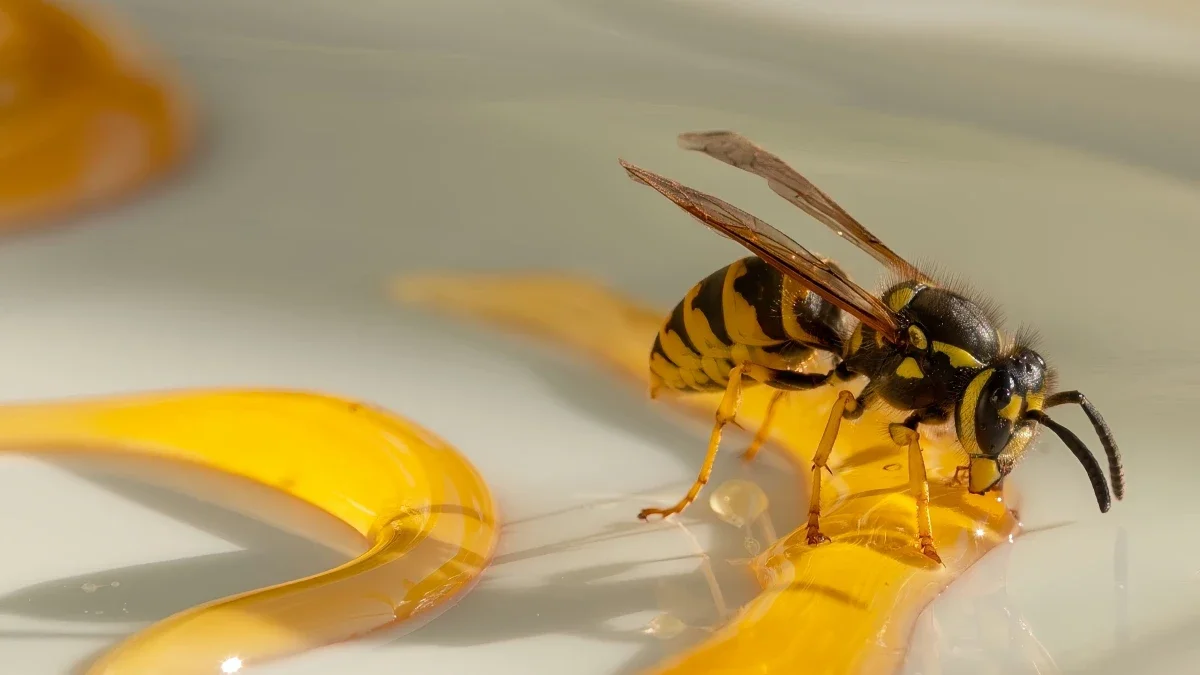
There is a hot, red welt rising on the back of a hand, the wasp is already gone, and the first instinct is to dig a fingernail in and scrape for a stinger like the videos show. With a wasp, there is usually nothing there to scrape. That single wrong move is where a lot of sting first aid goes sideways in the first sixty seconds.
Here is the honest version the quick advice skips: most wasp stings are painful, ugly for a day or two, and completely harmless. A small share are genuine emergencies that unfold in minutes. The whole job of good first aid is telling those two apart fast, and not wasting energy scraping skin, packing on mud, or waiting to see if a tightening throat sorts itself out. One thing to say plainly up front, and it will come up again: this is general information, not medical advice. When in doubt, call 911 or your doctor.
Why a wasp sting hurts, and why the stinger advice is usually wrong
WHAT: A wasp sting is a small dose of venom injected under the skin. Your body reacts locally with the classic trio: pain, redness, and swelling right at the spot. MedlinePlus lists "Swelling and pain at site of sting," "Itching," and "Hives" among the ordinary symptoms, and notes that "People who are not allergic to wasps, bees, hornets or yellow jackets usually get better within 1 week" (MedlinePlus, Wasp sting).
WHY the scraping advice misfires: The "scrape out the stinger with a credit card" step is real, but it is honeybee advice. A honeybee has a barbed stinger that tears loose and stays in your skin, still pumping venom. Wasps, hornets, and yellow jackets have smooth stingers; they pull out cleanly and can sting more than once, which is why they almost never leave anything behind. MedlinePlus hedges its own instruction for exactly this reason, telling you to "Try to remove the stinger from the skin (if it is still present)" (MedlinePlus, Bee, wasp, hornet, or yellow jacket sting). Translation: look, but with a wasp you will usually find nothing, so do not gouge at the wound hunting for a stinger that is not there.
First aid for an ordinary sting

HOW: For a normal sting in someone with no allergy, the steps are unglamorous and they work.
- Clean it. "Clean the area thoroughly with soap and water" (MedlinePlus). This lowers the odds of a scratched-open sting getting infected later.
- Ice it, on and off. MedlinePlus is specific: "Place ice (wrapped in a clean cloth) on the site of the sting for 10 minutes and then off for 10 minutes." Never put ice bare against skin.
- Keep it still. "Keep the affected area still, if possible, to prevent the venom from spreading." A stung hand held low and calm swells less than one you are shaking and rubbing.
- Do not scratch. The itch is real, but scratching drives swelling and infection risk up and does nothing for the venom.
An over-the-counter antihistamine or pain reliever can take the edge off the itch and soreness for some people. Doses and whether it is right for you are a pharmacist-or-doctor question, not a blog question, so ask one. And to be clear again: this is general information, not medical advice.
The three reactions, and which one you are looking at
Almost all of the confusion around wasp stings comes from lumping three very different things under one word: "reaction." They are not the same, and the gap between the second and third is the gap between an ice pack and a 911 call.
| Type | What it looks like | What to do |
|---|---|---|
| Normal local reaction | Pain, redness, and swelling right around the sting; maybe a welt an inch or two across. Fades over hours to a few days. | Home care: clean, ice on/off, keep still, do not scratch. |
| Large local reaction | Swelling that keeps spreading past the sting over a day or two, sometimes across a whole hand or forearm. Uncomfortable, not usually dangerous by itself. | Still mostly home care, but worth a call to your doctor, especially near the eye, or if it keeps growing. |
| Systemic / anaphylaxis | A whole-body reaction: trouble breathing, swelling of the face or mouth, hives spreading well beyond the sting, dizziness or fainting. Minutes, not days. | Emergency. Call 911 now. Use a prescribed epinephrine auto-injector if one is available. |
The key line to hold onto: a big, angry, spreading patch of skin around the sting is scary to look at but is usually a large local reaction, not an allergy emergency. The emergency is defined by what is happening away from the sting, in the breathing, the face, and the whole body.
The emergency signs that mean call 911 now

WHY this matters more than anything else here: a severe allergic reaction can move fast. MedlinePlus does not soften it: "Some people have severe, life-threatening allergic reactions to bee stings or insect bites," and when the reaction becomes anaphylactic shock, "This condition can occur very quickly and lead to rapid death if not treated quickly" (MedlinePlus, Insect bites and stings).
Call 911 right away if, after any sting, the person has any of these:
- Trouble breathing — MedlinePlus flags "Trouble breathing, wheezing, shortness of breath" as a call-911 sign.
- Swelling of the face, lips, tongue, throat, or mouth. The wasp-sting page lists "Swelling of throat, lips, tongue, and mouth" and "Difficulty breathing" as emergency symptoms; the general page adds "Swelling anywhere on the face or in the mouth."
- Hives spreading across the body, not just around the sting.
- Dizziness, fainting, or lightheadedness, a racing pulse, or sudden nausea and vomiting.
Two rules go with that list. First, the MedlinePlus wasp page is blunt about the threshold: "Call 911 or the local emergency number if the person has an allergic reaction (severe swelling or difficulty breathing)." You do not wait it out. Second, if the person has a prescribed epinephrine auto-injector (an EpiPen), that is what it is for; using it and then calling 911 is the plan a doctor has already set up for them. If someone was stung inside the mouth or throat, treat that as urgent on its own, because swelling there can close an airway (MedlinePlus). None of this is medical advice; it is the point at which you stop reading and dial.
When the number of stings is the emergency
LIMIT: Everything above assumes one sting, or a few. A swarm is a different problem. A person with no allergy at all can still get seriously ill from many stings at once, because the total load of venom, rather than an immune overreaction, is what does the damage. This is the scenario behind warnings to never swat at or disturb a nest: you are not risking one sting, you are risking dozens.
If someone takes a large number of stings, or is stung many times and starts feeling generally unwell — not just sore at each spot — treat it as a reason to get medical help rather than to tough it out. The same emergency signs apply, and they can show up in people who have been stung plenty of times before without trouble. The cleanest way to handle a multi-sting situation is to never be in one: leaving nests alone, and reading up on the safe way to deal with a nest before you go near it, keeps this whole category off the table.
The honest bottom line

A single wasp sting on a person who is not allergic is a soap-and-water, ice-on-ice-off, do-not-scratch event that is usually gone inside a week. Skip the frantic stinger hunt — wasps rarely leave one. The part that actually deserves your full attention is not the size of the welt but the presence of whole-body signs: trouble breathing, a swelling face or throat, spreading hives, dizziness. Those mean an allergic reaction that can turn dangerous quickly, and the response is to call 911 and use a prescribed epinephrine auto-injector if there is one, not to wait. Many stings at once can be dangerous even without an allergy, which is the best argument for leaving nests alone in the first place. For the bigger picture on handling stinging insects around the house without getting into this situation, our DIY pest control guide is the place to start. And once more, because it is the whole point: this is general information, not medical advice — when in doubt, call 911 or your doctor.





0comments